
Have you ever wondered how Mars’s softer pull might change the way you move? On Mars, gravity is only about 38% as strong as on Earth, so you’d feel much lighter with every step.
Imagine walking on a surface where falling feels almost gentle, like you’re floating on the Red Planet. Even simple tasks, like picking something up, would feel different, and machines would have their own unique way of moving.
It’s pretty cool to think that even a small change in gravity can spark such dynamic movement energy, challenging all our ideas about motion.
Mars Gravity Fundamentals
Mars pulls objects with less force than Earth does. Its surface gravity is 3.721 m/s² (0.38 times Earth's pull), meaning things fall more slowly when dropped. Surface gravity tells us how quickly something accelerates toward the ground. On Mars, you’d have a softer landing, almost like a gentle embrace compared to Earth's firm tug.
Because Earth’s gravity is 9.807 m/s², every movement feels different on Mars. Imagine doing everyday tasks where even slight changes in weight could alter how you move or how machines work. For example, an item weighing 100 lb on Earth would weigh about 38 lb on the Red Planet. This big gap in weight is crucial when planning missions and building equipment that can work safely under Mars’ lighter force.
| Weight on Earth | Weight on Mars |
|---|---|
| 100 lb | 38 lb |
| 150 lb | 57 lb |
| 200 lb | 76 lb |
This interesting change in gravity isn’t just a neat science fact. It directly affects everything from the way robots move around to how humans might feel nearly weightless while walking on Mars. Isn’t it amazing to think how a planet’s pull can change the whole experience of being there?
Measuring Mars Gravity: Relativity Insights
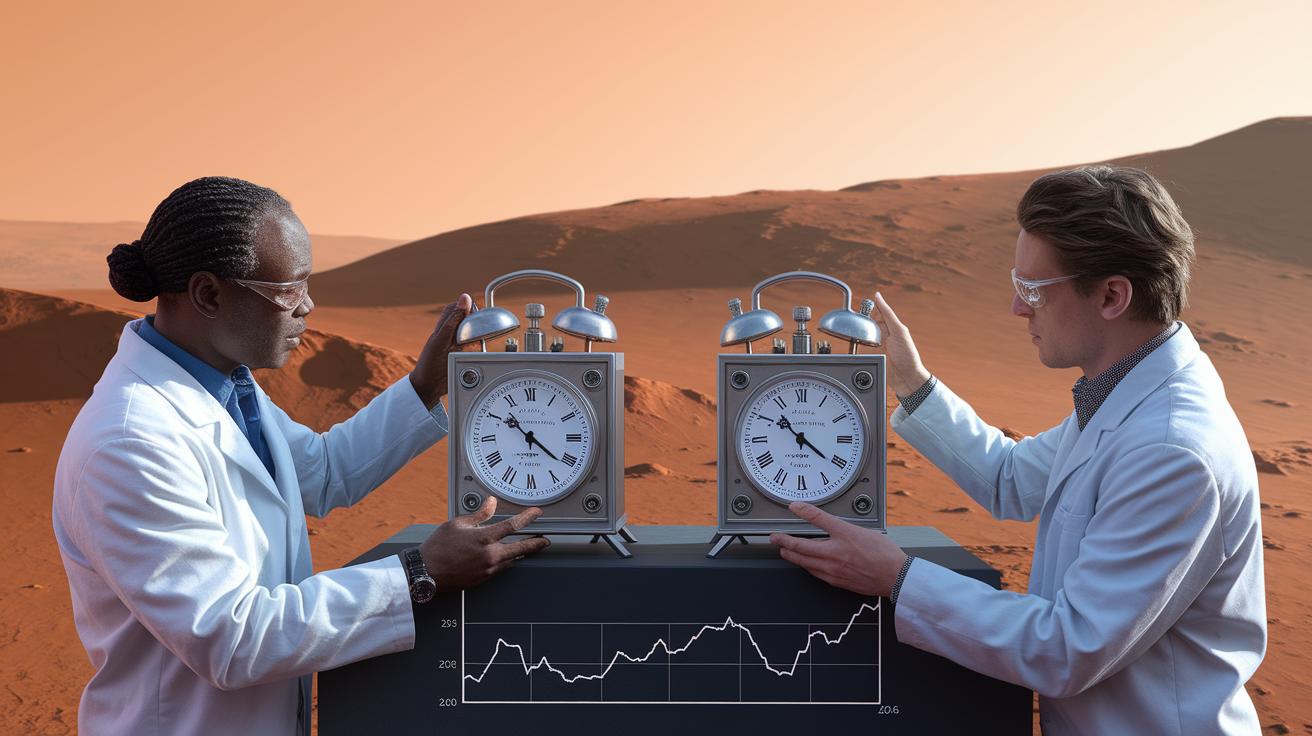
Einstein explained that gravity can even change how time moves along. On Mars, where gravity is not as strong, clocks tick just a tiny bit faster. Scientists use this idea to compare how time keeps going in different places. For instance, because Mars pulls less, its clocks run faster by only a few nanoseconds (extremely small parts of a second) than clocks on Earth. This small time boost isn’t just a cool fact, it helps researchers translate these differences into measures of acceleration (how quickly something speeds up) under Martian conditions.
Engineers also rely on atomic clocks (super precise timekeepers) to get clear information about Mars’ pull. By recording the slight differences in ticking, they can figure out acceleration without leaning on big orbit models or standard ground tools. Those tiny nanosecond shifts turn into dependable numbers for gravitational force. This method gives us a fresh way to understand Mars’ gravity and the energy of movement when you’re under a different cosmic tug.
Scheduling on the Red Planet: The Martian Sol and Gravity
On Mars, a day – called a "sol" – lasts about 24 hours, 39 minutes, and 35 seconds. That extra time means Mars runs on a schedule a bit different from Earth’s. At mission control, scientists and engineers talk about working on sols instead of the usual 24-hour days. Picture your morning routine starting almost 40 minutes later every day. It’s pretty neat to think that Mars' lower gravity gently affects its rotation and even the feel of time on the surface.
This longer sol also adds challenges when planning daily activities for rovers, landers, and human crews. Schedules have to be spot on; for instance, solar panels need to catch the sun exactly right, and communications with Earth must adjust for that constant time shift. Engineers plan engine burns and data transfers around these shifting cycles to keep everything running smoothly. In short, every task is timed carefully, making sure power management and science experiments all stay in sync with Mars’ unique time flow.
Rover and Equipment Operations Under Mars Gravity
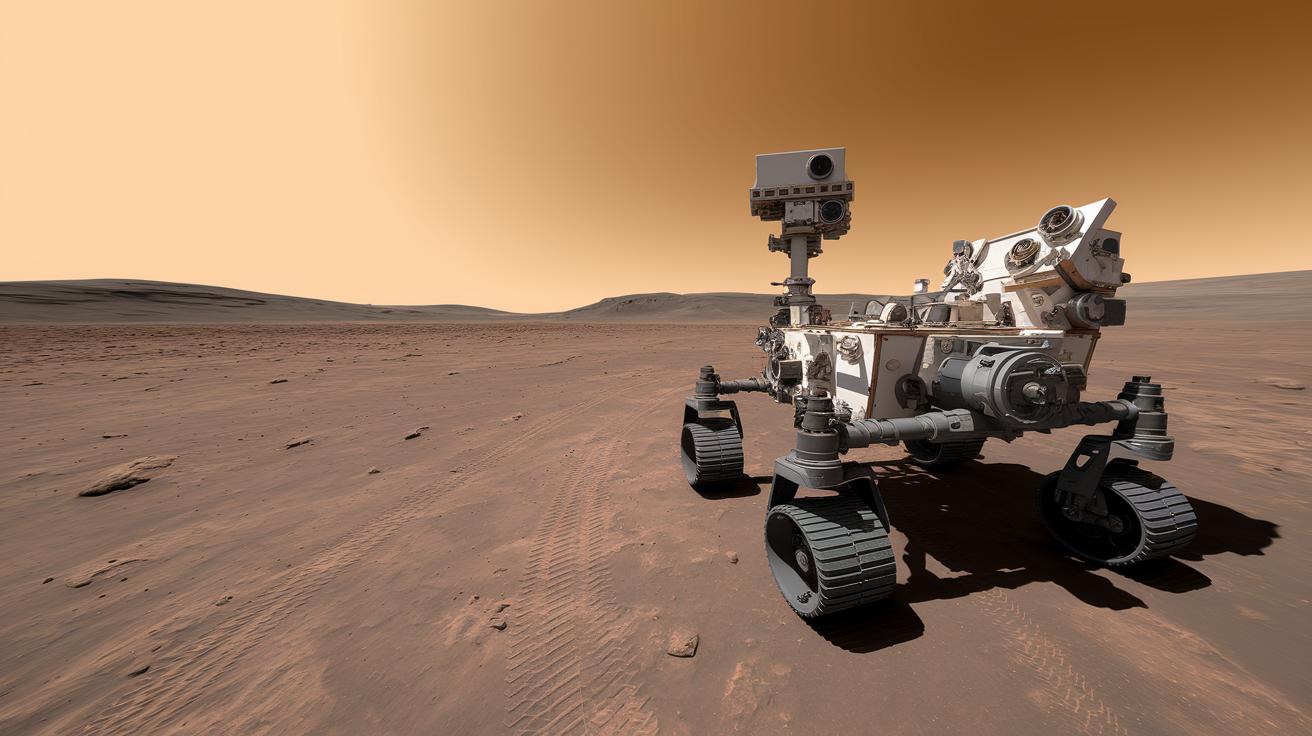
On Mars, every little moment counts. With a lighter pull from gravity, even a tiny delay can change things. For instance, if a command is sent to steer a rover, a tiny delay, even one you might not notice, can cause it to drift slightly off course. Mission planners must take these small timing changes into account so that every instruction, from reading sensors to firing engines, happens just right.
Mars' weak gravity also plays a role in how power systems work. Solar panels need to tilt just right to soak in sunlight, and the way batteries charge can be affected too. Engineers adjust thermal controls to handle the heat from daily operations, ensuring that every part of the mission, from moving parts to energy storage, runs smoothly even when the timing changes ever so slightly.
Mars Gravity and Astronaut Aging
On Mars, time feels a bit different. Because the Red Planet’s pull is lighter than Earth’s, even atomic clocks tick a tiny bit faster, by just a few nanoseconds. This means that our bodies’ own aging clocks could run a little quicker on Mars. Imagine a super-sensitive stopwatch in every cell; over many years, these small differences can really add up.
Over long missions, scientists believe these tiny time quirks might be measurable with precise instruments, even if you wouldn’t notice them day to day. Researchers are curious about how living in low gravity might affect our health, such as muscle strength and overall body function. They’re studying whether extended time under these conditions could change how our bodies work and how we plan future space journeys. In truth, even slight changes in the flow of time might one day shape how we get our bodies ready for a life on Mars.
Synchronizing Time Between Earth and Mars Gravity Environments
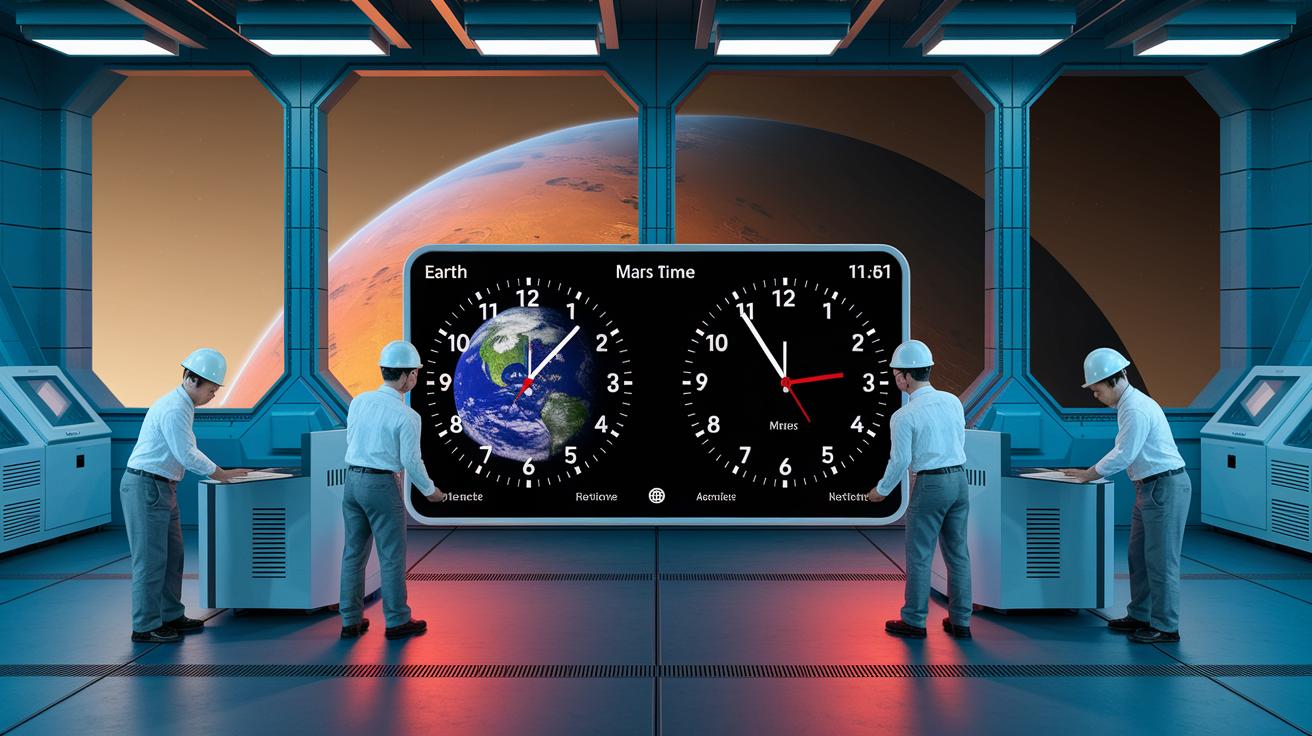
We work to line up the clocks so Earth’s 24-hour day meshes with Mars’ longer sol. In earlier sections, we talked about how these differences can mess up important tasks like coordinating data transfers if they aren’t corrected.
We use special correction formulas and data models that adjust for these time shifts with help from ultra-precise atomic clock data (the best time measurement available). By joining these ideas with our earlier notes, we avoid saying the same thing twice and keep our focus on the key time adjustments for the mission.
Future Mars Colonies: Adapting to Gravity and Time Differences
Engineers and space planners are working on designs for Mars colonies that use two time systems. In these future communities, people would follow Mars local time, a sol, which is about 24 hours, 39 minutes, and 35 seconds long, while still keeping in sync with Earth’s 24-hour schedule. Imagine starting your day with two alarms: one ringing on Mars time for your breakfast and another keeping the beat with Earth time for your video calls with family. In fact, on Mars you might end up having dinner by one clock and then attend a meeting by the other, blending life from two worlds in a unique way.
Researchers are also busy creating homes that work well in Mars’ gentle gravity and unusual time flow. They’re testing how building materials, energy systems, and everyday devices behave in low gravity (which means gravity that’s lighter than what we feel on Earth). Picture a busy lab where sensors pick up tiny shifts in machinery movements, helping engineers adjust solar panels and manage batteries accurately. All these efforts are meant to build habitats that support human life comfortably, ensuring that even with two time zones, daily routines stay smooth and in tune.
Final Words
In the action, this article showed how Mars gravity shapes weight, time, and even our future plans on the Red Planet. We talked about how the pull on Mars changes basic measurements, influences rover moves, and even affects astronauts’ aging by minuscule amounts. Small shifts in sol length and gravitational forces impact technology and mission schedules every day. Bringing everyday science to life makes these insights both accessible and exciting, proving that even subtle differences in mars gravity can inspire big ideas for exploration and understanding.
FAQ
What is the gravity on Mars compared to Earth?
The Martian gravity stands at about 3.721 m/s², roughly 38% of Earth’s gravity, so an object weighs much less on Mars, making movements feel lighter.
How high can I jump on Mars?
The lower pull on Mars means you could jump significantly higher than on Earth. With reduced weight, your leap might nearly double, though it still depends on your strength and technique.
Is there enough gravity on Mars to walk?
Mars provides sufficient pull for walking despite its reduced strength. Even though movement feels lighter, the gravitational force is enough to keep you grounded on the surface.
What is the name of the red planet?
The red planet is called Mars. Its rusty hue is due to iron oxide on the surface, giving it a distinct, eye-catching reddish appearance.
What is Mars Gravity manhwa?
Mars Gravity manhwa is a Korean comic series that mixes futuristic themes with space exploration. It creatively tackles challenges related to the effects of reduced gravity on life beyond Earth.
What is the Mars Gravity novel?
The Mars Gravity novel is a work of fiction that blends scientific facts with imaginative storytelling about life and challenges on Mars, highlighting the planet’s unique conditions.
Who is the Mars Gravity author?
The Mars Gravity author refers to the writer behind either the manhwa or novel with that title. Check the specific work for the detailed author information.
What does “Mars Gravity ft s 2” refer to?
Mars Gravity ft s 2 likely denotes a sequel or an extended edition related to the Mars Gravity series, continuing the narrative set around Martian conditions and themes.
How does Mars gravity compare to the Moon’s gravity?
Mars exerts about 0.38 g while the Moon only offers roughly 0.165 g. This means you’d experience a stronger pull on Mars, making you weigh more there than on the Moon.
Does Mars gravity affect temperature?
Mars gravity itself doesn’t determine temperature. Instead, the planet’s chilly, variable conditions arise from its thin atmosphere and distance from the Sun, not the force pulling objects downward.