
Have you ever thought a small patch on your arm could help protect someone’s health? Picture a sensor that watches how much water our elders have and gives them or their caregivers a little nudge when it's time for a drink.
This clever device keeps an eye on body moisture by sending a gentle signal, kind of like a friendly tap on the shoulder. It’s a simple and smart way to make sure older loved ones stay feeling their best.
In truth, it's amazing how a tiny piece of technology can make a big difference when it comes to care.
Real-Time breakthrough wearable hydration sensors for elder care
A team at UT Austin has come up with a smart, needle-free sensor that sticks to your arm and checks your hydration levels by measuring how your body resists a tiny electrical signal. This wireless sensor talks to your smartphone, giving you live updates about your fluid levels. Picture this: your smartwatch buzzes to remind you to have a sip of water when your hydration drops, a friendly nudge that helps keep you feeling fresh.
This cool tracker not only checks how much water you need but also helps keep your body running smoothly by supporting things like temperature control and clear thinking. Even a little dehydration can fog up your brain and leave you feeling off. Imagine wearing a device that, while you’re enjoying a walk or even sitting at your desk, keeps an eye on your water levels like a personal hydration buddy that never takes a break.
These innovative and non-invasive hydration monitors are changing the game for elder care. They give caregivers a heads-up about even the smallest changes in hydration so that help can come in right when needed. Plus, with the ease of syncing all your data to an app, these small sensors help you remember to drink more water while also keeping an eye on overall health. Isn't it amazing how a little technology can make such a big difference?
Clinical validation of breakthrough wearable hydration sensors for elder care

At the heart of these innovative devices is bioimpedance sensor technology. It works by sending a tiny electrical current through your skin to gently check how well your body carries electricity. In simple terms, this small pulse acts like a non-invasive check-up, showing how your tissue changes when your fluid levels shift. Imagine testing a car battery with a tool that measures its energy output, this sensor does something similar for your body, all without any discomfort.
Bioimpedance Sensor Technology
These smart sensors send a tiny, safe current through your skin that measures the resistance in your tissues. As the current passes through, it picks up on subtle changes that signal fluid movement within the body. This method, which we can think of as a quick water analysis, doesn’t involve needles or lab tests, making it an everyday tool for care. Whether you're out for a walk in the park or working at your desk, the technology keeps pace with your daily life.
Real-Life Trial Outcomes
In real-world tests, eight volunteers who took a diuretic (a drug that helps remove extra fluid) were monitored using the hydration sensor. The device showed a strong match with actual weight loss from fluids, proving its accuracy. Everyday activities like walking, office work, or exercise did not affect its reliability, even outside a lab. This testing shows that these sensors are sturdy and practical for seniors, offering a proactive way to keep an eye on health so that caregivers can catch problems early while keeping users comfortable and informed.
Integrating breakthrough wearable hydration sensors into elder care workflows
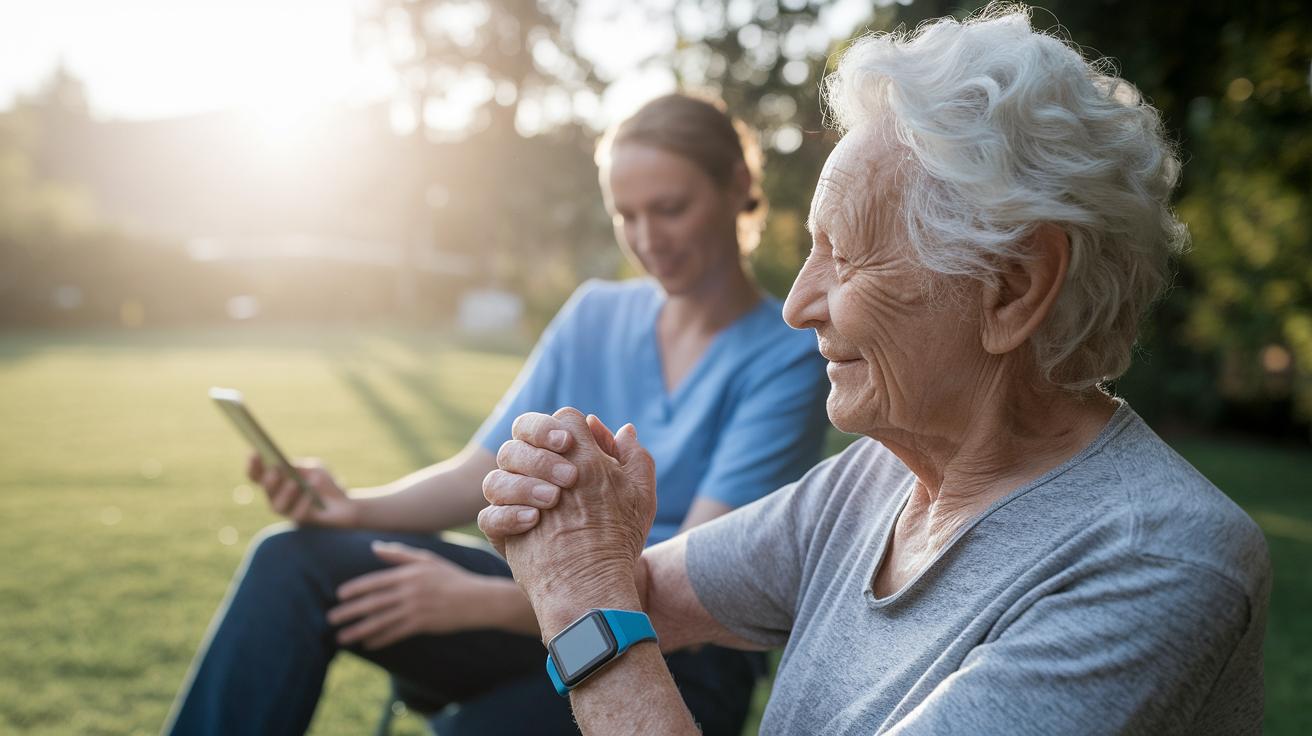
Wearable hydration sensors now team up with companion apps and smartwatches to help seniors drink more water. They automatically keep track of fluid intake and send friendly reminders in real time. It’s like having your own personal hydration coach gently nudging you when it’s time for a sip.
These sensors keep working even when seniors are on the move, resting, or busy with everyday activities. The data they collect flows into simple dashboards that caregivers can glance at. Imagine a caregiver quickly checking hydration levels along with key signs such as heart rate, blood pressure, and oxygen levels. This full picture helps caregivers make better choices in care facilities.
Getting started is simple. First, you set up the device by attaching the sensor and linking it to the right app. For example, you might follow a short guide like, “Place the sensor on your arm, pair it with your smartphone, and you’re ready to get water reminders.”
| Setup Step | Description |
|---|---|
| Sensor Installation | Attach the sensor to the arm for continuous monitoring. |
| App Pairing | Connect the sensor with a smartphone app to log data. |
| Dashboard Sync | Send hydration and vital signs data to a caregiver platform. |
By combining these digital tools with everyday care routines, caregivers get timely insights, and it makes managing hydration easier. It’s a smart innovation that fits right into elder care workflows.
Benefits of breakthrough wearable hydration sensors for senior health

Continuous hydration tracking is key for keeping seniors feeling their best. It helps keep the body’s temperature steady, supports clear thinking, and even gives early alerts before dehydration happens. Imagine a smart water tracker that adjusts its reminders based on your daily routine, it’s like having a personal water coach by your side.
These sensors work like friendly hydration detectives. They collect useful health data and send a gentle buzz when it’s time for a sip. You might see a message saying, "Time to hydrate and boost your focus, just like having a hydration coach right on your wrist!" It’s a simple, caring nudge that can make a big difference.
Besides keeping an eye on water levels, these devices offer extra features that enhance overall well-being. Many include fall detection to alert caregivers if there’s a slip, while built-in GPS helps locate you easily when needed. They even remind you to take your medications and prompt social activities to keep loneliness at bay.
By combining customized water tracking with smart alerts and helpful safety features, these sensors encourage a proactive approach to elder care. They balance your body’s needs and give you an extra boost of safety and independence, making life a little easier for both seniors and their caregivers.
Comparing breakthrough wearable hydration sensors to traditional monitoring methods
Old hydration checks depend on handwritten records, spot checks by staff, and simple alarms that only work at certain times. Imagine a caregiver flipping through a logbook after a long shift and realizing that a patient’s fluid intake wasn’t tracked every moment. This method can miss important details and slow down responses when quick action is needed.
On the other hand, smart fluid devices for seniors give continuous, gentle monitoring without any invasive tests. These modern tools watch your water balance all day and night and record every sip automatically. It’s like having a digital helper that immediately signals when there’s a risk of dehydration and keeps an up-to-date record. This way, caregivers have a clear picture all the time, and they can act fast when necessary.
These water balance gadgets remove the errors found in old methods. They offer an easy and reliable way to track liquid intake at home, making it simpler to check hydration levels and act quickly. By providing steady, dependable data, these wearables help caregivers take prompt, accurate steps to keep everyone safe and well-cared for.
Challenges and solutions for implementing breakthrough wearable hydration sensors in elder care
Sensor accuracy is a big issue when using these smart devices in elder care settings. Everyday activities and different environments can make a real difference in how they work. For example, a sensor that works just fine inside may have trouble outside when the sun is shining brightly or when there is a lot of moisture in the air. One way to fix this is by fine-tuning the calibration and updating the device software regularly. Developers are busy improving the algorithms so these wearable hydration trackers give trustworthy readings no matter where seniors are or what they’re doing.
Protecting health data is another major worry, especially with strict HIPAA rules in place. Keeping sensitive health information safe means using strong methods like secure data encryption (a way to scramble data so only the right people can read it) and tighter authentication processes. On top of that, these sensors need to be built to last. Since seniors use them every day, they must be sturdy enough to handle small bumps, sweat, and even water exposure. Manufacturers are testing different materials to make sure the sensors can stand up to daily wear and tear over the long haul.
Cost is also a challenge, particularly for seniors on a fixed income. The advanced features of these sensors might seem pricey. However, support from programs like Medicaid, VA benefits, or local grants can help reduce the financial strain. By improving the devices and streamlining production to lower costs, breakthrough wearable hydration sensors can become more accessible for older adults.
- Investment in updated calibration and robust software
- Strong encryption aligned with HIPAA standards
- Durable materials that withstand everyday use
- Financial support options including Medicaid and local grants
| Challenge | Solution |
|---|---|
| Sensor Accuracy | Calibrated algorithms and regular software updates |
| Data Privacy | Robust encryption and secure access measures |
| Device Durability | Enhanced materials testing and design improvements |
| Cost | Exploring financial assistance through federal and local programs |
Future prospects for breakthrough wearable hydration sensors in senior care
Imagine a smart sensor that looks after seniors by alerting them when they need to drink more water. This clever device uses machine learning (computer systems that learn from data) to keep track of your body's signals, like vital signs and bioimpedance (a measure of body fluid levels). It's almost like having a tech-savvy friend who gently reminds you to grab a drink, much like checking a weather forecast but for your hydration.
AI-Driven Predictive Hydration Analytics
The sensor taps into machine learning to constantly watch over your body data. It learns how your water levels change with your daily life and weather conditions, predicting when you'll need an extra sip. Think of it as a personal hydration coach that adapts to your routine and even the environment around you.
Integration with Electronic Health Records
These smart readings are sent securely to electronic health records, giving doctors a clear picture of a senior's hydration habits over time. This smooth integration helps create tailored care plans and informed decisions, shaping a future where tech supports personalized, sensor-driven care.
Final Words
In the action, this article explored breakthrough wearable hydration sensors for elder care by showcasing sensor technology that delivers real-time data and solid lab results. It discussed how sensor-based water analysis and smart digital monitoring blend with everyday care, revealing clear benefits for maintaining wellness in seniors. The piece also touched on practical challenges and future AI-driven improvements. Every detail highlights how these sensors can transform caregiving, making hydration tracking simpler and safer. The promise of breakthrough wearable hydration sensors for elder care shines a positive light on a smarter, healthier tomorrow.
FAQ
Frequently Asked Questions
What is a wearable hydration monitor?
A wearable hydration monitor is a device that uses sensors on the arm to track body hydration in real time by sending data to a smartphone. It helps you quickly see water intake levels without invasive methods.
How does a wireless arm-worn bioimpedance sensor measure hydration?
A wireless arm-worn bioimpedance sensor measures hydration by sending low electrical currents through the tissue. Changes in impedance (how much the tissue resists the current) reveal shifts in fluid levels throughout the body.
How do hydration monitors benefit elderly care?
Hydration monitors for elderly care provide continuous updates on fluid status and send real-time reminders through companion apps. They help caregivers spot early signs of dehydration, supporting overall health and cognitive performance.
What is considered the best wearable hydration monitor?
The best wearable hydration monitor offers a needle-free, accurate solution that syncs with smart devices, provides continuous updates, and reliably tracks fluid balance, making it ideal for both personal use and elder care.
What is the screening tool for geriatric dehydration?
The screening tool for geriatric dehydration often includes wearable bioimpedance sensors that track fluid changes non-invasively. They help identify dehydration early by providing continuous, real-time data for clinicians and caregivers.
What are examples of wearable devices in healthcare?
Examples of wearable devices in healthcare include hydration monitors, smartwatches that track vital signs like heart rate and SpO₂, and continuous blood pressure monitors. These devices aid in real-time health management and early warning systems.
What is the simplest method for monitoring hydration status?
The simplest method for monitoring hydration status is using a wearable sensor that determines hydration via bioimpedance measurements and connects with a smartphone app for easy, real-time fluid tracking.

