
Have you ever wondered how a tiny change in a molecule could ripple out to affect the everyday stuff we use? Recent discoveries in chemical kinetics (the study of how molecules react) have shown that molecules move and interact in ways that are more dynamic and lively than we imagined.
It’s almost like watching a dance where partners switch at just the right moment. Scientists can now track energy changes and the steps in a reaction as they happen, giving us a clear view of this molecular choreography.
These fresh insights could lead to clever new ways to create better medicines and materials. In simple terms, understanding these tiny shifts might open up a whole world of smarter, more efficient production methods in science and everyday life.
Recent Mechanistic Breakthroughs in Chemical Kinetics
Imagine atoms and molecules performing a lively dance during a reaction. The latest breakthroughs show us new ways these tiny particles change partners, which affects how fast reactions occur. Researchers now use modern ideas in reaction speed (how quickly substances transform) to watch these changes up close.
Scientists study molecular kinetics (how molecules move and interact) to uncover each step in a reaction. They also carefully examine transition states (brief moments when molecules rearrange) so they can map out how much energy is needed to start the reaction. This work helps them see the hidden energy steps in chemical processes.
- New energy profiles show how energy shifts during reactions.
- Step-by-step pathways are revealed with detailed molecular analysis.
- Advanced reaction rate models now predict behavior more accurately.
- Close looks at transition states uncover how molecules rearrange.
- Detailed studies pinpoint reaction parts that were hidden before.
These findings are promising for many fields, whether in making better medicines, improving industrial processes, or crafting innovative materials. By breaking down each phase of chemical change, scientists can better predict outcomes and design smarter ways to control reactions. In truth, as we learn more about this molecular dance, we open the door to new technologies and more efficient methods in our everyday lives.
Experimental Kinetic Measurement Advances in Chemical Reaction Breakthroughs
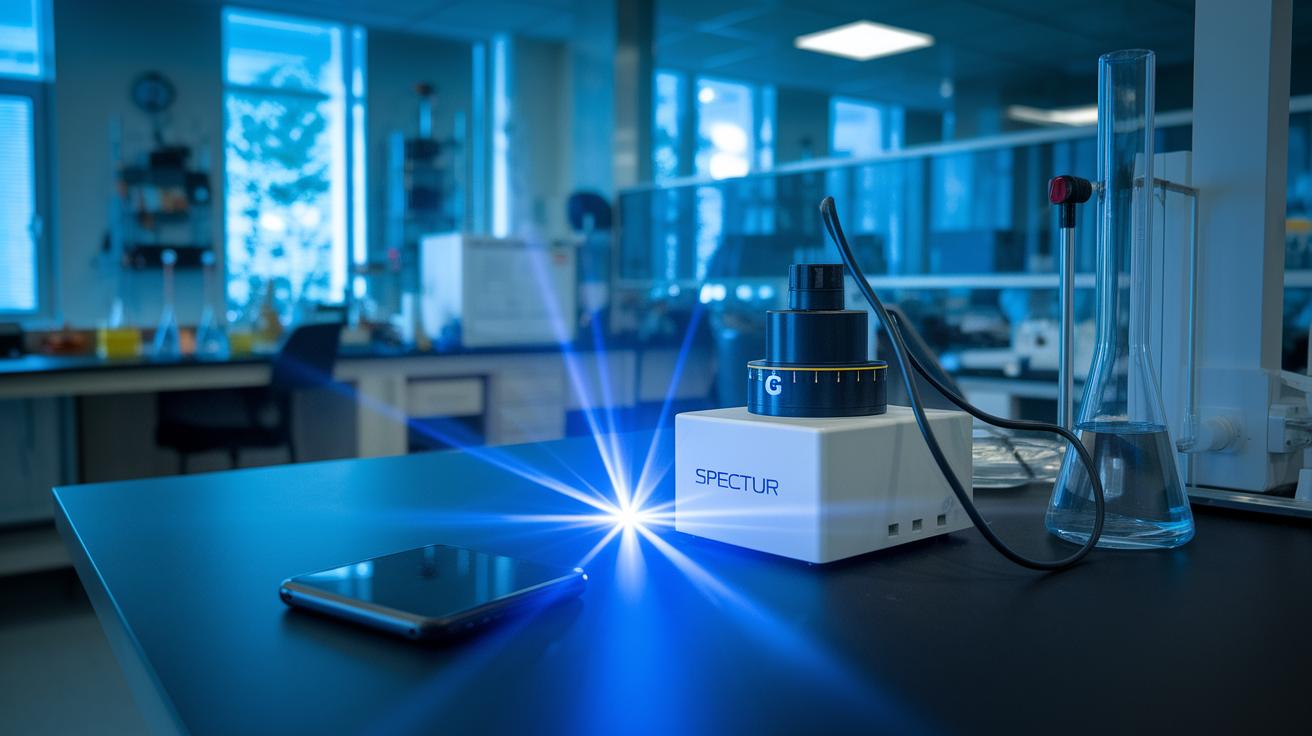
Scientists have long used methods like spectrophotometry (a way to measure how substances absorb light) and gas chromatography (a technique for separating parts of a mixture) to track how chemical concentrations change over time. These trusted techniques have provided solid data on reaction speeds and have set the stage for even more refined approaches.
Now, new methods are stepping up our game. Researchers are using ultrafast, time-resolved spectroscopy to grab fleeting reaction details that happen in just a few picoseconds (one trillionth of a second!). This lets them watch molecules appear and fade in the blink of an eye. Plus, high-throughput screening now allows labs to test hundreds of reaction conditions in a single day, linking outcomes to innovative scientific methods. With these advances, precise measurement protocols cut error margins to below 2%, giving a clear picture of how fast reactions actually take place.
- Ultrafast time-resolved spectroscopy captures momentary molecules within trillionths of a second.
- High-throughput reaction screening checks hundreds of conditions each day, expanding our scientific toolkit.
- Precision techniques now limit errors to below 2%.
- Improved spectrophotometry provides sharper data on concentration shifts.
- Advances in gas chromatography bring out finer details in complex mixtures.
- New detection systems combine standard methods with ultrafast measurements to create better reaction maps.
These breakthroughs are reshaping our view of chemical reactions. With more precise data, scientists can craft better experiments to see how atoms and molecules interact. This deeper insight is paving the way for improved processes in industries like manufacturing, medicine, and environmental science.
Theoretical and Computational Modeling in Kinetic Breakthrough Research
New advances in computational chemistry are changing how scientists study reaction processes. They use quantum chemical dynamics (a way to study energy and particles on a small scale) to simulate the energy maps where reactions take place. These dynamic models give us a clear picture of the different stages in a reaction. In fact, theoretical kinetics modeling now mixes machine learning with classic methods, which creates sharper, data-driven ways to predict reaction speeds. This helps scientists see, step by step, how changes in conditions can impact a reaction. Many researchers rely on these computation methods to identify exactly when molecules shift, a tricky task for older techniques.
On a practical level, these simulation models boost our understanding of tough reactions. Scientists create simulation tools that predict how reactions happen under various conditions, which helps drive new ideas in industries like pharmaceuticals and manufacturing. Dynamic modeling is key to spotting where a reaction might slow down or where energy barriers appear. And by comparing what really happens in experiments with the computer models, researchers can be sure their simulations match chemical realities. As these methods grow, collaborations between chemists, physicists, and computer scientists are becoming more common.
New simulation approaches now blend quantum chemical dynamics with machine learning techniques. This fresh take on theoretical kinetics modeling gives us clearer insights into how reactions work and will likely spark more breakthroughs in chemical research.
Catalyst Design and Activation Energy Insights in Chemical Kinetics Breakthroughs
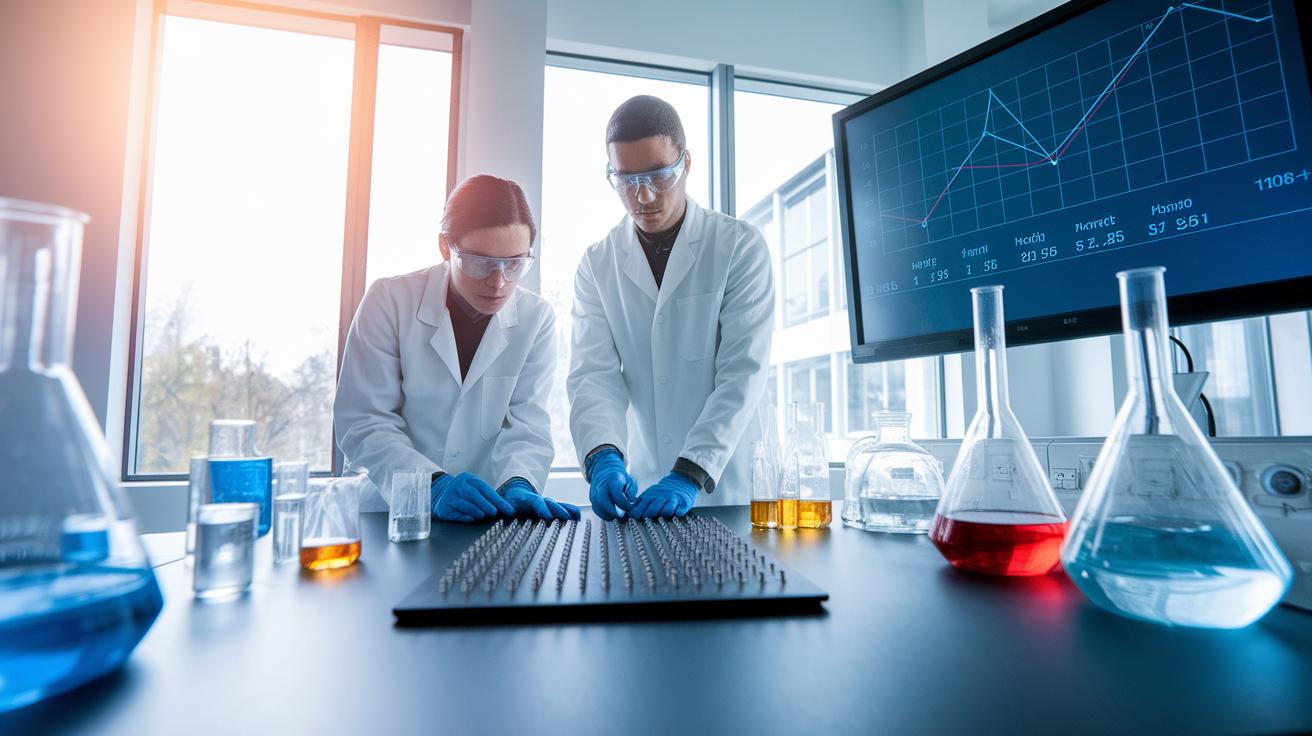
Catalysts help speed up chemical reactions by lowering the energy needed for starting materials to change into products. Scientists in the lab work on designing these special helpers to make reactions run faster and more smoothly. They see catalysts as tools that guide molecules along easier paths, meaning the process doesn't need as much energy as before.
One exciting area is heterogeneous catalysis, where solid catalysts meet gas or liquid reactants at their surface. Recent studies show that these catalysts can make reactions start with up to 20% less energy. Researchers use tools like Arrhenius plots (graphs that show how reaction speeds change with temperature) and transition state theory (a way to explain the critical moment in a reaction) to find new paths for reactions. This work shows that even familiar catalysts can be improved by studying how their surfaces interact with other molecules.
In another type of reaction called homogeneous catalysis, both catalysts and reactants are in the same phase (like all being in a liquid). New findings in this area reveal that small tweaks in the catalyst's makeup can really boost how fast and precise a reaction is. Scientists are also tracking performance metrics that show these catalysts can work longer and more strongly, giving them better control over chemical processes.
The newest advances in catalyst design come from smart optimization strategies. Techniques such as nanoscale structuring (arranging materials on a very small scale) and alloy tuning let chemists fine-tune catalysts to perform even better. These strategies not only speed up reactions but also help lower the overall energy needed in both industrial setups and research labs.
Integrating Experimental Data and Kinetic Models: Case Studies of Chemical Reaction Breakthroughs
When scientists mix real measurements with math that explains reaction speeds, our understanding of chemical reactions becomes much clearer. They use vibrational spectroscopy (a method that watches how molecules wiggle) along with mechanistic rate equations (simple math to show reaction speed) to catch short-lived particles that might easily be missed. Cool experiments (check out https://buzzyandclever.com?p=218) show how these tools can reveal which reaction paths are most important and help us understand the whole process better.
| Case Study | Methodology | Key Insight |
|---|---|---|
| Catalytic Cycle Analysis | Vibrational spectroscopy and mechanistic rate equations | Better understanding of which paths are chosen |
| Transient Intermediate Detection | Looking at reaction intermediate steps with diagnostic models | Finding the slowest, key reaction stage |
These examples show that by matching accurate measurements with strong math models, scientists can pinpoint the steps that control how fast a reaction goes. With a clear view of every quick, changing moment, they can adjust catalysts or reaction conditions to improve yield and accuracy. This combined approach also helps uncover unexpected reaction routes that older methods might miss. In doing so, it builds a solid bridge between test data and the theories behind them, leading to better research and industrial processes.
Industrial and Environmental Applications of Kinetic Breakthroughs in Chemical Reactions

In labs, scientists now use accurate reaction speeds (kinetic data tells us how fast reactions happen) to shift tests from small experiments to full-scale production. This smart move boosts factory output by 30%. Quick, high-throughput reaction tests let engineers try many setups fast, making sure ideas that work in the lab also shine in real-world factories.
Fuel cells and batteries are now performing better thanks to these improved energy conversion speeds. Faster reactions at the electrode points (where electricity is generated) help these devices run more efficiently while staying reliable. It’s amazing how measuring reaction speeds so carefully can lead to better energy use in today’s manufacturing.
Our environment also gains a lot from these scientific breakthroughs. Faster breakdown of pollutants in air and water shows the power of environmental reaction analysis. Researchers use this data to build solid climate models and clean-up strategies, which means that harmful chemicals are broken down quicker. By using precise reaction numbers, industries can fine-tune their chemical processes to help both production and our planet stay healthy.
Final Words
In the action, recent work has reshaped our view of molecular movements using hands-on experiments and smart computer models. The post touched on experimental advances, catalyst improvements, real-world case studies, and industrial applications that all add pieces to the chemical kinetics puzzle.
The progress in chemical reaction breakthroughs: new insights in kinetics shows how science can simplify even the trickiest ideas. These strides spark curiosity and make complex chemistry feel a bit closer to everyday life.
FAQ
Q: What are the latest discoveries in chemistry?
A: The latest discoveries in chemistry include insights into transition states and refined reaction mechanisms. These findings from recent research help improve everything from laboratory experiments to industrial and environmental processes.
Q: What is the new discovery in chemistry 2025?
A: The new discovery in chemistry 2025 spotlights advanced catalyst research that lowers activation energy barriers. This breakthrough enhances reaction speeds and optimizes processes for better lab and industrial performance.
Q: What are the 10 chemical reactions that have benefited your life today?
A: The 10 chemical reactions that benefit daily life include processes like combustion, digestion, and photosynthesis. Each reaction plays a role in energy production, nutrient breakdown, and sustaining plant life.
Q: What are the real life applications of chemical kinetics?
A: The real life applications of chemical kinetics involve optimizing industrial reactions, improving fuel cell and battery performance, and aiding environmental cleanup efforts. These insights drive advancements in sustainability and efficiency.