What if computers could warn you about a health problem before it even begins? Thanks to clever tools like artificial intelligence (computers that learn from data), experts are now using big sets of health information to catch early hints of trouble. Imagine your doctor getting notified in time to offer the perfect treatment right when it's needed. Hospitals are gathering loads of information, from your health records to data from wearable gadgets, to help care teams act sooner rather than later. This shift means faster treatments and a smoother overall experience. Read on to see how these smart systems are helping change the way we look after our health.
Achieving Predictive Healthcare Outcomes with Big Data Analytics
Breakthrough big data analytics uses smart computer methods like artificial intelligence and machine learning to help predict patient outcomes. Think of it like using math tools (simple models to analyze data) that spot health risks before they turn into full-blown problems. This new way of looking at healthcare helps doctors move from waiting to react to illnesses to stepping in early and giving timely help.
By tapping into lots of different data, from electronic health records and wearable devices to even genetic profiles, hospitals can make better choices. For example, Mount Sinai uses these models to guess how many patients will be coming in and what their bed needs might be, which cuts down waiting times and uses resources more wisely. And over at the Cleveland Clinic, clever AI tools spot sepsis risks almost 48 hours before symptoms show up, meaning treatment starts sooner and costs go down. It’s pretty amazing how these data-driven methods are putting more power in the hands of healthcare providers.
Catching risks early means doctors can start treatment faster and fine-tune care for each individual. Shorter wait times and smoother operating room schedules lead to a better experience for everyone involved, while also saving money. In cases like sepsis, finding the problem early can save lives and ease the heavy load on our healthcare system. In truth, this proactive approach is reshaping modern healthcare into a more efficient and patient-friendly practice.
Core Components of Breakthrough Big Data Analytics Platforms

These advanced platforms in healthcare work like a well-oiled machine, putting together different building blocks to manage enormous amounts of patient data. They pull in medical records from systems like Epic and Cerner, grab live data from Internet of Things (devices that connect online, such as fitness trackers), and even analyze genetic information to help tailor treatments to each patient. Cloud services from AWS, Azure, and Google Cloud help store and process all this data quickly, while strong encryption and role-based access (methods that ensure only the right people see the information) keep everything safe. Plus, standards like FHIR (guidelines for sharing healthcare information) and USCDI (a list of key health data) make it easier for different systems to work together and cut down on merging costs.
| Component | Function | Impact |
|---|---|---|
| EHR Integration | Brings together patient records from Epic, Cerner, and similar systems | Helps doctors see real-time clinical data |
| IoT Data Capture | Collects ongoing data from wearable devices | Allows for continuous patient monitoring |
| Genomic Data Processing | Examines genetic profiles for better-tailored care | Makes treatments more accurate |
| Cloud Solution | Provides scalable computing power and storage | Speeds up data processing |
| Data Security | Uses encryption and strict access controls | Keeps information compliant with privacy laws (like HIPAA and GDPR) |
In short, solid data security and well-planned standards not only safeguard patient information but also help these systems meet strict privacy regulations.
Case Studies: Predictive Analytics Driving Clinical Outcomes
Predictive analytics is changing the way we care for patients. These smart tools help spot problems before they turn into emergencies, so doctors can step in sooner. Hospitals are using advanced models (computer programs that look for patterns) to pick up potential issues early and create treatment plans that fit each patient just right. For example, one model at Johns Hopkins can warn about sepsis (a serious body-wide infection) 48 hours before symptoms show up. Other systems help cut down on intensive care admissions and save money.
| Case Study | Application | Outcome |
|---|---|---|
| Johns Hopkins | Detecting sepsis 48 hours before symptoms | Early treatment and better survival rates |
| University of Pennsylvania Health System | Using risk checks to reduce ICU transfers | Fewer patients needed intensive care |
| Geisinger Health System | Predicting staffing needs with patient inflow data | Saved $6 million annually |
| Mount Sinai | Custom risk scoring through the Windshield platform | Improved patient management and resource use |
| Keralty | AI predictions for tracking community health | Supported care for over 4 million members |
| Pfizer and AstraZeneca | Boosting clinical trial speed with AI tools (AI-powered drug discovery revolution in medicine) | Shorter trial timelines and faster medication development |
These real-life examples show a clear path for other health systems to follow. By tapping into data and smart analytics, hospitals can offer better care and save more lives.
Implementing Secure Analytics: Addressing Data Privacy and Integration Challenges
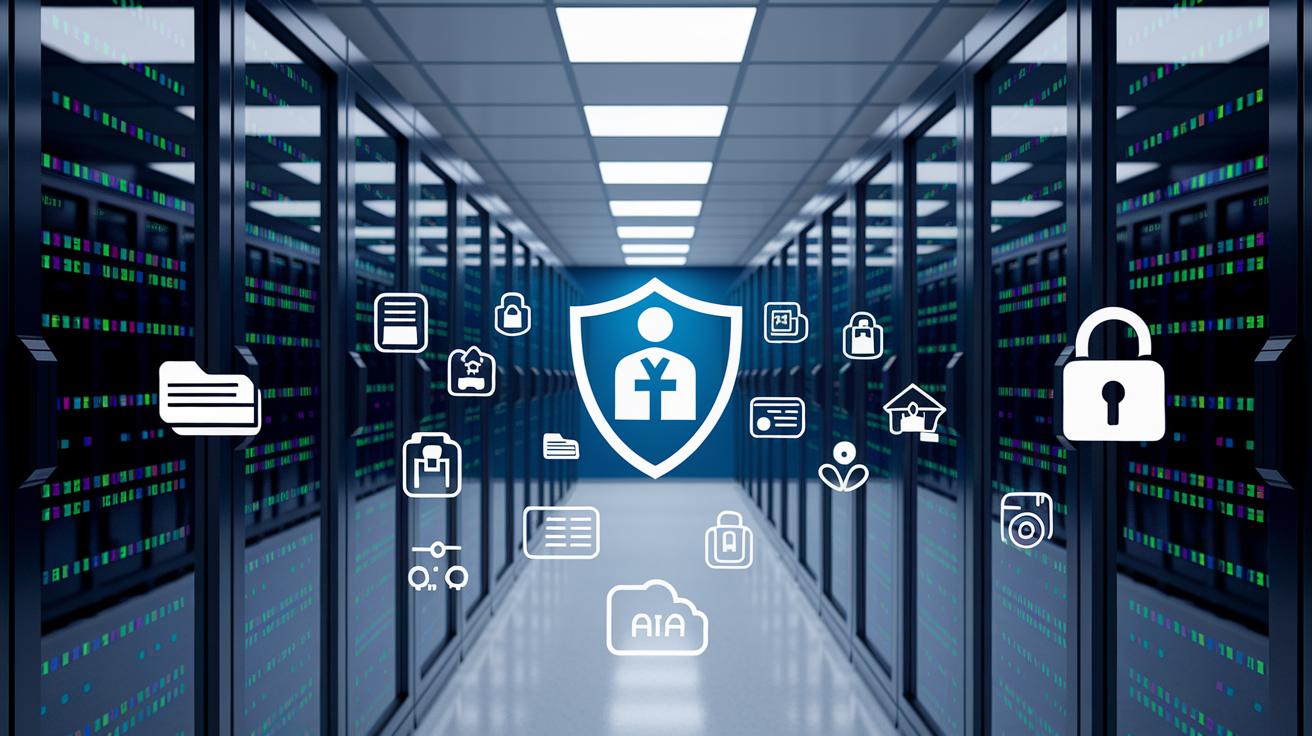
Data is often scattered in different systems like electronic health records, lab systems, and imaging archives. This patchwork can make it hard to get a clear picture of a patient’s health. When data is missing or repeated, it lowers quality and can mess up important clinical checks. Different data formats and methods for gathering information add more obstacles. Plus, rules like HIPAA and GDPR mean we must use strong protections like encryption (scrambling data so only the right people can read it), role-based access (only letting people see what they need), and audit logs (keeping records of who did what), which makes integration even trickier.
Another issue is combining different data sources without losing important details. When data is captured inconsistently or stored in separate places, key pieces of information can be lost. This not only makes clinical decisions harder but also raises the risk of breaking privacy rules, which can harm patient trust.
To overcome these problems, teams from different areas need to work together to tackle data quality challenges. Regular audits help catch errors early. Modern techniques like federated learning (a way for computers to learn together without sharing raw data), homomorphic encryption (allowing data to be used while still encrypted), and differential privacy (adding tiny amounts of noise so that individual data stays private) are used to protect data during tough analyses.
Real-time monitoring on cloud platforms that meet legal standards helps keep an eye on everything as it happens. By using these strong measures, healthcare teams can create secure systems that weave together electronic records and keep clinical research as accurate as possible.
Emerging Trends: Advanced AI and Genomic Integration in Predictive Healthcare
Today, breakthroughs are happening in healthcare by merging AI (artificial intelligence that helps computers think a bit like us), genomic analysis (studying a person’s genes), and IoT devices (smart gadgets that monitor health) to reshape how we take care of patients. By blending your unique genetic profile with your medical history, doctors can create treatments tailored just for you. Meanwhile, connected devices are keeping an eye on your health in real time, sending live data to smart programs that assess your symptoms and recognize early warning signs. Some of these AI systems even offer suggestions for quick action when they spot changes that might need a prompt response.
Looking forward, the mix of precise treatment plans with continuous, sensor-based data is set to revolutionize how we manage health risks. Health systems are now able to share information smoothly, which boosts the accuracy of predictions in many different settings. This really paves the way for personalized medicine, where treatment plans are updated as new patterns in our health emerge. In the end, these exciting innovations promise to transform routine monitoring and decision-making, leading to a smarter, more responsive healthcare experience for everyone.
Best Practices for Scaling Breakthrough Big Data Analytics in Clinical Settings

Begin with small pilot projects that focus on groups of high-risk patients. These early projects let you see firsthand how advanced data tools can sharpen clinical decisions. For instance, start with a small group and check how well the predictive models (tools that guess future events) work, then tweak your approach based on what you learn. This way, your team can quickly spot wins and areas that need a bit more work before rolling it out on a larger scale.
Build a team that unites clinical experts with tech staff. Regular training sessions and clear rules for handling data ensure everyone understands how to use these tools and keeps health records safe. Clear communication and plenty of practice go a long way in making sure clinical decision support tools hit the mark. Keep an eye on progress by tracking improvements and patient results as the program grows. Gradual cloud deployments let your institution expand its data systems safely and steadily. Regular reviews keep your strategy rooted in real-world outcomes, paving the way for smarter, outcome-focused wellness planning.
Quantifying the Impact of Big Data Analytics on Healthcare Costs and Patient Outcomes
Recent large-scale studies that combine various case data show that big data analytics in healthcare really helps lower costs and improve results. Predictive models (computer programs that forecast outcomes) reduce hospital readmissions by about 15 to 25% and cut treatment delays in half. For instance, one hospital, Geisinger, saved around $6 million with these techniques. Hospitals also see benefits in daily operations, like waiting times dropping by 20% and better scheduling for operating rooms, all thanks to real-time alerts that work like a dashboard warning light.
Looking ahead, automated decision tools (systems that help doctors make choices) and improved outcome forecasts let healthcare teams see patterns in community health more clearly. Studies suggest that these smart, proactive steps might boost survival rates in serious conditions such as sepsis and speed up the diagnosis of eye diseases like retinopathy (trouble with the retina). In short, these advances promise lasting improvements in patient care and help keep costs under control.
Final Words
In the action, the article explored breakthrough strategies by merging advanced technology with reliable data practices. We walked through evidence like early detection models and secure data platforms, all demonstrating meaningful improvements in patient care.
Case studies and practical tips highlighted how real-time insights cut treatment delays and optimize health resource use. These advances in breakthrough big data analytics for predictive healthcare outcomes pave the way for smarter, more responsive care that inspires optimism and continuous learning.
FAQ
How have breakthrough big data analytics for predictive healthcare outcomes evolved from 2020 to 2022?
The breakthrough big data analytics for predictive healthcare outcomes for 2020, 2021, and 2022 show improvements in AI and machine learning for early diagnosis and personalized treatment. Each year brings progress with enhanced accuracy and patient care.
What are some examples of predictive analytics in healthcare?
Predictive analytics in healthcare examples include sepsis detection models, risk stratification for ICU transfers, and AI platforms that forecast bed needs. These methods help reduce treatment delays and improve clinical operations.
How is AI used in predictive analytics in healthcare?
AI in predictive analytics in healthcare uses machine learning and statistical models to analyze patient data from EHRs and IoT devices. This approach supports early disease detection and creates personalized care plans improving outcomes.
What challenges do predictive analytics face in healthcare?
The challenges of predictive analytics in healthcare include fragmented data, incomplete records, and difficulties integrating various systems. These issues can affect model accuracy and slow the adoption of effective predictive methods.
What is big data analytics for predictive insights in healthcare?
Big data analytics for predictive insights in healthcare means using advanced algorithms to process large sets of diverse health data, such as EHRs and wearable device inputs, to forecast risks and guide proactive medical decisions.
What is the future of predictive analytics in healthcare?
The future of predictive analytics in healthcare looks promising with more AI integration, genomic data use, and real-time monitoring. These advances are set to improve early diagnosis and treatment efficiency even further.
What are the five V’s of big data in healthcare?
The five V’s of big data in healthcare are volume, velocity, variety, veracity, and value. They refer to the amount, speed, diversity, accuracy, and usefulness of data in supporting sound predictive models.
How is big data used in predictive analytics?
Big data in predictive analytics involves analyzing vast amounts of health information from many sources to identify trends and patterns. This process builds models that predict disease risks and support informed clinical decisions.
How can I access predictive analytics in healthcare research papers and PDFs?
Predictive analytics in healthcare research papers and PDFs are available through academic journals, online libraries, and reputable websites that focus on healthcare technology and research advancements.