
Have you ever thought that a small gene change might make an organism act completely differently? New research in evolution (the study of how living things change over time) is really shaking up old ideas.
Scientists using new gene tools (advanced methods to study DNA) discovered that even tiny changes, which we once thought were unimportant, can help an organism adapt in surprising ways.
Imagine it like a machine shifting gears when the road becomes rough. This study shows that adapting to your surroundings is a lively process that the environment constantly shapes.
Evolutionary Biology Breakthroughs That Reshape Adaptation Theory
Jianzhi Zhang and his team have uncovered surprising new findings that challenge old ideas. Groundbreaking research funded by the U.S. National Institutes of Health shows that gene changes we once thought did nothing can actually change roles with the environment. For example, a change that helps an organism in one place might hurt it in another. Yeast studies in controlled labs even revealed that these tiny organisms evolve in very different ways when their surroundings stay the same compared to when they change.
This fresh evidence makes us rethink the Neutral Theory of Molecular Evolution, a theory from the 1960s when scientists looked more at how things looked than at their genes. With the help of new tools in genomics (the study of all the genes in an organism), researchers now see that helpful mutations might occur more often than we believed, and that even the so-called neutral mutations can bring unexpected changes to an organism’s traits.
Experiments show that small gene changes slowly build up over time. It’s like hearing the soft hum of a machine that adjusts as its parts move along. The growing strength of these organisms isn’t fixed, it’s a flexible process, constantly changing as their environments do too. This new approach not only questions old theories but also sparks more research on how life adapts to unexpected shifts in its world.
- The study shows that changes in the environment matter a lot for how effective a mutation can be.
- It tells us that adapting isn’t a one-way street.
- It encourages scientists to look more into how mutations behave in different situations.
By seeing neutral mutations as active players in evolution, this research invites us to view adaptation as a dynamic process, as active and ever-changing as the environments these organisms call home.
Redefining Neutral Theory in Evolutionary Biology Breakthroughs

Back in the 1960s, scientists believed that most changes in our genes were harmless and that the overall shape of an organism was more important than the tiny details of its genes. Now, new research shows us a different picture. It turns out that some mutations, which we once thought were just along for the ride, can stick around in a group of organisms and even help them survive better when things change.
For example, in controlled yeast experiments, a tiny mutation that seemed unimportant at first ended up helping the yeast survive a sudden change in its environment. Isn’t that surprising?
These new discoveries make us rethink how little changes in our genes can impact an organism’s overall fitness. Earlier ideas focused mainly on visible physical traits, but we now know that even small genetic tweaks can have benefits that affect future generations. This fresh viewpoint is very different from past theories and paves the way for exciting new research on how genes drive life's changes.
Scientists are now urging more studies to look at these new mutation patterns across different species. They also want to explore if these changes can help predict how organisms will cope when their surroundings shift. For more details on how these ideas are changing the way we study adaptation, check out Paradigm Shifts Driving Modern Scientific Breakthroughs.
Yeast Experimental Demography Illuminates Adaptation Breakthroughs
A recent study ran an 800-generation experiment with yeast to see how different time frames change which mutations stick around. In one setup, the yeast grew every 3 hours in the same, steady environment. This steady pace allowed genetic changes to slowly build up over time. Meanwhile, another group of yeast was grown in 10 different types of growth media, each used for 80 generations. Here, mutations specific to each environment popped up fast but didn’t last.
This smart experiment shows that even if a mutation appears in a changing setting, a short burst of time might not be enough for it to take hold. In the steady setting, genetic shifts accumulate little by little. But when the environment keeps switching, the route of these changes keeps shifting too.
The researchers used advanced genomics (methods to track genetic changes) to capture these quick and context-based shifts, which shines a light on how fast adaptation can really happen.
Molecular and Epigenetic Mechanisms in Evolutionary Biology Breakthroughs
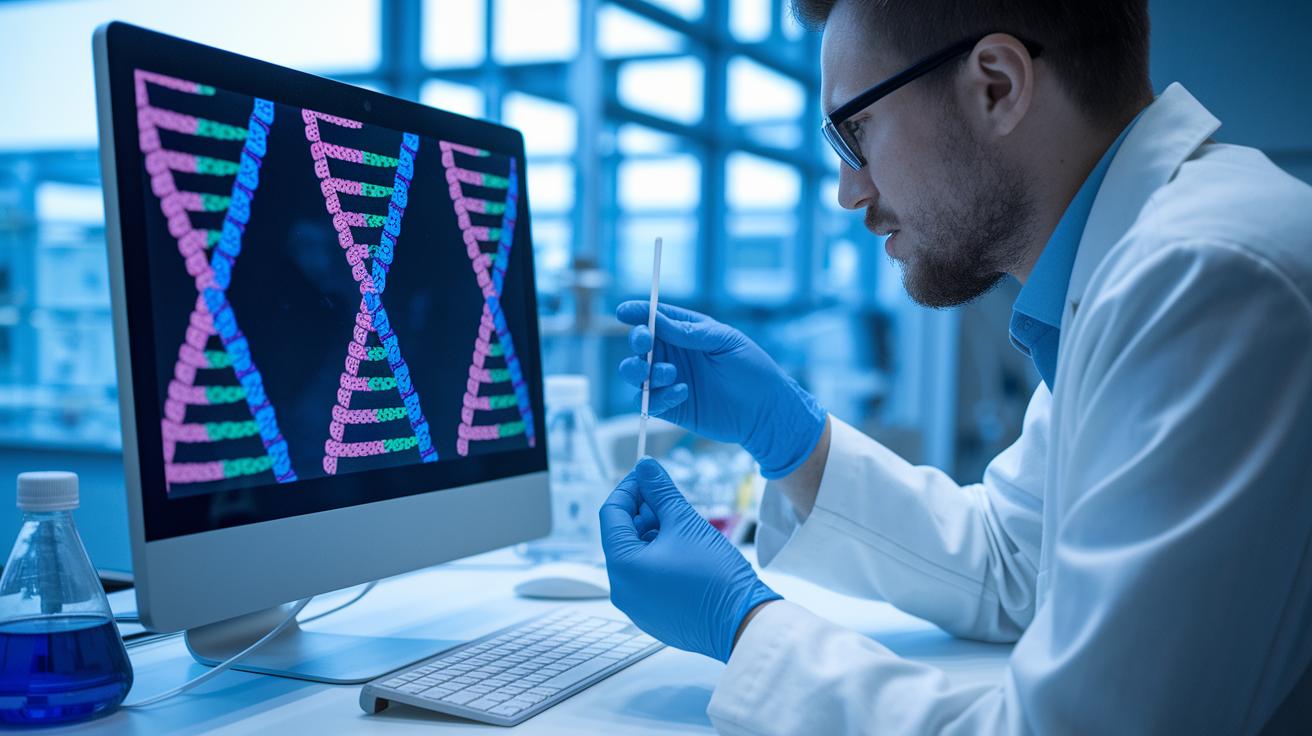
New research shows that tiny changes inside our cells can steer how living things adapt in ways we never expected. Scientists discovered that epigenetic regulation (chemical markers that control gene activity without changing the gene itself) acts like a subtle switch, deciding if a mutation becomes more or less common depending on the situation.
They also found that gene recombination, which is the process of shuffling pieces of DNA during reproduction, isn’t just random. Instead, these shifts can gently guide evolution. Imagine taking a puzzle and rearranging its pieces until a new picture appears when the environment changes.
Researchers are now linking these molecular shifts to where species live. By combining biogeographic context (how a place influences genetic traits) with molecular data, they gained fresh insights into adaptation. For instance, populations in different regions show different regulatory changes, hinting that where a species lives can shape its genetic journey.
This work is a global effort by many research teams and highlights the value of working together. With new molecular tools, we can now peek into the inner workings of life and appreciate just how flexible and responsive our genetic systems really are.
Bridging Historical and Modern Perspectives in Adaptation Breakthroughs
Back in the 1960s, scientists looked at what they could see. They believed that an animal’s or plant’s shape, like leaf size or bone appearance, told the full story of how they changed over time. It might surprise you that scientists once used just these visible traits to measure evolution, missing the hidden clues in genes. Today, we peek inside life using molecular phylogenetics (tools that compare DNA to show relationships), and we see that tiny changes in genes can spark big shifts in evolution.
New fossil discoveries have also flipped the script. These fresh finds show clear details about how animals and plants looked and lived long ago. Scientists match these fossils with modern genetic clues to build a timeline of when certain traits popped up. This timeline shows us that bursts of new species, adaptive radiations, can happen all of a sudden, like a hidden trail on a familiar map leading to uncharted places.
Modern biogeography (the study of where species live) adds even more depth to our story. With better models, researchers can now track how groups of animals and plants move and change over time. They see that an animal’s home has a big say in how its genes evolve. By linking fossils, DNA details, and place-based studies, we get a much richer picture of evolution that lets us update those early theories.
Every breakthrough in genomics builds on the past while pushing us to think in new ways. In truth, adaptation is a lively dance between what came before and the surprises of modern science.
Future Trajectories in Evolutionary Biology Breakthroughs on Adaptation

Scientists are breaking new ground with real-time gene sequencing in various settings. This method shows us gene changes as they happen, so we can really watch adaptation in action. They also mix these fresh insights with smart computer models (advanced programs) that predict how genes might change based on new information. Think of it like watching a racecar driver skillfully navigate every twist and turn on the track.
On another front, new experiments in population studies are coming up. Inspired by Zhang’s work, researchers are excited to test how groups of living things react when their surroundings are always changing. Imagine an experiment where scientists track a population over many generations while the environment is in constant flux. It reveals patterns of how life stays tough and adapts over time.
Another exciting path is combining maps of where species live with their genetic details to see how the environment shapes our genes. By charting where different creatures are found and comparing that with their genetic information, researchers hope to build a clearer picture of how nature sculpts life over time. In truth, mixing these smart computer simulations with live gene tracking might give us a more connected view of the natural world’s ever-changing rhythm.
Final Words
In the action, recent studies show that what were once seen as random mutations now reveal dynamic roles influenced by the environment. Yeast experiments, molecular observations, and historical comparisons reshape our view of adaptation. These evolutionary biology breakthroughs: new perspectives on adaptation challenge old ideas and spark fresh scientific dialogue. The insights remind us that science continually evolves, inviting us to explore and discuss more deeply. Every new finding brightens our understanding of life and fuels a future full of inspiring scientific conversations.