
Have you ever thought about a therapy plan that changes just for you? Now, robotics and artificial intelligence (smart machines that can learn and adapt) are joining forces to make your recovery faster and more personalized.
Imagine a treatment plan that adjusts every step along the way, almost like it’s following in your footsteps. It grows with you, adapting as you make progress.
Experts are excited because these new systems not only personalize your rehab but also make the whole process smoother and more efficient.
In this post, we'll explore how this breakthrough technology is reshaping recovery and turning tough challenges into faster, more manageable steps toward a full return to health.
Innovative Fusion of Robotics and AI for Breakthrough Personalized Rehabilitation
Rehabilitation is getting a major upgrade! Instead of sticking with the same old routine for everyone, smart systems now adjust treatments as you progress. Imagine your therapy changing step by step to meet your needs, almost like it’s following your footsteps.
This new method is not just a cool idea, it’s been given the thumbs up from top experts. It has a granted Patent and an ISO 9001:2015 Certification, meaning it meets strict standards. Big events like the 10th International Conference at AIIMS and the 2024 National Stroke Conclave & Awards have also shone a spotlight on these innovations, showing that the medical world is really backing this approach.
A mix of modern technologies makes this personalized therapy possible. For instance, exoskeletons help patients move, while virtual reality (VR, which creates computer-generated environments) makes exercises more engaging. Brain-Computer Interfaces (BCIs, devices that let your brain talk to machines) and AI sensors keep an eye on your movements, adjusting the therapy in real time. Picture a situation where a computer tweaks your exercise steps by comparing your motions to healthy movements, the technology is that smart!
Here are some of the key tools involved:
- AI-driven exoskeletons
- Gamified VR rehabilitation
- Wearable motion-analysis sensors
- Predictive analytics platforms
- Brain-computer interfaces
By using large sets of data and smart prediction techniques, this combo of robotics and AI can reduce recovery time by 30 to 50% while saving money. With accurate motion tracking and continuous data checks, rehabilitation is not only tailored to your needs but also more effective in helping you get back to a great quality of life.
Case Studies Illustrating Robotics-Assisted Therapy Success in Patient Recovery
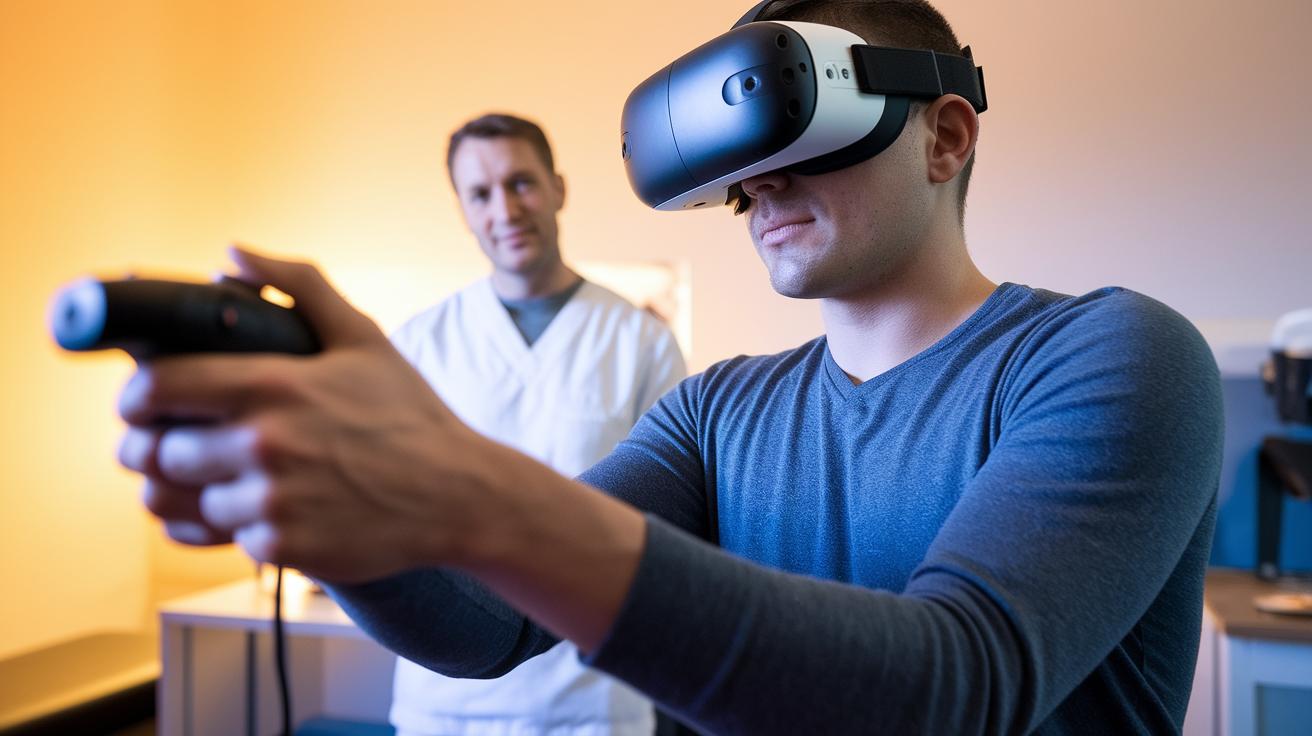
Testing these new systems in real-life settings is really important because it shows that robotics-assisted therapy is more than just an idea. In one study, a fun, game-like virtual reality rehab helped people with Parkinson’s improve their balance and the way they walk (gait). And in another, wearable sensors using AI (smart computer technology) adjusted therapy in real time to suit the patient’s needs. These studies clearly prove that mixing robotics with AI makes therapy feel more personal and engaging.
| Study/Technology | Patient Group | Outcome |
|---|---|---|
| Gamified VR Rehabilitation (2019) | 28 PD Patients | Improved balance and walking |
| 2025 Exoskeleton Devices | Spinal Cord Injury | Custom motion plans |
| AI-Enabled Telerehab | Post-Stroke | Better remote treatment adherence |
These results show that using advanced robotics with smart AI really boosts therapy engagement. Treatments can adjust on the fly so patients feel more in control of their movements and make progress faster. The tailored help from exoskeleton devices, along with constant feedback from wearables and AI-driven remote platforms, leads to clear gains in recovery and better everyday mobility.
AI Algorithm-Driven Personalization Techniques in Rehabilitation Planning
Smart scheduling systems help clinics run more smoothly. SPRY’s AI Scheduling Agent cuts down on admin work so healthcare professionals can focus on patients. An AI tool for ICD-10 (a set of codes for diseases) speeds up paperwork and billing, meaning less time on forms and more on care. Other ambient AI tools record notes during sessions so therapists can concentrate fully on treatment without being distracted by manual note-taking.
- Collect movement and health data using sensors
- Compare motion with healthy benchmarks using AI (a method to analyze movement)
- Create personalized exercise plans
- Continuously monitor progress and predict outcomes
This process starts by collecting important data from wearable sensors that track movement and other health markers. The AI looks at a patient’s performance and compares it with healthy standards, spotting where improvements are needed. Then, it builds a tailored exercise plan just for that person. And it doesn’t end there, the system keeps an eye on progress and uses predictive tools (methods that forecast future trends) to guess what might happen next.
By automating these steps, therapists can adjust treatments in real time to help patients gain better motor control and lower the chance of re-injury. The predictive tools catch even small changes in performance, which means therapists can tweak exercises as needed. This leads to more accurate recovery plans and faster improvements in rehabilitation.
Wearable Robotics and Interactive Recovery Systems Enhancing Patient Engagement
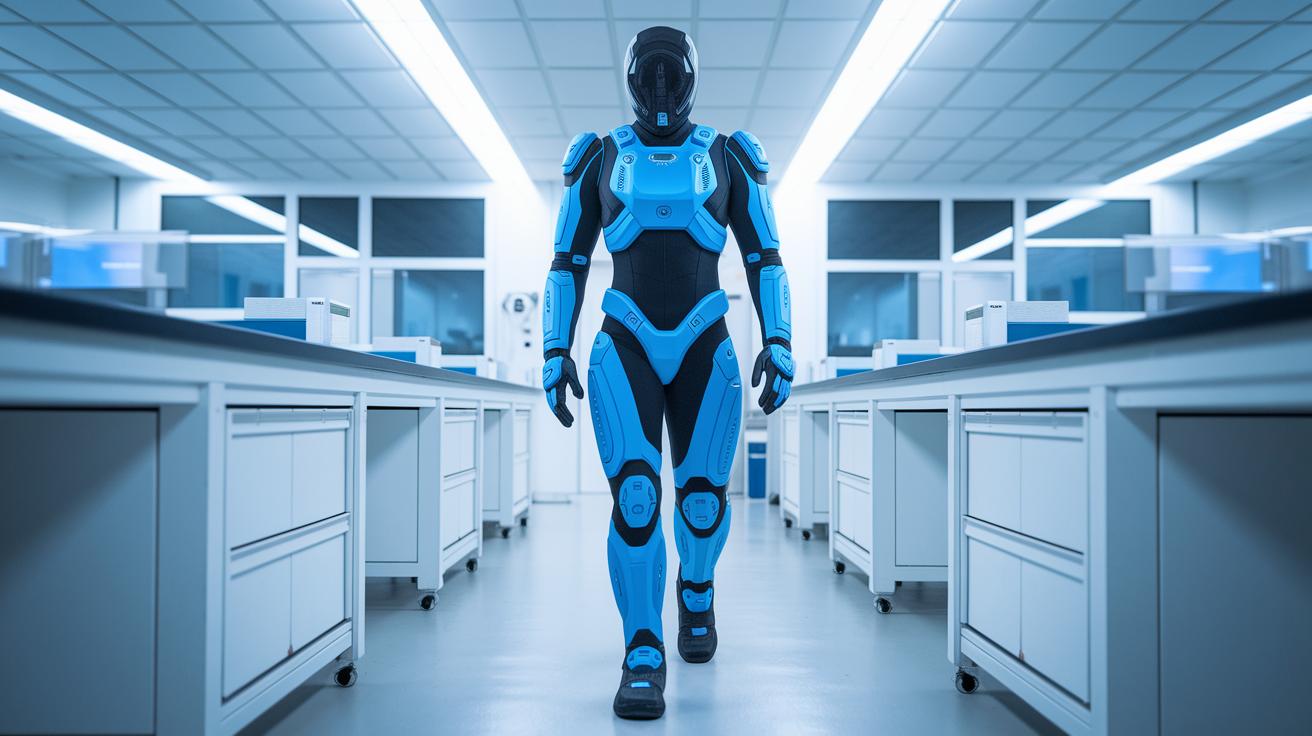
Wearable devices in therapy do more than just support your body, they give you handy feedback while you recover. New studies show clever designs that change your exercise routine in real time based on how well you perform. For instance, one trial found that people using a modern exoskeleton suit boosted their walking speed by 15% in just one month.
- Exoskeleton suits that help with walking
- Smart sensor garments that capture your movements
- VR/AR headsets that offer an immersive experience
- Brain-computer interfaces that connect your mind with your body
These new systems constantly collect detailed movement information so they can adjust to your progress. Upgraded sensors and smart algorithms make it possible to fine-tune therapy as you go. And now, with at-home setups that combine advanced virtual reality with AI, your daily sessions are smoother and more responsive.
Emerging Trends and Future Directions in High-Tech Rehabilitation Evolution
Quantum computing is now being used to mimic how our bodies move. It’s like creating a tiny, digital model that shows us how every joint and muscle might work. This new method challenges old ideas and offers a fresh way to understand complex movements. At the same time, AI tools are stepping in to make sure all the safety rules are met and that our data stays safe. These smart systems help build trust while crafting therapy plans that are both personal and secure.
Looking ahead, events such as IFNRCON 2025 and Hospex 2024 will spotlight exciting advances like assistive robots and new types of AI. These gatherings promise to introduce digital therapy options and brain-computer interfaces (tools that help the brain talk to machines) that could really change the game for rehabilitation. In truth, the use of big data and predictive medicine is setting the stage for faster and more personalized recovery plans, guiding patients toward smoother, more effective healing.
Final Words
In the action, advanced AI and robotics have changed rehab from standard routines to tailored treatments. We explored quality marks, real patient studies, and smart tech that adjusts in real time.
Breakthrough personalized rehabilitation integrating robotics and AI shows promise with faster, smoother recoveries and clear cost benefits. It’s an inspiring shift forward, making science work for better everyday care. Enjoy the promise of what comes next!