
Have you ever wondered if our changing climate might have a hidden silver lining? Rising temperatures sure make us feel uneasy, but scientists tell us that things might improve if we adjust how we live. They compare our future to a choose-your-own-adventure story, where the ending depends on how much we cut back on greenhouse gases (the gases that trap heat in our air). Let’s dig into these ideas and see why the choices we make today could brighten our tomorrow.
Future Climate Change Scenarios and Projections
Since 1988, the World Meteorological Organization's IPCC has been the go-to group for studying climate change. They look at how our climate has shifted since the 1850s, using the period from 1850 to 1900 as a starting point. This simple benchmark helps us understand what climate change means in real-life terms.
Historical records tell us that global temperatures began their steady rise around 1900 and then sped up during the 1970s. This increase is mainly due to more greenhouse gases (gases that trap heat in our atmosphere) from energy production and other human activities.
| Scenario | Radiative Forcing (W/m²) | Description |
|---|---|---|
| SSP1-2.6 | 2.6 | Low emissions pathway |
| SSP2-4.5 | 4.5 | Moderate emissions rise |
| SSP3-7.0 | 7.0 | High emissions challenge |
| SSP5-8.5 | 8.5 | Very high emissions if nothing changes |
Current forecasts suggest that temperatures may keep climbing into the next century. Depending on which pathway we follow, the warming might be slight or much more significant. While some scenarios show more hopeful, moderate increases in temperature if we cut emissions, others warn of much higher warming if we continue our current habits.
The latest report makes it clear that human activities are behind these rising temperatures, and only a steady reduction in greenhouse gases can slow the warming. Scientists also mention that the yearly temperature hikes strain natural ecosystems and our built environments. It really shows how important it is to start taking action now and keep it up to protect our future climate.
Temperature Projections Under Emission Pathways
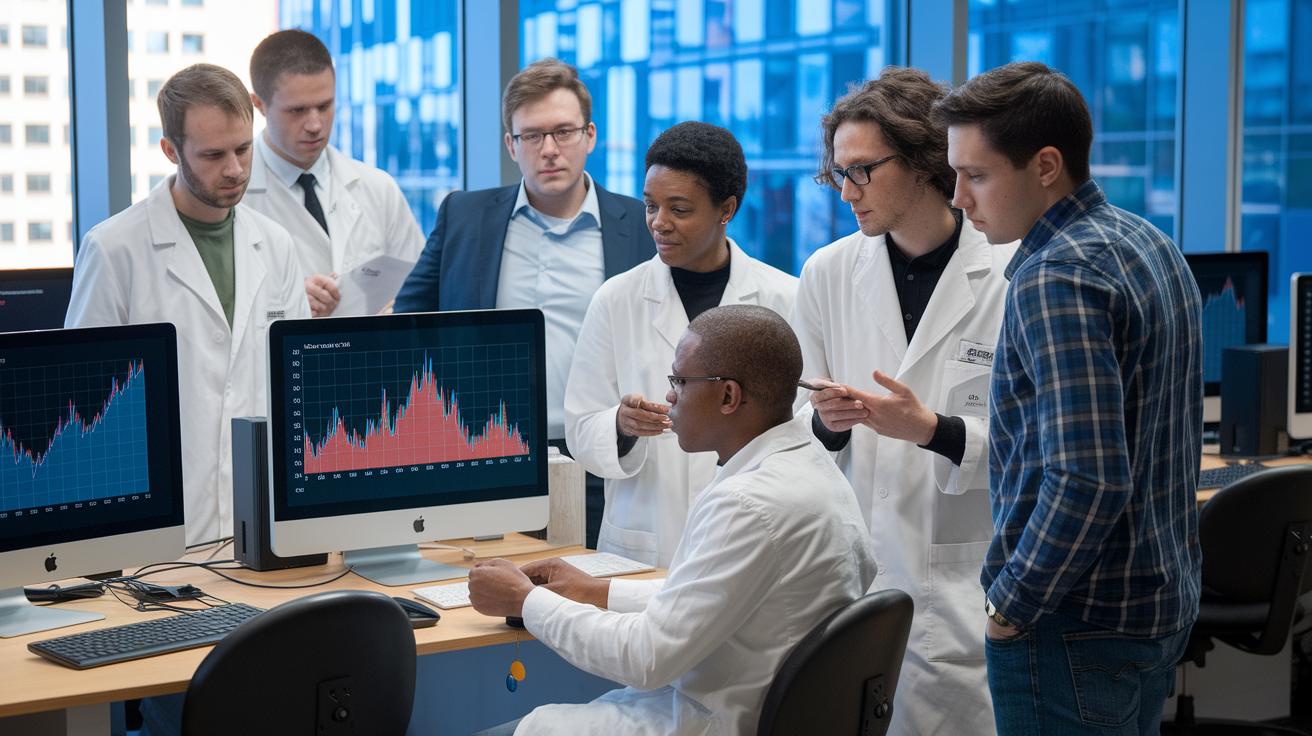
Different future paths give us a peek at how our climate might change. New AI models (smart computer programs that learn from data) say Earth could warm more than 1.5 °C above old, pre-industrial temperatures in the next 10 to 15 years. Even if we cut emissions, forecasts suggest temperatures may rise to about 2 °C by mid-century. And here’s something to think about: if we stop emissions after 2050, there’s still over a 99% chance that the planet will stay above 1.5 °C for a long time. With the current policies, estimates point to a warming of around 2.7 °C by 2100. This shows just how much our energy choices impact the climate.
| Emission Pathway | Projected Warming by 2100 (°C) | Probability of Exceeding 1.5 °C | Key Assumptions |
|---|---|---|---|
| SSP1-2.6 | ~1.5 | ~80% | Big emission cuts and strong clean technology use |
| SSP2-4.5 | ~2.0 | ~90% | Some policy changes and partial switch away from fossil fuels |
| SSP3-7.0 | ~2.7 | >95% | Continued high use of fossil fuels |
| SSP5-8.5 | ~2.7 (with a 33% chance of ≥3.1) | Mixed risk | Heavy fossil fuel use and delayed mitigation efforts |
Taking swift action to cut emissions, like tripling the capacity for renewable energy and doubling energy efficiency by 2030, could lower the warming by nearly 1 °C. It’s pretty amazing how fast policy changes and technology upgrades can help steer us toward a better climate future.
2. climate change projections: Bright outlook
Average temperature numbers on their own don't show us the full picture of climate risks. When we only focus on these gentle, overall increases, we miss how even a little extra heat can set the stage for extreme weather. Research driven by smart computers (AI – which means using advanced tech to study data) at places like Stanford and Colorado State has found that small temperature bumps can make wild weather events much more common and fierce. So, the usual predictions might not fully capture the real danger of sudden heat spikes, heavy downpours, and other stresses that can hit neighborhoods harder than we think.
Take a look at this: the same warming that shifts our climate today can also spark heart-pounding heat waves, stubborn droughts that shrink our water supplies, and sudden heavy rains that push rivers to flood overflow levels. As the average temperature climbs, the odds of facing these dangerous weather extremes go up too. Experts are warning us that these wild events can easily overwhelm local roads, buildings, and emergency services. In truth, this tells us that we need to look more closely at these risks to be ready when they hit.
Role of Major Emitters in Climate Change Projections
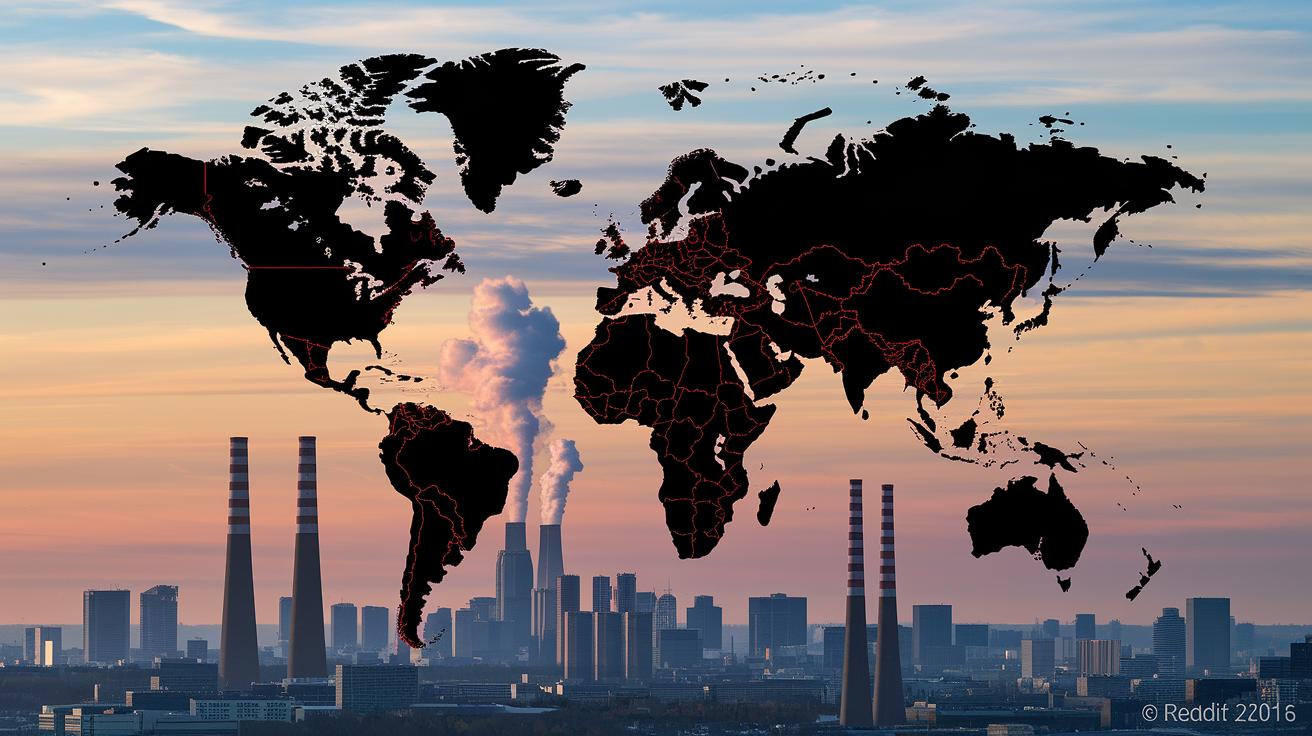
The levels of emissions we produce really steer the path of global warming. In 2022, ten major players like China, the U.S., India, the European Union, Indonesia, Japan, Australia, UAE, Azerbaijan, and Brazil together released 63% of the world's greenhouse gases. This clearly shows that the actions of just a few can strongly affect our planet's temperature.
Big economies are now struggling between boosting clean energy and sticking with fossil fuels. On one side, spending on renewables like wind and solar has doubled, signaling a push toward cleaner energy. On the other, ongoing fossil fuel use in some places keeps harmful emissions high. This back-and-forth drives uncertainty in temperature forecasts and makes it clear that we need firm, coordinated policies to cut emissions and guide us toward a steadier climate future.
Uncertainty in Climate Projections and Model Assumptions
Climate models show us chances in numbers. Even if we stop putting greenhouse gases into the air after 2050, the models tell us there’s over a 99% chance that Earth’s temperature stays above 1.5 °C. It’s interesting because even models that look alike can give different answers about the future.
Small changes in things like methane and CO₂ can shift the peak warming by as much as 0.4 °C. These models depend on factors such as how long greenhouse gases hang around in the air (their "lifetimes") and the effects of clouds and tiny particles called aerosols on sunlight. Since different studies use different ideas for these factors, it can be hard to compare the results. Because of this, it’s best to think of each forecast as a range of possibilities rather than one single outcome.
Visualizing Climate Change Projections with Maps and Tools
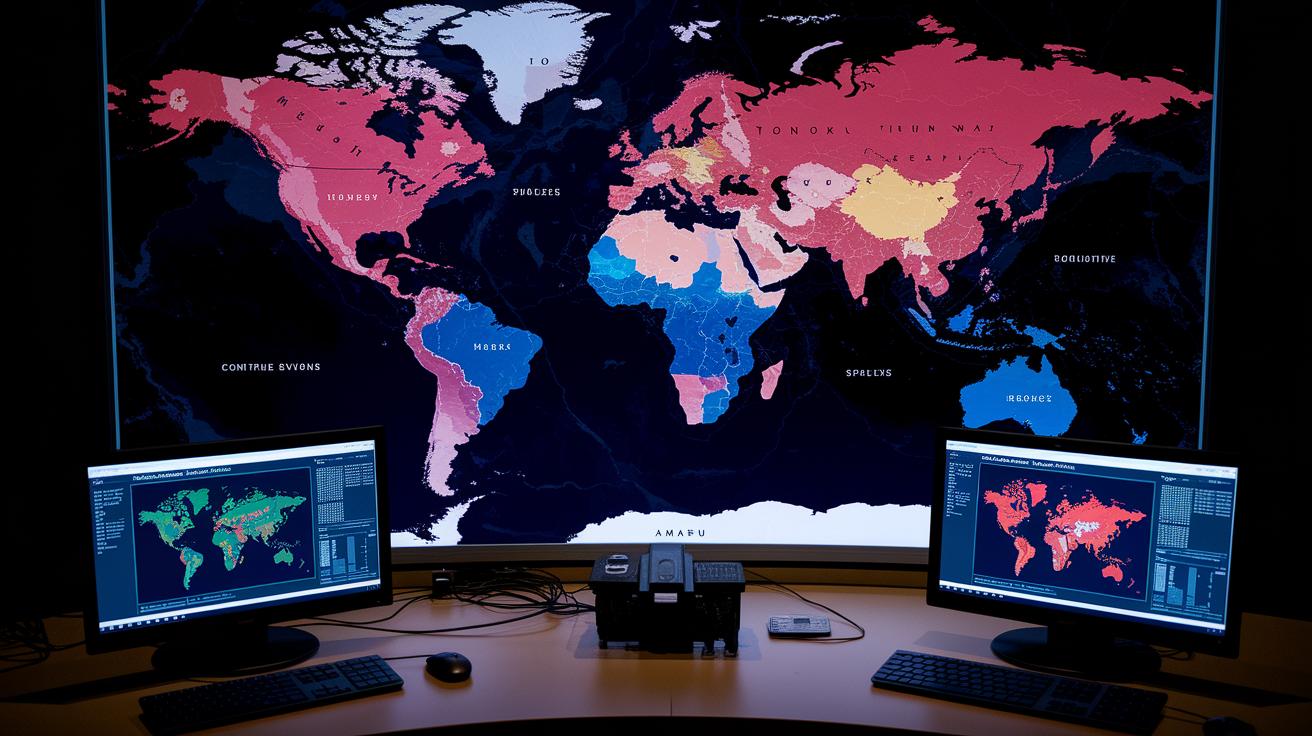
Geospatial anomaly maps help us see how our planet's temperatures are changing. They use red spots to show areas that are warmer than the 1850 to 1900 baseline and blue spots to show regions that are cooler. Think of it like a colorful world map that tells a story about global warming in a clear, visual way.
New online mapping tools take things even further. They let you pick a region and see what the climate might be like in different future timeframes. You can overlay different climate scenarios (different possible future paths based on human actions) on regional maps. Imagine clicking a few buttons and then watching a detailed map of your neighborhood change under different warming conditions. It’s an engaging way to understand what climate projections really mean for us today.
Adaptation Implications of Climate Change Projections
Even though we’re now spending more to cut carbon emissions, money to help us adjust to changing weather isn’t growing as fast. In other words, while we slow the warming of our planet, we might not be fully ready for the surprises that come with it.
Experts suggest a few simple steps to get us better prepared. For instance, building stronger flood barriers can keep communities safe from overflowing rivers. Cooling centers in neighborhoods offer a quick retreat during intense heat waves. And improving farming methods helps secure our food even when weather turns extreme. In health and infrastructure too, putting more funds toward preparation is key to lessening long-term impacts.
Policymakers, it seems, need to rethink their plans. By nearly tripling the money dedicated to adaptation, we can bridge the gap and better safeguard our communities against the stresses of an ever-changing climate.
Final Words
in the action, the article walks through how scientific research translates into insights on our weather and climate shifts. It breaks down the role of global reports, different warming scenarios, and the impact of human activities, while highlighting the use of maps and interactive tools. It also explains the uncertainties in model assumptions and the need for stronger adaptation measures. All of this paints a clear picture of climate change projections and what they mean for daily life. The outlook gives us a chance to learn more and talk openly about our future.
FAQ
What do climate change projections for 2100 indicate?
The climate change projections for 2100 show a wide range of temperature increases based on different emission scenarios. Higher emissions could lead to more warming, while reduced emissions would help limit temperature rise.
How do climate change projections maps help?
The climate change projections maps illustrate how different regions may warm compared to historical baselines. They provide a visual guide to understand where and how much temperatures could rise in the coming years.
What do climate change projections for 2050 suggest?
The climate change projections for 2050 indicate significant warming, even under low-emission scenarios. These forecasts warn of increased temperature averages and shifts in weather patterns that affect communities globally.
How do IPCC projections shape our understanding of climate change?
The IPCC projections rely on established socioeconomic pathways to model future warming. They offer a consistent framework for policymakers by highlighting potential temperature outcomes based on human-driven emissions.
What are the predictions for global warming in 2030 and 2025?
The predictions for 2030 and 2025 show that even in the near term, rising temperatures could trigger more frequent heat waves, droughts, and heavy rainfall. These early signs stress the need for immediate emissions cuts.
How hot might Earth be in 2050?
The analysis for 2050 suggests Earth could warm by a noticeable margin, with averages potentially approaching or exceeding 1.5°C above pre-industrial levels under current emission trends.
What does “3 years left to limit warming” mean?
The phrase indicates a short-time window for impactful climate action. It emphasizes that immediate and substantial measures are critical to slow temperature increases before irreversible changes occur.
How bad could global warming be in 2030?
Climate predictions for 2030 warn that if current trends continue, extreme weather events like heat waves, droughts, and heavy rains could become more common, highlighting urgent adaptation and mitigation needs.