
Have you ever wondered if a tiny gas we hardly notice might be key to a safer planet? Carbon dioxide, or CO₂ (a gas from cars and factories), wraps the Earth like a cozy blanket, keeping heat close and changing our climate. Our daily activities have pumped up these levels, making our planet warmer. But there’s a silver lining, new science shows that with smarter choices, we can keep our future bright.
In this post, we break down how CO₂ warms our world. We mix clear science with everyday examples to show that understanding these changes can lead us to smart, hopeful solutions.
Understanding Carbon Dioxide’s Role in Climate Change
CO₂ works like a snug blanket wrapped around our planet, stopping some of the heat (infrared energy) from leaving our Earth and floating off into space. This natural process is what we call the greenhouse effect, which warms our world. Radiative forcing is the extra energy trapped by these gases, causing global temperatures to rise. Imagine bundling up in a thick scarf on a cool day, it keeps your body warm by holding in the heat.
Human actions like burning fossil fuels have pushed CO₂ levels higher, making this warming effect even stronger. Even though CO₂ makes up only a tiny slice (about 0.04%) of our atmosphere, it’s really good at absorbing heat. It’s a small change that can tip the balance, sort of like turning a tiny knob that changes the overall temperature of our planet.
You can see this effect with a simple experiment. Take two soda bottles: one filled with CO₂ and the other with normal air, then place them under a heat lamp. When you measure the temperature using an infrared thermometer (a tool that checks heat without touching), the bottle with CO₂ heats up more. It’s like how a dark shirt quickly warms up on a sunny day.
Even though CO₂ is only a small part of our air, its heating power is huge. Look at Venus, for example, where the atmosphere is 95% CO₂ and the planet’s surface is about 15 times hotter than Earth’s average. Plus, natural systems like plants, oceans, and soil take thousands of years to remove the extra CO₂. This shows that the emissions we make today can have an impact that lasts for a very long time.
Historical Trends in Atmospheric Carbon Dioxide for Climate Change Analysis

Over the past 50 years, we've seen a steady rise in the amount of CO2 in our atmosphere. This increase is closely tied to our reliance on fossil fuels and industrial activities. Back in 1970, CO2 levels were around 320 parts per million (ppm), but by 2020, they had climbed to more than 410 ppm. These figures show us just how much human activity has altered our air.
At the same time, global temperatures have also gone up. Data from the HadCRUT dataset, which mixes air and sea-surface temperature readings from around the world, suggest that the Earth has warmed by about 1.2 °C since the days before industrial times. It’s interesting to see how these changes connect, CO2 levels and rising temperatures are part of the same story.
Even though some countries have tried to cut down their emissions, global outputs keep rising. When we look at our consumption-based numbers, which take into account the carbon that travels with trade, it becomes clear that CO2’s impact goes beyond local borders. It’s a challenge that affects everyone, no matter where they live.
| Year | CO₂ (ppm) | Temp Anomaly (°C) |
|---|---|---|
| 1970 | ~320 | +0.5 |
| 1990 | ~354 | +0.7 |
| 2010 | ~390 | +0.9 |
| 2020 | ~414 | +1.2 |
The clear upward trend in CO2 shows just how urgent it is to reach a point where we balance out emissions with removals. Without a major shift toward reducing our carbon output, our warming planet could face more dramatic changes that impact both nature and our lives. Have you ever stopped to think how each of us is part of this big picture?
Human Activities Driving Carbon Dioxide Emissions in Climate Change
Burning fossil fuels like coal, oil, and natural gas is a major reason we see so much CO₂ in our air. When we power our homes, factories, and cars with these fuels, they release lots of carbon dioxide. It’s a bit like leaving a window closed on a sunny day, the heat keeps building up slowly. In power plants and factories, these emissions add up over time, gently warming the surrounding air.
Cutting down trees and changing land use makes the situation worse, too. Trees and plants naturally soak up CO₂, but when we remove them, there’s less to absorb the extra gas. Some countries have managed to lower their emissions a bit, but many others see a steady rise as they develop their economies. This leads to clear differences in how much CO₂ is released around the world, even though the overall pattern is upward.
Another useful way to look at this issue is through consumption-based accounting. This idea means that a country’s emissions include not only the CO₂ released from producing goods at home, but also the emissions linked to items it imports.
Feedback Mechanisms Amplifying Carbon Dioxide-driven Climate Change

When our planet warms up, more water turns into vapor and fills the air, acting like a soft blanket that traps heat. This extra moisture feeds a loop where more heat leads to even more water vapor, which then holds in even more warmth. Think of it like turning up your thermostat just a bit, it can really boost the heat.
Likewise, when frozen ground (permafrost) starts to thaw, it lets out carbon dioxide and methane that had been trapped for ages. This sudden release is like opening a secret tap that adds extra heat to our atmosphere.
Our oceans also get involved. They suck up about 30% of the emissions we produce, which makes them more acidic and less able to soak up carbon in the future. Plus, the extra carbon dioxide can help some plants grow in dry areas, but this new growth means these plants now compete more for water, stressing the land even more.
All these feedback loops mix up the natural balance of carbon on Earth. Even small changes can ripple through entire ecosystems, tweaking our climate for centuries to come. Every detail counts in this complex dance of warming.
Mitigation Strategies Targeting Carbon Dioxide to Curb Climate Change
Policy gaps still stand in the way of reducing CO₂ in our air. Right now, our efforts aren’t enough to hit net-zero emissions fast enough to keep global warming under 2°C. We need a mix of smart technology, natural solutions, and new policies to really lower and remove CO₂. It’s not just about cutting emissions, it means changing whole industries and rethinking how we make and use energy.
- Grow renewable energy and close down coal plants
- Improve energy efficiency in homes, buildings, and factories
- Use advanced carbon capture, utilization, and storage (tech that traps CO₂ as it’s made)
- Plant more trees, expand forests, and use soils to hold carbon
- Put a price on carbon and set up emissions-trading systems
- Switch to greener transport and industrial processes
When these ideas are part of national and global climate plans, it takes teamwork from governments, businesses, and communities. When a country invests in renewables and shuts down coal plants, it sets off a ripple effect that can encourage changes in technology and even in our everyday habits. Plus, making things more energy efficient not only lowers emissions but also saves money for families and companies.
Using advanced carbon-capture methods stops CO₂ at its source, while nature-based fixes like tree planting work to pull carbon right out of the air. And adding a carbon price gives businesses a financial reason to adopt cleaner practices. Shifting to low-carbon transport and industry is key to cutting emissions from the biggest polluters. Together, these strategies help pave the road to a stable climate, and making them work means coming together on a global scale.
Future Projections of Carbon Dioxide Concentrations under Climate Change Scenarios
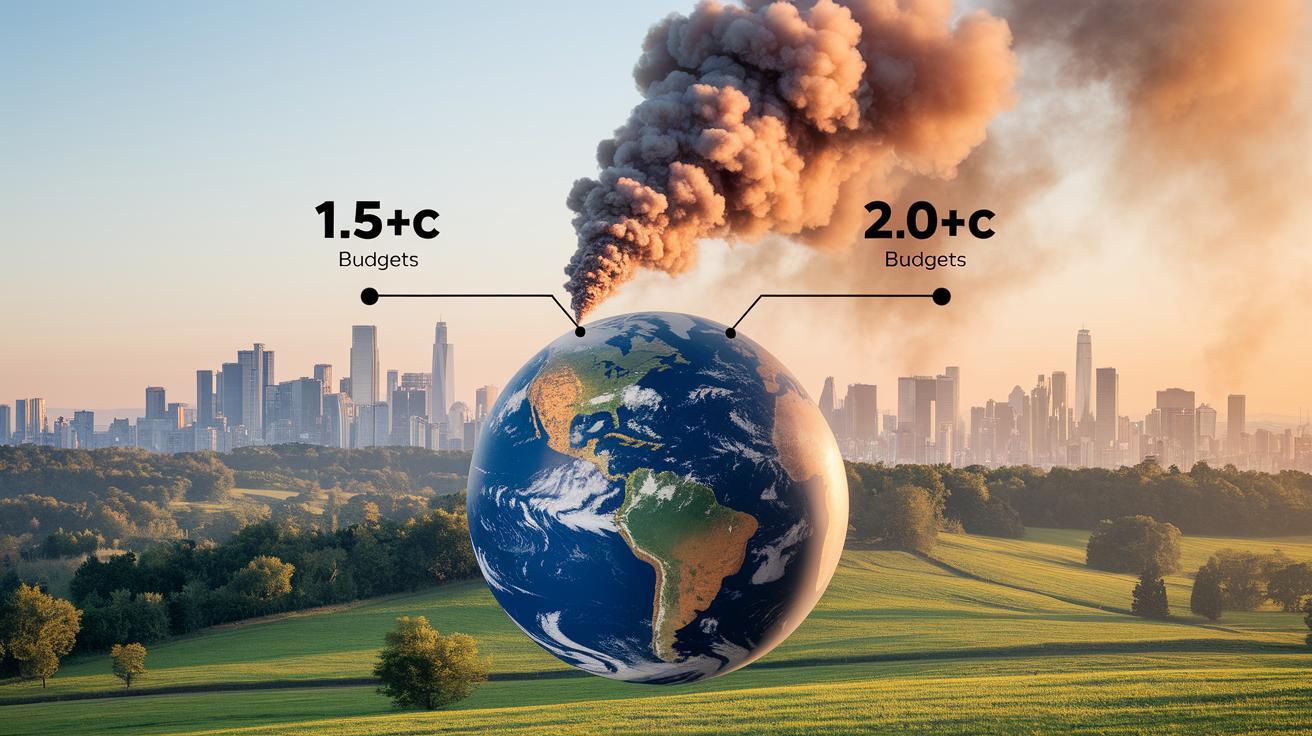
To keep the Earth's warming under 1.5 °C, scientists say we have less than ten years' worth of current CO₂ emissions left in our budget. Staying within a 2 °C limit, however, gives us almost thirty years. This total allowance of CO₂, or carbon budget (the maximum CO₂ we can emit before temperatures rise dangerously), drives home how urgent it is to reduce emissions quickly.
Current climate models suggest that if we stick with our present policies, the CO₂ in our atmosphere could rise to between 450 and 650 parts per million by the year 2050. That means we need to learn how to grow our economies without causing more pollution. In simple terms, we must find ways for our economies to get bigger without a matching rise in harmful emissions. This change is vital for keeping our climate safe for everyone.
Final Words
In the action of breaking down how greenhouse effects work and tracing carbon dioxide’s buildup, we saw how a simple experiment mirrors massive climate trends. We reviewed rising CO₂ levels and the way our activities contribute to climate change through feedback loops. Each section connected the dots, demonstrating that small shifts in our atmosphere can lead to big impacts. This understanding sparks hope and calls for smart changes, reminding us that everyday science can light the way toward a healthier planet.
FAQ
What does “Carbon dioxide and climate change pdf” refer to?
This search term refers to downloadable documents explaining how CO₂ affects our climate by trapping heat and contributing to global warming.
What are the effects of carbon dioxide on the environment?
The effects include trapping heat in the atmosphere, raising temperatures, and altering weather patterns, which can disrupt natural ecosystems.
What is the carbon dioxide percentage in the atmosphere for 2024 and 2025?
While CO₂ makes up only about 0.04% of our air, its concentration in parts per million is expected to keep climbing, following recent trends from around 414 ppm.
What is a “Carbon dioxide and climate change essay” about and how does it relate to 2022 data?
Such an essay explains how CO₂ from human activities warms the Earth, referencing recent data and trends like those observed in 2022 to support the arguments.
How does CO₂ cause global warming?
CO₂ causes global warming by absorbing infrared radiation from Earth. This trapped heat acts like a blanket, keeping the planet warmer than it would be otherwise.
How does an increase in carbon dioxide affect the atmosphere?
An increase in CO₂ boosts the atmosphere’s ability to trap heat. This warming effect can trigger other changes in climate patterns and create feedback loops.
What is the relationship between climate change and carbon dioxide?
The relationship is direct—rising CO₂ levels, mainly from human activities, increase heat retention in the atmosphere, which drives the overall change in global climate.
When was CO₂ the highest in Earth’s history?
Historical records show that CO₂ was much higher during ancient periods, such as the time of the dinosaurs, making today’s rapid rise especially concerning given its speed.
What is the #1 contributor to climate change?
The top contributor is human-generated CO₂, primarily released from burning fossil fuels like coal, oil, and natural gas, which drives the warming trend.
Why is CO₂ considered the primary driver of climate change?
CO₂ is seen as the main driver because it effectively traps heat in our atmosphere, initiating a warming process that influences climate patterns and magnifies other effects.