
Have you ever wondered if computers could learn on their own, much like our brains do? Neural networks are smart computer systems that mimic how our brain cells (neurons) work together. They sift through data like a team putting together a puzzle, spotting hidden patterns along the way.
Each new bit of information helps these systems become a bit smarter, which is why they're seen as modern marvels in places like healthcare and language tools. It's pretty cool to think about how these networks are reshaping the digital world we live in.
what are neural networks: Exciting Insights
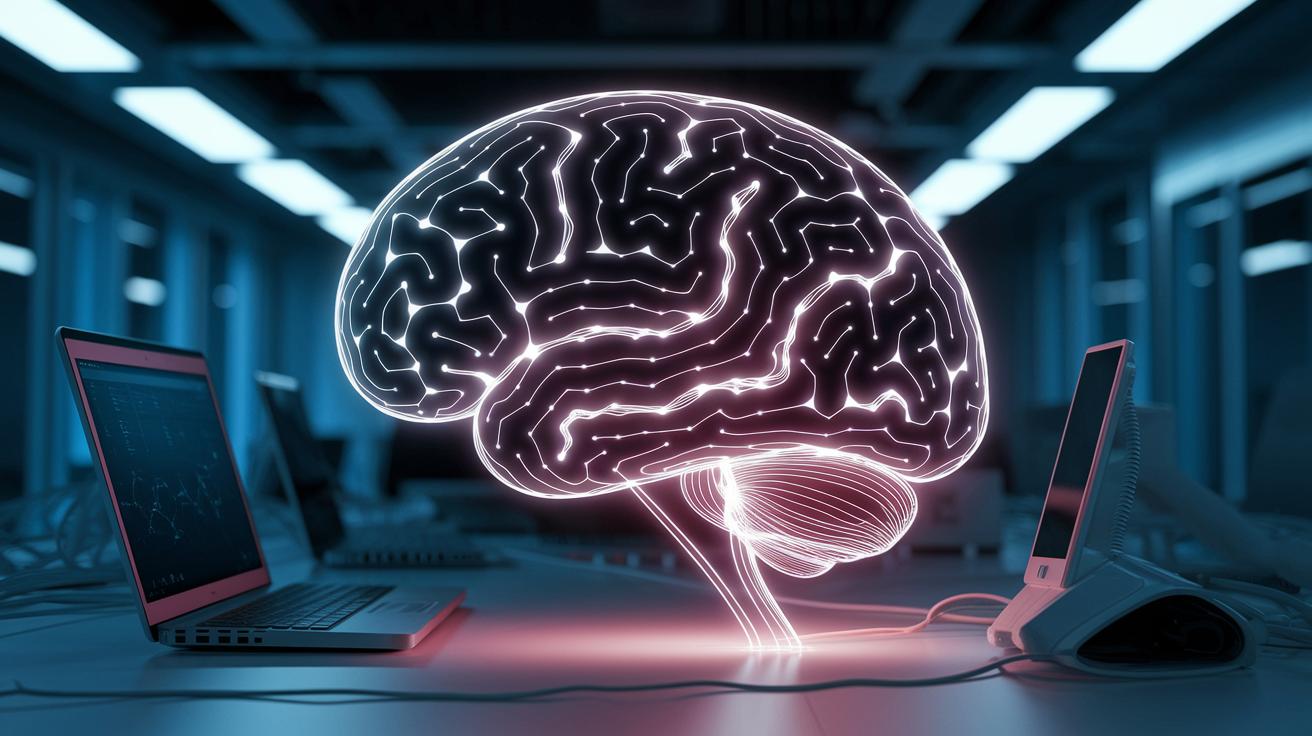
Neural networks are smart computer systems built to work a bit like our brains. They use many tiny parts called artificial neurons (mini decision-makers) that work together in layers. Imagine each one as part of a team sorting through a picture to figure out what you’re looking at. This brain-like setup lets machines see images and spot patterns without needing direct help from a person.
These systems learn on their own by picking up clues from lots of data. They don’t follow strict, step-by-step rules; instead, they adjust their internal connections as they work with more examples. Picture a computer that gets better at reading different handwriting styles just by looking at thousands of samples. Each new piece of data helps it become more accurate and faster at its job.
In short, neural networks use smart algorithms that mimic how our brains connect. They spot tricky patterns and relationships in data, and as they learn from every experience, they keep improving on their own. This self-improving skill makes them a key player in many advanced fields today, from medical tools to financial analysis and language processing.
Neural Network Architecture: Layers and Neuron Functions

A neural network works much like a layered cake, each layer plays its own part. The process starts with the input layer, which picks up raw data like image pixels or words from a sentence. Then one or more hidden layers jump in to work on this data. Picture each neuron as a tiny calculator that adds up weighted numbers along with a little extra value called a bias. After this step, a special decision-maker (a non-linear activation function, which simply means it adds some clever twists to the math) checks if the signal is strong enough to move on. For example, when looking at a picture, the early layers might notice simple details like edges or colors, while later layers mix these bits together to spot more complex features. Think of each neuron as a tiny calculator that lights up another neuron only if its sum is high enough.
This is where the real magic happens. The hidden layers perform a series of clever, non-linear adjustments that pull out detailed, high-level features from the data. The design is very flexible too, you can adjust the number of hidden layers or the neurons inside them depending on what you’re trying to do. For instance, spotting fine details in medical images might need a different setup than predicting financial trends, which depends on catching tiny numerical patterns. Finally, the output layer takes all the processed info and turns it into a decision or a prediction. Imagine a team effort in financial analysis where every neuron adds its bit to build a model that maps out intricate market trends.
| Layer Type | Primary Role |
|---|---|
| Input | Receives raw data for processing |
| Hidden | Extracts features through non-linear transformations |
| Output | Produces final decisions or predictions |
Training Neural Networks: Forward Propagation and Backpropagation

Neural networks learn by passing information through many layers. In forward propagation, the network takes the input data and pushes it from one layer to the next. Each neuron multiplies its input by a weight, adds a bias, and then uses an activation function (a math rule that helps decide if a signal should move on) to produce an output. Imagine a row of little calculators, each one changing the number a bit before handing it off. This method lets the network see the data in new ways and sets the stage for learning.
After the network produces its final answer, a loss function steps in to see how far off the guess is from the real value. The loss function compares the network's prediction with the true answer, much like a teacher grading a test. This error tells the network what it got wrong and where to improve.
Then comes backpropagation, where the network adjusts its settings using gradient descent techniques (a step-by-step method to reduce mistakes). Starting from the output, the system works backward, calculating how each weight and bias contributed to the error. These calculations show which way to adjust to lower the error. Over several rounds, the network fine-tunes its settings, learning from its mistakes and making more accurate predictions every time.
Neural Network Models: Types and Specializations

Neural networks come in many shapes and sizes, each one built to solve a specific type of problem. Imagine them like players on a sports team where every player has a special role. Some networks are amazing at spotting visual details, while others are crafted to understand sequences like speech or time-based data.
Think of a feedforward network as a quick striker, information moves straight from the start to the finish, perfect for simple tasks like classifying pictures. Meanwhile, convolutional neural networks (CNNs) work like a detective scanning every corner of a photo to uncover hidden details using small filters. Recurrent neural networks (RNNs) and long short-term memory networks (LSTMs) are like storytellers who remember what came before, making it easier to process sequences. Then there are generative adversarial networks (GANs), which set up a friendly contest: one network creates new images or data and the other checks its work, pushing for that creative spark. Lastly, graph neural networks (GNNs) map out data that is all connected, much like a group of friends sharing ideas and building on each other’s thoughts.
Each of these network types is tailored to handle different tasks, whether it’s analyzing images, processing language, or even generating fresh ideas.
Neural Networks in Action: Real-World Applications

Deep learning methods are changing the way we see and use technology. For example, convolutional neural networks (CNNs (computer tools that recognize patterns in images)) are very good at handling visual data. In medicine, these networks help doctors look at X-rays and MRIs to spot problems quickly. They also run object detection systems in many fields, from self-driving cars to security cameras. Have you ever noticed your smartphone camera automatically focusing on faces? That’s a real-life example of deep neural networks in action.
Forecasting models known as recurrent neural networks (RNNs (tools that predict things in a sequence, like weather or stock trends)) are challenging old methods in finance. They predict stock prices and demand trends by adjusting to changing market data on the fly. It’s pretty amazing how these models turn complex data into helpful insights in real time.
Neural networks also make a huge difference in how we process sound and text. RNN-based models create accurate speech-to-text transcription, which powers many voice commands behind our digital assistants. When you ask your phone for directions or request your favorite song, neural networks quickly understand your speech. Meanwhile, natural language processing (NLP (a way for computers to understand human language)) makes text much more meaningful by classifying topics, analyzing social media sentiments, or even translating languages. Imagine a system that reads thousands of reviews and suggests improvements without any human help. This is just one example of how neural networks are making technology smarter and more connected across many industries.
Neural Networks vs Traditional Machine Learning

Neural networks work a lot like our own brains by learning patterns from raw data on their own. They don’t need someone to pick out the important details for them. Instead, they figure out what matters just by looking at loads of data, kind of like how a smart chef experiments with many recipes until they perfect the dish.
Traditional machine learning, in contrast, usually needs engineers to manually choose which features to look for. Imagine trying every ingredient one at a time to create a meal; that’s pretty much what the old methods do. As more data comes in, these older systems might get overwhelmed because they depend on hand-picking details that can be hard to sort through.
Neural networks overcome this challenge by using layers of processing that automatically refine and pull out the necessary details. Even though they are inspired by the human brain, they mostly use math to get the job done, not by imitating every complex brain function. This smart design makes them great for tasks like identifying images, processing speech, and predicting outcomes, all while handling large amounts of data with ease.
Neural Network Limitations and Optimization Strategies

Overfitting happens when a model learns the training data too well and misses the bigger picture. It’s like when someone memorizes a story instead of understanding the lesson behind it. Dropout layers randomly turn off some neurons (tiny processing units) during training, while batch normalization keeps a steady rhythm by adjusting outputs of layers. Think of it as if you're building a tower of blocks and some blocks get removed now and then, which makes the tower stronger and less dependent on any single block.
Using smart techniques for starting weights, like those developed by Xavier or He, is very important too. They set up the model just right from the beginning, so it doesn’t start with extreme values that could throw off learning. Early stopping, learning-rate schedules, and L2 regularization act like friendly quality checks. Early stopping, for example, is like a coach calling time when the team is doing great, helping avoid extra strain on the system.
Advancements and Future Trends in Neural Networks

Transfer learning lets you use a network that has already learned basic features for new challenges. It’s like borrowing a trusted recipe to whip up a new dish without starting from scratch. Methods that automatically tune the network’s settings, like grid search and Bayesian approaches (where math helps guess the best settings), save time and boost performance, just like tweaking ingredients to perfect your favorite meal.
Researchers are now exploring fresh ideas such as self-supervised learning (where the computer helps label its own data), spiking neural networks (tiny bursts of activity similar to how our brain works), and lightweight architectures that work well on small devices. Imagine a smart sensor that can handle its own data instead of sending everything off to a big computer. Plus, hands-on online courses using tools like TensorFlow and PyTorch let everyone try these techniques out themselves. These trends could soon change many industries, making neural networks smarter, faster, and easier for anyone to use.
Final Words
In the action, the article walked through neural networks as brain-like systems that learn from data. We examined core ideas like layered architecture, training steps, diverse models, and practical uses for image, text, and voice. We even compared these systems with traditional methods and touched on ways to improve learning efficiency. This recap shows just how much we still can explore and understand. Keep asking questions and enjoying the learning process about what are neural networks while we all grow our science insights together.
FAQ
What is a neural network in the brain and what are biological neural networks in psychology?
The neural network in the brain means the intricate web of neurons that send signals to process information. In psychology, studying these networks helps explain how behavior and thoughts form.
What are neural networks in AI, machine learning, and deep learning in simple words and how do they work?
The neural networks in AI are computer models that mimic brain connections with layers of simple units. They work by adjusting their links as they learn patterns from data.
What are neural networks used for in real-world applications like machine learning and natural language processing?
The use of neural networks means applying smart models for tasks like image recognition, voice assistance, text analysis, and forecasting. They help solve problems by discovering patterns in large data sets.
Is ChatGPT a neural network?
The inner workings of ChatGPT use a large transformer neural network that learns from vast text data. It recognizes language patterns to generate helpful and context-aware responses.
What is the difference between AI and neural networks?
The difference is that AI is a broad field of smart technologies, while neural networks are specialized algorithms inspired by brain connections that help machines learn and recognize patterns.