
Have you ever wondered what it's like to live in a house that floats high above Earth? The International Space Station is a smart mix of rooms and corridors, all designed to help people live and work in space.
Every section, from the lab where experiments happen to the small quarters for sleeping, fits together perfectly to support both science and daily life. In this article, we'll give you a quick tour of the station and show you how even its tiniest spaces play an important role in creating a vibrant life in orbit.
ISS Module Arrangement and Interior Layout
The International Space Station is like a giant floating workshop in space where many cool tasks are carried out. When you take a virtual 360-degree tour, you'll see that its modules connect like puzzle pieces, each with its own important job. Together, they create a special setup that makes space experiments, everyday living, and exploration possible. The station orbits Earth at about 408 km high, zipping along at roughly 7.66 km/s and circling our planet nearly 16 times every day. Made with teamwork from the US, Canada, Russia, Europe, and Japan, the ISS is not just a lab; it’s a real home in space that helps us understand and explore more about our world.
Inside the ISS, the design is smart and practical. Scientists can test new technology and learn how space affects the human body. The modules are linked by short transfer tunnels so astronauts can easily move from study areas to living spaces. Looking at the station’s map makes it clear how every part supports the mission.
Take a look at the main parts below:
- Zarya – the module that gives power and helps with propulsion
- Unity – the connecting hub for several modules
- Zvezda – the living quarters for astronauts
- Destiny – the U.S. research lab module
- Columbus – the European research lab module
- Kibo – the Japanese experiment module
- Cupola – the observation area offering a clear view of Earth
These layout guides show how smoothly everything fits together on the ISS, helping both researchers and curious minds appreciate its clever design.
Inside ISS Sleeping Quarters and Rest
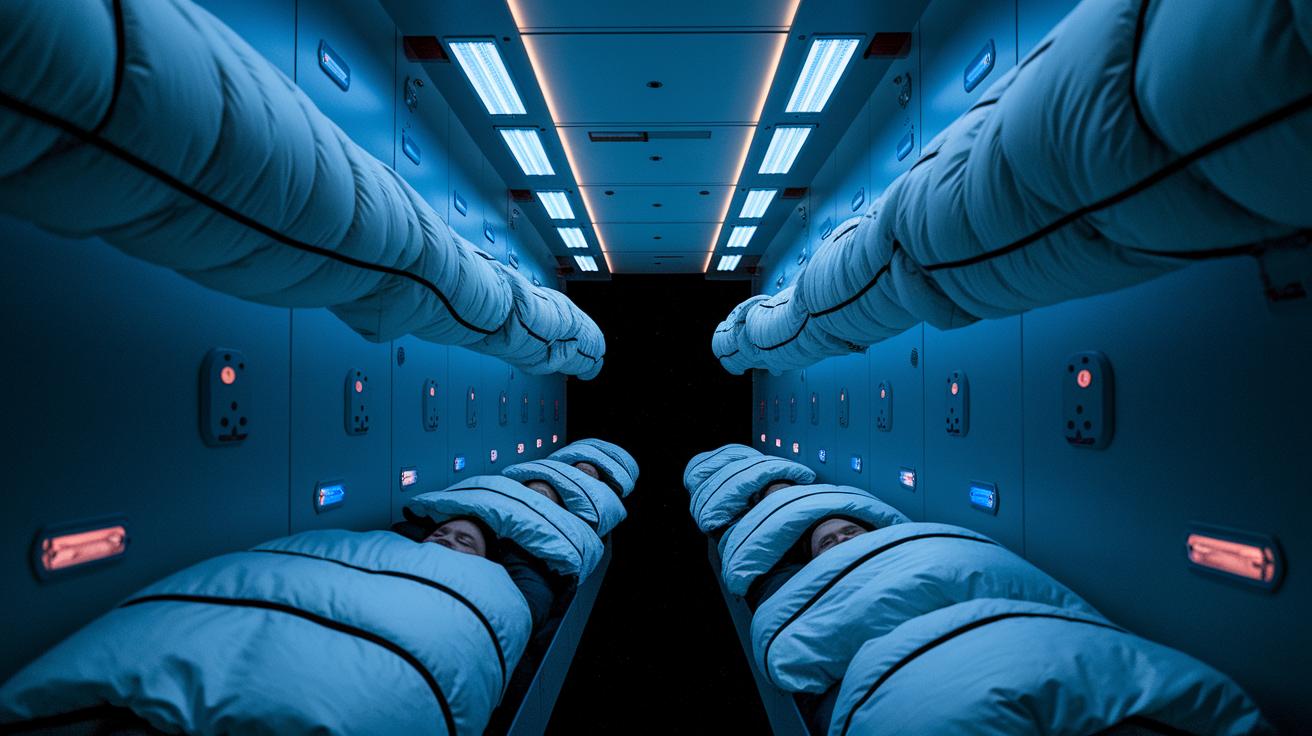
Astronauts face some pretty unusual challenges when it comes to getting a good night's sleep. Even though they plan for eight hours, they often end up with just six hours or less. In space, where there's almost no gravity (we call it microgravity), every little detail counts. They use special sleeping bags with extra padding to boost comfort and health. And instead of laying on a regular bed, these bags attach to walls, floors, or ceilings so they can sleep securely while floating.
The sleeping areas are like cozy little pods, small but smartly arranged to save space and ensure safety. They even have lights that mimic day and night cycles. Imagine a setup where the light shifts from a cool blue in the morning to a warm amber in the evening, helping the body know when to get active and when to wind down. It’s a simple, yet brilliant way to keep everyone on track.
These clever lighting designs work on the idea of circadian rhythms (your body's natural 24-hour clock). Changing the light's color and brightness tells the body when it's time to be awake or to rest. This thoughtful solution plays a key role in keeping astronauts mentally and physically fit while they navigate the challenges of living in microgravity.
Inside ISS Live Data Streams and Communication Hub
The International Space Station connects us with live video and digital tools that offer a peek into space. It sends out crystal-clear videos in HD, SD, and even 4K through Sen.com. You can watch as the station orbits about 408 km above Earth, see its speed, and count its orbits each day.
A handy mobile app keeps you updated with personalized notifications and even lets you chat with other space fans. It also shows live events like dockings and spacewalks so you can experience the excitement as it happens.
Inside the station, smart network systems and digital panels keep track of all the important details. Sensors and cameras on board send real-time data back to Earth, giving you a virtual tour of life in space. It’s not just about learning facts, it’s about feeling the wonder of space exploration.
The strong digital setup helps both the crew and people on Earth stay connected. Whether it’s automated reports or continuous video streams, every moment of the mission is clear and engaging. This system shows that even in space, staying connected is what makes everything work.
Inside ISS Laboratory and Research Modules

Inside the International Space Station, you'll find a flying lab created just for science. Special areas like Destiny, Kibo, and Columbus act as busy hubs where scientists explore different ideas. Destiny is a U.S. lab that looks closely at how liquids move and how fire burns when gravity is very weak. Kibo, on the other hand, holds Japanese life-science experiments to see how cells and tissues behave in such an environment. Columbus, the European segment, is used for studies on fluids and materials under these unique conditions. Each area is set up to help us learn more about living and working without the usual pull of gravity.
The lab is arranged in a smart way so every tool gets its own space. Instruments are placed for quick checks and smooth data gathering. For example, sensors capture tiny details during experiments, like how a drop of liquid can form into neat little balls while floating. This careful layout helps scientists uncover new secrets about space exploration.
Work on the station is as lively as it is careful. Researchers follow detailed steps, gather important data, and refine techniques that might even improve life on Earth. The thoughtful design of these research modules makes it easy to try out new technology and keep pushing the limits of what we know about science in space.
Inside ISS Exercise Routines and Crew Schedules
Astronauts aboard the space station work hard to keep their bodies strong, even without gravity. They spend about two hours each day exercising to help stop their muscles and bones from weakening. For example, they use the ARED, a machine that mimics weight training (it gives resistance like free weights on Earth), so every lift really counts.
The crew fits exercise right into their busy schedule. They shift between doing science experiments, maintaining the station, and working out. They use a treadmill with special features to reduce vibrations and a cycle ergometer (a stationary bike that helps improve heart health). These sessions not only build muscle but also boost their mood in a small, floating home.
Their routines are carefully planned to mix important mission work with fitness. Imagine a timetable that jumps from a lab experiment to a quick stretch, then onto a run on the treadmill. This shows how, even in a tiny space station, keeping a steady routine helps keep both the body and mind strong.
Inside the International Space Station: Sparkling Space Life
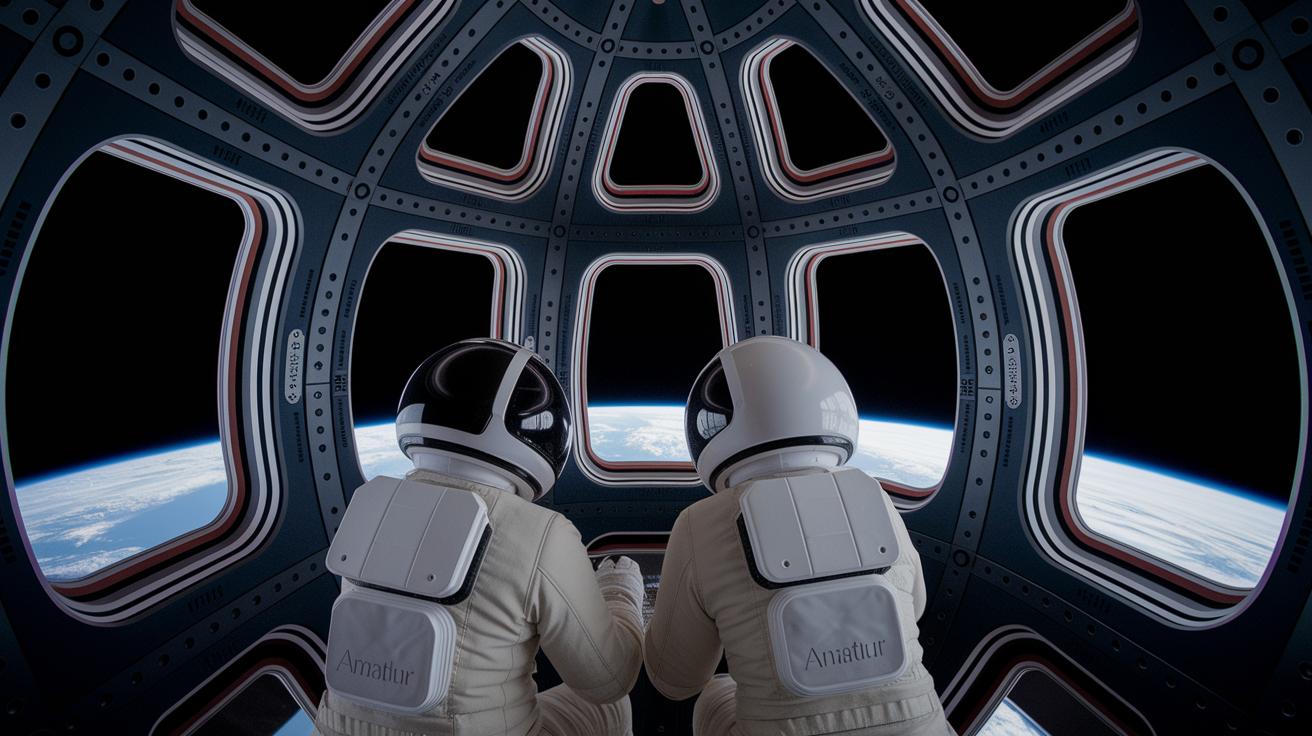
Inside the Cupola module, space becomes a blend of relaxed vibes and awe-inspiring adventure. The module has seven big windows that offer breathtaking views of Earth and the vastness beyond. It’s like having a front-row ticket to a live, ever-changing nature show.
This high-tech window spot is built for enjoying every bit of what our planet has to offer. Astronauts often set up their cameras along the viewing panels to capture crisp, high-resolution snapshots of Earth’s curves. These photos make our blue planet look vibrant and full of life.
Inside the Cupola, the lighting is set just right to boost everyone’s mood. Soft, adjustable lights mimic natural daylight and twilight, creating a warm setting that fits both quiet reflection and bursts of creative energy. It’s a favorite hangout, not only for snapping stunning images but also for sharing little moments and unwinding with friends in zero gravity.
Every time the crew gazes out those expansive windows, they find a slice of calm and wonder high above our busy world. This cozy observation deck shows that even in the middle of high-stakes exploration, there’s always room for a moment of playful inspiration.
Final Words
In the action, we’ve explored the ISS module arrangement, sleeping quarters, live data feeds, research labs, daily exercise routines, and observation decks. We unpacked how each area supports life and work inside the international space station. Here’s a snapshot of key modules:
• Zarya – power and propulsion
• Unity – system connector
• Zvezda – living space
• Destiny – research hub
• Columbus – research suite
• Kibo – experimental zone
• Cupola – observation area
This look shows the station’s smart design and continues to spark excitement for space science.
FAQ
Inside the international space station live
Inside the international space station live shows real-time views of astronaut activities and station interiors, letting viewers experience life in space through continuous camera feeds and interactive online content.
Inside the international space station nasa
Inside the international space station as seen by NASA offers a detailed glimpse of space life with virtual tours and live video feeds that explain how each module supports daily operations and science research.
International Space Station video for students
International Space Station videos for students provide educational, interactive tours that highlight the station’s layout, live data streams, and experiments, making space exploration engaging and easy to understand.
Inside International Space Station bedroom
Inside the International Space Station bedroom, astronauts use sleeping bags secured to prevent drifting in microgravity; these setups include extra padding to help them rest comfortably and maintain sleep cycles.
International Space Station tour for kids / Inside the International space Station for kids
International Space Station tours for kids offer a fun, simplified look at the station’s different modules, using engaging visuals and interactive displays to explain how astronauts live and work in space.
Step inside the International Space Station
Stepping inside the International Space Station reveals an organized network of modules that house research labs, living quarters, exercise spaces, and viewing decks, all working together to support space missions and discoveries.
International Space Station distance from Earth
International Space Station distance from Earth is roughly 408 km, which allows for detailed Earth observation, swift data exchange, and an accessible platform for both scientific work and public engagement.
What is inside the International Space Station?
What is inside the International Space Station includes research labs, living quarters, exercise zones, and observation decks, all interconnected to support astronaut life and advanced scientific experiments.
How many toilets are on the ISS?
How many toilets are on the ISS is two; these systems are specially designed to work in microgravity, managing waste efficiently to accommodate astronaut needs during long missions.
Can astronauts get erect in space?
Can astronauts get erect in space? Yes, astronauts can experience erections in space as the microgravity environment does not stop physical functions, although body fluid distribution behaves differently than on Earth.
How do astronauts shower on the ISS?
How do astronauts shower on the ISS is managed by using no-rinse bathing methods with waterless wipes and rinse-free cleansers, providing a clean feel in the absence of conventional showers in microgravity.

