
Have you ever wondered what it means to explore the unknown beyond our planet? It's not just about sending rockets into space. It's about clever machines and brave people teaming up to study our solar system and look at far-off wonders. When scientists study the stars and distant planets, they learn more about Earth and come up with fresh ideas to make our lives better. In this blog, we'll share the adventure of reaching for the stars, one mission at a time.
Defining Space Exploration: Scope and Purpose
Space exploration is our ongoing quest to understand the great vastness beyond our Earth's atmosphere. It brings people and clever robots together in a team effort to study our solar system and the endless cosmos. For instance, in 1961, Yuri Gagarin soared into orbit, a moment that marked our brave first step into the stars.
At its heart, exploring space is all about asking big questions and using smart technology to find answers. Telescopes (big instruments that help us see faraway objects), satellites, spaceships, and robots each play a special role in uncovering space’s secrets. Imagine robots sending back colorful photos from far-off planets while astronauts conduct experiments aboard the International Space Station, where the soft hum of microgravity sparks fresh ideas in science.
The journey of space exploration follows two paths. One path is driven by intrepid human missions that push our boundaries with piloted journeys, while the other uses unmanned probes equipped with sensors (tools that measure different things) to gather important data. Every mission not only helps us learn more about the universe but also builds new technology that can make life on Earth even better.
Scientists and engineers mix genuine curiosity with careful work to answer big questions, like how our planet got its start or what hidden wonders lie beyond our solar system. It’s not just about the excitement of discovery; it’s also about creating innovations that improve our everyday lives.
Historical Milestones in Space Exploration
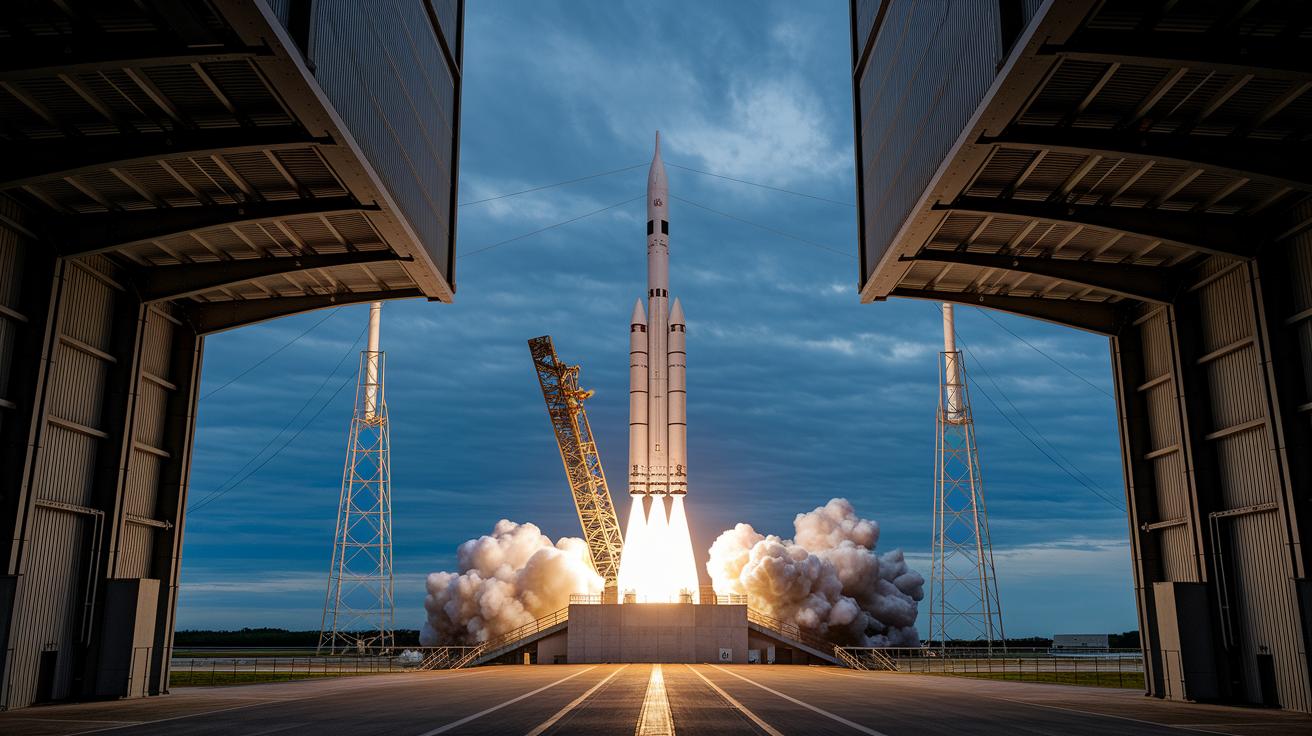
Space exploration is full of exciting moments that changed how we see our world and beyond. Back during World War II, Germany kicked off a groundbreaking journey with the V-2 rocket program in 1944. These long-range rockets (big rockets designed to travel far) set the stage for future adventures in space. Soon after, in 1957, the USSR surprised everyone by launching Sputnik 1, the very first man-made satellite. This bold move sparked a friendly, yet intense, competition during the Cold War as countries began pouring energy into exploring outer space.
Then, in 1961, the world watched in wonder as Yuri Gagarin became the first person to orbit our planet. That achievement showed us just how far human courage and curiosity can go. Later, President Kennedy’s inspiring push to put a person on the Moon led to the Apollo 11 mission, and on July 20, 1969, Neil Armstrong made history with his famous moonwalk. In the 1980s, the Space Shuttle Columbia introduced us to reusable spacecraft, a hint at a future where one vehicle could be used for many missions.
But space exploration hasn't always been smooth sailing. The tragedy of the Challenger disaster in 1986 was a stark reminder of the real risks that come with reaching for the stars. This event led to a stronger focus on improving safety and finding innovative solutions. Today, the International Space Station stands as a powerful example of nations working together to unlock the secrets of space.
| Year | Milestone | Description |
|---|---|---|
| 1944 | German V-2 Rocket Program | Early development of long-range rockets during WWII |
| 1957 | Sputnik 1 | Launch of the first artificial satellite |
| 1961 | Yuri Gagarin | First human to orbit Earth |
| 1969 | Apollo 11 | Moon landing; first human walk on the lunar surface |
| 1981 | Space Shuttle Columbia | Introduction of a reusable spacecraft |
| 1986 | Challenger Disaster | A tragic loss that led to major safety improvements |
what is space exploration: A Stellar Overview
NASA started in 1958 and has been a true pioneer in reaching out into space. They've steered big projects like Mercury, Gemini, Apollo, and the Shuttle programs, each one a brave step into the unknown. Think of the Apollo missions as a daring experiment, much like trying a new recipe that ended up landing human footprints on the Moon. NASA mixes creative science with hands-on engineering to help us answer big questions about the universe.
The European Space Agency, or ESA, began in 1975 and is all about teamwork among scientists from different countries. They’ve built parts of the International Space Station and conducted cool experiments up there. Picture ESA as a group of friends putting together a giant cosmic puzzle, where every project, like the Ariane rocket missions, helps complete the picture of space research.
Private companies have also jumped into the space exploration game with fresh ideas. SpaceX, for instance, grabbed headlines by reusing its Falcon 9 boosters and sending crews aboard the Crew Dragon. This innovative approach lowers costs and opens new doors in space travel. Along with SpaceX, companies like Blue Origin are testing creative designs and focusing on safer, more efficient travel. Together, these efforts boost research on the International Space Station, helping people from around the world learn more about our solar system and beyond.
Technological Innovations Powering Space Exploration
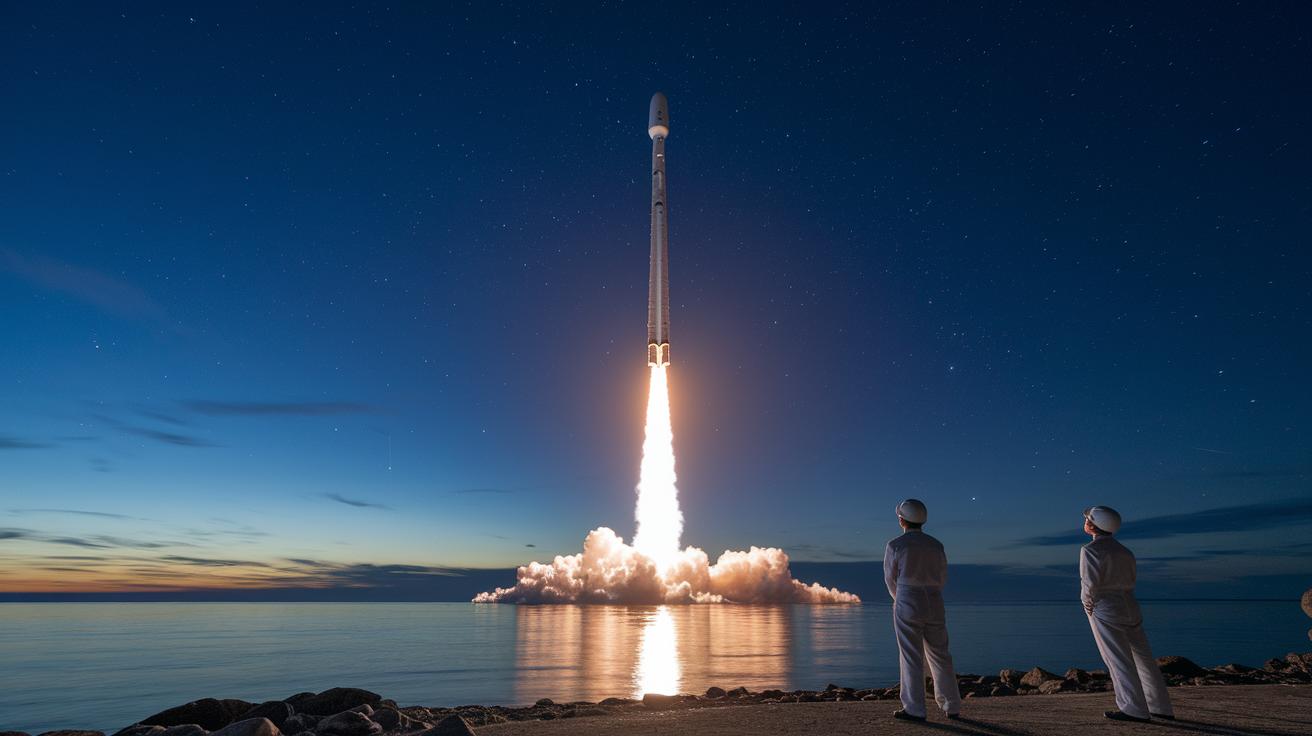
Propulsion systems have come a long way from the early days of liquid-fueled rockets. Today, reusable boosters like Falcon 9 are changing the way we venture into space. These rockets can be used again for multiple trips, meaning less waste and lower costs. Picture a rocket returning to Earth with the smooth precision of a well-practiced performer, ready to soar once more.
Remember the famous robotic probes, Voyager and New Horizons? They carry special instruments (advanced tools like cameras and sensors) that let us take a close look at far-away worlds. They capture incredible details from distant planets and moon surfaces, almost like gathering cosmic secrets one tiny sparkle at a time.
Satellite technology has also taken a giant leap forward. New systems using multispectral imaging (a way to see details that our eyes can’t) help us explore outer space and keep an eye on our own planet. Constellations of communication satellites and remote sensing platforms work together to track environmental changes on Earth while relaying vital information.
Navigating through space is now more reliable thanks to tools like Global Navigation Satellite Systems and NASA’s Deep Space Network. These systems act like lighthouses guiding spacecraft safely through the vastness of space.
Our spacecraft designs have grown much more advanced too. Today’s vehicles use high-tech heat shields for safe returns, closed-loop life support systems (that recycle air and water) to keep crews healthy, and lightweight composite materials to cut down on weight. All these improvements make space exploration not just tougher but also safer and more efficient, opening up a window to the wonders of the universe.
Societal Impacts and Future of Space Exploration
Space exploration changes our daily lives in more ways than you might think. It helps us learn more about science and keeps track of our planet by watching weather and changes in our environment. For example, satellites (machines that orbit Earth) give us real-time updates on weather conditions and dangers, which helps communities prepare for storms and other extreme events.
This field doesn't just offer direct benefits. It also creates jobs in the aerospace industry and leads to many spinoff technologies like GPS, medical imaging, and new materials. With NASA spending around $23 billion a year, these investments in space research lead to cool, everyday breakthroughs. It’s kind of like a ripple effect, tools made for space missions end up powering products and services that make our lives easier.
Another neat benefit is international teamwork. Take the International Space Station, for instance. Countries from around the world work together on research up there, which not only pushes science forward but also builds friendships and stronger ties between nations.
Looking ahead, future space missions promise even more excitement. Crewed trips to Mars and plans for a moon base (as part of the Artemis program) are set to test how humans can live for a long time away from Earth. There’s also talk of mining asteroids to spark new industries and boost economic growth. Plus, studying how life adapts to microgravity (the near-zero gravity in space) might bring new ideas for health and tech improvements back on our planet.
In essence, space exploration isn’t just about rockets or distant planets, it’s a powerful journey that improves our lives, drives our economies forward, and brings people from all over the world together.
Final Words
In the action of exploring our universe, we saw how space exploration stands as a blend of intense scientific effort and everyday wonder. We followed key events from early rocket launches and historic space flights to major missions driven by NASA, ESA, and private innovators. The article touched on breakthrough technologies that keep pushing boundaries and delved into the positive societal impacts of astronomical research. Remember, what is space exploration is not just travel; it’s our shared effort to understand the cosmos and brighten our future.
FAQ
What is space exploration in simple terms?
The term means studying and discovering the areas beyond Earth using machines and people to gather knowledge about planets, stars, and other objects in the universe.
What is space exploration for kids?
Space exploration for kids is learning about our universe in fun ways, with simple stories and clear ideas that show how we study planets, stars, and other wonders in space.
What are 10 reasons why space exploration matters?
The study matters for many reasons, such as boosting science, creating jobs, advancing technology, monitoring Earth’s weather, building teamwork between nations, and seeking answers to big questions.
How has the history of space exploration evolved?
The history begins with early rockets and the first satellites, moving through the first human in space to moon landings, and later, international space stations that show how our efforts have grown.
What benefits come from space exploration?
Benefits include new scientific discoveries, technological breakthroughs used every day, enhanced weather and climate data, economic growth, and an expanded view of our place in the universe.
Why is space exploration important?
It is important because it broadens our understanding, drives practical technology, promotes global teamwork, and helps us learn more about, and protect, our own planet.
How long is one hour in space time?
One hour in space is just like one hour on Earth in duration, even though the conditions in space can make time feel a bit different due to factors like microgravity.
What is a space exploration essay?
A space exploration essay is a written piece that explains the goals, key events, benefits, and challenges of studying space, and it often highlights major milestones and important missions.