
Have you ever wondered why some machines always work perfectly while others don’t? Making hard tech is a lot like preparing a special pie, every ingredient has to be measured just right before it goes into the oven.
Engineers spend countless hours making sure every little part is spot-on. They check and test each element over and over to build machines that are both reliable and precise.
In this article, we explore how careful work and repeated testing are leading to bold new changes in industry. You'll see how building strong, trustworthy systems from scratch is transforming the way things are made in ways you might not expect.
Hard Tech Defined: Tangible Innovations Versus Soft Tech
Hard tech is all about blending physical parts and computer programs to solve real-world problems. Think of it like building a car from scratch where every nut, bolt, and wire must be spot-on. Engineers work carefully on each detail, much like tuning an engine until it purrs just right. There’s no room for rough drafts here.
In hard tech, you can’t just throw together a simple model to see if people like it. Every piece, be it metal, circuit boards, or moving parts, needs to work perfectly. That means lots of hands-on tweaking and repeated testing until the product is ready. It’s similar to baking a gourmet pie where every ingredient is measured before it goes into the oven.
Take Tesla, for example. Their electric vehicles mix advanced hardware with smart software to create something truly impressive. Then there’s Waymo, whose self-driving cars rely on exact systems to navigate safely. And SpaceX? Their rockets show us that hard tech is about building reliable machines from the ground up.
Hard Tech Product Development: Core Challenges and Competitive Advantages
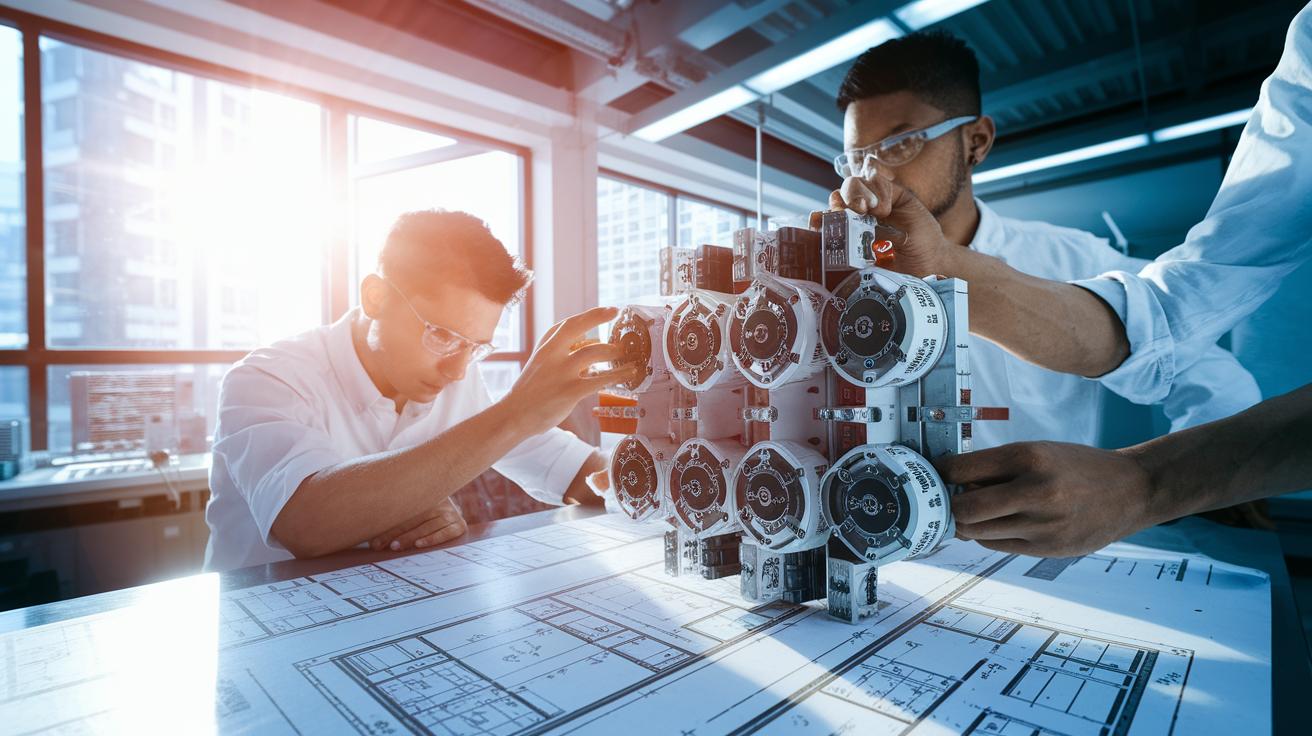
When you work on hard tech products, you're creating complete, working machines from scratch. Every part, from the tiniest circuit to the metal pieces, has to be perfect and fully tested before it reaches customers. This means you spend more time on prototypes and need a bigger upfront investment. Plus, the need for precise manufacturing (making parts exactly right) and reliable supply chains makes it hard to change things quickly. Imagine building a complex toy where every gear and spring must fit perfectly for it to work safely.
- A complete physical solution needed before launch
- High expenses because of extensive prototyping
- Dependence on very precise manufacturing methods
- A supply chain that can slow down changes
- Full-cycle testing required instead of a simple trial run
On the bright side, facing these challenges can give companies a big competitive edge. The hard work often leads to inventions that can be protected by patents for up to 20 years. These patents help secure a unique market position and build trust with consumers. Plus, data gathered from products in use, like how Tesla collects information on its cars, helps improve future models such as advanced batteries and self-driving features. This ongoing cycle of improvement keeps hard tech companies ahead in tough industrial markets and makes their products harder to copy compared to software-based ones.
- Patents providing long-lasting exclusive rights
- Strong market position thanks to solid intellectual property protection
- Feedback from real product use that guides future improvements
- Improved reliability from rigorous, full-cycle testing
- Clear differentiation in competitive industrial markets
Hard Tech Drives Bold Industrial Advances
Hard tech is changing the way we build and operate in many industries. It’s all about mixing solid physical systems with smart software to push our engineering and manufacturing boundaries. Companies are using these innovations to create, test, and perfect new products that truly work in the real world. These advances are not only changing how things are made but also making machines more reliable and efficient to meet tough industry standards.
Take aerospace, for example. Groundbreaking projects are literally soaring into the skies. Boom’s XB-1 supersonic jet, a true pioneer in hard tech, just completed its very first flight, marking a huge leap in design speed. And over at SpaceX, they’re busy fine-tuning rockets that can be used again and again, along with Starlink satellite hardware. Quite exciting, right?
In the world of cars, hard tech is behind safer and smarter transport. Waymo’s vehicles, for instance, use advanced sensor systems (sophisticated tools that see and measure their surroundings) to handle tricky road conditions with pinpoint accuracy. These clever systems don’t just steer autonomous vehicles, they’re also spurring similar tech improvements in everyday electronics.
Then there’s agriculture, where hard tech is making a big practical difference. A partnership between Vestaron and ADM has resulted in peptide-based crop protection products (new agricultural formulas that help guard crops against pests). This new method is offering a level of protection that older techniques simply can’t provide.
Even environmental work is being transformed. Specialized hardware is at the heart of PFAS remediation solutions, which are used to clean up industrial pollution. This smart approach shows just how powerful focused engineering can be when it comes to tackling big pollution problems.
Hard Tech and Deep Tech: Complementary Roles in Innovation
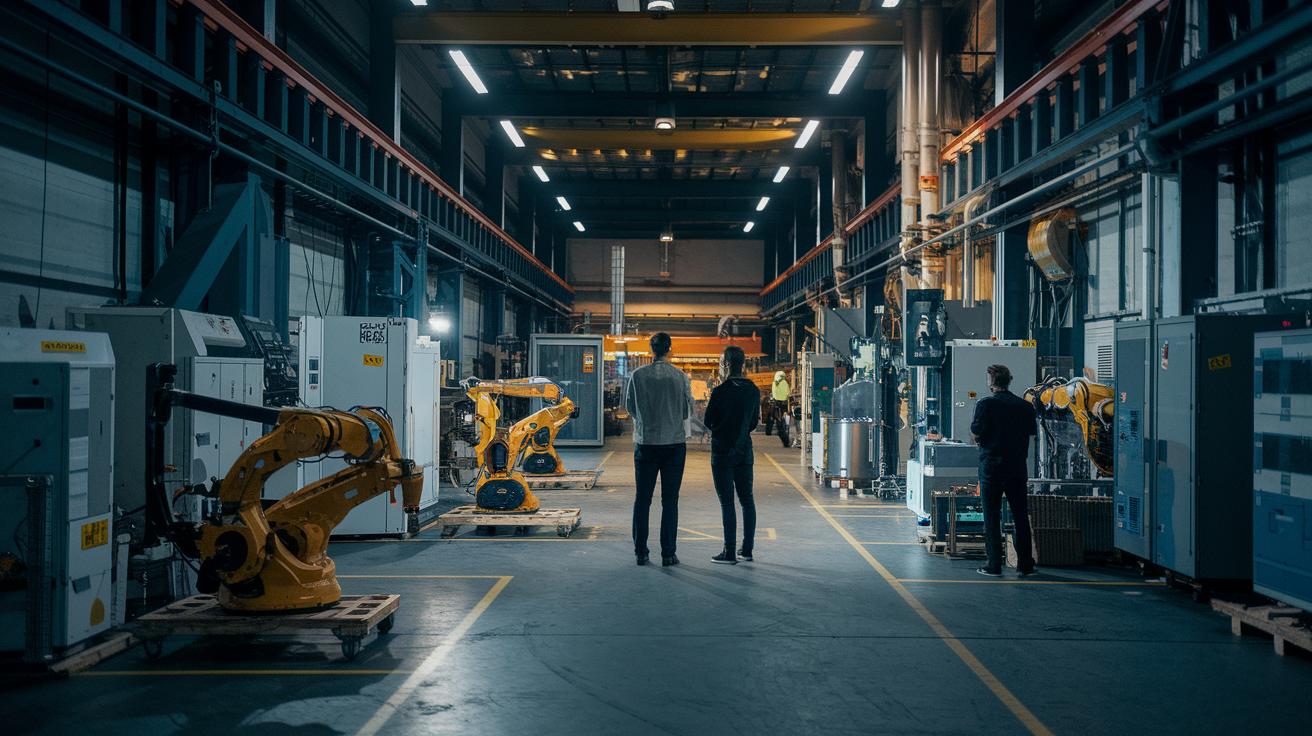
Hard tech is all about building real, touchable machines like renewable energy gear, robots, and advanced manufacturing systems. You can see and feel these engineering breakthroughs. In contrast, deep tech dives into areas like AI (smart computer programs), quantum computing (cutting-edge tech using tiny particles), and biotechnology. Think of it as the difference between putting together a precise machine and creating a smart program to control it. They both push the limits of what we can do but from different angles, one deals with physical construction, while the other experiments with digital ideas.
When hard tech and deep tech work together, they create an exciting blend that makes everything smarter. For example, smart data analysis from AI can improve renewable energy systems. It helps fine-tune the control systems, gathers important data, and even guides the choice of materials. This teamwork makes physical machines work better in tricky settings. By mixing hands-on engineering with clever algorithms, we get solutions that are both strong and flexible. And that combination really speeds up breakthroughs in today’s fast-changing industrial world.
Hard Tech Ecosystem: Funding, Patents, and Startup Support
Since 2017, mHUB has been a driving force for hard tech breakthroughs. Startups here have raised $1.89 billion and brought in $1.57 billion in revenue. With $6 million worth of prototyping equipment spread across multiple machine shops and labs, mHUB really speeds up development. Imagine having a workshop with every tool you need to build and test your device, the transition from idea to a real product becomes a lot quicker and smoother.
The community at mHUB is buzzing with over 650 members and alumni, all sharing ideas and expertise. This supportive network provides expert mentorship, ongoing education, and plenty of chances to collaborate with peers, making it an ideal space for new companies. Plus, member companies have secured 533 patents, showing how seriously they take protecting their inventions for up to 20 years. The mix of solid funding, hands-on prototyping, and a strong professional network is paving the way for hardware startups to succeed and bring real engineering solutions to life.
Final Words
In the action, we explored how hard tech combines tangible hardware with tested software, setting it apart from softer innovations. We walked through its product challenges, industrial solutions, and the dynamic ecosystem supporting startups and established companies like Tesla and SpaceX.
This piece brings us closer to understanding hard tech and its impact on everyday life. It leaves us feeling inspired by the continuous stream of practical breakthroughs shaping our world in smart, measurable ways.
FAQ
FAQ
What are hard tech startups and companies?
The question about hard tech startups and companies signifies firms that develop tangible technologies combining hardware and software. Examples include Tesla, SpaceX, and Waymo, each creating products that require complete physical development.
What is considered hard tech?
The question regarding what is considered hard tech refers to solutions with a tangible component. Hard tech involves manufacturing and rigorous testing of systems such as electric vehicle platforms, rockets, or sensor arrays.
How does hard tech differ from deep tech?
The question about how hard tech differs from deep tech shows that hard tech focuses on building physical products while deep tech leverages scientific research and advanced algorithms like AI or biotech to support these innovations.
What are some examples of hard tech?
The question on hard tech examples highlights tangible innovations such as SpaceX launch vehicles, Tesla’s electric platforms, Waymo’s autonomous sensor arrays, and even ag-tech hardware used in crop protection.
What are hard tech skills?
The question about hard tech skills refers to specialized engineering abilities, hands-on manufacturing know-how, and expertise in iterative prototyping essential for creating and testing physical technology solutions.
What does it mean when people say we’re in a “hard tech era”?
The question regarding the “hard tech era” indicates a period where innovation centers on developing meticulously designed physical systems, emphasizing precision manufacturing and rigorous testing over software-only iterations.
Where can I read hard tech news?
The question on hard tech news means you can follow industry updates on dedicated tech websites, industry publications, and reports that focus on breakthroughs in physical and manufacturing-based innovations.