
Have you ever been curious about how a tiny metal satellite changed the course of space history? Nearly 70 years ago, the Soviet space missions led us into an exciting race toward the unknown. Early successes, like the launch of Sputnik and Yuri Gagarin’s memorable orbit (a journey around Earth), captured the world's attention during a time of tension.
In this post, we explore these bold milestones that pushed scientific limits and sparked the imagination of people all over the globe. Get ready to follow a timeline filled with amazing moments that not only redefined our view of space but also changed our perspective on the world.
Soviet Space Missions: Comprehensive Chronology
On October 4, 1957, Sputnik I soared into space, kicking off the exciting race to explore beyond Earth. This bold start made way for many daring trips into orbit. Just a month later on November 3, 1957, Sputnik II lifted off carrying Laika, a brave little dog who became the first living creature to venture into space. These early missions set the stage during the tense Cold War era, where each satellite launch was a proud display of technological might and national spirit.
Then came April 12, 1961, when Vostok 1 took off with Yuri Gagarin on board. He became the first person to orbit Earth during a 108-minute journey, marking a truly historic day. A few years after that, on October 12, 1964, Voskhod 1 made headlines by sending a crew of three into space without the extra protection of spacesuits. This mission showed just how far Soviet space goals had advanced. And let’s not forget Luna 2, which reached the Moon on September 14, 1959, by intentionally crashing into it, demonstrating the growing strength of Soviet space technology.
As the years went by, the focus shifted to helping astronauts live in space for longer periods. On April 19, 1971, Salyut 1 became the world’s very first space station, opening up a new chapter for long-term space living. Later, Mir served as a multi-module orbital lab from 1986 to 2001, offering researchers a detailed view of life in space. Even the unmanned flight of the Buran shuttle in November 1988 added another exciting milestone, reflecting the continued drive for technological progress.
| Mission Name | Launch Date | Key Achievement |
|---|---|---|
| Sputnik I | Oct 4, 1957 | First artificial satellite |
| Sputnik II | Nov 3, 1957 | Carried Laika, first living creature in orbit |
| Vostok 1 | Apr 12, 1961 | First human orbit (Yuri Gagarin) |
| Voskhod 1 | Oct 12, 1964 | First three-person crew |
| Salyut 1 | Apr 19, 1971 | First space station |
| Mir Space Station | 1986–2001 | Long-duration, multi-module orbital habitat |
Vostok Pioneering Ventures in Soviet Space Missions
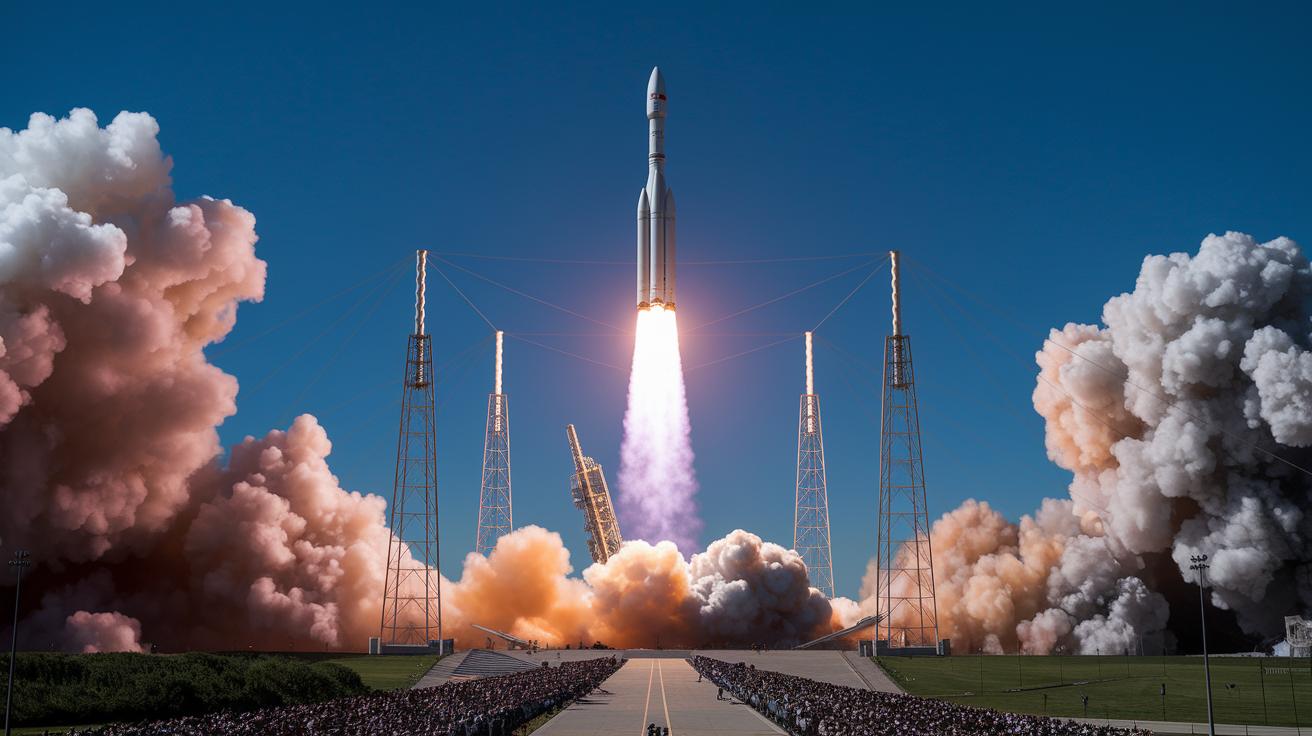
The Vostok program was a major step in taking humans into space. On April 12, 1961, Vostok 1 carried Yuri Gagarin around the Earth, filling people everywhere with amazement. Not long after, Vostok 2 broke records as Titov flew for 25 hours on August 6, 1961. Then in August 1962, Vostok 3 and 4 flew at the same time, showing just how far Soviet engineers were willing to push the boundaries of space travel.
On June 16, 1963, Vostok 6 made history by sending Valentina Tereshkova into space. She became the first woman to travel beyond Earth. These six flights between 1961 and 1963 opened up new frontiers for us. They not only marked many firsts in space but also taught us how people might live and work while orbiting the planet.
Cosmonauts trained for these daring missions at the GCTC. They spent time in centrifuges (machines that spin to create strong forces), flew on zero-gravity flights to feel weightlessness, and even did isolation tests that mimicked life in space. All this hands-on practice helped them get ready for the tough physical and mental demands of exploring outer space.
Voskhod Program Breakthroughs Under Soviet Space Missions
The Voskhod program changed crewed space travel forever. On October 12, 1964, Voskhod 1 made history by sending three crew members into space without any spacesuits. They trusted the spacecraft's built-in life-support system completely, showing that a small team could work well together in the harsh conditions of orbit. It really feels like each moment in space was a brave step toward a bigger future.
Then came Voskhod 2 on March 18, 1965. This mission brought another big change when Alexei Leonov went on a 12-minute spacewalk (an activity done outside the spacecraft). He used a special inflatable airlock that let him float freely outside. This clever setup, along with a new life-support system, let cosmonauts exit the capsule safely without wearing heavy suits. Imagine watching Leonov’s calm jump into weightlessness, a clear sign of human inventiveness.
Plans for a Voskhod 3 were dropped as Soviet engineers decided to focus on improving the Soyuz spacecraft. Their goal was to make future missions even safer and more reliable by putting a lot of effort into refining these systems.
Soyuz Mission Milestones and Legacy in Soviet Space Missions
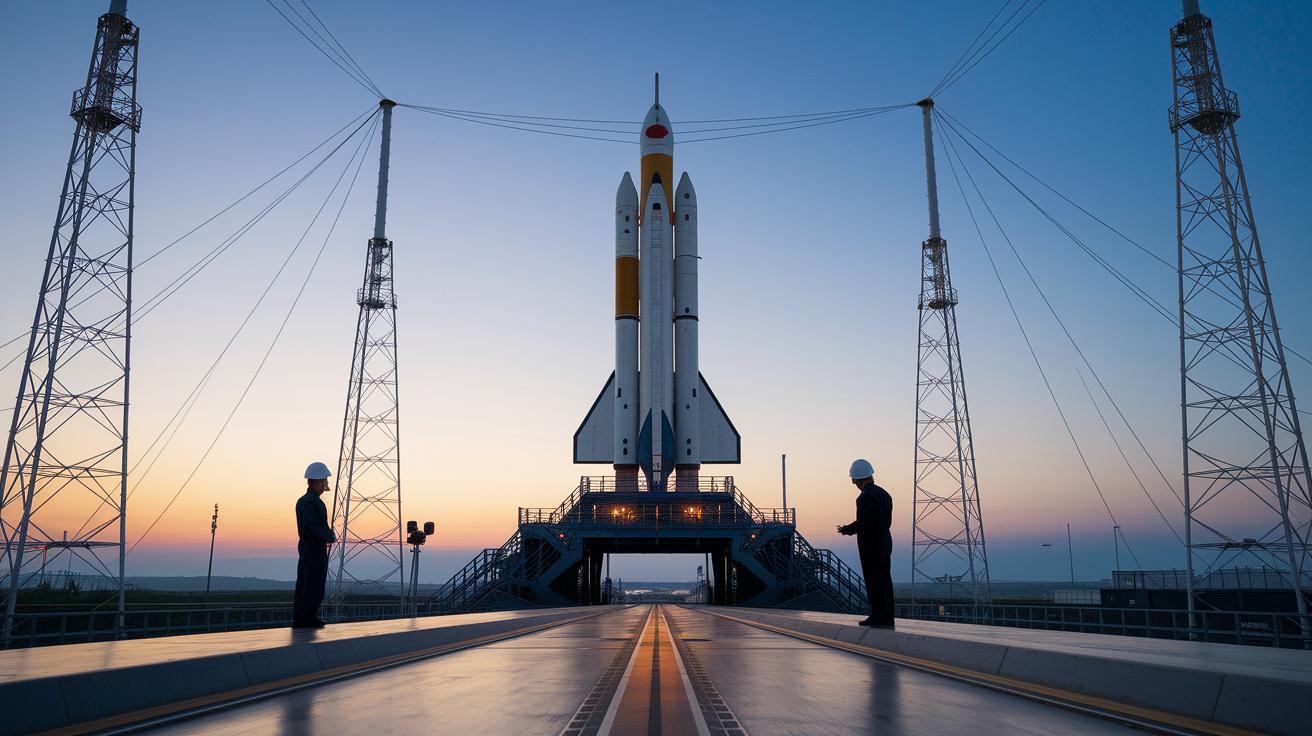
The early Soyuz missions faced tough challenges that really put the Soviet space program to the test. In April 1967, Soyuz 1 ended in heartbreak when a parachute failed, leading to a tragic loss. And then in June 1971, Soyuz 11 suffered a sudden loss of cabin pressure that cost three cosmonauts their lives. These painful setbacks led to a complete review of safety practices, with everyone determined to prevent similar disasters in the future.
Engineers took these lessons to heart and made key improvements to boost the safety and reliability of the spacecraft. For example, Soyuz 3 in October 1968 became a turning point by being the first mission to be flown by a single pilot. This flight proved that with better control and stability, successful missions were possible. With stronger heat shields, improved reentry methods, and thorough safety tests, the Soyuz evolved from a risky experiment into a trusted way to transport crew members into space.
Later on, Soyuz TM-31 in October 2000 showed just how strong these changes were when it safely delivered the first International Space Station crew. As the 84th Soyuz launch, this mission confirmed that the many tweaks had turned the Soyuz into a reliable workhorse for moving astronauts to space. Its ongoing success stands as a lasting reminder of the spacecraft’s resilience and its important role in human space exploration.
Soviet Space Missions: Bold Triumph in History
The Soviet era marked a turning point for space exploration with the creation of orbital stations. These stations gave space explorers a home where they could live, work, and perform experiments in zero gravity (where you don’t feel Earth’s pull). Salyut 1, launched on April 19, 1971, opened up this new frontier by overcoming early challenges with docking and support systems. Later, Salyut 6 improved on this by offering two docking ports so that crew and supply missions could join forces more easily. Then, Salyut 7 took things further by adding onboard workshops for repairs and scientific upgrades, paving the way for even more daring projects.
Mir, which began its journey on February 20, 1986, was a long-lasting and expandable space lab made up of six modules. This modular station let scientists run microgravity experiments (studies in an environment without the normal pull of gravity) in areas like agriculture, materials science, and biomedicine. Researchers on Mir could perform delicate tests to understand life in weightlessness while also solving common problems back on Earth. It truly showcased a unique blend of creative engineering and hard science.
Here’s a quick look at the key parts of Mir:
| Module | Purpose |
|---|---|
| Core | The main living area and control center for the station |
| Kvant-1 | Focused on astrophysical research, letting scientists study outer space |
| Kvant-2 | Ran experiments on life sciences and material properties |
| Kristall | Handled materials processing and physical research experiments |
| Spektr | Provided extra lab space for advanced technology tests |
| Priroda | Offered opportunities for Earth observation and biomedical research |
Isn’t it amazing how each module contributed to making Mir a true pioneering space laboratory? It shows how a bit of creativity and a lot of hard work can push us into exciting new realms.
Uncrewed and Deep Space Probes in Soviet Space Missions
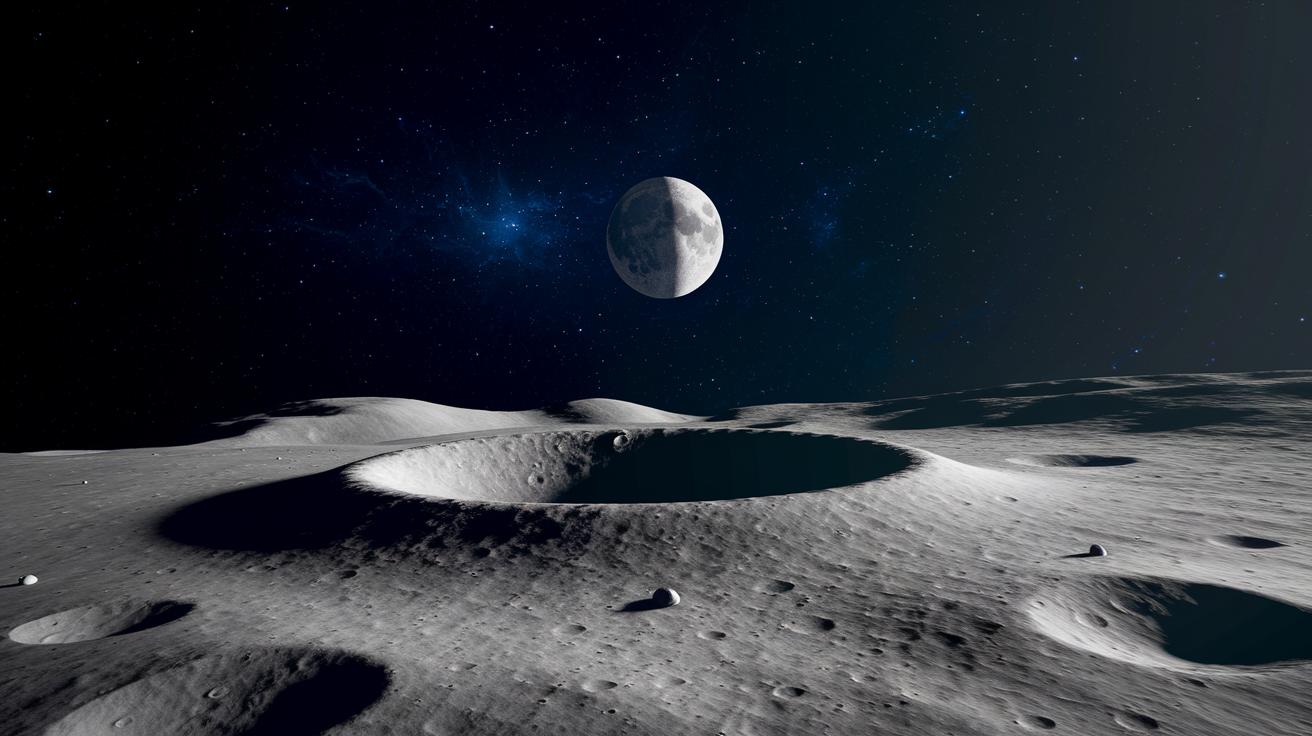
Luna 2, launched on September 14, 1959, made history as the first object to hit the Moon. This early probe was a bold effort by Soviet engineers to explore another world. Its precise impact on the Moon showed off Soviet technology and paved the way for later missions that tested guidance systems (tools that help steer spacecraft) and impact dynamics. Before its famous hit, Luna 2 already proved that interplanetary flight was possible, opening new doors for lunar exploration.
Lunokhod 1 was the first remote rover to be sent into space in November 1970, and it worked for 322 days on the lunar surface. Imagine a small, robotic explorer rolling over the Moon’s barren, dusty ground while capturing images and collecting data. This amazing achievement not only wowed people worldwide but also pushed forward the technology behind remote-controlled deep space missions.
In 1975, the Venera 9 and Venera 10 missions sent back the first clear images of Venus’s surface. And in September 1968, Zond 5 successfully traveled around the Moon while carrying living test subjects, small biosatellites like tortoises and plants. These missions gave us key insights into other planetary environments and showed that unmanned probes can safely and effectively gather important scientific data from space.
Technological Innovations in Soviet Space Missions
Space technology breakthroughs made many Soviet missions possible. For example, the Proton heavy-lift rocket powered the launches of the Salyut and Mir stations, helping heavy and complex spacecraft reach orbit. And then there was the Energia booster, which played a big part by pushing the Buran shuttle on an unmanned automated flight in November 1988. These innovations pushed rocket technology to new limits and proved even the most daring ideas could become real. In fact, Energia helped set the stage for launching vehicles without a human pilot.
Spacecraft designs also got a serious upgrade, making missions safer and smoother. The Soyuz spacecraft saw major improvements with a stronger heat shield and better parachute systems (safety features that slow the craft during landing) to protect its crew when they returned to Earth. Meanwhile, a technique called probe-and-drogue docking became a trusted way to link modules on both the Salyut and Mir stations. Upgrades at TsUP Korolyov further refined how mission control tracked and managed these journeys. Together, these changes reshaped how missions were planned, executed, and monitored.
| Technology | Achievement |
|---|---|
| Rocket | The Proton heavy-lift rocket powered Salyut and Mir launches |
| Shuttle | The Energia booster drove Buran’s unmanned automated flight |
| Reentry | The Soyuz’s improved heat shield and parachute systems ensured safe landings |
| Docking | Probe-and-drogue docking provided reliable module connections |
| Telemetry | Upgrades at TsUP Korolyov boosted mission monitoring and control |
Cold War Race Dynamics in Soviet Space Missions
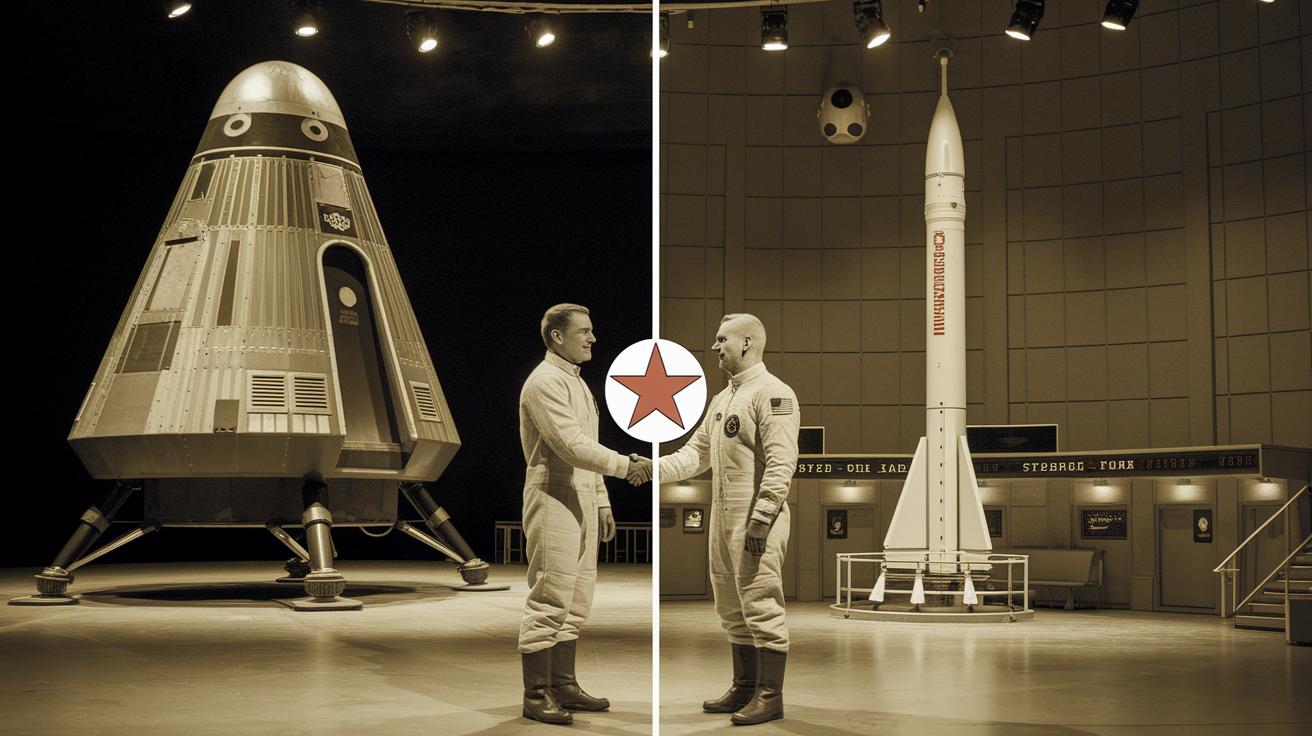
During the tough days of the Cold War, the Soviet Union made its space missions a proud symbol of national honor. When Sputnik I soared into orbit and surprised the world, the United States quickly responded by launching Explorer I in January 1958. Each mission was more than just a technical win, it was a clear message of strength and determination.
Political tension and fierce competition sometimes led to unexpected moments of teamwork. On July 17, 1975, the Apollo-Soyuz Test Project showed that even rivals could join forces. Before space docking became a common event, this mission brought diplomacy and technical skill together to ease political strain while still keeping the competitive spirit alive.
Money and resources played a big role, too. Budgets soared as the Soviets aimed to outdo their geopolitical competitors with cutting-edge technology. Every mission milestone not only proved their technical ability but also boosted the nation's standing during a time when space achievements were seen as a sign of strategic power.
Cosmonaut Feats and Training Regimes in Soviet Space Missions
Soviet cosmonaut selection wasn’t your everyday routine. They chose explorers who were ready for space in a way that blew past typical training. Instead of just practicing drills, they used creative, hands-on training that completely changed how missions were planned.
The training built both muscle and mental toughness. It was designed to make cosmonauts quick thinkers and strong problem solvers. In fact, early programs had simulations that were so real, candidates often felt like they were stepping into the unknown.
These unique methods helped cosmonauts bring sharp, rapid responses to unpredictable situations during missions. Their problem-solving skills and fresh approaches gradually influenced how space missions were run, setting a new standard for performance.
When accidents happened, they didn't just brush them aside. Instead, thorough investigations led to big changes in space safety. After digging into early mishaps, experts updated systems to better protect crews during and after missions, a lesson that still shapes space travel today.
Declassified and Undocumented Flight Records of Soviet Space Missions
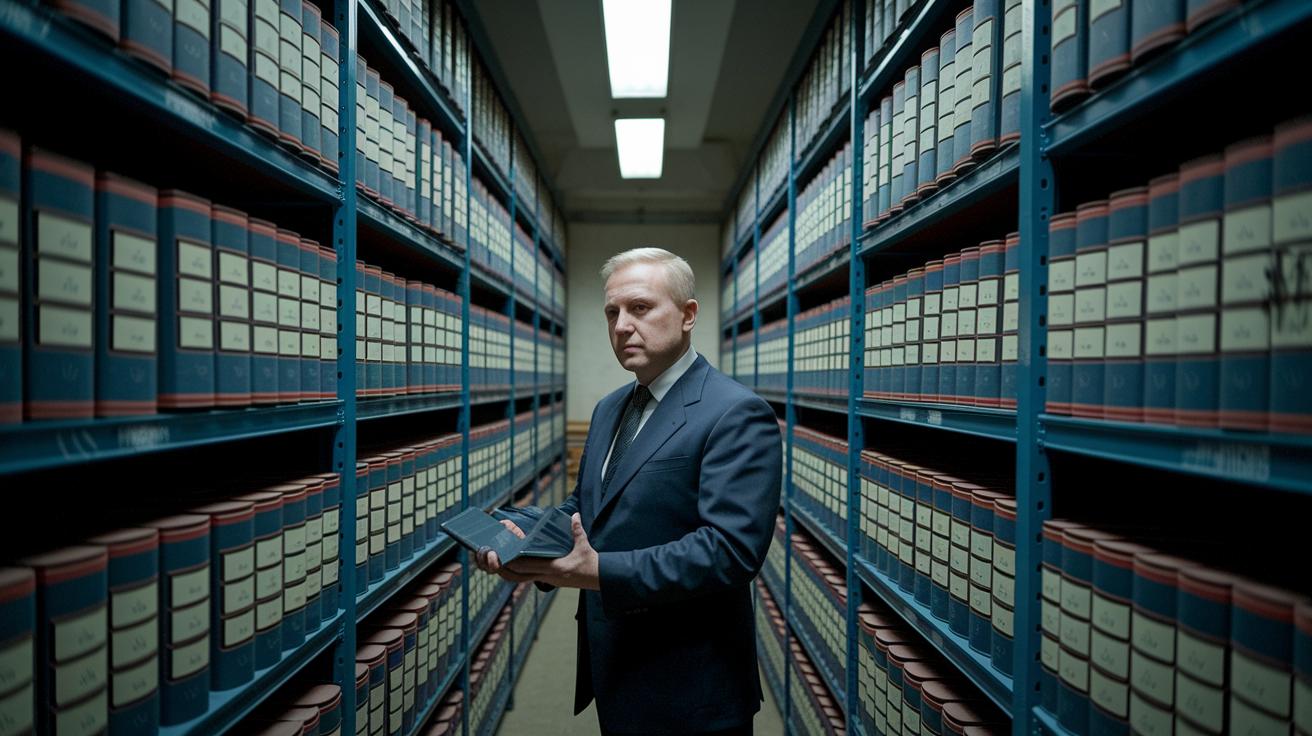
Rumors about lost cosmonauts once captured the public’s imagination. But recent research into old files shows these stories aren’t backed up by any official records. Declassified files and mission logs tell us that no hidden deaths occurred during those early flights. When documents were made public during the Glasnost period, we began to see forgotten details about Luna test-flight failures and other early missions. Today, researchers explore the TsPK and TsUP archives, piecing together mission logs to show us what truly happened behind the scenes of Soviet space projects.
Take the Buran program, for example. It stayed shrouded in secrecy until the late 1980s, reminding us of a time when classified projects dominated public life. New findings help clear up long-held myths and confirm that official records back up the real history. This work ensures these brave missions are remembered for their true achievements.
Final Words
in the action, this piece brushed over a timeline of milestones, from the first Sputnik flights to the defining Soyuz and orbital station achievements. It looked at the pioneering efforts of Vostok and Voskhod, deep space probes, and key updates in technology and safety. We also took a glance at how training and declassified records add depth to our grasp of these events. Soviet space missions remind us that science sparks enthusiasm and keeps us excited about exploring the unknown.