

Have you ever thought that a huge mistake in space might actually lead us to a breakthrough? When a mission doesn’t go as planned, it shows us that even small errors can have a big impact. Early design mistakes in spacecraft remind us that little slips can change the course of space exploration. Every setback is a chance to learn and improve. When we look closely at these challenges, we see real examples of how they help us build better systems and push forward toward our next big discovery.
Historic Aerospace Accidents and Orbital Failure Timeline
Space missions have become more complex as scientists aim higher and push further into the unknown. Every new mission brings fresh challenges, and even a tiny mistake in a spacecraft's many systems can lead to big problems. For example, early missions like Mariner 1 remind us that a small error in coding can stop a mission before it even leaves the ground.
As missions become more advanced, studies show that the risk of failure is still high, even though improvements over time have reduced some of these rates. Each failure gives us a chance to learn and fix future mistakes. This timeline brings together some notable setbacks to help us understand both the history and the ongoing challenges in space exploration.
| Mission | Date | Agency | Failure Cause |
|---|---|---|---|
| Mariner 1 | July 22, 1962 | NASA | Guidance coding error |
| Ariane 5 | June 4, 1996 | Arianespace | Onboard computer fault |
| Mars Climate Orbiter | September 23, 1999 | NASA | Unit conversion error |
| NOAA Satellite | 2003 | NOAA | Bolt refitting failure |
| Genesis | 2004 | NASA | Parachute malfunction |
This timeline shows a clear pattern: small technical glitches, whether in software, mechanical parts, or operations, can disrupt a mission in a big way. It is a reminder that even with the latest technology, human error and equipment limits are still major challenges in space exploration.
Space Shuttle Misadventure Accounts: Challenger Catastrophe and Columbia Tragedy
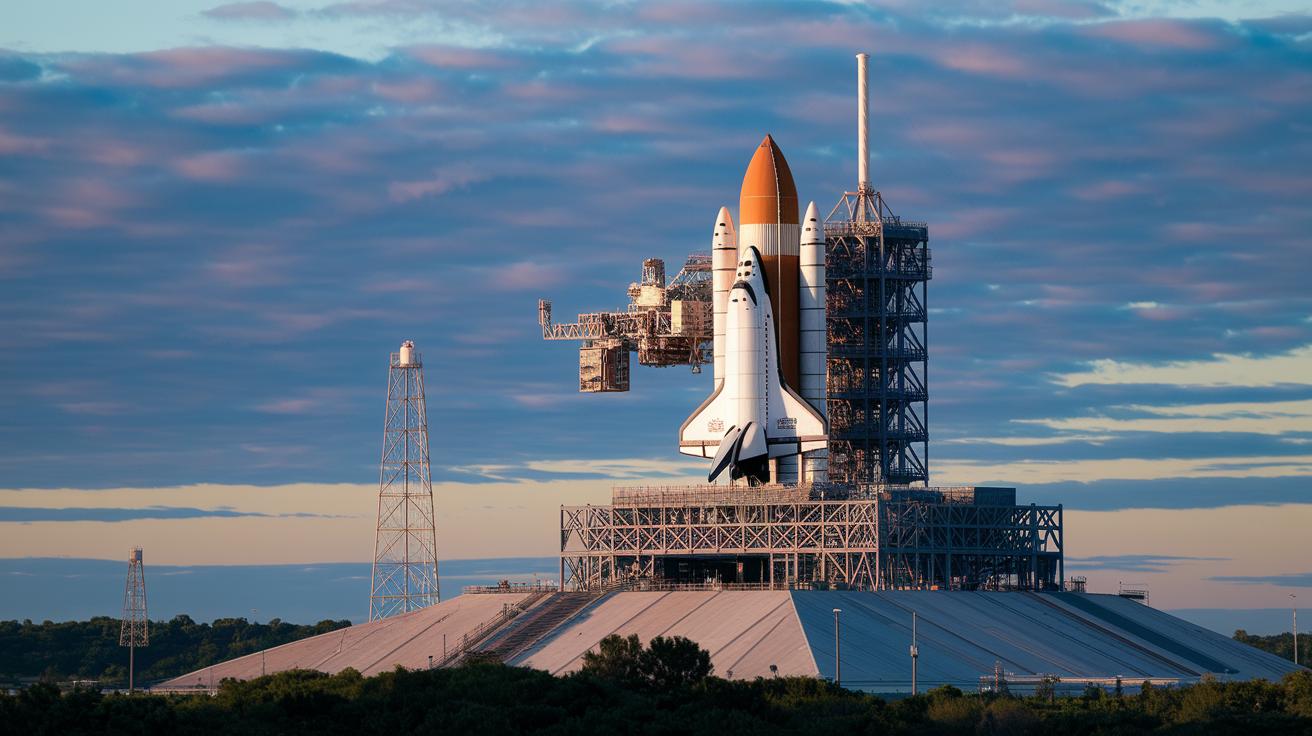
Both missions were set up to push science forward and deliver important payloads, but they also carried big dreams that ended in heartbreak. Challenger (STS-51-L) took off on January 28, 1986. Its plan was to launch satellites and do various scientific and business experiments. It was all about exploring space and showing off American tech skills. Meanwhile, Columbia (STS-107) was ready to run tests in microgravity (a place where gravity is very weak) and demonstrate new technologies. It hoped to build on many years of shuttle success by carrying out lots of research projects in orbit. Both flights were meant to help us learn more about space and to open doors for future journeys.
But things went very wrong, very fast. Unseen technical problems turned these carefully planned missions upside down. For Challenger, just 73 seconds after takeoff, a small part called an O-ring (a type of seal) got affected by cold weather and failed. This tiny malfunction sparked an explosion that wiped out the shuttle. Columbia experienced its own disaster during reentry. A piece of foam hit the shuttle and damaged the heat shield on its left wing. That damage made the shuttle break apart as it hurtled through the atmosphere at nearly 23 times the speed of sound.
Next, here’s a timeline of the critical moments for each mission:
| Critical Moment | Challenger (STS-51-L) | Columbia (STS-107) | ||||||||||||||
|---|---|---|---|---|---|---|---|---|---|---|---|---|---|---|---|---|
| Launch | Successful liftoff | Successful liftoff | ||||||||||||||
| Failure Event |
| Mission | Year(s) | Objective | Technical Issue and Outcome |
|---|---|---|---|
| Mariner 1 | 1962 | Test deep-space navigation | A tiny missing symbol in the guidance code sent the spacecraft on the wrong path. Because of this, safety protocols cut the flight short. |
| Mars Climate Orbiter | 1998–1999 | Monitor Martian weather | They used the wrong unit of measure (lbf·s instead of N·s) for navigation data. This error made the spacecraft dip 57 km lower than planned, leading to its breakup in the atmosphere. |
| Genesis | 2001–2004 | Collect solar wind samples | A faulty parachute during reentry caused a crash. Most of the sample collectors shattered, and only a few samples survived. |
Mariner 1’s failure shows just how a tiny coding mistake can derail an entire mission. Imagine planning a perfect journey and then finding out that one missing symbol upended everything mid-flight.
The Mars Climate Orbiter incident teaches us that even a small mix-up in units can have dangerous consequences. A simple error in measurement led the spacecraft to a dangerously low entry point into Mars’ atmosphere, proving that every calculation counts.
In the Genesis mission, a malfunctioning parachute during reentry ruined nearly all of the hard-earned solar wind samples. Picture the disappointment of working hard to capture these samples, only to have faulty reentry hardware break most of them apart.
Overall, these events remind us that every technical detail matters in space exploration. Each incident offers valuable lessons about the many challenges faced in unmanned space missions, connecting the story of these missteps to the larger quest for discovery.
Soviet and Russian Space Mission Breakdowns and Soyuz Mishaps
Phobos 1 launched in 1998 to take a close look at Mars. But on September 2, a small error on the ground turned off its thrusters, and the spacecraft lost contact before it could fly by Mars. It’s a clear reminder that even a tiny mistake in sending commands can lead to a big loss. Imagine building a finely tuned machine and then it suddenly goes silent because of one slip-up in the message.
Soyuz 11 marks another sad chapter in space history. On June 30, 1971, while returning to Earth, the spacecraft’s cabin lost pressure unexpectedly. This error tragically cost the lives of cosmonauts Dobrovolsky, Volkov, and Patsayev. They were on an important mission, and a failure to maintain cabin pressure turned their brave journey into a heartbreaking loss. It makes you pause and wonder about the serious impact even a small malfunction can have.
The Nauka ISS module had its own challenges too. Originally set for a 2007 launch, it finally arrived on July 19, 2021, 14 years later than planned. An unexpected thruster firing caused the station to rotate out of line before a manual fix could get it back on track. While this mishap wasn’t as severe as the others, it still shows the challenges engineers face when controlling such complex missions.
These events have led to big changes in Soviet and Russian space programs. In response, teams carried out detailed reviews and made updates to mission protocols and safety measures. Nowadays, every small detail is double-checked, and clearer communication rules are in place to prevent similar errors from happening again.
Root Causes of Space Mission Failures: Engineering Miscalculations and Human Error
When you look closely at space mission setbacks, it becomes clear that many failures happen because small mistakes in checking and following processes can add up. These errors have pushed engineers to change design rules and mission management tactics, aiming to cut down risks in every new project.
- Software issues: Tiny coding mistakes have led teams to create tougher testing routines so that a little glitch today won’t cause a big problem tomorrow. One small error even forced a complete review of quality control.
- Conversion mix-ups: When measurements get mixed up, engineers now use strong cross-check systems to handle data correctly. A single unit error showed everyone the need for better data verification.
- Hardware and design faults: Miscalculations in design have meant that inspections now dive deeper and manufacturing checks are more detailed. One design mistake led to adding advanced material tests.
- Human process errors: Simple oversights have highlighted the advantage of automated systems that double-check critical steps, lightening the load on people. One missed step was the spark for creating automatic process alerts.
These lessons are now central to space mission planning, from the very first lines of software code to the final bits of hardware. By tightening rules and introducing smarter checks, the chances of making the same mistake twice are much lower, building a culture where continuous improvement is the norm.
Recovery Challenges and Implications of Failed Space Missions
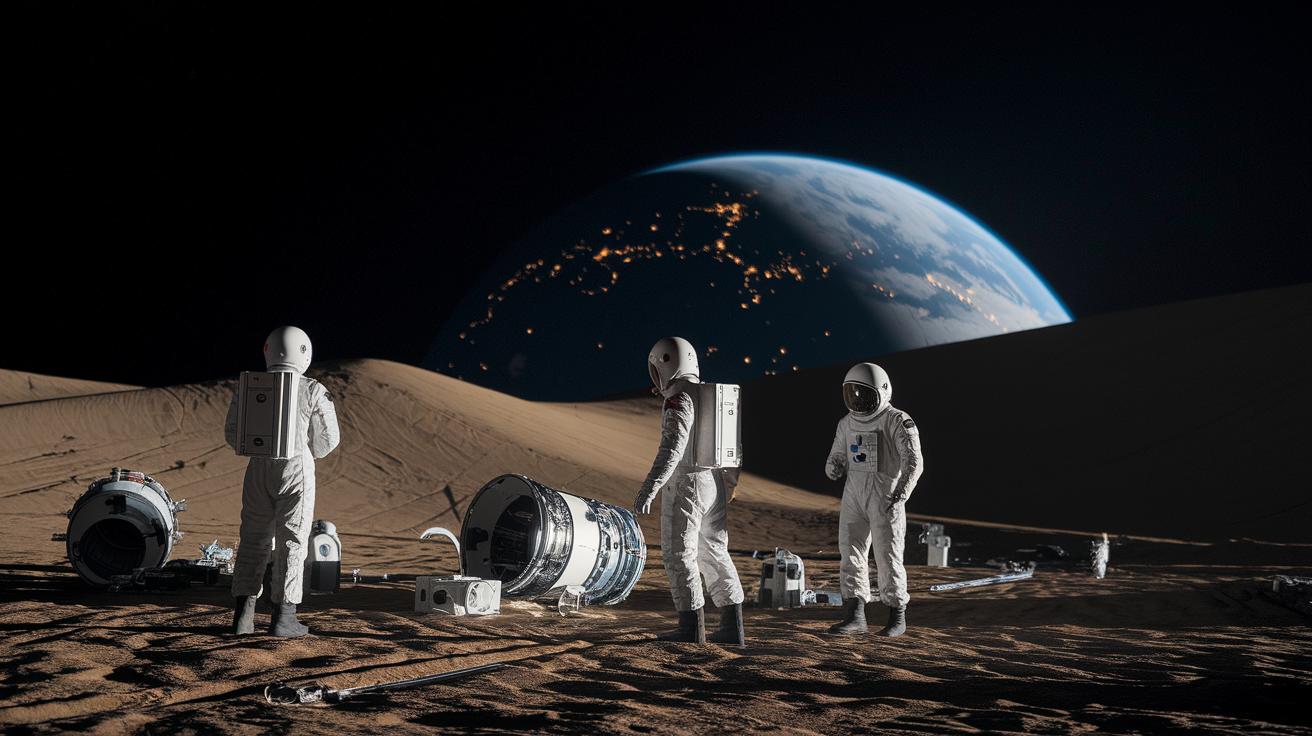
When a space mission fails, getting the hardware back is a big challenge. In the Genesis mission, for example, the team only managed to retrieve bits of the solar wind sample collectors, and they ended up with contamination that forced strict lab rules. Similarly, during the Cassini-Huygens mission in 2004, a radio activation problem meant that engineers had to troubleshoot mid-flight while key parts were at risk. And then there are older missions like Mariner 1 and Ariane 5, whose pieces still lie in hard-to-reach areas because no active recovery plans were ever set up. These examples really show how hard it is to recover hardware safely when things go wrong.
Crews in space face extra challenges beyond just getting hardware back. After the Challenger and Columbia disasters, there were no on-orbit rescue plans, so the astronauts had to rely solely on the strength of their spacecraft and guidance from mission control on the ground. This gap in rescue planning left many critical issues unresolved. Today, mission plans do focus more on quick safety checks and improved protocols, but setting up tools to rescue astronauts in space still remains a tough job. This reminds us that even with modern technology, we still need to push for better in-flight disaster responses to keep our space crews safe.
Lessons from Failed Space Missions: Evolution of Safety Measures
When space missions don’t go as planned, engineers learn a ton. They study every failure to find the weak spots and then fix them so future flights are safer. Every mistake teaches them a valuable lesson that helps protect both the crew and the equipment in space.
After the Challenger accident, experts came up with new ways to handle emergencies during takeoff. They added more escape options and reinforced important joints on the solid rocket boosters (big rockets that help during launch). For example, engineers redesigned seals and built stronger structures to handle sudden changes in temperature.
Following the Columbia tragedy, teams began doing careful checks of the heat-shield tiles (special tiles that stop the shuttle from burning up) while the shuttle was still in space. They even carry repair kits to fix any small damage on the spot. This hands-on method has made flights safer and helped the crew feel more confident during reentry.
Improved data systems and detailed checklists now guide every review of a mission. Computers send real-time data back to ground controllers so they can keep an eye on every part of the shuttle, and checklists ensure that nothing important is missed. These tools help turn raw data into a powerful way to avoid simple mistakes.
New platforms like Epsilon3 make it possible to work together in real time, offering instant feedback to catch problems early. Instead of waiting for a post-flight report, teams can fix issues immediately during the mission.
Today’s space missions are built on nonstop monitoring and flexible safety plans. Every flight benefits from the lessons learned in the past, ensuring that we continue to improve safety in the vast, challenging environment of space.
Final Words
In the action, we traced major setbacks from early guidance code errors to the tragic losses of Challenger and Columbia. We uncovered how technical glitches and human oversights fueled transformative safety measures and evolved mission protocols. Step by step, the article outlined notable aerospace accidents, unmanned mishaps, and even recovery challenges. Each case provided insights into making space travel safer and more precise. Our review of failed space missions reminds us that every setback pushes forward a smarter, better future in space exploration.
FAQ
What are some common examples of failed space missions, including historical and current ones?
The failed space missions list includes early incidents like Mariner 1 and Mars Climate Orbiter, along with crewed failures such as Space Shuttle Columbia. These cases show varied causes and evolving challenges in space exploration.
How have crewed failures influenced safety measures in space missions?
The impact of failed space missions with humans, like Columbia and Challenger, led to overhauled safety protocols and design reviews, making today’s space missions more resilient with improved engineering practices.
What happened during the Space Shuttle Columbia incident in 2003?
The Space Shuttle Columbia incident in 2003 involved the shuttle disintegrating on reentry due to foam damage on its wing, marking a tragic event that spurred a comprehensive safety review for crewed flights.
What do we know about the loss of 19 astronauts in space missions?
The mention of 19 astronauts lost in space covers multiple tragic events. These fatalities have prompted thorough investigations that have driven key improvements in crew safety and operational protocols.
What are considered some of the worst space accidents recorded?
The worst space accidents include high-profile disasters like the Columbia and Challenger missions, along with significant unmanned mission failures, each of which has guided critical enhancements in safety and mission design.
When did the most recent failed space mission occur, and what does it reflect?
The question about the last failed space mission points out that even modern launches face challenges. This timing reflects persistent technical risks, reminding us that risk management is an ongoing priority in space travel.
How many SpaceX missions have experienced failures?
The count of failed SpaceX missions is relatively low compared to overall launches. This success underscores SpaceX’s iterative testing and learning approach, which plays a key role in refining rocket technology.

Categories:
Hot right now:
Company:
Follow on:
We participate in marketing programs, our content is not influenced by any commissions. To find out more, please visit our Term and Conditions page.