
Ever wondered how fast our planet really spins? Imagine you're on a vast racetrack where the land, water, and air all move together. In this post, we'll break down how quickly Earth rotates, from the super-fast pace at the middle of the planet to a gentler turn near the poles. Get ready for clear numbers and plain explanations that show just how dynamic our world really is.
Earth’s Equatorial Spin Rate: Precise Speed Values
Earth spins on its axis every 24 hours, which means it makes one full turn each day. The equator stretches about 24,898 miles (40,070 km) around the planet. When you divide that distance by 24, you find that something at the equator zooms along at roughly 1,037 mph (1,670 km/h). It’s like the Earth is one giant racetrack that finishes a lap every day!
| Unit | Speed at Equator |
|---|---|
| mph | 1,037 |
| km/h | 1,670 |
It’s pretty cool to realize our planet is moving so fast, even if we don’t feel it. Knowing that a 24-hour spin packs such a huge distance into our day shows just how dynamic our world really is. Imagine standing right at the equator and moving at over a thousand miles per hour, all without a hint of dizziness, because everyone, every ocean, and every bit of air is moving in sync with Earth’s rotation. This simple calculation really brings home how rapid Earth’s spin can be.
Variation of Earth’s Spin from Equator to Poles

Our planet’s spin isn’t the same everywhere because Earth is round. The closer you are to the equator, the longer the path you travel as Earth turns. On the flip side, move toward the poles and the circle you trace gets smaller, which slows down your speed.
Imagine standing at 45° latitude. Here, Earth’s spin feels noticeably slower. This happens because we can use a simple idea from math, the cosine of 45° (about 0.707), to adjust the speed we feel at the equator. So if the equatorial speed is about 1,037 mph, multiplying by 0.707 gives you roughly 733 mph (or 1,180 km/h). Think about it: you’re halfway between the equator and the pole, and even though your journey is almost 30% shorter, you’re still moving incredibly fast.
Now, picture being right at the poles. Your circular path shrinks down to almost a single spot. Even though Earth completes a full rotation every 24 hours, the speed right there is nearly zero because you’re just turning in place. It’s like the planet’s motion almost disappears in that spot.
Unit Conversions & Measurement Techniques for Earth’s Spin Rate
Scientists figure out how fast Earth spins by taking the distance around the equator and dividing it by a 24-hour period. This simple math lets us see the huge journey made at the equator as a clear speed. For example, breaking the equatorial circumference into day-long segments shows us exactly how quickly our planet turns.
- Astronomical observations of fixed stars – watching far-off stars (ones that seem to stay in the same spot) shift as Earth rotates.
- Foucault pendulum experiments – using a swinging pendulum to show the effect of Earth’s turning in a way you can actually see.
- Satellite laser ranging and VLBI – bouncing lasers off satellites and using groups of radio telescopes (VLBI means Very Long Baseline Interferometry, which is just a fancy way of saying many telescopes working together) to capture detailed data on Earth’s rotation.
- GPS and atomic-clock timing – combining very precise satellite signals with atomic clocks (super accurate timekeepers) to track how Earth turns every single second.
Modern technology has really sharpened our measurements. With better GPS networks and the accuracy of atomic clocks, scientists can now spot even tiny changes in Earth’s spin. These tools turn what used to be a rough guess into a clear, second-by-second look at our planet’s steady yet rapid movement.
Why We Don’t Feel Earth’s Fast Rotation

Imagine gliding along in a car with perfectly smooth roads, you wouldn’t even notice you’re speeding. That’s a bit like how we experience Earth’s spin. The ground we stand on, the water we splash in, and even the air we breathe all move together in a quiet, steady dance as our planet spins. It’s a smooth ride that keeps us blissfully unaware of the rapid motion.
Because everything moves in harmony, there’s no sudden bump or jolt to signal that you’re cruising at over a thousand miles per hour at the equator. The earth’s spin creates a gentle outward push (called centrifugal force), which barely eases gravity’s pull, only by about 0.3%. Even when you jump or take a walk, this tiny force remains hidden, and your inner ear doesn’t pick up on it.
In short, our senses simply aren’t built to notice such a smooth, constant motion.
Distinguishing Earth’s Spin and Orbit: Rotation Versus Revolution
How Earth Spins
Earth spins around once every 24 hours. That means every part of our planet, from the deep blue oceans to the tall mountains, makes a full turn in just one day. Near the equator, this spin causes things to move at about 1,037 mph (1,670 km/h). This constant spin brings us day and night and is a steady rhythm we experience every day.
Earth’s Journey Around the Sun
Our planet takes one full year to circle the Sun. Even though it seems like Earth is slowly drifting, it actually speeds along at roughly 67,100 mph (30 km/s) on its path and covers about 584 million miles (940 million km) in a year. This smooth, ongoing trip shapes our calendar and brings about the changing seasons.
When you compare these two motions, it’s clear they operate on very different scales. The quick, daily spin is something we feel all the time, while the slower, annual journey is like a grand voyage through space. Both moves play a special role in our lives, mixing burst speeds with the wonder of immense distances.
Impact of Earth’s Spin on Gravitational Forces and Day-Night Cycle
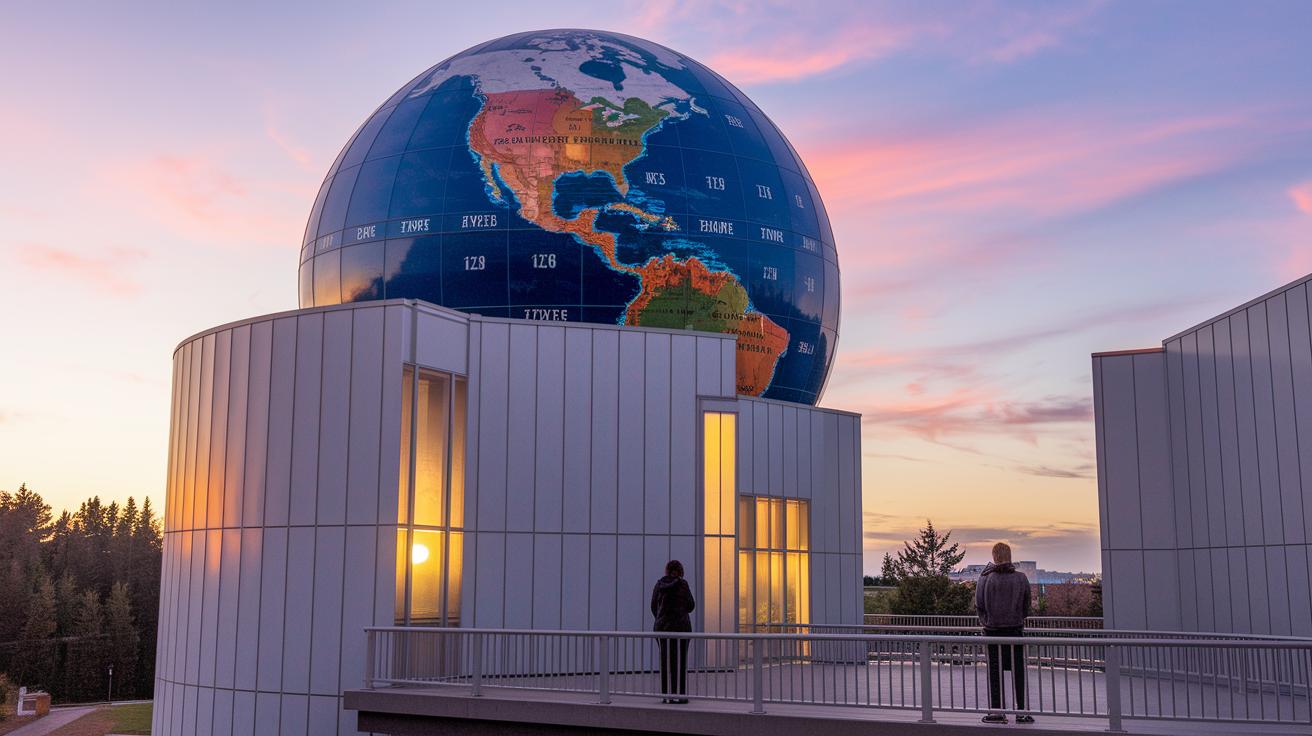
Did you know that Earth’s 24-hour spin not only brings us day and night but also sets up time zones around the globe? As our planet turns, it gently kicks weather and ocean currents into action. For example, as the sun moves slowly over the land, the shift from light to dark helps push air around, which in turn shapes local climates in a quiet yet steady way. It’s almost like the soft rhythm of sunlight is turning both our clocks and nature’s own flow.
Also, Earth’s spin creates a small centrifugal force that makes gravity a little weaker, about 0.3% less at the equator than at the poles. While this tiny difference won’t change your weight when you step on a scale, it does help guide the movement of air and water. So, even these small forces are part of a bigger picture that links our everyday routines with the planet’s broader climate patterns.
Earth’s Spin within Solar System and Galactic Motion
Our solar system glides through the Milky Way at about 447,000 mph (roughly 200 km/s). The Sun, our brilliant star, keeps pace at nearly 448,000 mph (or 720,000 km/h). Scientists work out these massive speeds by tracking satellites and using Doppler methods (simple techniques that spot shifts in light when objects move), though there's roughly a 10% uncertainty, about 20 km/s.
When you stack these galactic speeds up against Earth’s equatorial spin of about 1,037 mph, the contrast is pretty wild. Just imagine: while our daily spin carries us at a smooth 1,037 mph, the Sun races ahead at almost 448,000 mph. It really puts into perspective that our everyday motions are just small steps in a vast, energetic cosmic dance.
Historical Observations and Proofs of Earth’s Rotation
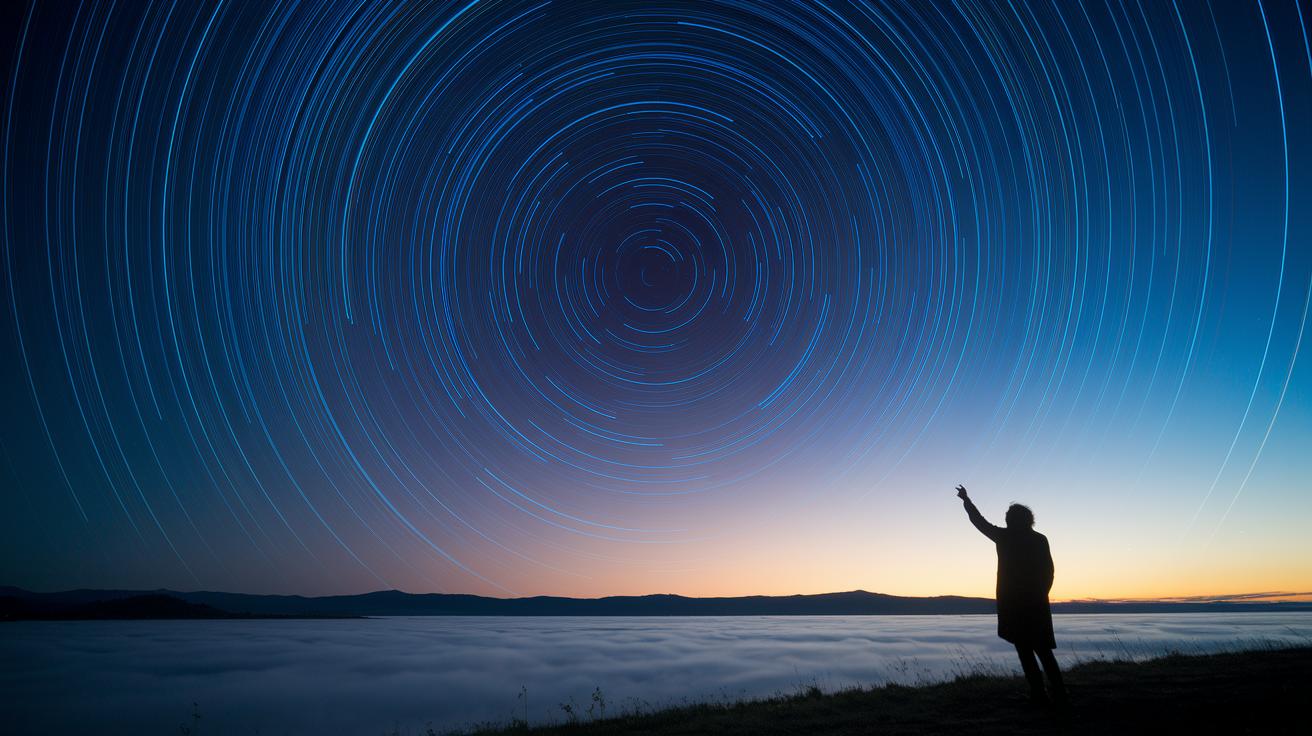
Long ago, people gazed up at the starry sky and believed that the sun and stars moved around them. They didn’t notice any motion on the ground, so it felt like the sky was turning while the Earth stayed still. Ancient storytellers explained what they saw by imagining a spinning sky, not realizing that it was actually our planet on the move.
Later on, scientists began using satellites and GPS (a tool that helps you know exactly where you are) to prove that Earth spins every 24 hours. They tracked signals bouncing off our planet, a method called satellite geodesy (measuring Earth using satellite signals), which gave them detailed measures of Earth’s daily turn. With the help of very precise atomic clocks in GPS systems, we now have clear, easy-to-understand data that shows Earth is constantly rotating. This modern evidence settles the old mystery for good.
Final Words
In the action, we examined Earth’s steady 24-hour rotation, outlining speed changes from the equator to the poles using clear numerical values and measurement techniques. We also explored how Earth’s spin shapes day and night while placing it in context with larger cosmic movements. These insights tackle the question, how fast does the earth spin, in a friendly and easily understood way. The discussion leaves us inspired by our planet’s dynamic and ever-present motion.
FAQ
How fast does the Earth spin at the equator in mph and km/h?
The Earth spins at about 1,037 mph and around 1,670 km/h at the equator. This speed stems from its 24-hour rotation and a circumference of nearly 24,898 miles.
How fast does the Earth spin in a minute and per second?
The Earth’s equatorial spin breaks down to roughly 17 miles per minute and about 0.28 miles per second, calculated by dividing its hourly speed by the appropriate time unit.
How fast does the Earth spin around the sun?
While our planet spins on its axis at high speed, it also orbits the sun at approximately 67,100 mph. These two motions are distinct, with the orbit taking one full year.
Why can’t we feel Earth’s fast rotation?
The Earth’s rapid spin goes unnoticed because its surface, along with the air and water, moves uniformly. Our senses aren’t tuned to detect this steady, constant motion or minor centrifugal differences.
Does the Earth complete a full spin in 24 hours?
The Earth completes one full rotation on its axis every 24 hours, a movement that creates the familiar cycle of day and night experienced around the globe.
What would happen if the Earth stopped spinning?
If the Earth suddenly stopped spinning, it would disrupt weather patterns, ocean currents, and gravity-related forces, leading to dramatic changes in environmental and geological conditions.

