
Ever wonder if building real machines could change our world more than just tweaking software? Hard tech is all about creating things you can touch, pushing engineering into unexpected places. Imagine engineers trying out a full digital model of a factory line as a practice run before making any real changes. They take ideas that work and quickly bring them into everyday life. This approach not only speeds up progress but also makes us rethink what technology can really do when it's built for real life.
Hard Tech Sparks Remarkable Engineering Advances
Hard tech is all about creating real, physical products and systems. It goes beyond just writing code. Engineers work on developing hardware parts and specialized software that support machines and production processes. For instance, imagine a team building a digital twin (a virtual copy of a real system) of a production line. This lets engineers try out improvements in a simulated setup before making any real changes.
Today, the focus has shifted away from small software tweaks to bold, capital-heavy projects. These projects involve designing precision machines and new electronic circuits. While many breakthroughs start with basic research (often called low TRL levels, which means just the beginning stages of testing), hard tech usually works with ideas that have already been proven (mid-level TRLs above 3). This means products can hit the market faster, even though there’s still a lot of competition.
Industries like precision tool manufacturing and high-performance computing rely on hard tech. These areas need long development times and expert engineers because the work is complex and must be trusted to perform well in the real world. Overall, the steady move toward hard tech shows that investors are once again betting on solid hardware solutions to drive big changes in engineering.
Hard Tech vs Deep Tech and Software: Key Distinctions
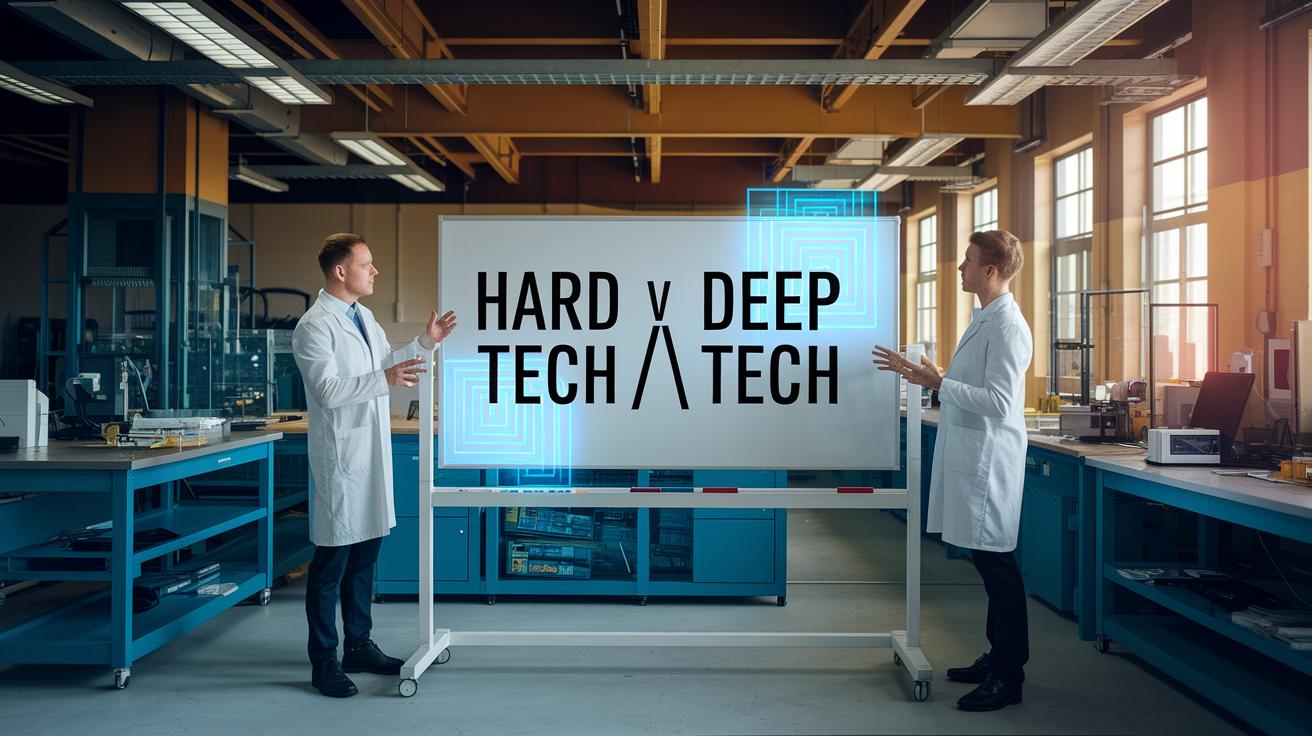
When we say hard tech, we mean projects that build on proven science and solid engineering to create real, tangible products. Hard tech picks ideas that have already shown some promise during testing and pushes them to market quickly. Deep tech, on the other hand, starts much earlier, often in the lab (TRL 1-3) where scientists work with basic science to explore new ideas.
Software projects usually center around writing code and creating digital solutions. Hard tech, however, dives into mixing machinery, circuits, and overall system design. It even touches on sectors like manufacturing software and digital twin platforms (virtual models of physical items), but it goes further by actually prototyping electronic circuits and the next generation of circuitry. Often, hard tech includes embedded system solutions that control hardware in real time.
This kind of innovation needs a blend of talent, from engineers to designers to scientists, all working together to turn ideas into practical, working products. In truth, by focusing on how parts come together in the real world, hard tech clearly stands apart from efforts that rely only on software or remain in early research stages.
Hard Tech Evolution: From Silicon Valley Hardware Era to Today
It all began with a few groundbreaking inventions. In 1968, Intel launched its memory chips, followed by the debut of the Apple I in 1976 and Cisco routers in 1984. Each step built tough tech challenges and set high standards for their companies. I still recall how news of a new chip that transformed computer performance left everyone in awe. In those early Silicon Valley days, innovation meant mixing creative design with hands-on skill. But soon, investments shifted toward internet platforms and software instead of physical products.
After 2020, investors started to be more selective. They began to focus on projects that produce real, tangible systems. New ideas in robotics, automation, and smart production are capturing attention now. It’s interesting to see how we moved from a time of pure digital solutions to a renewed love for physical innovation. Have you ever felt that thrill when a new gadget finally emerges after a long testing phase? That excitement mirrors today’s shift in tech.
Today, hard tech projects stand out by blending tried-and-true science with modern engineering. They need special skills and long development times, yet they promise breakthroughs that change entire systems. The journey from Silicon Valley’s early hardware days to the current boost in smart manufacturing shows that engineers never stop pushing what machines can do. This modern hard tech pays tribute to past successes while paving the way for future innovation.
Hard Tech Challenges and Risk Management
Hard tech projects come with both market and technical risks that need smart planning and thorough testing. There's a rule called Perkins' Law that tells us when a technology is tried and true, companies often face more market uncertainty. In simple terms, even if a product is built well, showing that it works reliably in the real world can take several sales cycles. It's a bit like checking your measurements before you cut, careful planning now can save you a lot of trouble later.
To tackle these risks, founders and engineers rely on strong design methods and strict testing routines. They often plan sales cycles that stretch over several quarters to make sure every part of the machine performs as expected. Plus, safety standards in automation protect not only the equipment but also the people operating it.
Key practices include:
- Creating detailed testing routines that mimic real-world conditions.
- Using precision manufacturing techniques to ensure high-quality production.
- Planning product life cycles that support growth and long-term performance.
In today’s competitive market, sticking to these practices can be the difference between a product that endures and one that struggles. Careful planning, rigorous design, and ongoing testing are vital for overcoming both the technical and market challenges inherent in hard tech innovation.
Hard Tech Case Studies: Boom XB-1 Supersonic Jet and Cruise Innovations
Boom’s XB-1 is a true game-changer in hardware. This jet became the first independent supersonic plane by using a composite design that mixes lightweight materials with real strength. Its high-performance engine pushes speed limits, and every part is carefully put together so everything fits perfectly. When the XB-1 took its first flight, it showcased breakthrough tech in next-generation electronics (advanced circuits and computers) and navigation systems. Imagine a test readout saying, "The XB-1 flight proved the power of mixing cutting-edge circuitry with high-powered engines." That moment really captured its innovation.
Similarly, Cruise’s self-driving vehicle project is making waves in the hard tech field. Led by Kyle and Dan, the team built a system that quickly prototypes sensors, smart computer programs (AI that helps machines think), and car parts all working together. Every new sensor tweak and software update makes the vehicle a bit smarter and more reliable. When everything clicks, someone might say, "Our new sensor design is as precise as a well-tuned machine." This shows how each component plays a vital role in a harmonious system.
Even Sam Altman’s public support highlights that hardware startups are stepping up to real-world challenges. By blending advanced engineering with rapid prototyping, these projects mark a shift toward tech that requires deep expertise and strong manufacturing standards.
Key parts of these case studies include:
| Feature | Example |
|---|---|
| Composite-airframe design and advanced propulsion | Boom’s XB-1 |
| Rapid prototyping and integrated AI systems | Cruise’s autonomous vehicles |
These examples are reshaping how new technology is built and used in both aerospace and automotive fields. It's amazing to see how careful design and smart engineering come together to push the boundaries of what we thought possible.
Hard Tech Investment Landscape and Funding Dynamics

Investors are backing hardware projects that show a strong hold on the market and reach clear technical targets. With rising interest rates and venture funds getting choosier, every funding round must be planned with care. Founders spread out their investments over stages like developing prototypes, testing in small-scale production, and then full-scale manufacturing. Think of it like assembling a machine piece by piece, each part must work perfectly before you add the next.
Take YC partner Jared Friedman’s journey, from his early days at Scribd to his current role with hardware startups. His career shows a clear shift: investors now match funding with the actual progress of a company’s technology. In simple terms, companies attract money based on how far along they are in their engineering rather than just the market buzz.
Investors focused on hard tech typically look for:
- Clearly defined milestones during early prototypes and tests.
- Careful spending that balances the longer sales cycles of capital-heavy projects.
- Production systems that prove they can scale up effectively.
Did you know a single funding round, from prototype to full-scale production, can shape the future of a tech company? It’s a bit like building a high-performance engine one precise part at a time. This approach is changing the investment scene by ensuring projects move forward step by step while keeping long-term risks in check. By linking each stage of progress to the right capital, investors are helping build robust engineering ventures in today’s competitive market.
Hard Tech Trends: Manufacturing Automation, Digital Twins, and IoT Integration
Robotics and smart sensor systems are changing the way we build things in factories. Robots now handle many assembly tasks, making production lines smoother and more consistent. Meanwhile, AI-powered control systems are on hand to tweak machine performance as needed in real time. For example, smart sensors pick up small problems before they turn into big ones. This hands-on approach boosts the overall stability and efficiency of the manufacturing process.
Digital twins, virtual copies of real production systems, are a game-changer. They let engineers try out new ideas and test processes on computer models before putting anything into action on the factory floor. This means design cycles shrink by up to 30%, and it’s easier to plan maintenance before issues really occur. On top of that, IoT (Internet of Things, or networked devices) connects all the equipment, allowing for real-time monitoring and quick fixes when something seems off. That way, manufacturers can adapt on the fly to keep quality and production high.
Key advancements include:
- Robotics in production for quick, efficient assembly
- Digital twins for testing ideas and reducing design time
- IoT for live monitoring and fast problem solving
Smart factory advances blend self-operating systems with precise digital techniques. These trends don’t just ramp up efficiency, they set the stage for new technologies in electronics and processing, ensuring that production stays both flexible and robust in our fast-changing world.
Final Words
In the action, the article explored how hard tech combines solid engineering and manufacturing know‐how to tackle challenging projects in today’s market. It compared hard tech with early-stage technologies and highlighted its evolution from classic hardware breakthroughs to modern advancements in automation and IoT. The post also examined case studies and funding dynamics that shape this field. There’s plenty to be excited about as hard tech continues to boost innovation and transform everyday life. Stay curious and keep an eye on these inspiring developments.
FAQ
What are hard tech startups?
The hard tech startups are companies that focus on creating tangible products like advanced machinery or integrated circuits rather than solely producing software. They usually require specialized engineering and longer development periods.
How do hard tech and deep tech differ?
The hard tech and deep tech differ in that deep tech involves early-stage research (TRL 1–3) while hard tech builds on proven science and focused engineering, leading to products with faster market readiness and lower technical risk.
What does the hard tech era mean in Silicon Valley?
The hard tech era in Silicon Valley indicates a renewed focus on capital-intensive hardware projects, spurred by AI innovations and a shift back to investing in physical engineering breakthroughs over purely software-based models.
What is meant by hard tech music?
The hard tech music refers to an electronic music style that features heavy, mechanical beats and industrial sounds, reflecting technology’s influence on production and modern musical aesthetics.
What are some examples of hard tech?
The hard tech examples include advanced industrial machinery, precision manufacturing tools, digital twin modeling, and high-performance computing systems where robust hardware design is critical to performance.
What are hard tech skills?
The hard tech skills involve expertise in physical hardware design, systems integration, engineering practices, and manufacturing techniques that together support the development of tangible, reliable technology products.
What is the difference between hard tech and soft tech?
The hard tech and soft tech difference lies in focus; hard tech centers on physical product development and engineering, while soft tech emphasizes digital solutions and software creation to drive innovation.