
Have you ever wondered how something could be billions of years old? Scientists tell us Earth is around 4.54 billion years old, which is pretty mind-blowing. Imagine a clock that never stops ticking, marking time with each tiny change in atoms (the small bits that make up everything). This constant ticking reveals a story that goes all the way back to when our solar system was first taking shape.
When we look at ancient rocks, we see Earth not just as our home but as a dynamic planet that has been slowly transforming for billions of years. Isn't that something to think about?
Earth’s Age in Numbers: How Long Has Our Planet Existed?
Billions of years ago, tiny radioactive particles began their steady decay, marking time in a way that tells the epic story of our planet from its fiery birth to the present day.
Scientists have worked out that Earth is about 4.54 billion years old, with an error margin of roughly 50 million years. Back in the 1950s, researchers first used a technique called radiometric dating (a way to track tiny changes in atoms over time) on space rocks and Earth samples. This method watches unstable atoms slowly turn into stable ones, giving us a clear timeline of Earth’s history.
Over the years, scientists have tested and refined this approach with many different samples. Every new study has confirmed that our planet is incredibly old, billions of years old, in fact. And when you think about it, the rocks and minerals around us began forming almost at the start of our solar system. It’s pretty amazing to realize how long our world has been churning through the ages.
Dating Earth's Age: Radiometric Analysis Techniques

Radiometric dating is a neat method for figuring out how old Earth is by checking how fast certain radioactive atoms change into stable ones. Basically, unstable atoms (called parent isotopes) slowly decay into stable atoms (daughter products) at a constant pace. When scientists measure the ratio between these two, they can tell how long it’s been since a rock formed. One of these methods even helped set our planet's age at about 4.5 billion years.
One big breakthrough happened back in the 1950s. Geochemist Clair C. Patterson studied lead isotopes from the Canyon Diablo meteorite using uranium-lead dating on zircon crystals (tiny minerals that hold ancient records). His work gave us a dependable "clock" to read Earth’s history and sparked more advances in dating techniques.
There are several radiometric dating techniques that help us understand Earth’s age. They include:
- Uranium-Lead dating on zircon crystals
- Potassium-Argon dating in volcanic layers
- Rubidium-Strontium dating of igneous rocks
- Samarium-Neodymium dating of ancient crust samples
Every method relies on a special decay process unique to different minerals. Scientists choose the best approach based on the rock’s history and the specific isotopes present. These techniques have been thoroughly tested and are very accurate. When multiple methods give the same result, our confidence in Earth’s age grows even stronger. And as new technology emerges, these dating methods continue to improve, revealing more about our world’s incredible deep history.
how long has planet earth existed: Timeless Age
For centuries, folks had many different ideas about how our planet came to be. Aristotle and other ancient Greek thinkers even said Earth had no beginning at all. At the same time, some old Indian texts mentioned a timeline of about 1.97 billion years. Long before modern science, philosophers and scholars spun their own tales of Earth’s formation, while some biblical interpretations suggested our planet was only about 6,000 years old. This sparked lively debates as new ideas began to emerge.
In the 1700s and 1800s, breakthroughs in geology and physics started to change our thinking. Scientists observed rocks, fossils, and the way Earth’s surface moves, and they soon realized our planet is much older than some early views claimed. Researchers began using solid, testable evidence, and radiometric dating techniques (methods that use the decay of certain elements to measure time) later confirmed that Earth has been around for roughly 4.54 billion years.
This discovery was a major turning point. It helped transform our understanding from ancient legends to facts we can observe and measure.
Cosmic Formation Timetable: When Did Planet Earth Form?
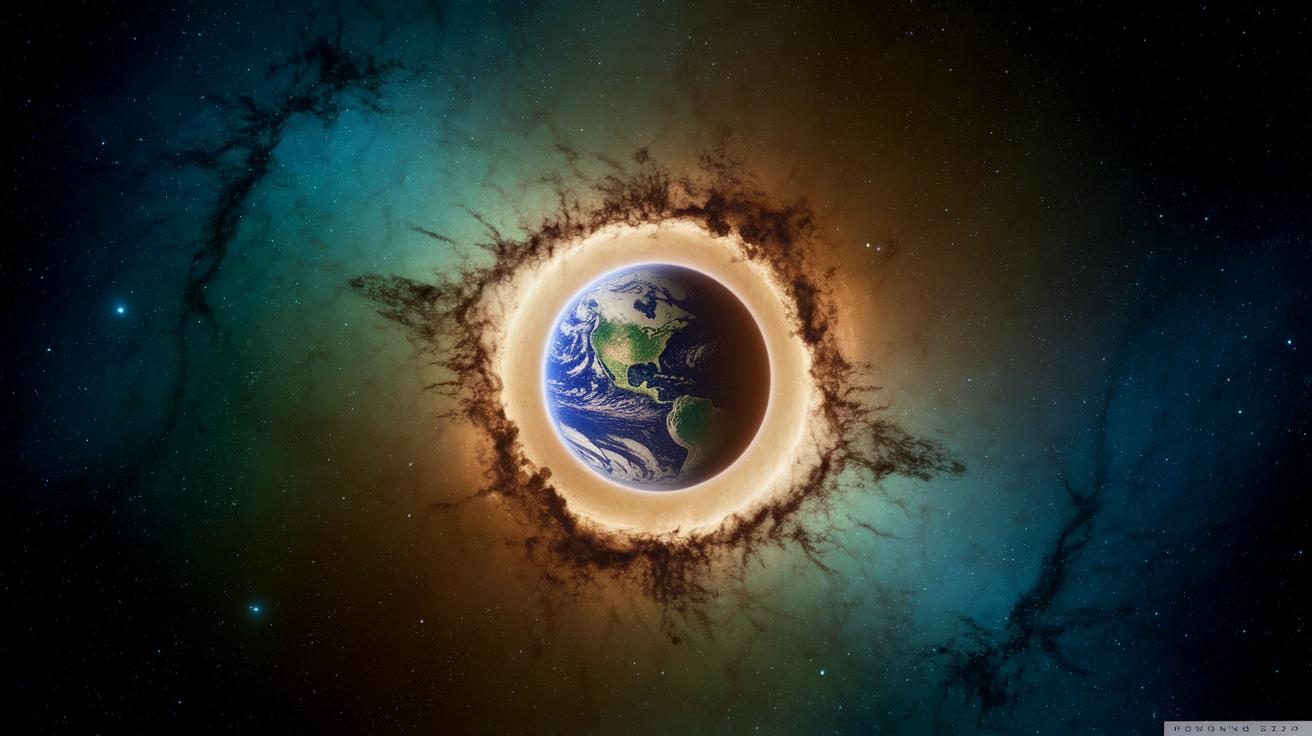
Earth’s story started with the Big Bang almost 13.8 billion years ago. Right after that huge explosion, the universe cooled down and expanded, setting the stage for everything we see today. Then, about 4.6 billion years back, a giant cloud of gas and dust, what we call a solar nebula, spun around and eventually formed the Sun and our planets. Tiny particles began to stick together, slowly building up Earth around 4.54 billion years ago.
Soon after, the planet went through a big change. The heavier parts sank to become Earth’s core while lighter materials floated up to make up the mantle and crust. This important process happened roughly 4.4 billion years ago.
This timeline shows how our cosmic home came together through a series of natural events. Each step, from the Big Bang to Earth’s layered structure, has been confirmed by many scientific methods. If you’re curious to learn more about how the universe works, check out the science breakthroughs in space exploration for extra insights.
| Event | Approximate Age |
|---|---|
| Big Bang | 13.8 billion years ago |
| Solar Nebula Collapse | 4.6 billion years ago |
| Earth Accretion | 4.54 billion years ago |
| Core-Mantle Differentiation | 4.4 billion years ago |
Geologic Time Scale Overview: Earth's Eons & Eras
Have you ever wondered how our planet's past gets organized? Earth's entire history is split into huge chapters known as eons. These aren’t just dates on a calendar, they each tell a story of a world that looked very different from today. For example, the first chapter, the Hadean, describes a time when our planet was super hot and wild. Then came the Archean, a period when the very first hints of life began to appear in an environment that was still pretty unpredictable.
Next up is the Proterozoic, when things started to get calmer and oxygen (the gas we breathe) began to fill our air. Finally, we have the Phanerozoic. This is the part of Earth’s story where a rich variety of plants and animals evolved, making it easier for us to see how life has grown and changed over billions of years.
| Eon | Time Span |
|---|---|
| Hadean | 4.54 – 4.0 billion years ago |
| Archean | 4.0 – 2.5 billion years ago |
| Proterozoic | 2.5 – 0.54 billion years ago |
| Phanerozoic | 0.54 billion years ago – present |
Within the Phanerozoic eon, the story of life splits further into three eras: Paleozoic, Mesozoic, and Cenozoic. Imagine Earth as a giant, ever-changing canvas, long before complex creatures roamed its surface, the planet was busy being reshaped by nature's brushstrokes. Every eon and era adds a special ingredient to the long tale of our world, proving that, whether in a whirlwind of change or a calm period of growth, each moment has played a key role in shaping the Earth we know today.
how long has planet earth existed: Timeless Age
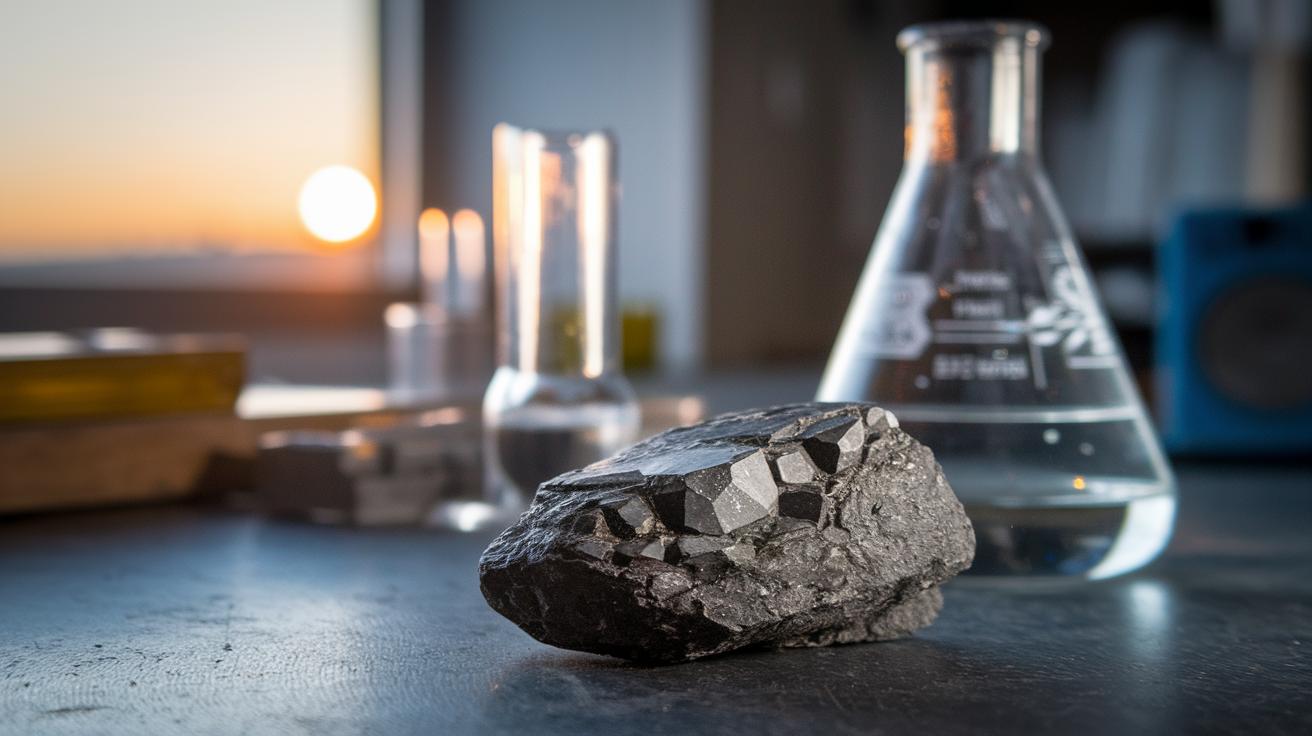
Scientists figure out Earth’s age by using special methods that measure radioactive decay (a natural process that changes elements over time) along with clues from old fossils. For instance, tiny crystals called detrital zircons found in Western Australia tell us the planet is about 4.4 billion years old. Other clues come from studying lead in a space rock, the Canyon Diablo meteorite, which points to Earth being roughly 4.54 billion years old. Plus, finding small fossils in rocks that are 3.5 billion years old shows that life had already begun by then.
Key evidence includes:
- 4.4 billion-year-old zircons from Jack Hills
- 4.54 billion years from lead measurements in the Canyon Diablo meteorite
- 3.5 billion-year-old microfossils found in stromatolites
Imagine these zircon crystals as nature’s time capsules. Picture discovering a tiny crystal that survived billions of years and holds secret clues about how our planet was formed.
Comparing Earth's Age: Planet Earth vs. Sun & Universe
Earth has been around for about 4.54 billion years. That might sound like forever, but when you compare it to the whole cosmos, it’s just a little piece of the puzzle. The Sun came into being around 4.6 billion years ago, so it and Earth really started their journey together.
Now, take a step back to look at the bigger picture: the Universe is about 13.8 billion years old. That means Earth has seen roughly one-third of all time since the cosmos began. Imagine a giant clock where Earth is just a small slice of the long timeline of everything that exists.
Here’s another mind-blowing thought. In about 7.5 billion years, the Sun will run out of its hydrogen fuel and expand into its later stages. This change is expected to be so dramatic that the Sun might even swallow Earth. It’s wild to think that our star could one day change the fate of its closest planet.
In short, our little home is just a young spark in an ever-changing, vast universe.
Final Words
In the action of exploring Earth's timeline, we uncovered details from zircon dating to cosmic milestones. We examined radiometric methods that reveal our planet's ancient past and discussed how theories have evolved over time. We also placed Earth alongside the Sun and broader cosmic events to give perspective on how long has planet earth existed. Each piece of rock and fossil evidence adds a spark to our understanding, showing that science can be both clear and inspiring. Keep that curiosity alive!
FAQ
Q: How long has planet Earth existed in years?
A: When we look at Earth’s history, it has existed for about 4.54 billion years based on radiometric dating methods.
Q: How does Earth’s existence compare to that of humans?
A: Earth’s age stands at roughly 4.54 billion years, while humans evolved only a few hundred thousand years ago, making human history much shorter.
Q: What was the first year on Earth called or when did the Earth start?
A: The concept of a “first year” doesn’t apply, but Earth’s formation began around 4.54 billion years ago when it started gathering matter from surrounding space.
Q: How old is the universe compared to Earth?
A: Cosmic measurements reveal that the universe is about 13.8 billion years old, meaning Earth is roughly one-third of that age.
Q: How old is life on Earth and when did it first appear?
A: Fossil evidence shows that life started on Earth around 3.5 billion years ago with early forms like stromatolites marking its onset.
Q: When did humans first appear on Earth?
A: Scientific research indicates that modern humans emerged about 300,000 years ago, a blink compared to Earth’s ancient timeline.
Q: How do Earth’s age and those of other planets compare?
A: While each planet has its own formation nuances, Earth, Mars, Venus, and even gas giants like Jupiter all formed around 4.5 billion years ago, placing them in the same ballpark age-wise.