
Have you ever paused to notice the wind swirling around you or wondered how a river finds its way through the land? Science takes those curious thoughts and turns them into clear ideas.
It starts with a simple look at the world and making a smart guess, then checking it out with a basic experiment. That process helps us see how things naturally fit together.
In the end, science lets us spot little patterns in what seems like chaos, helping us understand our world bit by bit.
Understanding the Goal of Science: Defining Its Core Objective
Science is all about spotting the patterns in nature. It asks simple but powerful questions to help us understand how things work. For instance, the same ideas that explain how a river flows can also show us how air moves in a breeze. Isn’t that pretty amazing?
At its heart, science involves making smart guesses (we call these hypotheses, which are just ideas we want to test) and then running experiments to check if those guesses might be true. Think about a scientist noticing that plants lean toward sunlight and then setting up different light conditions to see how they grow. In doing so, careful observations lead to solid conclusions about nature.
Science rests on three main steps:
- Observing and describing what happens around us.
- Using data to predict what might occur next.
- Testing our ideas to explain why things happen.
These steps work together to form the backbone of every scientific project. By watching nature closely, scientists can record events without jumping to conclusions. Making predictions based on real data helps draw a clear link between cause and effect. And by testing ideas, we steadily improve our understanding and open the door to new questions and discoveries. In short, curiosity about everyday happenings can transform simple observations into powerful insights about our world.
The Goal of Science in Historical Context
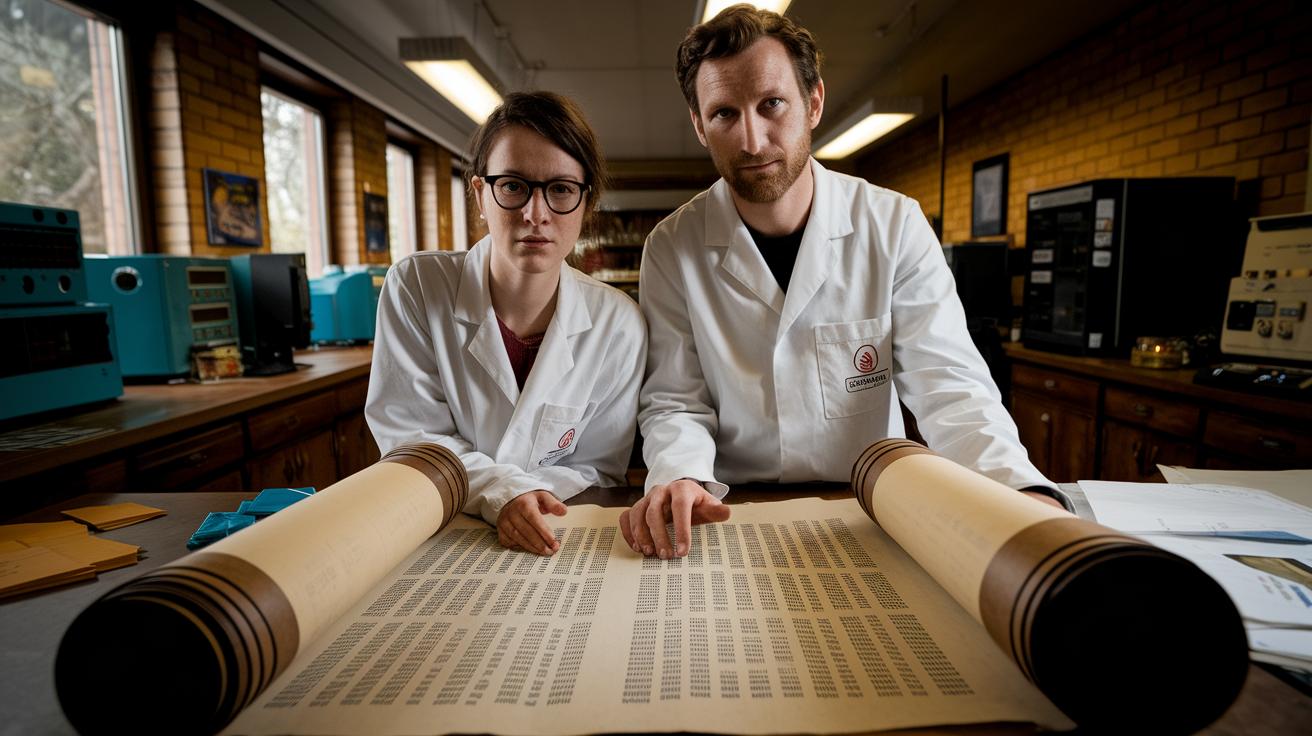
In the early days, curious minds began exploring the world around them. Natural philosophers watched objects fall, observed the shifting seasons, and admired the twinkling stars, all without any modern tools. Their simple observations sparked big questions about nature, laying the groundwork for careful study.
One major breakthrough came with the Human Genome Project, which lasted from 1990 to 2003. This project set out to map every human gene, driven by pure curiosity rather than immediate practical needs. By repeatedly testing and observing details, scientists uncovered amazing truths about life, and their method paved the way for many future discoveries.
Later, the idea of falsifiability changed modern science. Falsifiability means that any claim has to be set up so it can be proved wrong if the facts don’t match up. Karl Popper popularized this idea, and soon scientists were designing experiments to test and even challenge what we thought we knew about gravity, genes, and atoms. This approach helped build a culture where ongoing testing makes our understanding of nature clearer every day.
Applied Goals of Science: From Theory to Practical Discovery
Applied science takes the ideas from basic research and turns them into real tools that make our daily lives better. It changes theories into helpful gadgets and treatments, opening doors to new ways to improve technology and healthcare. For example, early studies that explore how nature works can serve as a blueprint for breakthroughs that impact our world. Moving from pure understanding to practical action is a big part of how science drives progress, as seen in the innovations mentioned in "Key Factors Driving Scientific Breakthroughs" (https://buzzyandclever.com?p=1700).
In medicine, researchers are looking at whether combining ketamine with an antidepressant can reduce depression symptoms more effectively than using an antidepressant by itself. They focus on how ketamine interacts with brain receptors like NMDA (helpful for nerve communication) and AMPA (which supports mood and thinking). By testing these ideas carefully, scientists gather useful insights that could lead to better treatment options for mood disorders.
Similarly, behavioral studies are asking if listening to classical music can lower a dog's heart rate and blood pressure. In these experiments, scientists set up tests to see if calming music can ease anxiety in dogs. This kind of hands-on research shows how trying ideas in everyday settings can lead to solutions that make life better.
The Goal of Science in Driving Technological and Societal Evolution

Science has opened doors to amazing advances in computers, clean energy, and healthcare services you can get over a video call. It shows us that careful experiments, even the small ones in quiet labs, can spark inventions that change how we live every day. These little tests often grow into big ideas that help solve everyday problems and even spark more discovery.
Scientific discoveries are making our daily routines easier and our communities closer. Think about smart devices that share information in a flash or solar panels that help power our homes. With every new breakthrough, science is quietly and steadily updating the way we live, making things work better and more sustainably.
New findings in health, like better ways to diagnose illnesses and treatments that actually work faster, are lifting the quality of life for people all over the world. Thanks to persistent research, doctors now have improved ways to care for us, which means healthier lives and stronger communities. Each experiment, no matter how tiny it may seem, plays a role in making a real difference in our daily lives.
Every step of scientific research, from rigorous testing to thoughtful review by other experts, helps shape safe and smart policies. These careful checks lead to debates that refine our understanding and guide changes in how we run our cities and care for our health. In truth, the ongoing process of testing and discussion is what keeps our society moving forward, ensuring that both our technology and our day-to-day quality of life keep improving.
Future Directions: The Ongoing Goal of Science in Exploration and Inquiry
Scientists are diving into new research areas that push the limits of our past understanding. Quantum computing is gaining ground, and it holds the promise of simulating atomic interactions in a way that might completely change how we approach medicine and create new materials. New space instruments with super-sensitive sensors are ready to listen to the quiet hum of the cosmos, offering clues about far-off planets and dark matter. Meanwhile, AI tools are stepping in to sift through mountains of data, spotting patterns that were once lost in the background noise. Fun fact: quantum computers can solve some problems in seconds that might otherwise take traditional computers years!
Researchers are now faced with challenges that need flexible, experimental designs. They are combining digital simulations (advanced computer models) with hands-on experiments to better understand everything from tiny particles to giant cosmic events. This mix of computer-predicted insights and real measurements is not just a repeat of old methods, it’s carving out fresh, unconventional paths to explore scientific questions.
Experts from physics, computer science, and astronomy are coming together like never before. By fusing data-driven ideas with practical experiments, these interdisciplinary teams are rethinking how research is done. Their collaborative work is lighting up new ways to explore untouched corners in science and to understand the dynamic dance between technology and nature.
Final Words
In the action of exploring science’s layered purpose, we saw how careful observation, thoughtful experiments, and valid tests shape our understanding of nature. Each section brought clarity, tracing science’s roots, testing theories, applying insights, and steering progress in everyday life.
As you ask what is goal of science, consider how these steps empower us to tackle real-life questions and spark new ideas. The future remains bright and inviting.
FAQ
What is the goal of science simple definition?
The goal of science is to understand the natural world by observing, predicting, and explaining events through systematic inquiry and careful experimentation.
What are the primary goals of scientific research and psychology?
The primary goals involve describing phenomena through observation, predicting outcomes using data, and explaining causes via hypothesis testing; in psychology, these steps help us better understand behavior and mental processes.
What is the goal of science and technology?
Science and technology work together to build knowledge and offer practical solutions, turning ideas into tools and methods that improve our everyday lives.
What are science goals for students?
Science goals for students include learning to observe carefully, ask thoughtful questions, experiment to test ideas, and analyze evidence to make sense of everyday events.
What are 5 goals of scientific research?
Scientific research aims to describe natural phenomena, predict specific outcomes, explain underlying causes, apply findings to solve real problems, and improve overall quality of life.
What are 5 reasons science is important and which of these is a goal of science?
Science is important because it builds critical thinking, fosters innovation, improves health and living standards, drives material progress, and helps explain the world around us.

