
Ever wonder how a simple experiment can lead to huge discoveries? Researchers start with everyday ideas and then test them out to gather real proof. They begin with small lab tests and build on them with heaps of data that guide what comes next. By mixing hands-on experiments with computer models (simulations that mimic real-life conditions), scientists show that even tiny observations can spark big changes. Step by step, these early guesses turn into the breakthrough findings we depend on today.
Foundational Methodologies Fueling Breakthrough Discovery
Basic science methods mix fresh ideas with careful testing to push forward breakthrough discoveries. Researchers start with a simple guess and use hands-on experiments to see if their idea works in the real world. Think back to the 2010s when tools like ChatGPT and Midjourney changed daily workflows, proving that new ideas can spark rapid progress.
Big data projects also play a big part. By examining huge piles of both organized and unorganized information, scientists can build models that help governments and businesses predict future events. Every tiny result from this work adds up, making our overall understanding of complex systems stronger and more reliable.
Quantum computing is another exciting piece of the puzzle. This technology uses super tiny transistors (about two nanometers in size) to test wild theories that once only lived in our imaginations. At the same time, nanotechnology works at an even smaller scale, around one nanometer, which lets researchers handle really tiny structures like the DNA helix. These careful studies are key to making big breakthroughs.
Then there’s CRISPR-Cas9 gene editing. This technique, which earned a Nobel Prize in 2020, allows scientists to tweak, copy, or switch off genes with amazing precision. It shows how moving from a simple idea to tested evidence can change our lives.
Other areas, like metamaterials, such as light aerogels and shape-memory metals, and modern space exploration, add even more to the picture. From the historic Apollo XI mission to today’s unmanned space flights and the International Space Station, each step builds on solid, repeatable experiments. In truth, these methods form the very backbone of how we make new, exciting discoveries in science.
Advanced Experiments and Cutting-Edge Simulation Techniques
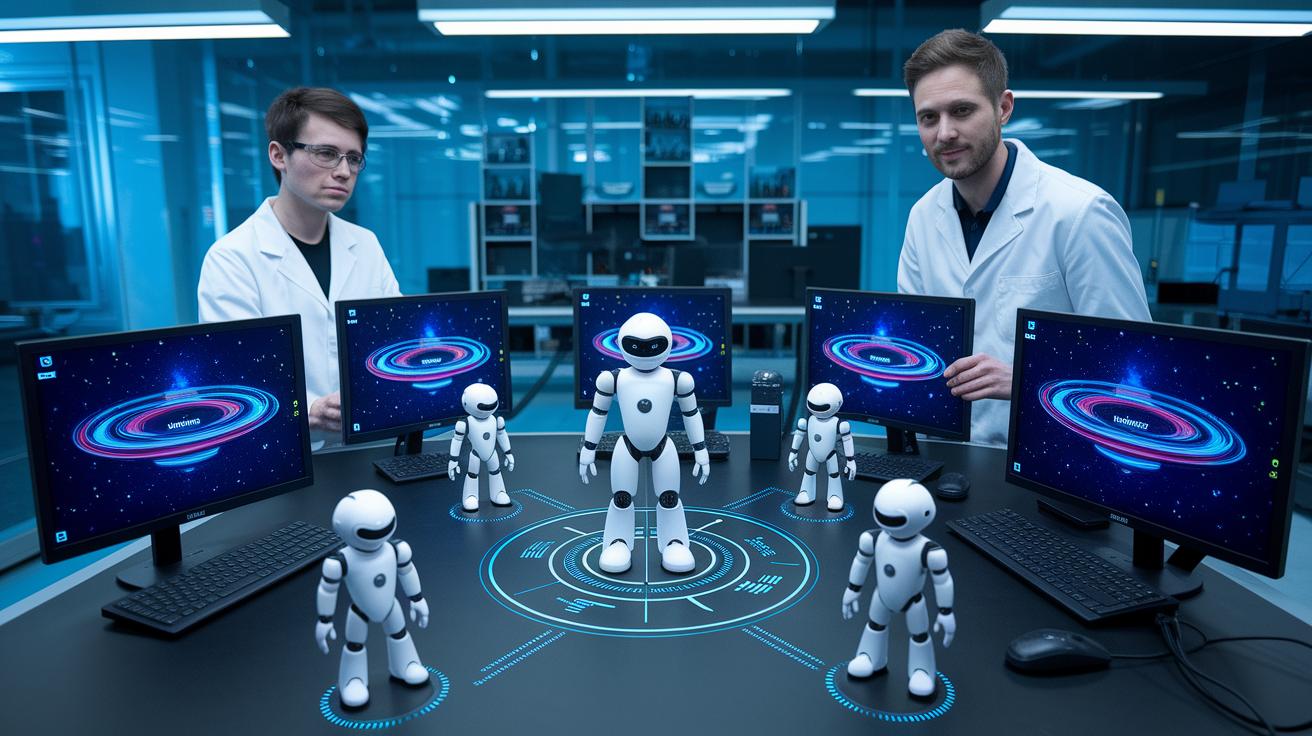
Today's labs are buzzing with powerful computers that let scientists turn complex trial designs into virtual experiments. One great example is the AI co-scientist platform. It uses six smart agents, Generation, Reflection, Ranking, Evolution, Proximity, and Meta-review, that work together in a loop to keep improving over time. It's like having a small team of digital researchers always fine-tuning new ideas. Imagine a simulation that can predict the swirling motions of space fluids, much like a digital weather forecast for cosmic storms that scientists can trust.
These platforms use neat techniques like self-play scientific debate, where virtual models chat back and forth about the best ideas before real tests take place. Then there are ranking tournaments that compare different simulation results in a friendly competition, sharpening the process even more. The system also reviews its own predictions to catch even the tiniest mistakes. Plus, thanks to test-time compute scaling (which means adding extra computer power when needed), it handles tough calculations in fields like astrophysics and fluid dynamics with ease.
Dynamic simulation techniques are the core here. They mimic everything from the gentle flow of liquids to the massive mechanics of galaxies, ensuring every digital prediction stands on firm ground. Virtual research platforms like these help scientists skip many of the usual steps in setting up experiments. They can quickly test out designs and new ideas, pushing the edge of what we think is possible in the lab and beyond. This approach not only speeds up experiments but also opens up whole new questions for curious minds to explore.
Pioneering Data-Driven Inquiry and Quantitative Analysis Strategies
Big data analytics is like having a superpower to turn raw numbers into clear scientific clues. Scientists work with enormous amounts of info – sometimes even petabytes (a whole lot of data) – from both neat and messy sources. They use this treasure trove to spot trends that might hint at weather shifts or the spread of disease. Fun fact: data sets so massive, they could fill hundreds of libraries, often help break down mysteries about our health and the environment.
Data-driven inquiry is all about checking ideas with real numbers. For instance, in one study on liver fibrosis (a condition where the liver gets scarred), researchers found treatment effects with p-values below 0.01 (a measure that tells us the results are very unlikely to be due to chance). This shows a clear difference in cell behavior when different treatments were compared, moving scientists from guessing to knowing with solid proof.
Quantitative analysis means using math and simple statistics to make sense of experiments. Researchers rely on steps like error analysis (basically looking for little mistakes) and uncertainty checks (figuring out how sure the numbers are) to see if the results really stand up. They even compare outcomes through performance benchmarking studies. This way, even small errors can be caught before they mess with the big picture.
Predictive modeling is like creating a smart forecast by trying out different "what if" scenarios. Every piece of data is double-checked with quality assurance, which means scientists make sure only the best info is used. By following these methods, they transform messy data into reliable experiments that push innovation forward. In short, strong numbers and a commitment to testing ideas are at the heart of today’s trusted scientific methods.
Collaborative Investigation Models and Reproducibility Enhancement
Many research teams are now choosing to share their tools, datasets, and support programs with everyone. This open-access way of doing science lets anyone check results and build on solid evidence. Sharing research materials openly is a smart move because it allows scientists everywhere to see, test, and improve experiments on their own.
Researchers use feedback cycles on platforms like the AI co-scientist. Here, digital agents chat over fresh ideas, helping to catch mistakes before sharing any results. Another exciting approach is the Trusted Tester Program. This program brings labs from around the world together to review AI-generated ideas. Imagine a network of experts all trying out a smart idea to catch errors early!
These methods encourage teamwork across many fields and make peer reviews even better. One scientist shared, "My colleague checked the experiment twice and caught a small error that turned out to be very important." Such careful checking ensures that even tiny details in the research can lead to big breakthroughs.
Working together like this not only makes the methods more consistent but also builds trust in science. Multiple experts can look at every new step, making discoveries that much more reliable.
Case Studies: Translational Technique Innovations in Science
In biomedical research, real examples show how fresh ideas from the lab turn into real health benefits. For example, in treating acute myeloid leukemia, an AI helper discovered a compound called KIRA6 that stops KG-1 cells from surviving at clinic-level doses. This clever approach cuts down on side effects and sets the stage for safer treatments. Imagine this: a digital tool finds a compound that targets cancer cells while mostly sparing healthy ones.
CRISPR-Cas9 gene editing (a way to change DNA safely) has led to new gene therapies that are now starting clinical trials. This technique lets scientists adjust genetic material very precisely, which means they can tackle the root causes of genetic disorders. Every gene edit brings us one step closer to real, life-saving treatments.
Climate simulation models are also making a big impact. These models predict how regional temperatures might change over the next 50 years. They help communities plan better by figuring out where renewable energy can be put to work and how to handle future climate shifts. By blending lots of weather data with smart computing, these models offer a clear guide for local planning.
In materials science, advances in tiny materials are sparking new ideas in membrane technology. These innovative membranes improve water purification by cleaning water more efficiently while using less energy. This not only supports our environment but also shows how high-tech materials can lead to solutions that help both our economy and our planet.
Leveraging Machine Learning and AI-Driven Experimentation for Next-Generation Discoveries
Imagine an AI co-scientist helping us come up with fresh ideas. It simulates how bacteria swap genes to tackle antimicrobial resistance. Fun fact: before today’s AI tools, scientists often missed the tiny ways bacteria shared traits during processes like conjugation, transduction, and transformation.
Algorithmic modeling now lets us fine-tune estimates in really complex systems. This speedy approach helps researchers jump from forming ideas to testing them, tweaking models on the spot.
| Technique | Unique Contribution |
|---|---|
| AI-driven hypothesis generation | Simulating bacterial gene transfers to uncover hidden clues in resistance |
| Algorithmic modeling | Tweaking models in real time for complex systems like quantum measurement and ecosystem forecasts |
Future Directions: Emerging Simulation Design Frameworks and Frontier Theory Evaluation
Next-generation quantum computer designs are pushing the boundaries of size and speed. By shrinking transistor dimensions to less than two nanometers, engineers are opening up whole new ways to process information. It’s like watching a lab where the tiniest circuits spark big jumps in speed, small design changes can really make a difference.
Smart-city sensor networks are another exciting area. These networks use IoT platforms (devices connected to the internet) to adjust things in our cities in real time. Imagine sensors that change street lighting or room temperature based on what’s happening around them. It’s a smart, hands-on approach that’s reshaping how our cities work.
High-tech space telescopes and new cosmic observation methods are also refining our understanding of dark matter and the atmospheres of exoplanets (planets beyond our solar system). Observatories in space collect important data that drives fresh research in astrophysics. This work is paving the way for studies that could change how we see the universe.
New simulation design frameworks offer tools to forecast how upcoming experiments might perform. They’re guiding the development of next-generation instruments into unexplored territories. For more details, check out "emerging trends in breakthrough scientific research" (https://buzzyandclever.com?p=).
Final Words
In the action, we explored how foundational methods like AI-driven studies and big data analytics fuel breakthrough discovery across diverse fields. We touched on how evolving experiments and simulation techniques are reshaping research, from medical innovations to deep space exploration.
Each section showed real-world impacts when rigorous experiments mesh with innovative scientific methodologies behind breakthroughs. The future shines bright, inviting curious minds to embrace a science that's both approachable and full of promise.