
Have you ever thought that reaching for the stars might change our everyday life? Space missions bring people together and spark a shared excitement for the future. They blend our natural curiosity with clever machines (tools that help us do difficult work) and teamwork that tackles problems far beyond our planet.
Every mission gives us a new way to see our place in the universe. When countries work together in space, they create amazing scientific breakthroughs and stir up a true sense of wonder. It really shows us that the sky isn’t the limit.
Space missions spark boundless enthusiasm
Space missions are bold projects where countries and agencies work together to explore space, study stars and planets, and create new technologies to help everyone. They help us answer big questions about our place in the universe, spark new ideas, and even protect our home, Earth.
These missions have clear goals: some are about exploring other worlds, others search for signs of life, and a few focus on shielding our planet from danger.
Over time, missions have evolved. Early trips built the foundation of our knowledge about space, while today’s missions use advanced technology and global teamwork to push further. Looking ahead, plans mix trips with people, like astronauts on space stations, with robotic explorers that go to far-off or risky places. This mix of human curiosity and smart machines gives us fresh scientific insights and keeps the spirit of exploration very much alive.
Working together, agencies around the world take on space challenges, sharing ideas and discoveries. It’s a journey that not only deepens our understanding of the cosmos but also unites us in wonder and adventure.
Evolution and History Of Space Missions
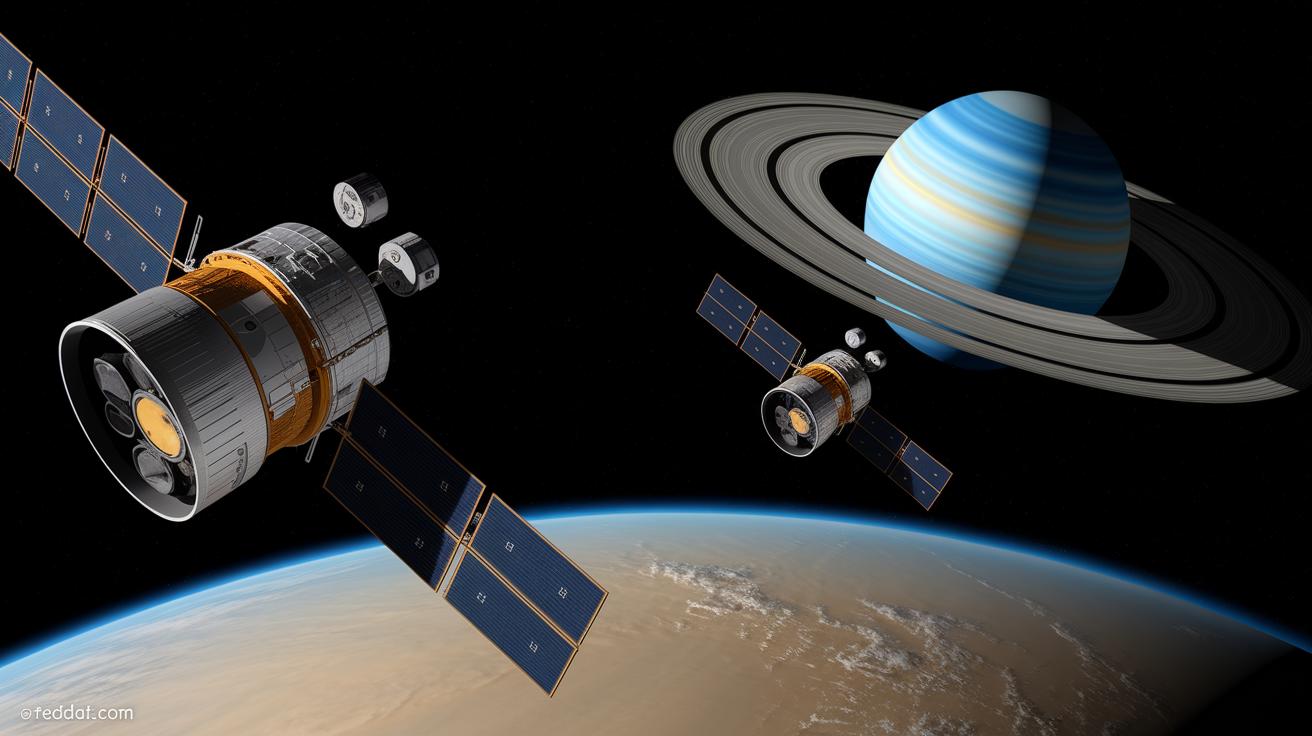
Exploring deep space changed everything for us. In the late 1900s, new technology opened the door to missions that showed us parts of our solar system we never knew existed and even led us beyond it.
Voyager Era
In 1977, two spacecraft named Voyager 1 and Voyager 2 set off on an incredible journey. They boldly zoomed past Uranus in 1986 and Neptune in 1989. Even today, Voyager 1 is still traveling into space and sending back hints about what lies beyond our solar system. Imagine a little traveler going billions of miles and whispering secrets of the universe back home.
Cassini-Huygens Saturn Campaign
Launched in 2004, the Cassini-Huygens mission spent 13 years exploring Saturn and its many moons. It gave us stunning images and important data, unveiling the swirling beauty of Saturn’s rings and its active atmosphere. This mission reminds us how sticking with long-term investigations can open our eyes to the amazing dynamics of our outer solar system.
Lunar Landing Milestones
The Moon has been the closest and most visited world beyond Earth. The Apollo missions, like Apollo 11’s historic landing in 1969, achieved remarkable milestones for humanity. For more details on these landmark events and their lasting impact on space travel, visit Apollo missions.
| Mission | Launch Year | Primary Target | Duration |
|---|---|---|---|
| Voyager 1 | 1977 | Interstellar Space | Ongoing |
| Cassini-Huygens | 2004 | Saturn System | 13 years |
| Apollo 11 | 1969 | Moon | 8 days |
Crew And Robotic Space Missions: Manned Vs Unmanned
When we send humans into space, the challenges and risks are very different from those in robotic missions. Human space vehicles are like mini homes built to keep astronauts safe and comfortable, with lots of backup safety features. In contrast, robotic missions rely on smart, automatic systems to explore places that might be too unsafe or too far for people.
Imagine crafting a spaceship is much like building a cozy house that can brave extreme space weather. It’s a delicate mix of human comfort and advanced engineering.
Popular crewed missions spark our imagination. For example, Artemis II will take four astronauts on test flights, paving the way for Artemis III, which aims to touch down near the Moon's South Pole, a spot filled with exciting scientific clues. The Boeing Starliner, part of NASA’s Commercial Crew Program, is another step forward in carrying crews safely into orbit. Meanwhile, China’s Tiangong space station has been buzzing with activity since its first module launch in 2021, where astronauts work daily in an environment with very little gravity to learn more about our world.
On the flip side, unmanned missions are pushing the limits of space exploration. The Perseverance rover has been busy on Mars since February 2021, gathering hints that might suggest the planet once supported life. The twin ESCAPADE orbiters, planned for 2025, will look at how the solar wind (streams of charged particles from the Sun) affects Mars’ thin atmosphere. And then there’s Chang’e-6, launched on May 3, 2024, which not only brought back samples from the Moon but also extended its mission to study the Moon’s makeup even further.
All these adventures, whether carrying humans or robotic explorers, are carefully monitored by mission control centers. These centers handle every step in real time, ensuring the safety of astronauts and the smooth running of robotic operations.
Key Agencies And International Space Missions Collaborations
Indian Solar Science Partnerships
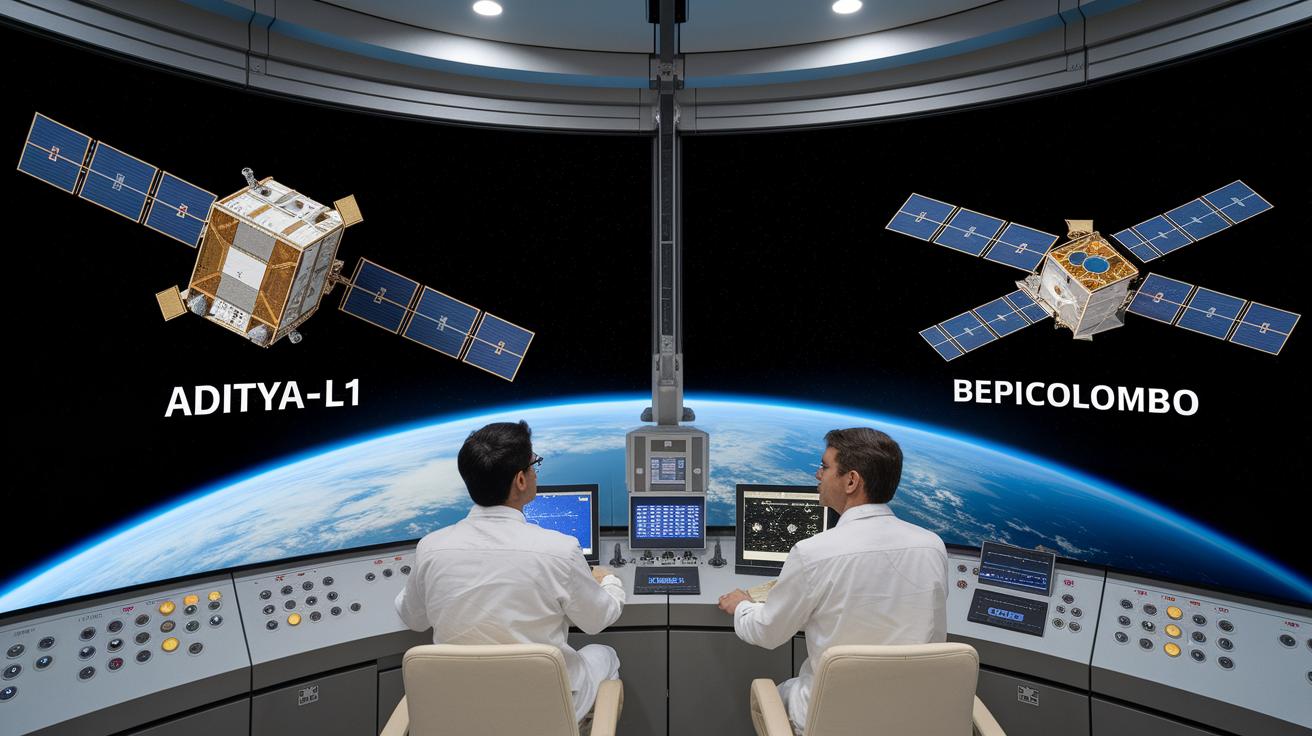
India’s Aditya-L1 mission, launched in September 2023, is a real-world example of how teamwork in science can work. This mission gathers data from instruments in India and around the world to learn more about the Sun. And coming up in 2028, the Shukrayaan mission will mix different technologies and research ideas to help map Venus’s surface. For instance, Aditya-L1 has already set the stage for global solar studies by blending many sharp advances in technology.
ESA-JAXA Mercury Exploration
BepiColombo, which launched in 2018 by ESA and JAXA, shows what can happen when scientists share a common goal. This mission uses two orbiters to study Mercury, carefully mapping its surface and checking out its thin atmosphere before the orbiter starts its full journey around Mercury in 2026. It’s a clear sign of how international partners can work together to explore our nearest planet to the Sun.
NASA-ESA Saturn Program
The joint NASA and ESA mission Cassini-Huygens, which ran from 2004 to 2017, broke new ground by gathering lots of detailed data on Saturn and its moons. In the same spirit of collaboration, the upcoming Comet Interceptor will send three spacecraft to a spot called L2 to study the nucleus of a comet. These combined efforts bring together experts from all over the world in a shared adventure to unlock the secrets of our cosmos.
Modern And Upcoming Space Missions
The JWST, which launched in 2021, keeps amazing us with stunning images of distant galaxies and young star clusters. Its clever light-capturing sensors and unique design help us see tiny details about the early universe. Meanwhile, the Parker Solar Probe zips around the Sun, coming closer than ever before. It uses high-tech heat shields and smart instruments to study the Sun’s outer layers, showing off modern engineering in space.
Scientists are excited about a range of missions planned between 2025 and 2028, each one featuring cutting-edge technology. For example, the ESCAPADE orbiters will study how streams of charged particles (tiny bits of energy from the Sun) change Mars’ atmosphere. Another mission, SWFO-L1, will keep an eye on solar storms by watching the Sun’s activity. Plus, the Roman Space Telescope aims to capture clear images of planets outside our solar system. Upcoming missions like Shukrayaan and BepiColombo at Mercury will explore Venus and give us a deeper look at Mercury’s environment.
At the same time, missions focused on Mars and deep space are expanding our view of both nearby planets and far-off regions of the cosmos. These expeditions use smart sensors and fast data links to capture detailed images of planetary surfaces and the wider space around them. Imagine how surprising it is that before becoming a famous scientist, Marie Curie carried radioactive test tubes in her pockets, not knowing how dangerous they were. That same mix of curiosity and careful science fuels today’s space exploration, connecting our past adventures with new discoveries.
Future And Next-Generation Space Missions
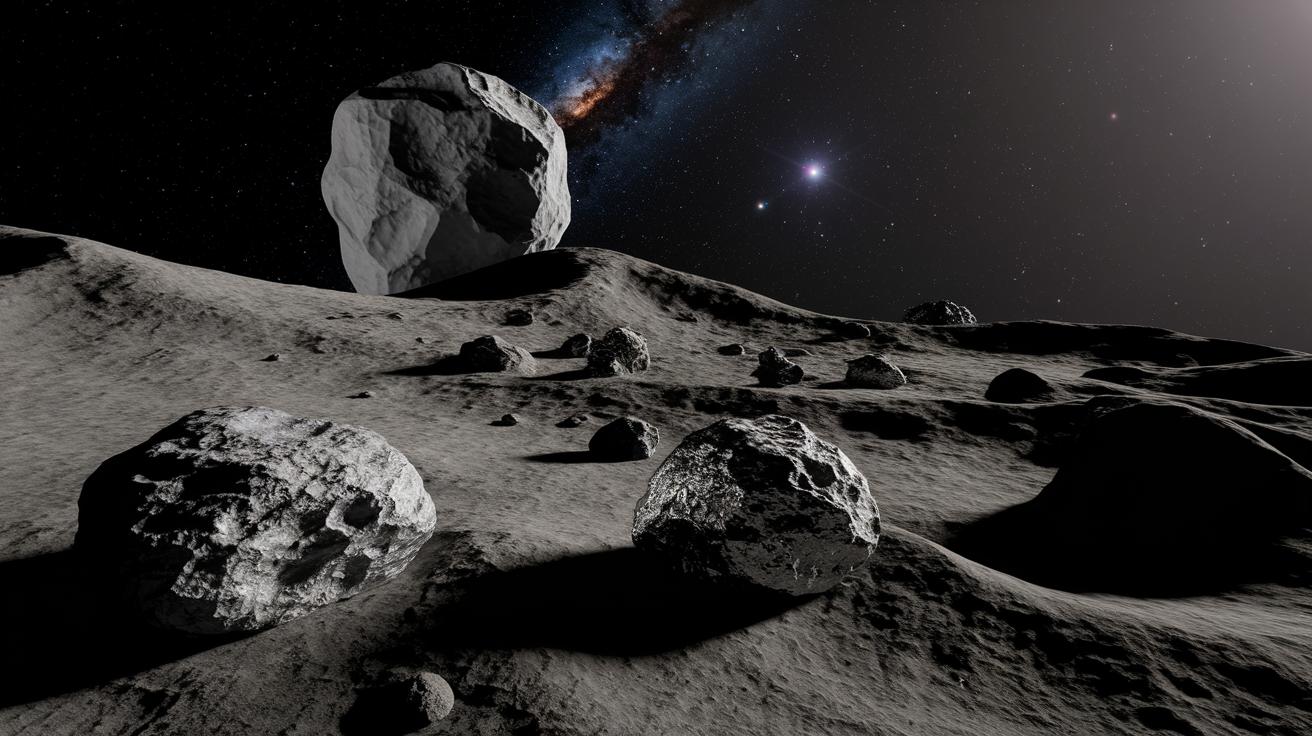
Dragonfly is set to use a drone-like flyer to study Titan's surface. It's planned for launch after the mid-2030s. The mission will explore different types of ground on Saturn's largest moon, offering clues about how its atmosphere works and the organic chemicals that could hint at life-friendly conditions.
Psyche aims to study an asteroid rich in metal. By looking closely at its makeup, scientists hope to understand more about the building blocks of planetary cores. In other words, it will help us learn how planets like Earth were formed and evolved, giving us a rare peek into the metallic secrets hidden in our solar system.
SPHEREx will dive into the cosmic past and the time soon after the universe's birth. With its wide-angle view, the probe will map the large-scale layout of space and follow the process that made the early universe glow.
VERITAS plans to map Venus's surface changes using radar and light analysis. The mission will capture clear images and detailed information about the planet's composition. This will help scientists see how Venus's environment has changed over time and what these changes mean for similar rocky worlds.
VIPER is a Moon rover that will explore the polar regions to study ice and other compounds. By examining these volatiles (substances that can easily change from solid to gas), VIPER will boost our understanding of the Moon's resources and pave the way for future space missions.
Final Words
In the action, we explored the dynamic world of space missions, from early deep-space probes and lunar landmarks to today’s crewed and robotic endeavors. Small groups of international partners worked together to push our limits and bring science closer to us. The post highlighted clear milestones, breaking down major missions and their impacts on everyday life. Every effort in these space missions continues to spark curiosity and keep the wonder of exploration alive.
FAQ
Q: What are the names of space missions and how are they ordered?
A: The question about space missions names outlines programs like Apollo, Voyager, and Artemis, among others. They’re typically listed by launch dates and objectives, as shown on official space agency websites.
Q: How many NASA missions are there and how are they listed by year?
A: The question about NASA missions indicates that missions are categorized by launch year. Numerous crewed and robotic missions are documented and updated regularly in NASA’s official records.
Q: What are the seven major US manned space programs?
A: The question on US manned space programs highlights Mercury, Gemini, Apollo, Skylab, the Shuttle, International Space Station partnerships, and Artemis missions, each marking a landmark phase in human space exploration.
Q: What missions is NASA doing right now?
A: The question on current NASA missions shows that ongoing projects include Artemis lunar missions and various robotic missions like the Perseverance rover, with updates available on NASA’s official website.
Q: Is there a space missions game available?
A: The question regarding a space missions game points to interactive simulation games that let users experience space exploration in a fun and engaging way, combining real mission details with gameplay.