
An experimental personalized mRNA vaccine is producing durable immune protection in people with pancreatic cancer, and early results look striking. In a Nature study, bespoke mRNA vaccines — made from each patient’s tumor mutations — prompted powerful killer T‑cell responses. After roughly 3.2 years of follow‑up, patients who mounted vaccine‑specific responses remained relapse‑free far longer than those who didn’t. Researchers call this possibly one of the biggest advances in modern oncology: a vaccine that trains the immune system to patrol for—and possibly prevent—recurrence. Below we unpack how the vaccine works, the immune data, and what comes next.
A Potential Game‑Changer: Personalized mRNA Vaccine Against Pancreatic Cancer

An experimental personalized mRNA vaccine is producing durable immune protection in people with pancreatic cancer, and early results look striking. In a Nature study, bespoke mRNA vaccines , made from each patient’s tumor mutations , prompted powerful killer T‑cell responses. After roughly 3.2 years of follow‑up, patients who mounted vaccine‑specific responses remained relapse‑free far longer than those who didn’t. Researchers call this possibly one of the biggest advances in modern oncology: a vaccine that trains the immune system to patrol for, and possibly prevent, recurrence. Below we unpack how the vaccine works, the immune data, and what comes next.
Why cancer vaccines often fizzle out , pancreatic cancer's unique challenges
Cancer vaccines have a history of promising starts and fast fadeouts: the immune response can be short‑lived, like a campfire that quickly burns out. Pancreatic tumors make the problem tougher , they tend to present few obvious neoantigens, have dense stroma that physically blocks immune cells, and cultivate an immunosuppressive microenvironment that dampens T‑cell activity. Those features mean even a well‑designed vaccine can struggle to generate a focused, durable attack. The new study targeted those limitations by identifying private tumor mutations and designing vaccines to amplify long‑lasting, tumor‑specific killer T cells.
How the personalized vaccine (autogenous cevumeran) trains killer T cells

This approach , an autogenous vaccine sometimes called cevumeran , is custom built for each patient. Scientists sequence the tumor, pick mutation‑derived neoantigens unique to that cancer, encode them as mRNA, and deliver the payload in nanoparticle carriers. Once taken up by cells, the mRNA is translated and the new antigens are presented on the cell surface, training CD8+ killer T cells to recognize those mutation ‘flags.’ It’s a bespoke, precision strategy: not one‑size‑fits‑all, but a tailored immune education program that turns the patient’s own T cells into targeted tumor hunters.
Durable T‑cell responses and the standout numbers

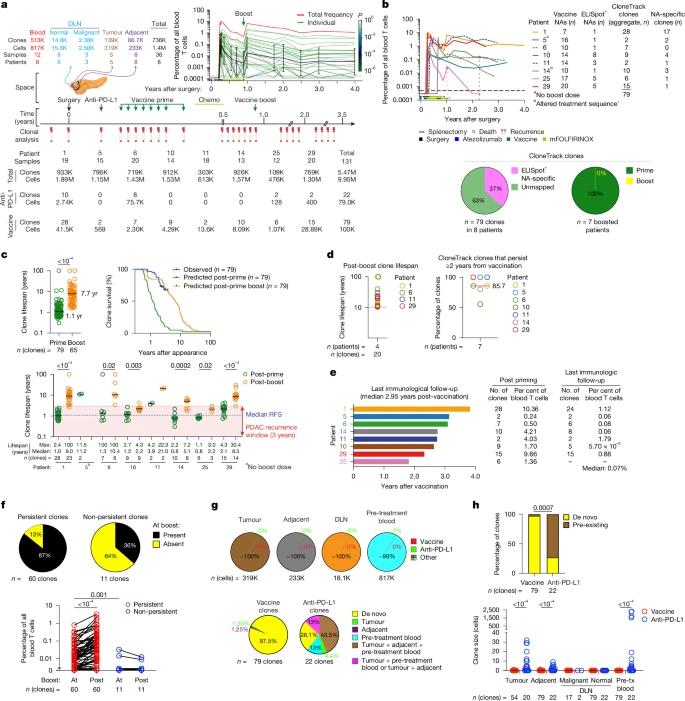
The immune durability is the eye‑catcher. Vaccinated patients developed tumor‑specific T‑cell populations modeled to persist on average 7.7 years, with projections that some clones could last decades. About three years out, 86% of vaccine‑induced T‑cell responses were still detectable. Clinically, responders had far fewer relapses: median relapse‑free survival was not reached for responders versus 13.4 months for non‑responders. Researchers tracked T‑cell clones over time and used functional assays to confirm activity against neoantigens. Those correlations are encouraging, but larger studies are needed to confirm durable clinical benefit.
If IMCODE‑003 confirms this: trials, scale‑up and what comes next
An ongoing randomized study, IMCODE‑003, will test whether these findings hold up in a controlled setting. If confirmed, personalized mRNA vaccination after surgery could become part of standard care for pancreatic cancer within a few years and then be evaluated across other tumor types. Broader adoption hinges on successful confirmatory trials, regulatory approvals, and scalable manufacturing of bespoke vaccines. Logistics and cost are real hurdles, and investigators will likely explore combinations with checkpoint inhibitors to counteract tumor immunosuppression. The optimistic takeaway: tailored mRNA boosters could one day cut recurrence by teaching the immune system to hunt microscopic leftovers.