
Ever wondered what secrets light might hold about our world? Scientists use clever techniques like spectroscopy (a way to study light) to peek inside materials without hurting them.
They use tools such as nuclear magnetic resonance (a fancy method that looks at tiny atoms) and infrared analysis (which reads heat signals) to detect even the smallest traces in everyday things. These smart methods have started to change how we do work in fields like medicine and environmental science.
In this post, we'll chat about how these modern tools uncover hidden details and spark a flood of new ideas that might just change the way we see nature.
Advanced Spectroscopy Techniques Powering Breakthroughs in Scientific Research
Spectroscopy is all about figuring out how light and matter interact. It looks at how light is absorbed, emitted, or scattered to tell us what a material is made of, whether it's a chemical, a bit of biology, or something from nature. This easy-to-understand tool has become super popular in chemistry, biology, materials science, and environmental research, helping scientists peek into both simple substances and really complex ones.
Today’s tech has given us even more powerful ways to use spectroscopy. Methods like nuclear magnetic resonance (NMR, which uses magnets to see atoms), Fourier transform infrared (FTIR, a way to study chemical bonds with infrared light), mass spectrometry (MS, which measures the mass of tiny particles), Raman spectroscopy (a technique that examines vibrational signatures in light), and X-ray fluorescence (XRF, which uses X-rays to find elements) let researchers get quick snapshots of their samples without damaging them. For example, mass spectrometry can spot tiny amounts of chemicals, even at parts-per-billion levels, which makes it great for things like checking drug safety or solving crimes. And best of all, these techniques need very little sample prep so you get real-time, trustworthy results without much hassle.
- ppb-level sensitivity for catching even the tiniest amounts.
- Non-destructive sampling that keeps your sample whole.
- A wide range of wavelengths across the light spectrum.
- Fast results that cut down analysis time.
- Minimal use of extra chemicals, helping keep experiments neat.
These qualities are sparking plenty of exciting breakthroughs. With detailed molecular fingerprints from each measurement, scientists can explore materials in new and surprising ways. The fast, accurate, and gentle nature of modern spectroscopy is helping researchers tackle tough questions and push the boundaries of what we know across many fields.
High-Resolution Optical Measurements in Cutting-Edge Spectroscopy
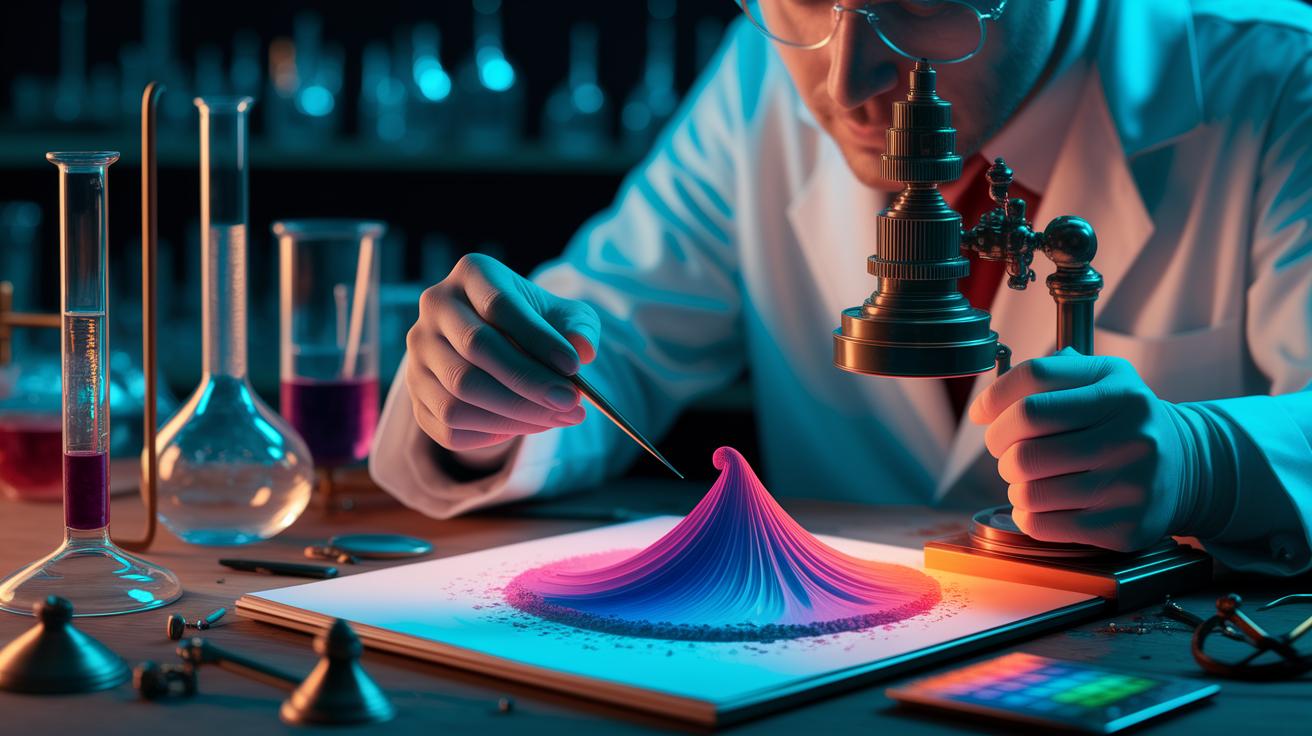
Optical spectroscopy relies on the electromagnetic spectrum (which is simply all kinds of light) to study materials. One common method is to watch how light dims as it goes through a sample. For example, when a pigment soaks up light at a specific wavelength, it leaves behind a unique signal that helps scientists figure out what it is.
Modern high-resolution optical systems can spot incredibly small details, even down to less than a nanometer (one billionth of a meter). They pick up the tiny patterns of molecules, making it easier to tell different chemicals apart. Imagine being able to notice even the slightest change in how light behaves; each tiny difference gives you clues about a substance’s chemical features.
| Technique | Wavelength Range | Spectral Resolution | Typical Application |
|---|---|---|---|
| UV-Vis | 200-800 nm | High | Concentration analysis |
| FTIR | 2.5-25 μm | Moderate to high | Functional group detection |
| Raman | Visible to near-IR | High | Molecular fingerprinting |
| Hyperspectral Imaging | Broad spectrum | Optimized for spatial detail | Complex sample mapping |
These sharper light details help scientists understand materials better
Laser-Induced and Ultrafast Spectroscopy Methods for Time-Resolved Analysis
When studying super quick chemical and physical changes, capturing moments as they happen makes all the difference. It’s like watching a high-speed movie where every frame shows a tiny shift in energy. Scientists use these techniques to see how materials respond to energy, how a fast reaction unfolds, or how energy moves from one spot to another.
Laser-induced excitation sends short, focused bursts of light to hit specific parts of molecules. These light pulses come from different lasers, such as tunable dye, diode, or fiber types, and they match the unique energy levels of molecules just right. This method lets researchers trigger a reaction on purpose. For example, a quick laser pulse might nudge a molecule into a higher energy state, letting its hidden features shine through the light it later emits.
Ultrafast lasers work with pulses that last only a few femtoseconds to picoseconds (incredibly quick moments). In a pump-probe setup, one pulse (the pump) starts a reaction, and another pulse (the probe) nearly instantly checks the light that comes out, whether it’s fluorescence (bright light) or phosphorescence (a gentle glow). By watching how this light fades, scientists learn about the speed and structure of these tiny changes at the microscopic level.
All in all, these smart spectral analysis methods open up a window into the blink-of-an-eye processes that shape our world, giving researchers powerful tools to understand and even control rapid scientific events.
Non-Destructive Elemental Profiling and Molecular Absorption Studies
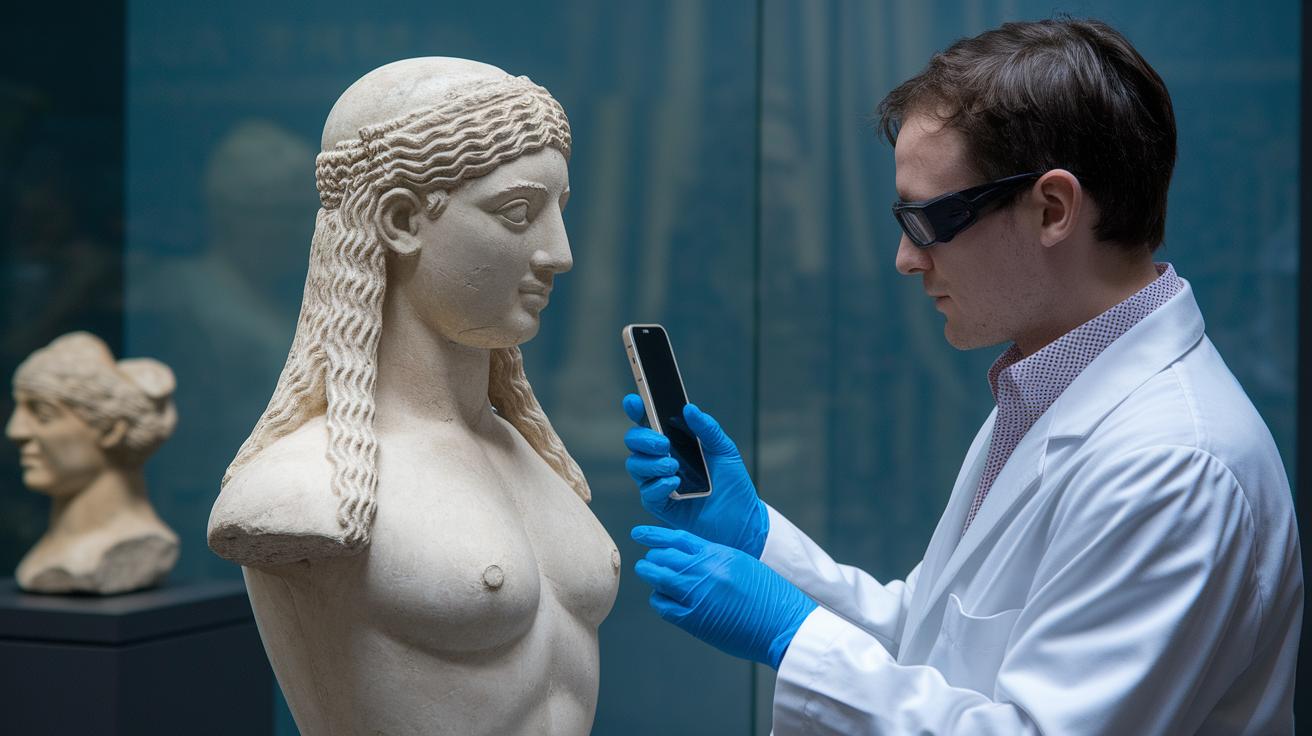
XRF (X-ray fluorescence) spectroscopy uses a burst of X-rays to make a sample give off secondary light. This helps scientists find out what elements are in the sample without changing it at all. It’s really handy in areas like art conservation and forensic science where keeping the original piece safe is key. For example, when studying an ancient sculpture, XRF lets researchers check the metal’s makeup without any damage, preserving it for future study.
UV-Vis and FTIR absorption methods look at how light interacts with molecules to show changes in their structure. UV-Vis (ultraviolet-visible) and FTIR (Fourier transform infrared) are techniques that help spot groups of atoms in a sample and even measure their amounts. Imagine shining gentle light on an old painting to reveal each pigment carefully, experts can then confirm it’s authentic without touching or altering the artwork. These methods are important for everything from making sure medicines are safe to keeping our environment in check.
Integrated Spectral Sensor Technologies and Data-Driven Interpretation
Modern spectroscopy is getting smaller and more connected. Today, tiny spectrometers work with IoT sensor arrays (networks of smart devices) to collect data right where it's needed. Imagine taking a compact tool into a farm or park to instantly check air quality. These smart devices send back data in real time, giving clear insights for environmental checks, farming, and even quick health tests. Their small size and connectivity mean researchers can get accurate readings without lugging around heavy lab gear or waiting for long sample preparations.
Software-driven analysis is also changing the way we work with data. Automated tools and machine learning (computers that learn like we do) quickly go through huge amounts of spectral data, spotting chemical patterns and unique signatures with great care. This method takes away the slow, manual steps, making data interpretation faster and more precise. The boost in efficiency with these digital tools is paving the way for quicker research and better decisions. Check out data-driven discoveries fueling science breakthroughs at data-driven discoveries fueling science breakthroughs. Together, these hardware and software advancements are starting a new chapter in science by making high-quality spectral analysis more accessible and efficient.
Emerging Trends and Future Frontiers in Advanced Spectroscopy Techniques
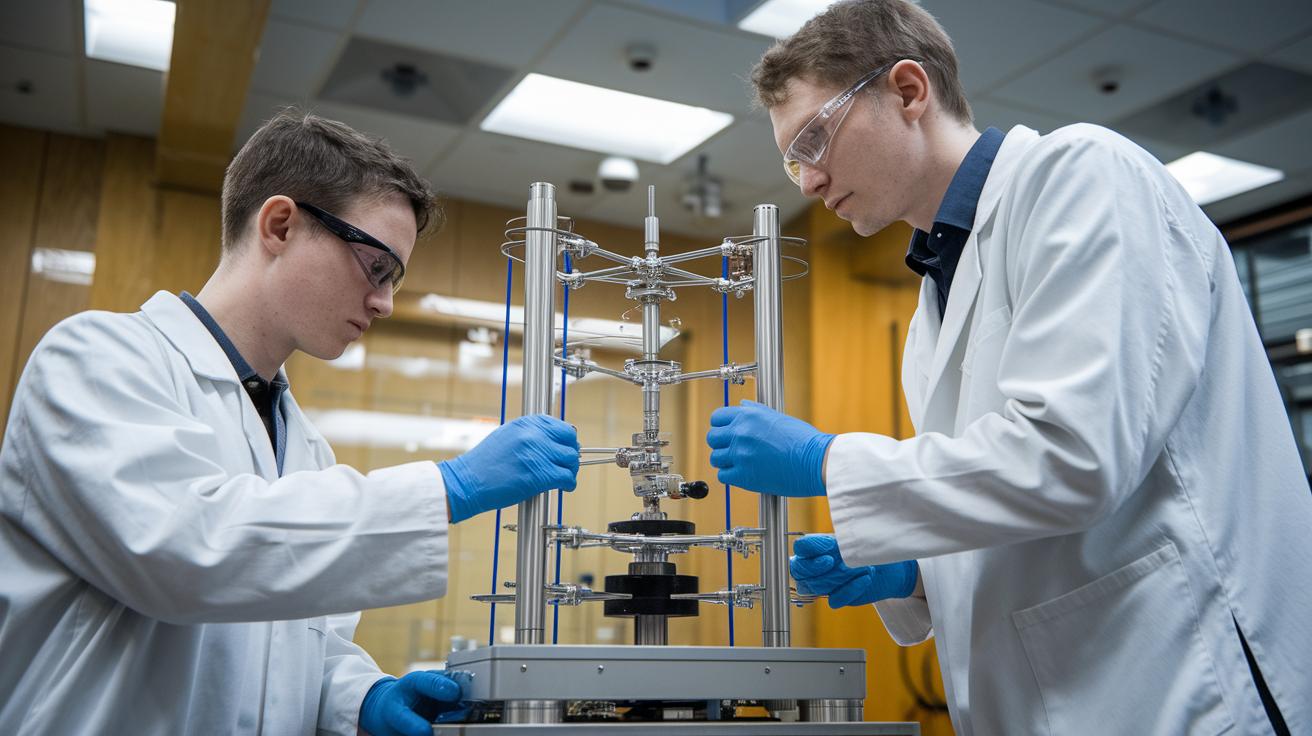
Scientists from physics, chemistry, and engineering are teaming up to give spectroscopy, a way of studying light, a big boost. They’re building spectrometers that use quantum technology (advanced physics ideas that make devices more powerful) and smart AI-guided systems (computer programs that learn) to fine-tune measurements. This mix of skills is paving the way for new optical tools that help us explore and discover in exciting ways.
New gadgets like super-sensitive photon detectors (devices that notice even the faintest light) and adaptive filtering systems that adjust on the fly are changing how we study light. Researchers are looking into how light interacts with tiny materials to check them up close and even map out light signals over a wide range from a distance. These cutting-edge detectors catch subtle light signals that reveal detailed chemical traits.
Looking ahead, these advances could unlock better renewable energy materials, non-invasive medical tests that don’t require cuts or needles, and even space experiments using special spectroscopic equipment on satellites. With improved accuracy and sensitivity, every careful measurement in the lab helps us learn more about materials and molecular behavior, pushing science into new frontiers. Overall, these trends spark rapid progress and inspire creative problem solving across many fields.
Final Words
In the action, advanced spectroscopy techniques have transformed our view of science. The post traced how light’s dance reveals material secrets through methods like mass spectrometry, high-resolution optical measurements, and time-resolved studies. It underscored non-destructive profiling and smart sensor integrations that make today's experiments more insightful.
Advanced spectroscopy techniques: unlocking scientific breakthroughs are now at the heart of innovative research, lighting up pathways for clearer, faster scientific insights. It leaves us feeling positive about the bright future of science.
FAQ
What are the advanced spectroscopic techniques and techniques used in spectroscopy?
The advanced spectroscopic techniques include methods like NMR, FTIR, mass spectrometry, Raman, and XRF. They study how matter interacts with light, offering real-time, non-destructive data for various research fields.
What is the future of spectroscopy?
The future of spectroscopy embraces quantum-enhanced instruments, AI-guided analysis, and portable sensors. These improvements aim to provide faster, more accurate results across fields from material studies to medical diagnostics.
What are the 9 types of spectroscopy?
The 9 types of spectroscopy include methods such as UV-Vis, IR, NMR, mass, Raman, fluorescence, X-ray, electron spin resonance, and Mössbauer spectroscopy. Each method offers unique insights into the composition of materials.

