
Ever thought about how a degree could launch you into an exciting future? An aerospace engineering degree is like a ticket to designing cool flying machines and exploring the skies. In this program, you'll mix fun classroom lessons with hands-on lab experiments. You'll get to see air in motion and even try out flight controls (tools used to help steer and manage an airplane).
Imagine watching a small model airplane glide through the air as your own ideas take shape. Along the way, you'll build up strong technical skills and set yourself up for a bright career in aerospace engineering. It’s a journey that blends creativity with science and could open up a whole new world for you.
Aerospace Engineering Degree: Program Overview
A bachelor’s degree in aerospace engineering is a four-year program that mixes classroom lessons with real-world practice. You’ll study topics like aerodynamics (how air interacts with moving things), propulsion (how engines push things forward), materials science (learning about building materials), structural analysis, control systems, and flight mechanics. All these subjects give you a solid start in understanding aerospace engineering and prepare you to solve tricky technical problems.
Programs balance theory with hands-on work. In labs, you might watch how air flows over a surface or try out flight controls on a small model. Imagine a student seeing a model aircraft glide gracefully in a lab simulation, sparking ideas for a more efficient wing. Many classes also use computer simulations so you can try different designs on screen before working with real-life models.
One exciting part of the course is the senior capstone project. This project lets you design an aircraft or spacecraft, putting everything you’ve learned into practice. It feels a lot like dealing with real challenges in the aerospace world, as you even get to try out new software tools and use simulation data.
Many programs include a six-credit internship or co-op to give you a taste of actual industry work. These experiences let you see what a day in the life is like at a company or research lab while also helping you build important professional connections. Overall, these hands-on experiences not only boost your technical skills but also pave the way for a bright future in aerospace.
Admission Requirements for an Aerospace Engineering Degree

Starting your journey in aerospace means meeting a few key admission requirements. First off, you need a high school diploma or an equivalent certificate, along with at least a 3.0 GPA in your STEM classes. For standardized tests, a SAT Math score of 600 or higher or an ACT Math score of 25 or above is expected. Imagine a student who nails the SAT Math section and opens doors to top engineering programs, that’s the kind of potential programs are looking for.
You’ll also need to provide two to three recommendation letters from your math or science teachers who can speak to your passion for the field. Additionally, writing a personal statement is important. This is your chance to share your technical interests and dreams. Some schools may even invite you for a campus visit or interview, letting you chat with faculty and get a feel for the facilities.
If you’re an international student, you must show proof of your English skills through tests like the TOEFL, with a score of 90, or the IELTS, scoring 6.5 or above. These steps are designed to ensure every student is ready for the exciting challenges of aerospace engineering.
Cost Analysis for Pursuing an Aerospace Engineering Degree
When you decide to study aerospace engineering, the price tag depends on where you go. At a public university in your state, tuition and fees might cost about $25,000 per year. If you attend an out-of-state school, you could end up paying nearly $40,000 a year. And some private colleges even charge over $50,000 yearly. You also need to factor in extra expenses like lab fees (roughly $1,000 to $2,000 per year), textbooks for about $800 each year, and software licenses costing around $500 per year. Think of lab fees like buying a special toolkit that helps you run hands-on experiments.
There are several ways to help manage these costs. Federal grants and work-study programs can reduce what you pay out of pocket. Merit-based scholarships, such as those from the AIAA Foundation, might provide anywhere from $1,500 to $10,000 to help cover tuition. In addition, industry-sponsored internships can give you a stipend between $3,000 and $6,000 per semester to help with living costs. All these options work together to help make your dream of studying aerospace engineering a bit more affordable.
Accreditation and Rankings for an Aerospace Engineering Degree

ABET accreditation is like a gold star that shows a program meets high quality standards in its classes, teachers, and lab work. Every six years, each program goes through a careful review process to earn this honor. Just imagine a student walking into a lab knowing that every experiment and simulation has been thoroughly checked for quality. This gives them confidence in their learning and can open doors to great career opportunities.
Some top schools that lead the field include Massachusetts Institute of Technology, Stanford University, Caltech, Georgia Tech, and the University of Michigan. These schools are known for having creative labs and experienced professors. A degree from an ABET-accredited program also helps students work toward getting a professional engineering license, which prepares them for real challenges in the industry.
Regular reviews keep these programs up-to-date with the latest technology and best practices, ensuring that every student gets a top-notch education they can trust.
Aerospace Engineering Degree Ignites Bright Futures
In your first year, you dive into the basics with classes like Calculus I to III, General Physics I and II, and Introduction to Engineering. It’s like working on a puzzle where every number and concept builds your problem-solving skills and starts teaching you the language of science.
In the second year, things get even more interesting as you explore how the world works. You study Fluid Mechanics and Thermodynamics, learn about Materials Science (the study of substances used to make vehicles), and tackle Differential Equations. Imagine that "aha" moment when you see how heat flows through a material, it's a real thrill connecting theory to everyday life.
By the third year, the focus shifts to more specialized topics. You dive into Aerodynamics, learning how the forces on an aircraft make it fly, and discover Propulsion Systems to see how engines power flight. Classes in Structural Analysis and Control Systems help you understand how to design strong structures and manage the systems that keep an aircraft steady. Picture the excitement of watching a model airplane soar in the lab, knowing you contributed to its design.
In the final year, advanced subjects take center stage. You work with Computational Fluid Dynamics, using computer simulations to study fluid flow and fine-tune designs. Flight Dynamics and a Capstone Design Project let you get hands-on experience, maybe even designing space systems or UAVs (unmanned aerial vehicles, which are remote-controlled aircraft). This blend of theory and real-world projects prepares you for the challenges ahead.
| Academic Year | Core Modules & Electives |
|---|---|
| Year 1 | Calculus I to III, General Physics I and II, Introduction to Engineering |
| Year 2 | Fluid Mechanics, Thermodynamics, Materials Science, Differential Equations |
| Year 3 | Aerodynamics, Propulsion Systems, Structural Analysis, Control Systems |
| Year 4 | Computational Fluid Dynamics, Flight Dynamics, Capstone Design Project, Electives (Space Systems, UAV Design) |
Specializations and Advanced Studies in Aerospace Engineering Degrees
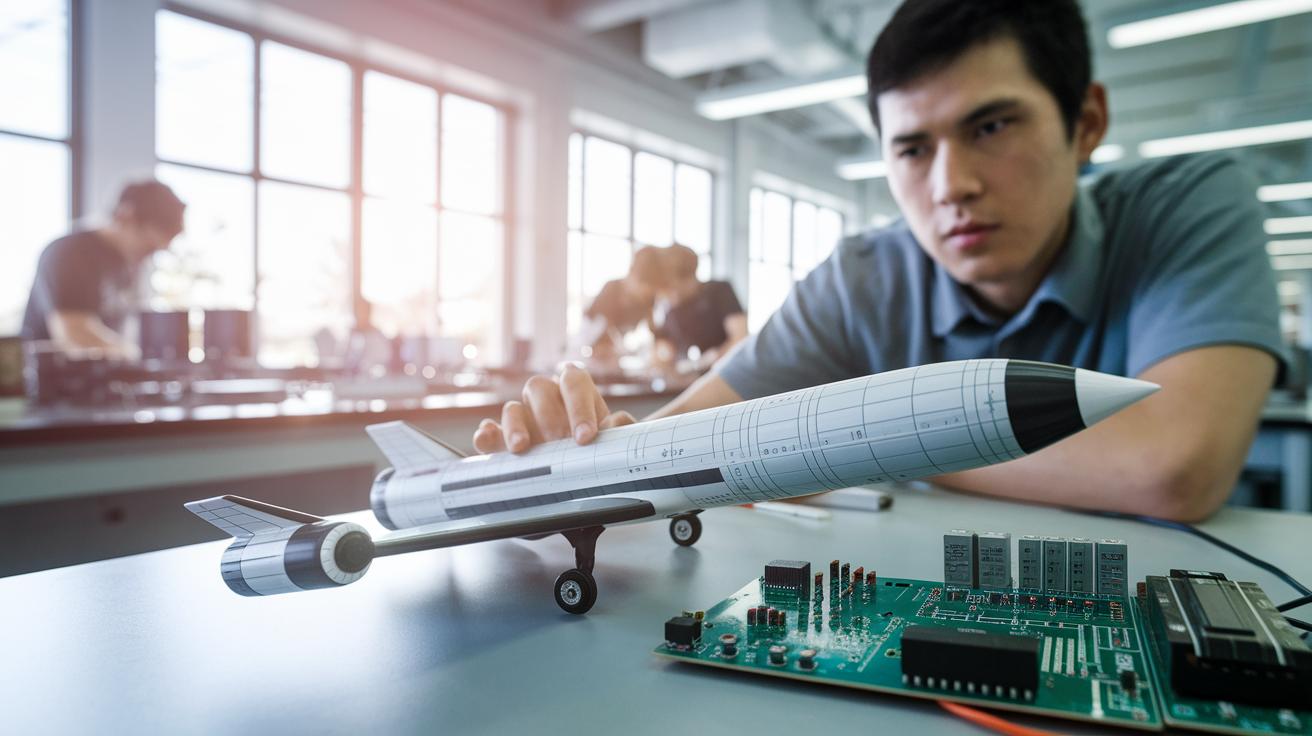
At the undergraduate level, you can choose an area of focus that really fits your interests. Many students pick courses like Aerodynamics (the study of how air moves over things), Propulsion and Energy Systems (learning how engines and fuel work), Avionics and Control (studying the electronic systems that steer aircraft), and Spacecraft Design. Imagine a student working on a small model spaceship and saying, "I never imagined electronics could open up so many new ideas," as they dive into Avionics and Control.
If you're ready for even bigger challenges, graduate studies offer more specialized paths. A master's program in aerospace innovation typically requires about 30 credit hours and a thesis. This gives you plenty of time to explore advanced topics like new engine designs or innovative materials. For those juggling work and study, an M.Eng. in Flight Technology focuses solely on coursework, usually delivered through 10 online classes, making it a great choice for keeping a busy schedule.
Advanced studies do more than expand your knowledge, they also prepare you for research and leadership roles. Ph.D. programs often come with funded research opportunities, where you might work on areas such as hypersonics (the study of super high-speed flight) or space robotics (robots designed for space). Although these programs require a lot of hard work, they promise to push the boundaries of what we know about aviation and space travel.
Undergraduate specialization options:
- Aerodynamics
- Propulsion and Energy Systems
- Avionics and Control
- Spacecraft Design
Graduate studies pave the way for creative breakthroughs in the field. Picture a graduate student perfecting flight technology in a virtual lab, hinting at a future where aerospace innovation changes how we explore the skies.
Career Outlook and Pathways with an Aerospace Engineering Degree
Have you ever thought about where an aerospace engineering degree might take you? According to the U.S. Bureau of Labor Statistics, jobs in aerospace engineering are set to grow by about 6% between 2020 and 2030. As a newcomer, you can look forward to a solid starting paycheck. For instance, design engineers usually earn between $75,000 and $85,000 a year. There are also roles like test engineer and systems engineer that offer a range of opportunities straight out of college. And if you go for extra certifications, like becoming an FAA Aircraft Dispatcher (a credential that shows you can manage aircraft operations), you might see your starting salary jump by 10 to 15%.
When it comes to employers, aerospace engineers have options galore. You could work for commercial airlines, major defense contractors such as Boeing and Lockheed Martin, or even space agencies like NASA and SpaceX. These companies really value a mix of deep technical skills and practical, hands-on experience from real projects.
New and exciting fields are opening up too. Think unmanned aerial systems (basically, drones) and sustainable aviation. Today’s aerospace engineers are doing more than just designing and testing vehicles, they’re also busy optimizing systems and coming up with innovative solutions to tough problems. In this ever-changing field, staying curious and learning new skills is key to moving up your career ladder.
- Design Engineer: Creates fresh ideas for designing aircraft and spacecraft.
- Test Engineer: Puts systems through their paces under simulated conditions to keep everything safe and efficient.
- Systems Engineer: Brings together different technical pieces to make large projects run smoothly.
For mid-career professionals, the median salary is around $116,000 a year. Employers are on the lookout for engineers who blend solid theoretical knowledge with practical skills, ensuring plenty of room for growth and long-term stability in the aerospace industry.
Comparing Aerospace and Aeronautical Engineering Degrees

Aeronautical engineering is all about airplanes and vehicles that fly in our air. It focuses on designing, testing, and fixing these machines. On the other hand, aerospace engineering covers a wider range, it includes both aircraft and spacecraft. At the start, you’ll study many of the same subjects, but later on, aerospace courses dive into topics like the motion of satellites and the power of rocket engines.
In the first couple of years, about 70% of the classes you take will be the same. Both fields look at things like aerodynamics (how air moves around objects), fluid mechanics (how liquids and gases behave), and materials science (the study of building materials). The big differences show up in the advanced courses. For example, aeronautical engineering usually focuses on jet engines, while aerospace engineering covers rocket engines and the unique challenges of space travel.
Want to explore more differences? Check out aeronautical vs aerospace engineering for a detailed side-by-side look at what each path offers.
Online and Distance Learning Options for an Aerospace Engineering Degree
Many schools now offer ABET-approved online master's programs in aerospace engineering that need around 30 to 33 credit hours. These programs feature live lectures where you can talk with your instructors in real time. It’s like having a classroom right in your living room!
They also use online labs with tools like CFD software (which simulates how air and fluids move) and FEA software (which tests how materials perform under stress). This lets you get hands-on practice even when you’re studying from home. Plus, remote capstone projects give you the chance to work on final projects with classmates just as you would in person.
The full-time path can be wrapped up in 18 to 24 months, but if you prefer a slower pace, you can take up to 5 years by studying part-time. Throughout the course, you’ll have support services such as technical help and monitored exams to keep everything fair and organized. This setup makes it easy to balance school with personal and work life while building skills that matter in the field.
Here’s a quick look at what these online programs offer:
| Feature | Description |
|---|---|
| Accredited Program | ABET-approved online education |
| Virtual Labs | Practice with CFD (air and fluid simulation) and FEA (material stress testing) tools |
| Flexible Duration | Full-time: 18-24 months; Part-time: up to 5 years |
| Support Services | Technical assistance and monitored exams |
These online learning options mix the convenience of studying from home with a strong, hands-on curriculum. They prepare you for a bright and competitive future in aerospace engineering.
Experiential Learning and Internship Opportunities in Aerospace Engineering Degrees
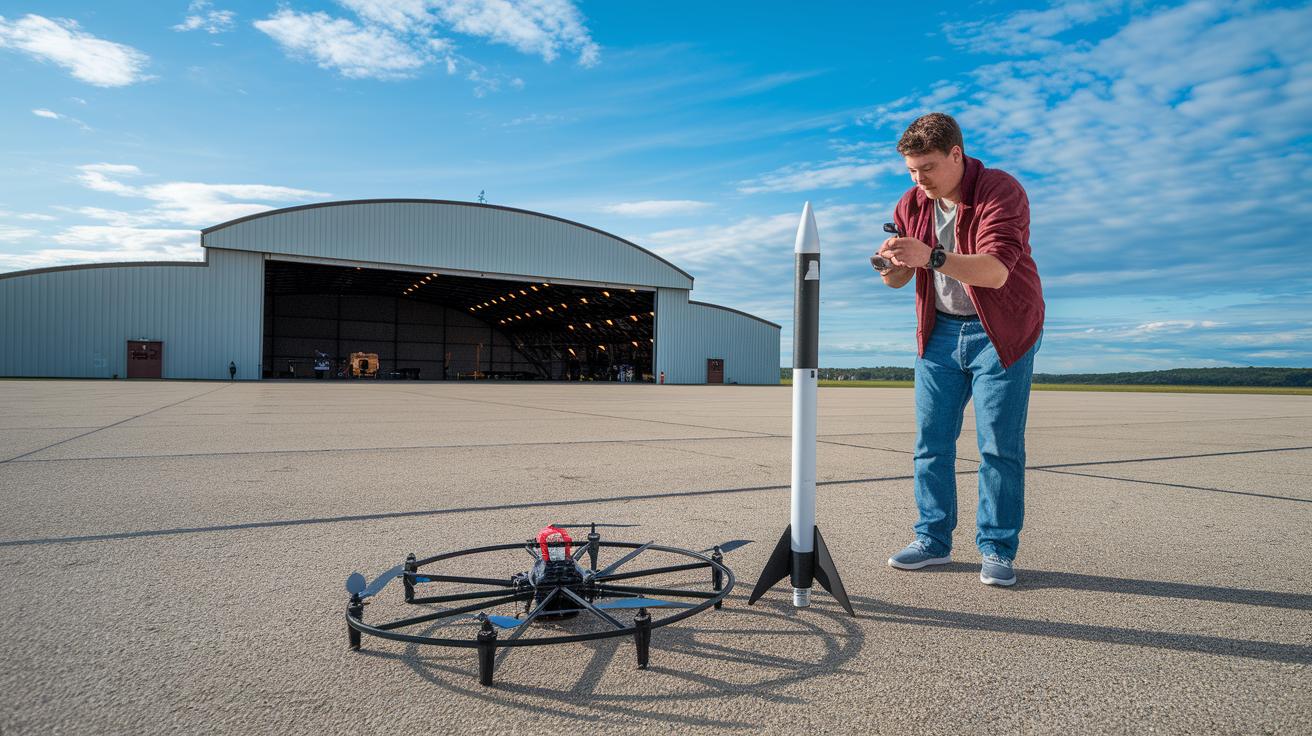
Most aerospace engineering programs include a final design project that lets you put classroom theory to the test. Imagine working on a small drone (a UAV, which is an unmanned aerial vehicle) or even a mini rocket that only travels partway into space (a suborbital rocket). These projects give you real hands-on training, where you can try out your ideas and face challenges similar to those in the real world.
Internships at aerospace companies are a key part of the learning process. Many students land internships at famous places like NASA, Boeing, or Airbus, usually lasting 3 to 6 months. And these aren’t just breaks from the classroom, they often lead to full-time job offers as you show off your skills and genuine enthusiasm.
Some universities even partner with local defense labs, offering co-op rotations where you earn academic credits along with a monthly stipend (around $4,000). This mix of school projects and working with industry experts gives you a rare chance to focus on aircraft design and other cutting-edge aerospace projects.
All these hands-on experiences help build your confidence and prepare you for professional challenges. It’s a unique way to truly understand how theories in aerospace engineering work in the real world.
Final Words
In the action, we traced how an aerospace engineering degree mixes theory and hands-on work. We looked at core subjects, admission steps, cost details, and even online options. The post reviewed lab sessions, internships, and capstone projects. We also compared course work and career paths. Each section painted a clear picture of what to expect on this route. It’s all about turning academic passion into real-world skills, encouraging everyone to move forward with a clear, vibrant perspective.
FAQ
Q: What is an online aerospace engineering degree?
An online aerospace engineering degree offers a flexible option to study subjects like aerodynamics, materials science, and flight systems through virtual labs and remote classes, while still meeting recognized accreditation standards.
Q: What are the admission requirements for an aerospace engineering degree?
Admission requirements include a high school diploma, a minimum 3.0 GPA in STEM subjects, strong SAT or ACT math scores, a personal statement with teacher recommendations, and sometimes an interview or campus visit.
Q: What jobs and careers can I expect with an aerospace engineering degree?
An aerospace engineering degree opens the door to jobs such as design engineer, test engineer, and systems engineer in sectors like commercial aviation, defense, and space exploration, often enhancing career growth with internship experiences.
Q: What is the typical salary for aerospace engineers, and do they make a lot of money?
Entry-level aerospace engineers typically earn between $75K and $85K per year, with mid-career professionals averaging around $116K, which highlights competitive earning potential in the field.
Q: What does an aerospace engineering degree program include?
This program covers courses in calculus, physics, aerodynamics, propulsion, and flight mechanics, along with hands-on labs, computer simulations, a capstone project, and sometimes an internship or co-op experience.
Q: How long does it take to complete an aerospace engineering degree?
A bachelor’s degree in aerospace engineering generally takes about four years to complete, integrating classroom learning, laboratory work, practical projects, and internship opportunities.
Q: How challenging is a degree in aerospace engineering?
A degree in aerospace engineering is known for its rigorous mix of math, science, and design courses, combined with hands-on lab work and collaborative projects that help build strong problem-solving skills.
Q: What are some notable colleges for aerospace engineering?
Top schools such as Georgia Institute of Technology, Arizona State University Tempe Campus, Texas A&M, University of California, Berkeley, Stanford, and MIT offer acclaimed aerospace programs with excellent research facilities and industry connections.
Q: What do online discussions, like those on Reddit, say about aerospace engineering degrees?
Online discussions highlight that aerospace engineering programs offer strong practical training and high job placement rates, although many note that the coursework is challenging and demands consistent dedication.