
Have you ever wondered how we build the planes and rockets that take us sky high? Aerospace engineers use math, science, and a dash of creativity to turn simple drawings into safe, flying machines. They try out ideas, tweak their designs, and solve problems through hands-on work every day. In this article, we’ll dive into what aerospace engineers do and the basic skills they use to keep things flying smoothly. It’s a job that mixes big dreams with real-world solutions to make sure our vehicles always stay in the air.
Key Elements of Aerospace Engineering Job Descriptions
Aerospace engineers bring creative ideas to life by designing new air and spacecraft. They mix science, math (like solving equations) and engineering know-how to turn simple sketches into working models. Their work covers everything from checking out new materials to meeting strict safety rules. For a deeper dive, you can explore what aerospace engineering is all about.
This job is a blend of creativity and practical problem-solving. Engineers write proposals for new designs, test out prototypes and materials, and adjust parts to make them work even better. They don’t just plan things – they get hands-on, testing ideas to improve strength and durability. It’s a challenging and fun field because every design decision plays a part in a project’s success.
- Designing systems for air and spacecraft
- Testing prototypes and materials
- Tweaking existing parts
- Drafting proposals for new designs
- Looking into failures and issues
- Developing and fine-tuning components
- Making manufacturing processes better
- Following safety and regulatory rules
All these tasks work together to move a project smoothly from an idea to a finished product. Each responsibility helps build safe and efficient vehicles and technology. When an aerospace engineer balances design proposals, thorough testing and ongoing improvements, they play a key role in ensuring that air and spacecraft perform well in the real world.
Required Qualifications and Core Competencies in Aerospace Engineering Job Descriptions
Hiring teams usually want candidates with a bachelor's degree in aerospace engineering or a closely related field. If you’re interested in roles that focus on research and development, having a master's degree can give you an extra edge. A Professional Engineer (PE) license (a certification that shows you meet strict quality and skill standards) is also a big plus. Many candidates even earn extra aerospace certifications to stay ahead in this competitive field.
Technical skills are the backbone of an aerospace engineer’s work. You need a solid understanding of advanced math and physics (the study of how things move and work) to handle tough calculations. Being skilled in computer-aided design (CAD) helps you create detailed digital models, while simulation modeling (using computer programs to test how things perform) lets you see how a design might act under stress. Think of simulation modeling as taking a digital airplane for a test flight before it even leaves the ground, every detail, from lift to drag, is fine-tuned to ensure the design is both innovative and reliable.
Success in aerospace engineering isn’t just about technical know-how; it’s also about strong soft skills. Engineers face unexpected challenges during design and testing, much like working on a tricky puzzle. Good communication, both written and spoken, is key when sharing detailed reports and proposals with teammates and clients. And teamwork is important too, as great ideas flow best when experts from different fields work closely together. When technical skills and interpersonal talents come together, projects run smoothly and exciting innovations take off.
Day-to-Day Responsibilities in Aerospace Engineering Job Descriptions
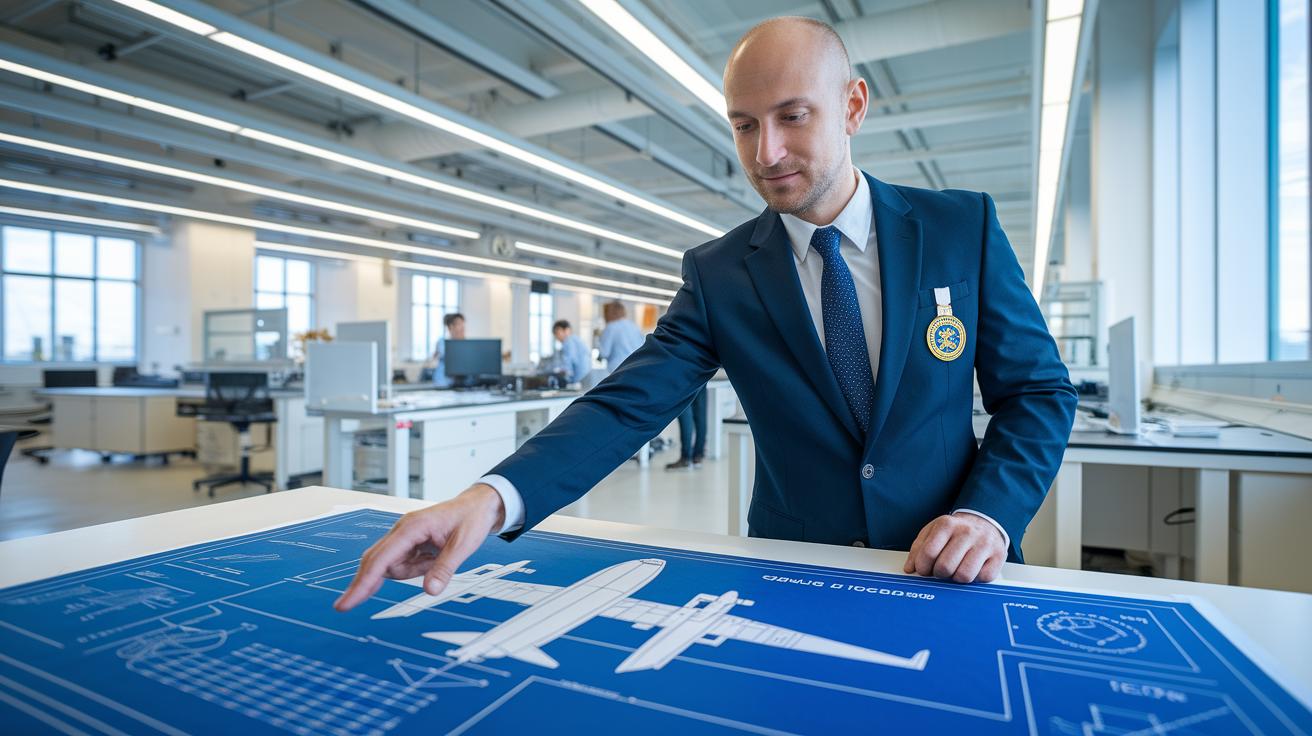
In the morning, aerospace engineers kick off the day with design reviews. They pore over blueprints and craft fresh proposals to improve air and spacecraft designs. They chat about ideas, point out any weak spots, and write up clear technical documents that explain smart design tweaks. Did you know that before the day even starts, engineers run digital simulations (computer tests) to check how designs might handle extreme conditions? This early prep really sets the tone for a smooth day ahead.
Later in the day, the action heats up as engineers move on to hands-on testing. They put prototypes through real-life trials to see how materials stand up under pressure. In these live tests, they watch component performance closely, spot issues quickly, and team up with production experts to adjust things on the fly. They wrap up the testing phase by compiling all their findings into clear, concise reports that guide ongoing improvements in design performance.
Career Path and Advancement in Aerospace Engineering Job Descriptions

The world of flight and space technology is on the rise. Experts predict a 6% job growth between 2024 and 2034, which means about 3,800 new jobs every year. This growing field offers plenty of opportunities for both beginners and experienced professionals. Companies are eager to find people with fresh ideas to help design and test new airplanes and spacecraft. It’s an exciting time to jump in, as you can learn a lot while you work in a dynamic, ever-evolving setting.
Many engineers kick off their careers as junior designers or test engineers. In these roles, you get to work on real projects while picking up key technical skills. If you’re serious about building a career here, earning a bachelor’s degree in aerospace engineering or a related field is a must. As you gain experience, you might step up to roles like senior engineer, project manager, or research and development specialist. Some even move into teaching, sharing what they’ve learned. For those looking to speed things up, a master’s degree and a Professional Engineer (PE) license can open doors to tougher challenges and bigger responsibilities.
Mentorship and leadership programs are a big plus in this industry. By working side by side with seasoned engineers, you can polish your skills and prepare for future leadership roles. These programs provide guidance and help you grow into roles that let you lead and innovate. It’s a hands-on path filled with learning, teamwork, and plenty of chances to prove just how valuable your ideas can be.
Compensation and Salary Benchmarks in Aerospace Engineering Job Descriptions
Aerospace engineers make good money based on their skills and how long they've worked in the field. On average, they earn about $134,830 a year. Those just starting out usually earn less, sometimes under $78,170, while the top 10% of engineers earn over $176,280. Entry-level roles start on a smaller scale but can grow a lot as you learn more and earn advanced degrees. Special jobs within aerospace can have very different salary figures, showing the unique tasks each one takes on. These numbers help job seekers and hiring managers set fair pay and clear career goals.
| Role | Average Salary | Salary Range |
|---|---|---|
| Thermodynamics Engineer | $115,864 | $38,000–$191,500 |
| Aeronautical Engineer | $130,258 | $49,000–$205,000 |
| Aircraft Design Engineer | $152,999 | $120,000–$176,000 |
| Airframe Design Engineer | $120,241 | $71,000–$178,500 |
| Spacecraft Systems Engineer | $124,441 | $84,500–$174,500 |
| Propulsion Systems Engineer | $122,519 | $62,500–$184,000 |
| Flight Test Engineer | $134,885 | $43,500–$204,000 |
Pay can change a lot depending on things like your education, the number of years you’ve worked, and where you work. Have you ever thought about how these factors shape your career path? It’s always good to know what to expect so you can aim high and build a future you’re proud of.
Work Environment and Typical Conditions in Aerospace Engineering Job Descriptions

Aerospace engineers usually work full time, often putting in more than 40 hours a week. They do their jobs in places like offices, specialized labs, manufacturing plants, and testing facilities. Many times, these engineers must be on site, especially when testing prototypes or carrying out field evaluations. While some jobs let you work from home on certain tasks, most activities need you to be there in person to make sure designs are safe and sound. This mix of flexible hours and required on-site work creates a lively and adaptable work environment.
Safety is always a top concern in aerospace engineering. Engineers follow strict rules and work closely with their teammates to keep everyone safe during testing and manufacturing. They stick to clear safety guidelines to protect both the team and the project. Plus, benefits such as health insurance, retirement plans, paid time off, and support for professional learning add extra support to the work culture. Even when the work pace is fast, there is a strong sense of teamwork and continuous skill building throughout the day.
Final Words
In the action, we explored an aerospace engineering job description that carefully outlines technical duties, educational paths, and daily challenges. We looked at how roles evolve from designing air and spacecraft to ensuring safety in production and testing.
The discussion made clear how these responsibilities connect with overall project success. The post also highlighted salary details, work conditions, and growth opportunities that spark continuous learning and lively discussion. It's inspiring to see how passion for science shapes real-world impact.
FAQ
What is the aerospace engineering salary?
The aerospace engineering salary reflects a median wage of about $134,830 per year, with ranges from $78,170 for lower-level roles to $176,280 for higher positions, showing varied compensation across the field.
How does an aerospace engineering job description enhance a resume?
The aerospace engineering job description highlights core duties like designing and testing air and spacecraft systems, ensuring candidates show their technical expertise and passion for applying scientific principles.
How is an entry-level aerospace engineering job description structured?
The entry-level aerospace engineering job description lays out basic responsibilities such as drafting proposals, testing prototypes, and ensuring safety, usually requiring a bachelor’s degree in aerospace or a related field.
What do aerospace engineering jobs involve?
The aerospace engineering jobs involve creating and improving air and spacecraft designs by applying math, science, and engineering skills, and working in labs, offices, or manufacturing settings.
What are aerospace engineer education requirements?
The aerospace engineer education requirements call for a bachelor’s degree in aerospace engineering or a related discipline, with many roles preferring a master’s degree and professional certification to advance.
What degree is needed to become an aerospace engineer?
The aerospace engineer degree is usually a bachelor’s in aerospace or mechanical engineering, with further studies like a master’s degree and certifications helping boost career opportunities.
How does aerospace engineer schooling prepare you?
The aerospace engineer schooling builds a base in math, physics, CAD, and simulation modeling, while also developing strong problem-solving and teamwork skills that are essential in tackling design challenges.
What does the aerospace engineering job outlook look like?
The aerospace engineering job outlook is positive, with forecasted growth of about 6% and roughly 3,800 new positions annually, indicating solid demand in the industry.
What exactly do aerospace engineers do?
The role of aerospace engineers includes designing, testing, and modifying air and spacecraft systems and ensuring that projects meet safety and performance guidelines through careful analysis and testing.
What are the job roles in aerospace engineering?
The job roles in aerospace engineering range from starting positions like junior designer and test engineer to more advanced roles such as senior engineer, project manager, and R&D specialist.
Do aerospace engineers make 800k a year?
The claim of aerospace engineers making $800k a year is not typical; most engineers earn around $134,830 on average, with top earners reaching higher but rarely near that amount.
What skills are needed for an aerospace engineer?
The skills needed for an aerospace engineer include advanced math, physics, computer-aided design (CAD), simulation modeling, keen problem-solving, clear communication, and effective teamwork.