
Have you ever wondered how we build the jets that soar above us? Aerospace engineering is more than just earning a degree, it calls for a mix of solid classroom learning and practical skills. You need to be good at math and science, and you also have to get your hands dirty with computer design (using computers to draw up designs) and lab experiments. In this field, turning ideas learned from books into real designs is what really counts. So, is studying enough? Not quite, a true passion for solving problems and working with the latest technology is what really sets you apart.
Aerospace Engineering Job Requirements: Inspire Excellence
Aerospace engineering jobs call for a good mix of solid schooling and hands-on skills. Most jobs need at least a bachelor’s degree in aerospace engineering or a similar area like physics. Some roles even want you to have a master’s degree or a Professional Engineer license (a special certificate showing your expertise). Students learn about how air moves around objects (aerodynamics), how engines work (propulsion), how things hold up under stress (structural analysis), how fluids behave (computational fluid dynamics – methods to study how liquids or gases move), and the science of materials. Knowing how to use computer design tools (CAD) and simulation software, along with a strong grasp of math like calculus and linear algebra, is very important.
Employers also look for real-world experience and a knack for explaining tough ideas simply. They usually expect about one to three years of work or lab experience, such as internships where you might work in a wind tunnel or on a final design project. I once heard an intern say, "Working in the lab showed me how to turn theory into practical experiments." This mix of classroom learning and on-the-job training is key to solving everyday challenges in aerospace.
In addition to technical skills, being good with teamwork and clear communication is a must. Aerospace engineers often join forces with others to refine designs using CAD software and simulation tools, which help test and improve new ideas. Plus, having extra certifications, like those in quality management, can give you an extra edge in a competitive field.
Academic Pathways: Degrees and Accreditation Standards in Aerospace Engineering
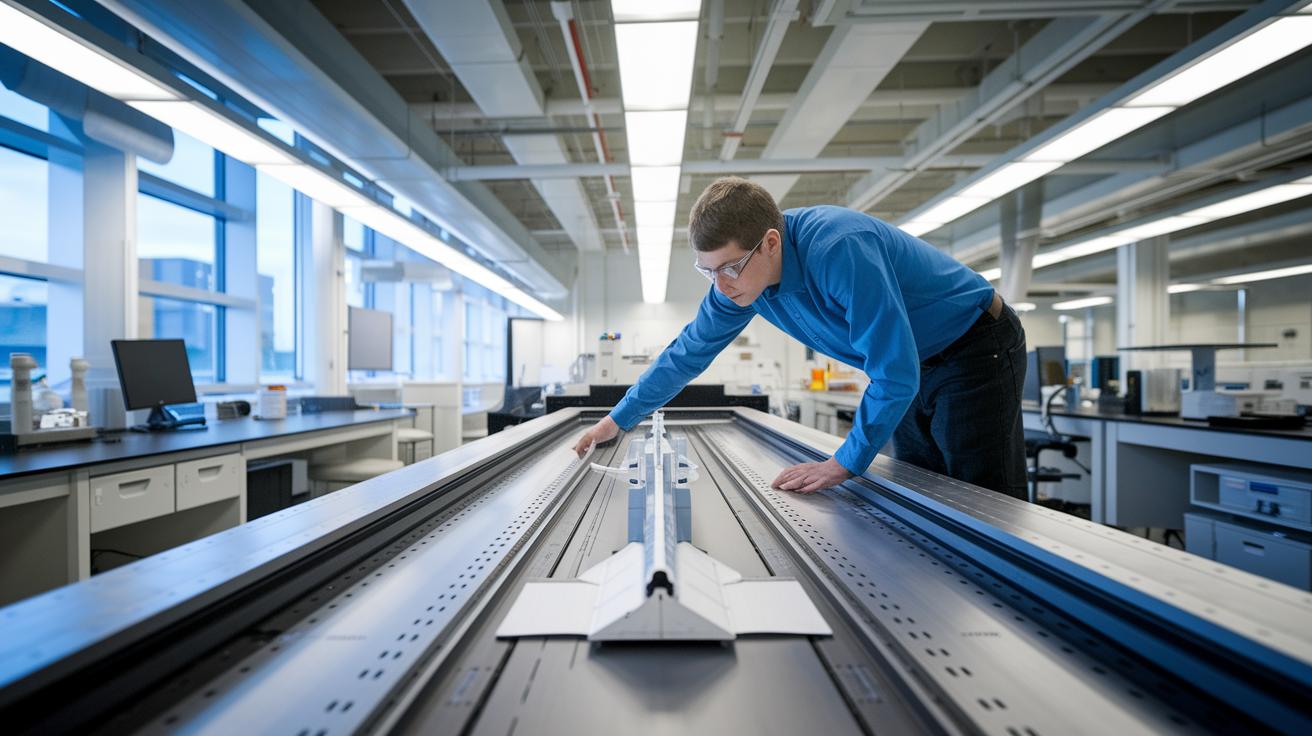
Undergraduate aerospace engineering programs lay a solid groundwork by covering all the key subjects. Students majoring in aerospace engineering, or even studying related areas like physics, learn the basics such as thermodynamics, fluid mechanics, and how flight works. They also explore how designs hold up under pressure by studying structural analysis and materials. Many schools stick to strict guidelines like ABET, which help ensure the courses are top quality and that students meet professional standards. One student even said working in the wind tunnel lab made the ideas jump off the page.
Bachelor’s Degree Requirements
Bachelor’s students need to keep a good GPA while tackling tough math courses like differential equations and linear algebra. These math skills are important for building models and simulations. They also get hands-on experience in labs, think wind tunnels and propulsion benches, where the classroom theories mix with real-world challenges.
Graduate and Doctoral Level Criteria
When moving on to graduate studies for an M.S. or Ph.D., students dive deeper by focusing on advanced research and special projects. They take more focused courses, such as computational methods (using computers to solve problems) and control systems (technology that helps machines run smoothly), and spend time in labs to sharpen their research skills. This advanced work builds on what they learned as undergraduates and gets them ready for leadership roles in the world of aerospace engineering.
Technical and Software Skills for Aerospace Engineering
Aerospace engineers need to be comfortable with design software like CATIA and SolidWorks, and they also rely on tools like ANSYS and NASTRAN to test their ideas. These programs help engineers create detailed designs and check prototypes. For example, if an engineer is fine-tuning a wing, they might build a model in SolidWorks and then use ANSYS to see how the design handles stress.
Simulation software is just as important. Engineers often use MATLAB/Simulink to model control systems (that is, systems that keep everything stable) and ANSYS Fluent to simulate fluid flows in tricky situations. There are also setups known as hardware-in-the-loop, which mix real devices with simulation software for real-time testing. This approach helps connect digital designs with how they actually perform in the real world.
Programming skills with languages like Python and C++ add another useful tool. Engineers use them to create custom programs and analyze the large amounts of data gathered during tests. Being skilled in digital twin and virtual design environments, which means creating virtual replicas of physical systems, can speed up the process of building and checking new designs.
All in all, a blend of CAD expertise, simulation skills, and programming know-how lets aerospace engineers turn creative ideas into practical solutions in a competitive field.
Essential Certifications and Licensure in Aerospace Engineering

Getting certified in aerospace engineering is like unlocking a new level in your career. One of the most important credentials is the Professional Engineer (PE) licensure. After about four years of real-world work and passing a state exam, engineers earn this license. It allows you to approve projects and lead teams with a lot more responsibility. I’ve heard engineers say that earning their PE license was a real turning point in their careers.
Professional Engineer (PE) Licensure
Passing the state exam isn’t just about technical know-how, it also checks your practical experience. With your work history verified and the exam behind you, the PE license really boosts your career chances. Employers see this status as proof of rigorous training and robust problem-solving skills, so you can confidently handle design challenges and complex regulations.
Industry-Specific Certificates
There are also certificates that target specific areas in aerospace. For instance, the AS9100 certification is a big deal for manufacturing quality-management (ensuring that products meet strict standards). Certifications like the Six Sigma Green or Black Belt show that an engineer is skilled in process improvement and managing risks. Plus, being knowledgeable about FAA regulations is key when working with aviation systems and safety measures. Many engineers proudly mention how their understanding of FAA guidelines gives them the tools to assess airworthiness and maintain safety on every project.
Hands-on Experience: Internships, Lab Work, and Project Learning in Aerospace Engineering
Internship experiences are still really important, and there are fresh ways to explore them now. Many students get a chance to work with organizations like NASA centers or big equipment makers. One student even shared a story about working at an aerospace start-up. He said that building unmanned aerial vehicles in a creative lab turned classroom theories into something you could actually see, kind of like ideas taking off right before your eyes.
University labs still play a big role, too. Sometimes, labs join forces with local research centers to build custom setups for digital flight simulations. These sessions go beyond the usual wind tunnel or engine tests and give students a chance to experience flight in a hands-on way.
Capstone projects also bring real-world aerospace challenges to life. Recently, students have worked on projects like small unmanned systems and new sensor arrays. These projects connect class lessons with practical work, helping students feel confident and ready for advanced challenges.
Soft Skills, Leadership, and Career Development Strategies in Aerospace Engineering

Aerospace engineers need to be clear speakers and writers. They must explain tough technical ideas in simple words so that everyone, from colleagues to clients, can understand. In truth, when we communicate well, it really brings teams together.
Working well with others is just as important. Engineers often team up with experts in mechanical, electrical, and software areas to fine-tune projects. When a technical manager leads meetings, plans out tasks, and mentors new team members, they’re not just checking boxes, they’re building real leadership skills. Managing projects means keeping an eye on budgets, schedules, and even potential risks (things that might go wrong). These skills are vital for any project to succeed.
- Engineers keep learning by joining workshops, webinars, and professional groups.
- Focusing on soft skills alongside technical know-how helps open doors to senior and managerial roles.
Final Words
In the action, this article walked through the academic routes, technical proficiencies, critical certifications, and hands-on experience that shape a solid aerospace career. It also highlighted the teamwork and communication skills needed to shine and advance in the field.
The insights shared here provide a quick snapshot of aerospace engineering job requirements. Stay curious, keep learning, and never stop asking questions about the science that surrounds us.
FAQ
Q: What is the typical aerospace engineering salary?
A: The typical aerospace engineering salary depends on education, experience, and location. Starting salaries are modest, and while salaries can grow with experience, they generally do not reach figures like 800k a year.
Q: What are the entry requirements and resume qualifications for an aerospace engineer?
A: The entry requirements usually include a bachelor’s degree in aerospace engineering or a related field, along with strong technical skills, coursework in math and science, and hands-on internship experience to strengthen a resume.
Q: What types of jobs are available for aerospace engineers?
A: Aerospace engineering jobs can range from design and testing to systems analysis and research. These roles often require expertise with simulation tools, CAD software, and the ability to work well in cross-disciplinary teams.
Q: What degree paths or programs are available for aerospace engineering students?
A: A standard path is earning a bachelor’s degree in aerospace engineering or a similar field. Many schools also offer advanced degrees with options to work in labs, capstone projects, and specialized coursework.
Q: Do aerospace engineers really make 800k a year?
A: The claim that aerospace engineers make 800k a year is not accurate. Most aerospace engineers earn a strong, competitive salary that increases with experience and additional certifications.
Q: How does aerospace engineering compare to other engineering fields like electrical, computer, or mechanical engineering?
A: Aerospace engineering focuses on flight and space vehicles, using principles that set it apart from fields like electrical or mechanical engineering, which cover broader areas of design, systems, and technology applications.