
Have you ever wondered how a small group of brave explorers changed the way we see space? The Apollo missions pushed the limits of what humans thought was possible, showing us that with teamwork and courage, even the wildest dreams can come true.
In this post, we'll look at some key moments from those exciting journeys. Each mission opened new doors and continues to fuel our passion for exploring beyond our home planet.
Apollo Missions: Comprehensive Overview of NASA’s Lunar Expeditions
The Apollo Program came on the heels of the Mercury and Gemini missions, running from 1967 to 1972. It built on earlier successes in human spaceflight and was sparked by the competitive energy of the space race. Essentially, it was all about pushing the boundaries beyond Earth’s orbit and making that unforgettable jump onto the Moon. People were really excited about marking a major milestone in space travel, with each mission setting the stage for the next.
The main goal was bold yet simple: land a person on the Moon and bring them back safely. Out of eleven crewed missions, from Apollo 7 to Apollo 17, six actually touched down on lunar soil. Of course, Apollo 11 is the one everyone remembers; on July 20, 1969, Neil Armstrong and Buzz Aldrin took those famous steps on the Moon. Apollo 13, on the other hand, reminded us that space travel comes with risks. An oxygen tank exploded, forcing the mission to be cut short, but the crew safely returned to Earth.
The legacy of Apollo still inspires today’s space exploration. Not only did it deepen our understanding of the Moon and improve space technology, but it also laid the groundwork for the adventures we see now. It’s a story of bold dreams, careful planning, and human courage that continues to spark our fascination with the stars.
Apollo Missions Origins: Cold War Context & Program Development

In 1961, a presidential challenge set us on a race to land someone on the Moon before the end of the decade. This thrilling goal came during a time of fierce Cold War space rivalry, pushing fast new tech and shifting national priorities toward exploration.
| Year | Mission | Key Outcome |
|---|---|---|
| 1967 | Apollo 1 | Cabin fire, crew loss |
| 1967 | Apollo 4 | First uncrewed Saturn V launch |
| 1968 | Apollo 6 | Final uncrewed test |
| 1968 | Apollo 7 | First crewed Saturn V flight |
| 1968 | Apollo 8 | First crewed lunar orbit |
Each of these missions provided valuable lessons. Some were tough, while others marked major breakthroughs. Together, they built the technical know-how and confidence needed to eventually land humans on the Moon.
Engineering Marvels of Apollo: Saturn V & Lunar Module Innovations
The Saturn V rocket is a true marvel of engineering that helped us reach the moon. It came in three main stages and produced nearly 7.5 million pounds of force to power its way into space. The rocket used strong F-1 and J-2 engines to push the astronauts beyond Earth. Its stages, S-IC, S-II, and S-IVB, worked in perfect harmony, while an Instrument Unit (a special computer system that steered the rocket) ensured it followed the right course toward the moon. And thanks to the Command Module’s smart heat shield and clever design for re-entry, the crew safely returned home after their lunar adventures.
- The F-1 engine provided amazing power and dependable performance.
- The S-II and S-IVB stages featured innovative interstage designs to connect seamlessly.
- The Lunar Module boasted a two-stage setup that allowed it to both descend onto the lunar surface and rise back up.
- The Instrument Unit brought modern improvements in guidance and navigation.
- The Apollo Command Module was built with a sturdy heat shield and fine control for a safe re-entry.
- Docking mechanisms made transferring between the Command Module and Lunar Module easy and secure.
Each of these points highlights a unique breakthrough in rocket propulsion and spacecraft design. The Lunar Module, designed by Grumman, was a notable step forward with its independent life-support system that kept astronauts safe and comfortable. Its two-stage structure made it possible to land softly on the moon and take off again, building on lessons learned from the Gemini program about meeting and docking in space.
These amazing technological strides did more than just make the Apollo missions possible. They set a clear path for future space exploration and left us with engineering standards that continue to guide how we design spacecraft and solve technical challenges today.
Apollo Missions Timeline: Major Missions & Achievements

In July 1969, a brave crew set out on a mission that would capture the world’s imagination. Neil Armstrong, Buzz Aldrin, and Michael Collins were on a quest to land on the Moon, collect around 21 kg (about 46 pounds) of rocks and soil, and return safely to Earth. When Neil Armstrong took that first step from the lunar module, it sparked a feeling of wonder that still resonates with many of us today.
Not long after, Apollo 12 made its debut in November 1969. This mission proved that landing with pinpoint accuracy was possible by touching down very near the Surveyor 3 spacecraft. Building on this success, Apollo 14 refined these landing techniques even further and carried out important scientific experiments on the Moon’s surface. These early missions paved the way for more daring and detailed lunar studies.
Apollo 13, launched in April 1970, encountered a sudden problem when an oxygen tank in the service module failed. The crew quickly switched to a free-return path, and through remarkable teamwork and fast problem-solving, they managed to get home safely on April 17. This episode reminds us how resourceful and resilient human space explorers can be under pressure.
Between 1971 and 1972, missions Apollo 15 through Apollo 17 expanded lunar exploration even more. Astronauts spent longer periods outside their spacecraft, using lunar rovers (small electric vehicles that helped them glide over the surface) to venture farther than ever before, collecting more than 382 kg (around 840 pounds) of samples. Apollo 17 was especially groundbreaking, featuring Harrison Schmitt, the first scientist-astronaut on the Moon, and it marked a powerful closing chapter in a golden era of space exploration.
Apollo Missions: Inspiring Space Triumphs
Apollo 1 Tragedy
Before safety reforms, a critical design flaw cost precious lives, prompting courageous changes that saved future crews. On January 27, 1967, a cabin fire on Apollo 1 claimed the lives of the crew. The hatch opened inward, so it was nearly impossible to escape quickly. The cabin was filled with a flammable atmosphere too, which made the fire even more dangerous. After this dire loss, NASA paused the program and took a hard look at every detail of the spacecraft’s design. They improved emergency exits and tackled fire risks head on. This painful moment sparked a renewed promise to keep crew members safe on future missions.
Apollo 13 Safe Return
Apollo 13’s adventure took an unexpected turn on April 13, 1970. An oxygen tank burst, filling the service module with dangerous CO₂ (a gas we breathe out). The crew’s famous call, “Houston, we’ve had a problem,” set off a flurry of quick-thinking action. With limited supplies and a life-or-death situation, the astronauts and Mission Control, led by figures like John Aaron and Gene Kranz, joined forces to find a solution. They rigged an improvised adapter to scrub out the harmful CO₂. This clever fix helped guide the damaged spacecraft back to Earth safely. Their teamwork and determination remain an inspiring example of crisis management in space.
Scientific & Operational Legacy of Apollo Missions
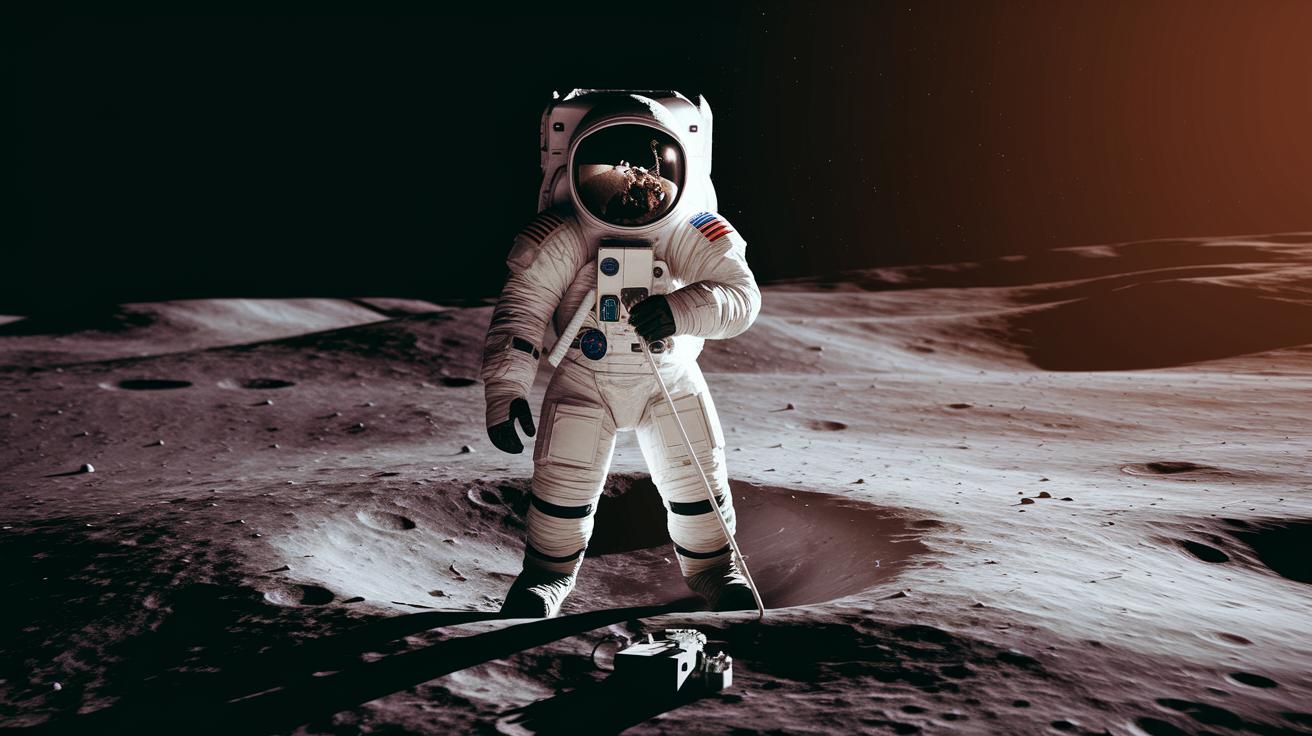
The Apollo missions did some really important experiments on the Moon that still shape what we know about lunar exploration today. These missions collected about 382 kg of Moon rocks, which scientists sorted into different types to piece together the Moon’s long and fascinating history. Astronauts even stepped out onto the lunar surface for what we call EVAs (extravehicular activities) , their time outside ranged from 2 hours 31 minutes on Apollo 11 to over 22 hours on Apollo 17. They set up handy tools like seismometers (instruments that detect shakes), magnetometers (devices that measure magnetic fields), and laser reflector arrays that helped figure out the Moon’s inner workings and surface details.
By gathering these samples and using these instruments, the Apollo crew not only boosted our understanding of how the Moon was formed and changed but also set the stage for future lunar missions. Their work created a blueprint for how we operate on the Moon’s surface, making it easier for later missions to follow in their footsteps.
But the Apollo legacy isn’t just about rock samples and moonwalks. The program sparked amazing new technologies as well. Innovations like miniaturized electronics, improved life-support systems, and stronger materials emerged from the tough demands of space travel. These breakthroughs transformed how we design future spacecraft and how we plan space missions today. You can explore more about this lasting impact at sites like nasa space flight, where lessons from Apollo continue to inspire modern space exploration.
Cultural Impact & Modern Perspectives on Apollo Missions
Films such as First Man and Apollo 13 bring the thrill of space exploration to life on screen. Documentaries using NASA archives and vivid IMAX footage show us the real challenges and heroic efforts behind these missions. Imagine watching a movie where every scene pulls you right into the excitement and tension of being in space.
When Apollo 11 was broadcast live, it reached nearly 600 million people, turning a technical achievement into a shared cultural celebration. Museums now feature interactive exhibits that let you experience authentic space artifacts firsthand. Picture entering an exhibit where the shine of a real spacecraft part sparks your curiosity about the universe beyond our sky.
The spirit of the Apollo missions still lights a fire for science in classrooms and among modern space fans. Educational programs and the enthusiasm of the private space sector remind us that bold dreams can lead to amazing achievements. As one teacher put it, "Learning about Apollo makes us feel like we, too, can touch the stars."
Final Words
In the action, we explored Apollo missions as a window into historic space exploration. We retraced the timeline, celebrated engineering breakthroughs, and witnessed courageous crisis management that turned challenges into triumphs.
The post unpacked crew experiences, technological milestones, and the lasting cultural impact that ignited public passion for science.
Apollo missions continue to inspire us all with a legacy of innovation and brave spirit. The adventure of these missions leaves us excited about the future of space travel.
FAQ
How many Apollo missions were there and how many were successful?
The Apollo program included 11 manned flights (Apollo 7–17). All achieved their goals, though Apollo 13 suffered an in-flight explosion yet managed to return its crew safely.
Which Apollo missions landed on the Moon?
The Apollo missions that landed on the Moon were Apollo 11, 12, 14, 15, 16, and 17, each successfully achieving the goal of a lunar touchdown and surface exploration.
What happened to Apollo 2, 3, 4, 5, and 6?
Apollo 2 and 3 were designations that never flew. Apollo 4 and 6 were uncrewed tests that validated the Saturn V rocket, while Apollo 5 served as a test for the lunar module.
How many Apollo missions suffered major malfunctions?
Apollo 1 experienced a tragic cabin fire during a ground test, and Apollo 13 encountered an oxygen tank explosion in flight, both leading to significant safety improvements in later missions.
Why can’t we go to the Moon anymore?
Moon travel paused due to shifting space exploration priorities, changes in funding, and a growing focus on other destinations, even though future lunar missions are being discussed.
Which Apollo mission is considered the most famous?
Apollo 11 is widely regarded as the most famous mission since it achieved the first human landing on the Moon, marking a historic milestone in space exploration.
Who were some key astronauts in the Apollo missions?
Key crew members included legendary figures like Neil Armstrong, Buzz Aldrin, and Michael Collins, who each played vital roles in making the Apollo milestones possible.