
Have you ever thought about how each breath you take is filled with a secret mix of ingredients essential for life? Earth's air isn’t empty space. Instead, it’s a blend of gases that work together much like the ingredients in your favorite sandwich. Most of this air is made up of nitrogen, while oxygen comes in second and supports us every day. Even though there are only tiny bits of other gases, they play a big role in keeping our climate balanced and our world comfortable. This text dives into the science behind these gas mixtures and shows how even small amounts of certain chemicals help keep our planet lively.
Primary Gas Percentages in the Earth's Atmosphere
Our planet’s air is like a carefully blended recipe that supports all life. Most of it is made up of nitrogen (a gas that doesn’t react much), which fills about 78% of the air. This quiet gas helps spread out other more active chemicals so that nature stays balanced. Oxygen comes in next at roughly 21% and is essential for breathing, it’s what keeps our hearts beating every time we take a breath.
Even tiny amounts of other gases are important. For example, argon, carbon dioxide, and water vapor each play special roles in keeping Earth’s temperature steady and the energy flowing the way it should. They’re like the secret ingredients in your favorite dish.
| Gas | Approximate Percentage |
|---|---|
| Nitrogen | 78% |
| Oxygen | 21% |
| Argon | 0.93% |
| Carbon Dioxide | 0.04% |
| Water Vapor | Varies from 0 to 4% |
Keeping these gas levels in check is key to a friendly and stable climate. Nitrogen helps by staying mostly in the background and stopping some chemical reactions from getting out of hand. Oxygen isn’t just vital for life, it also affects things like fire and the breakdown of organic matter. Even carbon dioxide, though it’s present in very small amounts, traps heat that keeps our planet warm. And when the air holds more water vapor, it can shift our weather from a light mist to a heavier storm.
So, every breath you take is a reminder of nature’s perfect mix that makes Earth a comfortable and lively place to be.
Atmospheric Layers and Their Composition
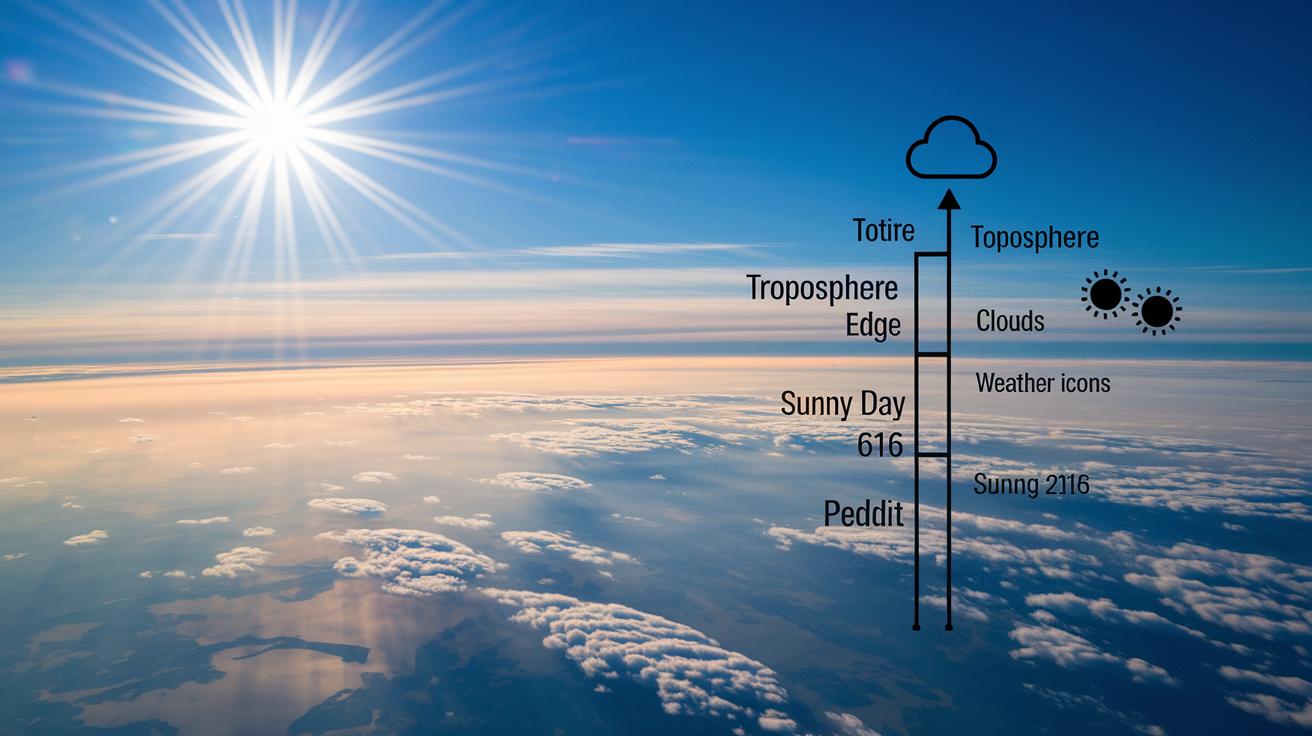
Earth’s blanket of air is split into several layers, each with its own special features. These layers vary in how high they are, what chemicals they contain, and how their temperatures change. They help shape our weather, carry radio waves, and even create dazzling lights in space. Isn’t it cool how our sky works?
Troposphere
The troposphere starts at the ground and goes up about 8 to 14.5 km. This layer holds most of the air’s weight and almost all of the moisture we know as water vapor. Here, weather events like rain, wind, and thunderstorms take place, and the temperature drops by about 6.5 °C for every kilometer you go up.
Stratosphere
The next layer is the stratosphere, which stretches from about 14.5 km to 50 km above Earth. What makes it special is a thick layer of ozone (a gas that protects us from harmful ultraviolet rays). In this layer, temperatures actually rise with altitude, starting at around –51 °C at the bottom and climbing to roughly –15 °C near the top.
Mesosphere
Above that, the mesosphere reaches from 50 km up to around 85 km high. This part of the atmosphere is the coldest of all, with temperatures dropping down to about –90 °C. The air is extremely thin here, and when meteors plummet into Earth’s atmosphere, they burn up in this chilly zone, briefly lighting up the night sky.
Thermosphere
The thermosphere lies next, from about 85 km up to 600 km. Even though the air is very sparse, it heats up quickly because of strong ultraviolet and X-ray rays. Temperatures in this layer can soar from about 500 °C all the way to 2000 °C at times. This is also the region where you can see the breathtaking auroras (natural light displays).
Exosphere
Finally, the exosphere is our atmosphere’s outermost layer. It extends from around 600 km to nearly 10,000 km, where the air is mostly made of lightweight gases like hydrogen and helium. Here, collisions between particles are so rare that the air slowly drifts off into space. Quite a journey from our busy ground level, isn’t it?
Temperature and Pressure Variation in Earth’s Atmosphere
Let's dive into how air temperature and pressure change as you rise through Earth's atmosphere. In the lowest layer, known as the troposphere, pressure falls quickly. At sea level, it starts at about 1013 hPa (a way to measure air pressure) and drops to around 226 hPa near the top. This shift can change how weather forms and affects the way planes fly. Think about climbing a mountain and feeling the air get thinner with every step.
Moving up to the stratosphere, you'll notice that the temperature actually increases. This happens because ozone (a gas that helps block the sun's harmful rays) absorbs ultraviolet light, similar to how the inside of a car warms up on a sunny day. Even though the pressure here doesn't drop as drastically, it still plays a part in how we predict the weather.
As you enter the mesosphere, the pressure drops even further to roughly 1 hPa at about 50 km high, and temperatures can plummet to nearly -90°C. Then, in the thermosphere, temperatures soar above 2000°C because high-energy rays are absorbed. But don’t worry, the air here is so thin that you wouldn’t feel the heat. These striking changes help us understand how energy moves and how the atmosphere cools over time.
Changes in air pressure and density matter not only for weather but also for flying. Variations in air density can affect how sound travels and even how radio signals move, making it important for pilots to find layers where conditions are consistent for a smoother flight. Here's a quick look at the numbers:
| Atmospheric Layer | Approximate Pressure |
|---|---|
| Troposphere | 1013 hPa at sea level to 226 hPa near 11 km |
| Stratosphere | Pressure drops slowly; values can vary |
| Mesosphere | About 1 hPa around 50 km |
| Thermosphere | Very low, almost negligible |
By putting these details together, we get a clearer picture of how our atmosphere works. It helps scientists make better weather forecasts and keeps pilots safer in the skies.
Trace Gases and Greenhouse Components in the Atmospheric Mix

Greenhouse gases work like a warm blanket, catching infrared radiation and keeping Earth about 33 °C warmer than it would be without them. Carbon dioxide is a great example. Even though it makes up just around 0.04% of the air, its boost has a big effect. Before industrial times, CO₂ hovered around 280 parts per million; today, it’s more than 415 parts per million. Pretty surprising, right? Even a little extra CO₂ can make a huge difference, much like a pinch of salt can transform a simple dish.
Water vapor is another heavy hitter, contributing nearly 50% of the warming we experience. Along with water vapor, methane (found at about 1.8 parts per million) and ozone also help guide Earth’s temperature. Then there are trace compounds like volatile organic compounds (VOCs, which are chemicals that evaporate easily) and nitrous oxide. These layers work together to decide how heat stays in our atmosphere.
Air pollutants, including nitrogen oxides, sulfur dioxide, and various aerosols, change how our planet handles sunlight. They can affect the balance of light coming in and heat sent back out, which in turn tweaks weather patterns and creates lasting changes in our climate. It’s a careful dance between human actions and the natural systems that keep our planet comfortable.
Human Influence on Earth’s Atmospheric Composition
Burning fossil fuels and running factories have changed our air over time. When we burn coal, gas, or oil, it pumps more carbon dioxide (CO₂), methane (CH₄), and nitrogen oxides (NOx) into the sky. Factories also let out things like CFCs and aerosols (tiny particles) that mix up our atmosphere. Before we industrialized, CO₂ was about 280 parts per million (ppm), but now it’s over 415 ppm. Methane has almost doubled since 1750. These changes don't just heat up our planet, they also affect the air we breathe and our health. What causes climate change talks about how these gases change our temperature and impact communities and nature.
Scientists now use cool, modern tools to watch these shifts in our atmosphere. They use satellites like NASA’s OCO-2 and networks on the ground from NOAA ESRL to measure gas levels everywhere. This info is turned into an easy-to-understand Air Quality Index (AQI) that tells us about health risks. Projections show that if we don’t take big steps to cut emissions, CO₂ levels will keep rising. Thanks to ongoing monitoring, we can make smarter choices to lower emissions and improve our air. What is climate change dives into these techniques and shows how they help us look after our planet.
Methods for Measuring and Analyzing Atmospheric Composition
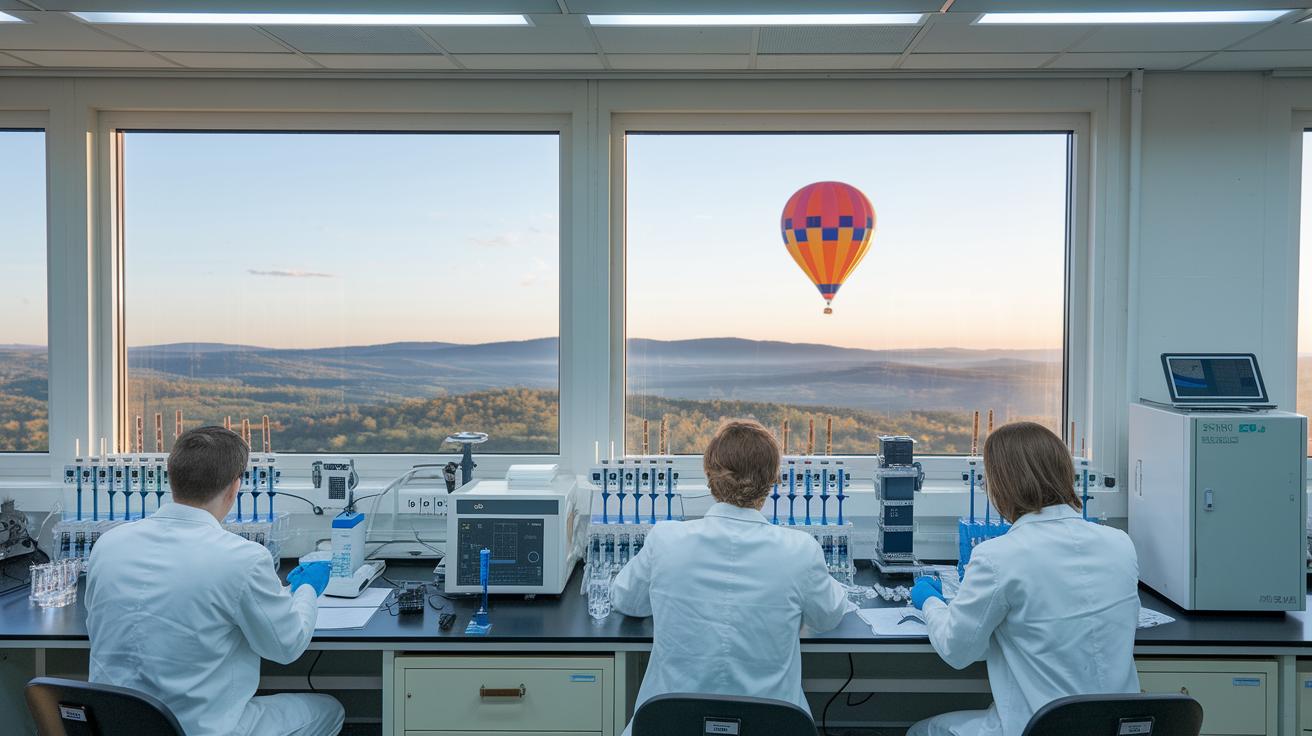
Scientists use many hands-on techniques to learn what our air is made of. They use tools like gas chromatography (a method that sorts chemicals in a mix), mass spectrometry (which figures out what something is by weighing its parts), and lidar-based probes to collect clear data right from the air. Radiosondes and weather balloons also give us clues; they climb high and record changes in temperature, pressure, and humidity. Barometers even help by checking the air pressure at different heights. Imagine a weather balloon rising into the sky, sending back bits of information that help researchers solve the puzzle of our atmosphere.
Remote sensing helps us see the bigger picture from above. Satellites such as Sentinel-5P and OCO-2 roam our planet, spotting gases like CO₂, CH₄ (methane), and tiny particles (aerosols) that float in the air. The info from these space tools is mixed with ground measurements in climate models that guide big decisions about our environment. By combining what we learn from space with what we measure here on Earth, scientists can see patterns in how gases change over time and predict how human actions might shape our future.
Final Words
In the action, our exploration covered the main gas percentages and detailed the air layers and temperature changes shaping our environment. We looked into trace elements, the impact of human activities, and the tools that help us learn about our air. These insights tie directly to the atmosphere composition of earth, making complex ideas easier to grasp. The science behind our air is truly inspiring. Stay curious and keep exploring – the world around us holds endless wonders.