
Have you ever thought about how our wildest space dreams might change our daily lives? Exploring space is more than just a cool adventure, it's a spark that lights up inventions that help our health, tech, and even how we work together around the world.
Since NASA first sent missions into space, every step has handed us fresh tools, smarter technology, and new ways to fight diseases. What might seem like a distant journey actually brings little surprises that make our everyday routines easier, boost our economy, and inspire science that leads us into a future full of promise.
Space Exploration Benefits for Society, Science, and the Economy
NASA started its space mission back in 1958, and we've come a long way since then. In the 1960s through the early 2000s, we saw amazing events like the Apollo moon landings, the first space shuttle flight, the launch of the Hubble Space Telescope that has let us see far-off galaxies, building the International Space Station where astronauts do cool experiments, and the Mars rover missions with Spirit and Opportunity exploring another world. These milestones not only pushed technology ahead but also set the stage for linking scientific wonders to our everyday lives.
These space achievements have had a big impact on our economy and global partnerships. They have brought different countries together to work on research and business projects, creating new opportunities for growth. Governments and companies alike have enjoyed benefits that open up new industries and income sources. Today, even developing countries are stepping into space exploration, which boosts a worldwide market where innovation thrives and international bonds are made stronger.
On the science and health side, research in space has led to many exciting breakthroughs. The International Space Station acts like a one-of-a-kind lab in a low-gravity setting (where things weigh less), letting scientists experiment in ways that aren’t possible on Earth. This work has helped improve materials, accelerate drug discovery, and even paved the way for better treatments for diseases like cancer and Alzheimer’s. It’s truly amazing how studying space can lead to new ideas that help make our lives better.
Technological Spin-Off Benefits from Space Exploration

Space programs have given us more than just a glimpse of far-off planets. They have also sparked inventions we use every day. Did you know that memory foam was first created to help astronauts survive a crash in the Apollo Command Module? Now, it makes our mattresses much more comfortable.
Many of these cool inventions came from solving tough problems in space. They were built to handle the harsh conditions beyond Earth, but they turned out to make life here much easier.
- Memory foam: Originally made to absorb impacts in space, now it offers extra comfort for beds and sports gear.
- GPS: Started as part of satellite systems, today it helps guide us on roads and keeps track of weather patterns.
- Advanced solar cells: Engineered for satellites, these cells now power portable energy solutions.
- Radiant Barrier insulation: Designed to shield spacecraft from extreme temperature changes, it now helps keep our homes cozy.
- Earthquake shock absorption technology: Inspired by launch vibration dampers, this tech strengthens bridges and tall buildings.
These space spin-offs show how exploring the universe can lead to new, practical ideas that improve our everyday lives. It’s amazing to think that challenges in space have turned into benefits right here on Earth.
Economic Opportunities from Space Exploration
Asteroid and lunar mining open up amazing new business opportunities. Asteroids and the moon have metals like nickel and cobalt (kinds of metal) that could be worth trillions of dollars. Tapping these space resources might create revenue that goes far beyond our typical mining on Earth. Imagine unlocking huge markets from off-world supplies that change how we value and move goods. It’s an exciting shift in how we get our resources and imagine future industries.
Space-based solar power is another bright idea. By catching constant sunlight in space, these systems can produce clean energy all day long, no cloudy days or dark nights to slow them down. This steady stream of energy could cut our need for traditional mining while powering new industries and communities. In truth, this kind of breakthrough paves the way for green energy investments and a growing market that benefits us right here on Earth.
Private rocket launch companies and space tourism ventures are already pulling in billions in funding. This shows us that commercial space operations are more than just a dream. At the same time, making sure everything stays safe is key. New rules and guidelines are being formed to help the market grow without cutting corners on security or public trust. All of these changes are reshaping our economy and setting the stage for a strong space industry that could bring benefits around the globe.
Scientific Innovation in Orbit Through Microgravity Research
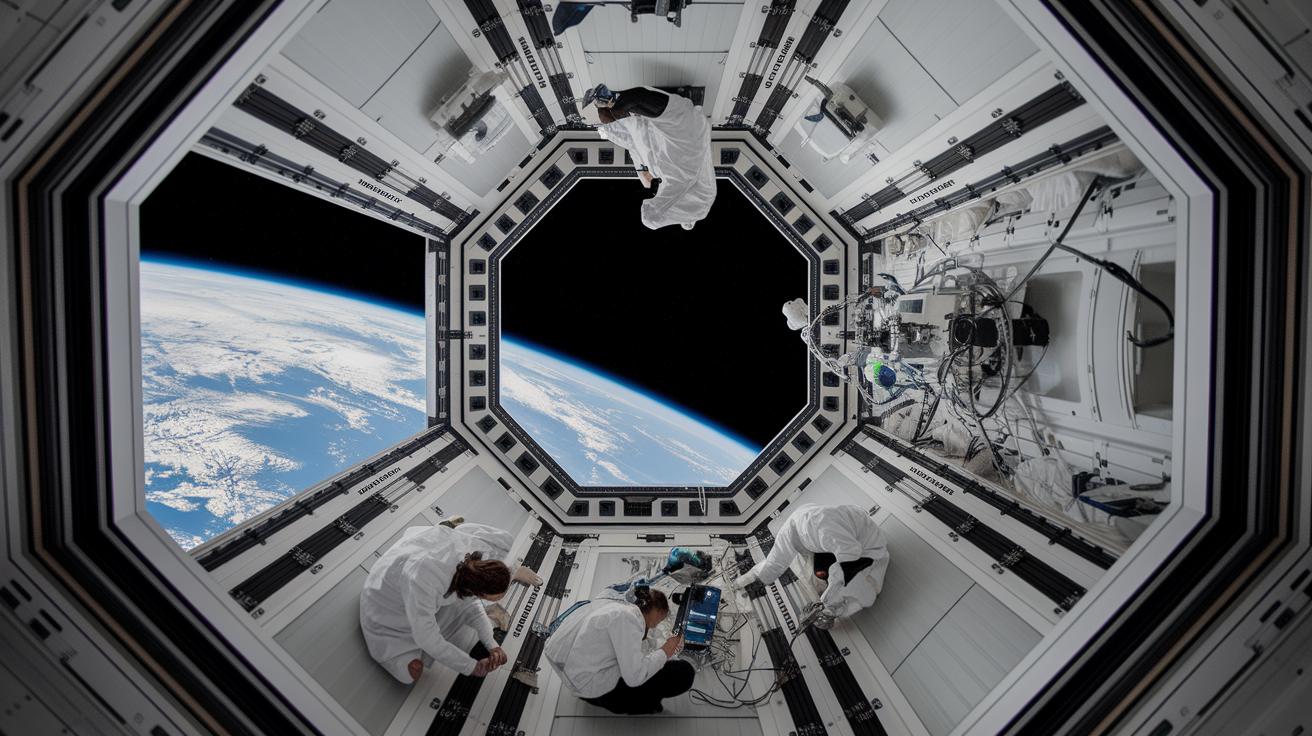
Imagine a giant, floating science lab high above us, that’s the International Space Station. In space, where gravity barely tugs at things, researchers get to explore ideas that just can’t be tested on Earth. They look at everything from how liquids mix to the way cells grow and materials hold up under near-weightless conditions. These cool experiments help us understand our own world better. And hey, if you’re curious to learn more about space science breakthroughs, check out "science breakthroughs in space exploration" (https://buzzyandclever.com?p=1792).
Working in medicine is a whole new adventure when you’re in space. With gravity on pause, scientists can try fresh ideas in biomanufacturing (making useful products from living things) and drug discovery at a much faster pace. This means we might find improved treatments for illnesses like cancer and Alzheimer’s. By watching how our bodies act without Earth’s heavy pull, researchers are uncovering new ways to tackle health issues back home.
Then there’s the exciting world of in-space servicing, assembly, and manufacturing. This area, often called ISAM, is turning the way we build and maintain spacecraft upside down. Imagine being able to refuel or put together parts of a space station right where you are, with materials produced in orbit. That not only keeps missions going longer but also sparks fresh ideas for grander projects. In essence, orbit-based research is setting the stage for new engineering marvels and business opportunities.
Environmental Monitoring and Climate Benefits Enabled by Space Exploration
Satellites are like our eyes in the sky, keeping track of weather changes and natural events. Using systems like the Global Positioning System (GPS, which tells you your exact location), these space tools monitor wildfires, storms, and other weather happenings as they occur. When a satellite flies over an area, it gathers key details that help scientists predict severe weather and guide emergency teams to act fast. For example, knowing exactly where a wildfire is burning lets responders rush in to protect homes and lives.
Space technology does even more. It helps us capture clean energy from the sun without being affected by day-night cycles or bad weather. Space-based solar power systems collect sunlight all day long, offering a steady and reliable energy source that might lessen our reliance on traditional mining. Moreover, satellites provide early alerts for earthquakes and storms, which allows communities to brace for impact and stay safer during natural disasters.
| Application | Benefit |
|---|---|
| Weather and wildfire tracking | Real-time data for forecasts and faster emergency response |
| Space-based solar power | Continuous and uninterrupted renewable energy |
| Early disaster warning | Improved community safety and better disaster preparedness |
All in all, these satellite tools show how space exploration boosts our ability to monitor the environment and study the climate. By giving us reliable forecasting tools and creative energy solutions, space technology is helping us build safer, greener communities and paving the way for a healthier planet for future generations.
International Cooperation and STEM Education Boost from Space Exploration

Across the globe, space exploration is opening up new opportunities for countries still growing their technology. By the end of 2022, 14 African nations were operating 52 satellites (devices orbiting the Earth that collect data). This shows how many countries are using space technology to improve science and boost their economies. For example, Kenya took a huge step by launching its first observation satellite in April 2023. These efforts not only support local research but also help improve how communities monitor the environment and respond to disasters.
Collaborative missions like those on the International Space Station bring together experts from different parts of the world. These joint projects build bridges between nations and create a shared spirit of discovery. Global events, such as world space week (visit https://buzzyandclever.com?p=1714), encourage countries to pool their knowledge and resources to solve challenges in space.
STEM education benefits a lot from these international projects. Educational programs linked to space missions spark interest in science, technology, engineering, and math. Public astronomy events give everyone a chance to see the wonders of space up close, sparking curiosity and inspiring the next generation of scientists and innovators.
Future Prospects and Emerging Benefits of Space Exploration
Imagine a future where new fuel ideas shrink what used to be a 40-year journey between planets down to just about 10 years. Companies like Magdrive, Helicity Space, Pulsar Fusion, and Neutron Star Systems are busy testing these ideas, pushing the limits of what spacecraft can do. It’s like gearing up to take a super-fast trip through space that you never thought possible.
Then there’s the exciting promise of off-world resource exploration. Think about reaching out to asteroids or even the Moon to mine metals like nickel and cobalt (important materials used in many modern gadgets). Drawing these resources from space could completely change the way our markets work, opening up new economic models you’ve never seen before. It’s pretty wild to imagine space resources boosting industries back on Earth.
Looking further ahead, the plans to build places for people to live off Earth and to uncover even more about our universe open a whole new chapter in human history. With goals like creating sustainable space habitats and diving deep into astrophysics (the study of how space works), we might even see communities growing beyond our planet. These advances promise not only new challenges and discoveries out in space but also fresh ideas and improvements here on Earth that could enrich our everyday lives.
Final Words
In the action, we explored NASA milestones, from moon landings to modern labs in space, showing how each breakthrough fuels everyday tech.
We looked at how space ventures spark new business opportunities, drive global teamwork, and boost science education.
All these points underline the benefits of space exploration, revealing real-world impacts and a bright future fueled by continuous scientific inquiry and innovation.
FAQ
What are the benefits of space exploration?
The benefits of space exploration include breakthroughs in technology, economic growth, and enhanced STEM education, all of which improve our quality of life and bolster research that touches everyday industries.
What economic benefits does space exploration bring?
The economic benefits from space exploration show up as increased job opportunities, new industries like satellite technology and space tourism, and international partnerships that invite more investment into innovative sectors.
How does NASA drive space exploration benefits?
NASA demonstrates benefits through its landmark missions — from moon landings to Mars explorations — that spark technological innovations and global collaborations, pushing forward science and practical applications.
What are the pros and cons of space exploration?
The pros include scientific advancements, technological spin-offs, and economic opportunities. The cons often involve high costs and inherent risks, inviting a balanced discussion on the value of these initiatives.
How does space exploration benefit society?
Space exploration benefits society by advancing environmental monitoring, enabling climate research and medical progress, and inspiring future generations in STEM fields through shared knowledge and international teamwork.
What key outcomes come from space exploration?
Key outcomes include improved technologies used daily, data for weather and disaster monitoring, and medical research breakthroughs, all contributing to safer lives and more resilient communities.