
Have you ever thought about slowing down or reversing aging? New treatments in regenerative medicine are challenging what we always thought about growing older. These therapies clear away old, worn-out cells and boost our body's natural repair system (like giving your body a tune-up so it runs more smoothly). In early tests, scientists have seen some really exciting results. It might one day help us feel a bit younger every day.
Overview of Breakthrough Rejuvenation Modalities in Regenerative Anti-Aging Therapies
Recent studies in regenerative medicine reveal some exciting ways to help our bodies feel younger. One cool method uses medicines called senolytics, which are designed to clear out cells that have stopped working well. This cleanup can lower inflammation and help our tissues stay healthier. Another strategy kicks in by boosting telomerase, an enzyme that extends telomeres (the little protective caps at the ends of our chromosomes) so our cells can divide more robustly.
Then there’s stem cell therapy, where special cells, known for their ability to transform and repair damaged tissues, work like tiny repair crews. Scientists are fine-tuning the delivery of these cells to make sure they fit in nicely and work safely alongside our own cells.
Researchers also watch key signals of aging – things like how stretchy our tissues are, our metabolic balance, and levels of inflammation – during trials. It’s like checking a car’s gauges to see how well it’s running. All these different tools work together to bring us closer to turning back the aging clock.
| Benefit |
|---|
| Better tissue repair and regeneration |
| Fewer signs of cellular aging |
| Improved cell repair signals |
| Healthier blood markers |
| Clear safety in early trials |
These breakthrough treatments offer a glimpse into a future where age reversal might not only slow aging but perhaps even reverse some of its effects. It’s pretty amazing to think how a mix of cleaning out old cells, enhancing cell lifespan, and repairing tissues could give us a more vibrant life as we grow older.
Senescence Clearance Compounds and Oxidative Stress Alleviation in Regenerative Anti-Aging Therapies
Our bodies slowly collect cells that have stopped dividing, and these cells can crowd out healthy ones. When these old cells hang around, they spark inflammation and can hurt our tissues. That’s why scientists are exploring ways to clear them out using special drugs while also protecting healthy cells with antioxidants.
- Dasatinib+Quercetin is a mix of a cancer drug and a natural plant compound called a flavonoid (a substance found in fruits and vegetables). This combo aims to target and remove old cells, and it’s now in Phase II trials.
- N-acetylcysteine works as an antioxidant, which means it helps guard cells against harmful molecules called reactive oxygen species (tiny, unstable molecules that can damage cells). It’s currently being tested in Phase I.
- Fisetin, a compound from plants, helps lower signs of old cells and may boost tissue health. Researchers are checking its effects in early-phase trials.
- MitoQ is designed to protect the cell’s powerhouses known as mitochondria (parts of the cell that produce energy). This targeted antioxidant is in Phase I–II studies.
New studies are also looking at chemicals that boost autophagy, which is the cell’s natural cleaning system that removes waste and damaged proteins. Combining these cleanup helpers with senescence-clearing drugs and antioxidants might create a stronger approach to rejuvenating tissues and slowing down aging. It’s an exciting time for research, and these combined methods could help us feel younger and healthier as we age.
Telomere Lengthening and DNA Repair Enhancement for Age Reversal
Scientists are busy exploring fresh ways to help our cells hold on to their vitality. They’re looking at methods that make our chromosomes more stable and may slow down aging. One big idea is to extend telomeres, those little protective caps on our chromosomes. At the same time, researchers are boosting the cell’s repair crew so it can mend damaged DNA. They do this by using gene therapy to deliver telomerase (an enzyme that adds extra building blocks to telomeres) and by using small molecules to kick-start the cell’s repair systems. Imagine giving your body a tune-up that could keep it running smoother for longer.
Mechanisms of Telomerase Activation
There are two key ways scientists are trying to boost telomerase. One way sends telomerase genes into cells using viral vectors, which are like tiny delivery trucks that drop off the gene packages. This method works well but needs extra care to ensure the body’s immune system doesn’t overreact. The other method uses mRNA, a temporary messenger that tells the cell to produce more telomerase for a short time. This approach is seen as safer because it doesn’t permanently alter the cell’s genes, which lowers the chance of unintended effects. Both tricks aim to give telomeres a little extra boost without causing too much fuss.
Enhancing DNA Repair Pathways
Scientists are also working on ways to ramp up the cell’s natural repair work. They’re focusing on special enzymes such as PARP modulators (which act like early-warning systems for DNA damage) and tools that fix tiny errors in DNA through a process called base excision repair. These treatments help keep the cell’s blueprint safe from the everyday wear and tear it experiences.
On top of that, researchers are testing “epigenomic reset” techniques. These strategies adjust the cell’s internal settings to bring back a more youthful pattern of gene activity. Think of it as resetting a clock in the cell, so everything runs a bit more like it did when you were younger. In truth, these innovative ideas might one day help our cells stay resilient even as time goes on.
Pluripotent Revival Techniques and Tissue Reconstruction Engineering
Transforming adult cells back into a flexible state is opening the door to fresh tissue energy. Scientists can take regular cells and reprogram them so they can turn into many kinds of tissues, much like how young tissues develop. This approach shows real promise in mimicking the natural growth we see when we're younger. And if you're curious, some studies even mention it alongside topics like Stem Cell Therapy Advances for Spinal Cord Injury Recovery, pointing to how hopeful these methods can be.
Another method uses mesenchymal stem cells paired with supportive scaffolds to help rebuild injured tissues. In simple terms, researchers mix these cells with specially made structures that copy the body's natural support system. This gives the cells a chance to attach and grow just as they would in their normal environment. Some common scaffold materials include:
- Collagen hydrogel
- Polylactic acid
- Fibrin gel
Even with these exciting innovations, there are still challenges to tackle. Creating new blood vessels (a process called vascularization) is a big hurdle if we want engineered tissues to survive for the long run. Plus, getting these new tissues to connect properly with the body (in vivo integration) requires even more careful work. Solving these issues is key to turning a promising idea into a reliable treatment for aging tissues.
Mitochondrial Energizing Protocols, Autophagic Flux, and Proteostasis Optimization
Mitochondria are like the little power plants in our cells, but they don’t work as well once we get older. This drop in performance means our cells make less energy, which can leave us feeling tired and slow down healing. At the same time, waste builds up in the cells, making it harder for them to work properly. All of these changes can chip away at our overall vitality.
Here are some treatments being explored:
• NAD+ precursors: In Phase II studies, these seem to boost energy and help mitochondria work better.
• Coenzyme Q10 analogs: Tested in Phase I/II, they improve the flow of electrons (the process that creates energy) and help cut down on damage from harmful molecules.
• MitoQ: Now in Phase I trials, this compound protects the membranes of mitochondria and reduces damage from free radicals (unstable molecules that can harm cells).
• Pterostilbene: In early testing, it supports efficient energy use and helps keep inflammation low.
Proteostasis regulators, like chaperone enhancers, are key for keeping proteins in our cells correctly folded and functional. They clear away misfolded proteins, which can be toxic, and support the natural clean-up and recycling process inside cells. This approach not only boosts energy but also keeps harmful waste out of cells, helping to keep our tissues strong and healthy as we age.
Growth Factor Augmentation and Cytokine Modulation in Anti-Aging Regenerative Medicine
Paracrine signals are like secret texts that help your body fix itself. They get cells talking to each other so that when something gets hurt, your cells know exactly what to do. Imagine your cells sending quick notes to adjacent cells, telling them to start the repair work. For example, when you have growth factors like FGF-21 or IGF-1 around, they trigger healthy repair and maintenance in your tissues.
Engineered Growth Factor Therapies
Engineered growth factor therapies are all about fine-tuning these cell messages. Scientists work hard to design, dose, and deliver molecules that act just like the natural ones. It’s like installing a smart update for your cells that boosts their performance without causing chaos. The idea is to support repair while keeping extra cell growth in check.
Cytokine Modulation Approaches
Cytokine modulation approaches focus on key molecules like IL-6 and TGF-β to calm down too much inflammation, which can get in the way of healing. Researchers use blockers to clear up the signal, so important repair messages don’t get lost in a noisy background. It’s a bit like turning down the volume on background noise so you can hear what really matters.
Delivery remains a challenge, though. These treatments need to hit the right cells without sparking off-target effects that could risk safety.
Innovative Biologic Formulations and Nanodelivery Vector Networks
When we put drugs into the bloodstream, they sometimes don’t work as well as we need because they break down too fast or end up in the wrong places. This is a big headache for scientists, so they’ve been working on smarter ways to deliver these medicines. These new methods use tiny carriers that help protect the drug and make sure it gets to the right spot.
Take lipid nanoparticles, for example. They wrap the drug in a protective layer and let it out slowly, which keeps the medicine stable. Then there are polymeric micelles that hold water-hating (hydrophobic) drugs safely, boosting their solubility and lowering side effects. Exosomes are another cool option; since they come naturally from cells, they help move drugs from one cell to another without triggering a strong immune response. Dendrimers are also in the mix – these are like uniform, little delivery trucks with special surfaces that make drug release even more precise. And let’s not forget carbon nanotubes, which offer a huge area for attaching lots of drugs and push them deep into tissues.
Another exciting breakthrough is using smart, injectable biopolymers to reshape the tissue around cells. These polymers create a kind of friendly scaffold that not only supports repairing old or damaged tissues but also helps cells grow and connect properly.
Clinical Study Advancements and Experimental Therapeutic Strategies
Recent studies in Phase I and Phase II are showing some encouraging signs in anti-aging treatments. Scientists are now testing therapies that remove unwanted cells, repair damaged genes, and boost cell function. Early results indicate that senolytics can lower the number of old cells, while telomerase therapy may help keep chromosome ends stable. Researchers are also looking at stem cell infusions for their potential to help tissues heal and mitochondrial enhancers for increasing cellular energy. These trials mainly focus on safety and early improvements like better tissue repair, reduced inflammation, and overall enhanced cell activity.
| Therapy | Trial Phase | Primary Endpoint | Status |
|---|---|---|---|
| Senolytics | Phase II | Reduction in senescent cell count | Active |
| Telomerase Therapy | Phase I | Telomere length stabilization | Ongoing |
| Stem Cell Infusion | Phase II | Tissue regeneration markers | Recruiting |
| Mitochondrial Enhancers | Phase I | Functional energy capacity | Preliminary |
Next, researchers are exploring more flexible trial designs that adjust treatments based on early responses from patients. They are also developing sets of biomarkers (signals in the body that help track changes) to monitor improvements in real time. These adaptive methods aim to fine-tune dosage, safety, and overall effectiveness, helping regenerative anti-aging therapies evolve quickly to benefit patients better.
Personalized Longevity Regimens and Precision Youth Preservation
Scientists are using multi-omics to design anti-aging treatments that match each person’s unique makeup. This approach studies things like your DNA (the code that makes you who you are) and the small molecules in your body (tiny substances that help your body work). It gives a clear picture of how your body works inside, almost like a detailed map that guides every treatment decision. In the future, data from these studies will team up with artificial intelligence to create treatments based on your specific body signals.
- Predictive modeling uses your past health data to guess how a treatment might work for you.
- Digital twins create a virtual copy of your body’s profile to see how you might react to different therapies.
- Adaptive dosing changes the amount of treatment in real-time as your body is continuously monitored.
Health regulators carefully check these new approaches as they move through clinical testing. They look at things like data safety, the accuracy with which they measure your body’s signals, and the trustworthiness of AI tools, similar to what you see in modern AI-powered drug discovery, to make sure these personalized treatments are both safe and effective.
Future Directions: Biofabrication, Extracellular Vesicle Application, and Organ Restoration Innovations
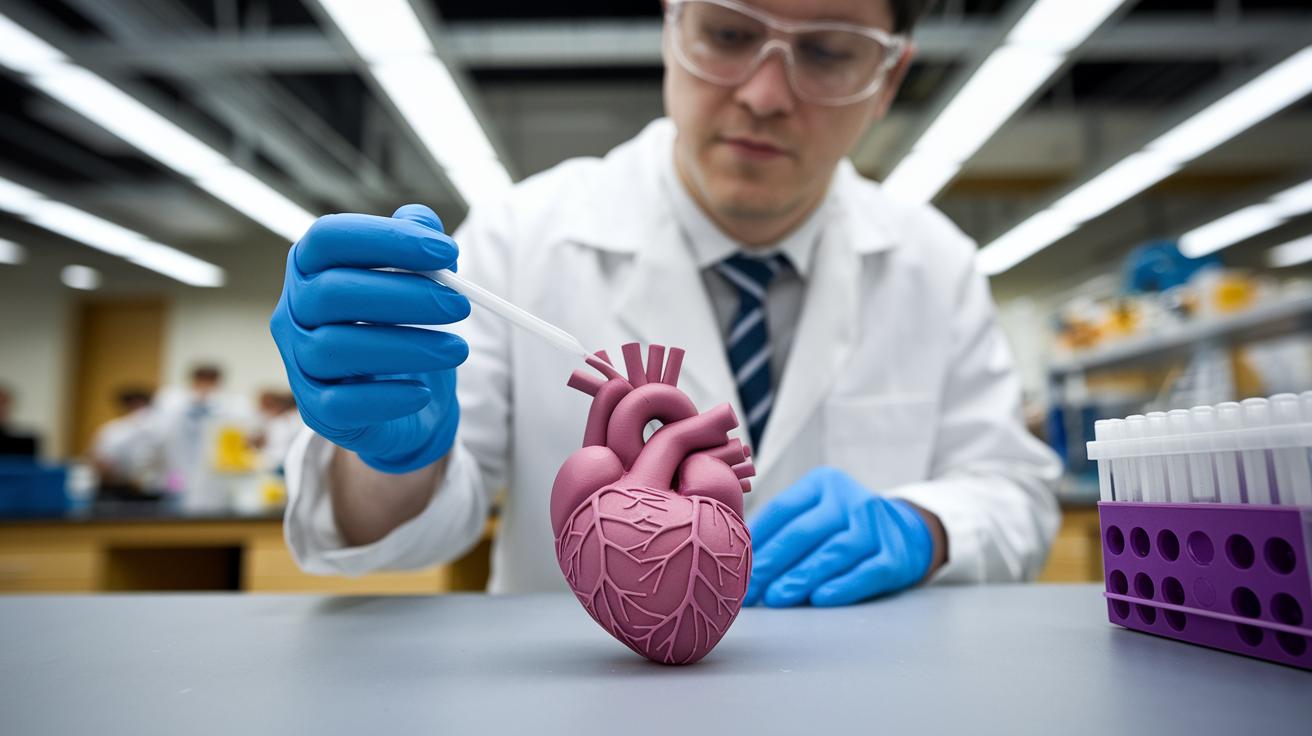
3D bioprinted organ scaffolds are paving the way for new treatments that help fight aging. Scientists use modern printers to create detailed, lifelike frames that copy natural tissue. These custom templates guide cells as they build working tissues, much like a stage where each actor has a role. Imagine crafting a tiny heart model that later supports the growth of new heart tissue.
Another exciting development is the use of therapeutic exosome platforms. Exosomes (small packets released by cells that carry important signals) help cells talk to each other and repair damage. Researchers are working to collect and boost these natural messengers so they can deliver healing factors straight to aging cells. It’s like sending a short, clear note that tells cells how to clean up and rebuild.
Bringing together techniques that use the body’s own signals for healing with new research on organ repair makes the process even stronger. In truth, scientists are tapping into our natural communication systems to enhance how tissues recover in our bodies. Picture gentle cell messages sparking repairs across an entire organ, leading to tissue that is both stronger and more youthful.
Final Words
In the action, we explored new methods to rejuvenate cells and tissues using breakthrough anti-aging therapies in regenerative medicine. Each section highlighted how innovative treatments like senolytic drugs, telomerase activation, and stem cell reprogramming could improve tissue function and overall health. We also touched on cutting-edge delivery techniques and personalized strategies to refine these approaches. The science behind these efforts holds promising benefits. The future looks bright as research continues to translate these insights into everyday benefits.
FAQ
What do breakthrough rejuvenation modalities address?
The breakthrough rejuvenation modalities address anti-aging by targeting key cellular markers. They use next-level strategies like stem cell treatments and telomerase activation to promote youthful cell function.
How do senescence clearance compounds support anti-aging therapies?
The senescence clearance compounds support anti-aging therapies by reducing the burden of older cells. They use drugs such as dasatinib with quercetin and antioxidant measures to improve cell balance in early trial stages.
How do telomere lengthening strategies and DNA repair enhancements work?
Telomere lengthening strategies and DNA repair enhancements work by strengthening chromosome stability and boosting repair signals through gene therapy and small molecules, thereby slowing the aging process.
How do pluripotent revival techniques contribute to tissue regeneration?
Pluripotent revival techniques contribute to tissue regeneration by reprogramming cells and supporting new tissue growth through stem cell scaffolds, which help restore aged tissues effectively.
What role do mitochondrial energizing protocols play in anti-aging?
Mitochondrial energizing protocols improve anti-aging by supplying energy enhancers and antioxidants. They aim to improve cell metabolism and maintain protein balance for better cellular health.
How are growth factor therapies and cytokine modulation applied in regenerative medicine?
Growth factor therapies and cytokine modulation are applied by using compounds like FGF-21 and IGF-1 while managing inflammatory signals, which together boost tissue repair and encourage regeneration.
What benefits do innovative biologic formulations offer in anti-aging treatments?
Innovative biologic formulations offer benefits by improving treatment design. They use advanced delivery platforms such as nanocarriers to get active compounds directly to targeted tissues.
How do personalized longevity regimens enhance treatment outcomes?
Personalized longevity regimens enhance outcomes by tailoring interventions based on individual biomarkers. AI and multi-omic profiling help in adjusting treatments for unique patient needs.
What future directions are anticipated in regenerative anti-aging therapies?
Future directions include using 3D bioprinted scaffolds and therapeutic exosome platforms. These developments promise refined tissue reconstruction and improved organ health restoration.