
Have you ever thought that just a few minutes could save a life in a hospital?
When things are intense, every second matters. Thanks to a new test that checks kidney health almost right away (using just a tiny drop of blood), long waits in emergency situations are becoming a thing of the past.
This simple method lets doctors and nurses make fast, informed decisions to protect their patients. It’s a big change in how they handle emergencies and could really make a difference when time is short.
Transforming Acute Care Diagnostics with Pioneering Bedside Renal Function Testing
Imagine getting a quick kidney test right at the patient’s bedside instead of waiting for lab results. That’s what point-of-care renal testing is all about. It measures creatinine (a waste product in your blood that shows how well your kidneys are working) in just a few minutes, a method that doctors have trusted for over 50 years. This speed is a real game-changer, especially in emergencies or when dealing with sudden infections.
New devices, like portable blood gas analyzers, now include these creatinine tests. With just a small drop of blood, you can get results in minutes. It’s like having a tiny lab right there with the patient. This modern twist on a classic test not only speeds things up but also helps medical teams make faster, smarter decisions.
Quick creatinine checks are also key for avoiding complications such as nephrogenic systemic fibrosis (a serious condition linked to some imaging contrast agents). By knowing a patient’s kidney health swiftly, doctors can decide safely on procedures like contrast-enhanced imaging. In short, these rapid tests help protect patients by ensuring timely, effective care.
Novel Point-of-Care Technologies Underpinning On-Site Renal Function Analysis
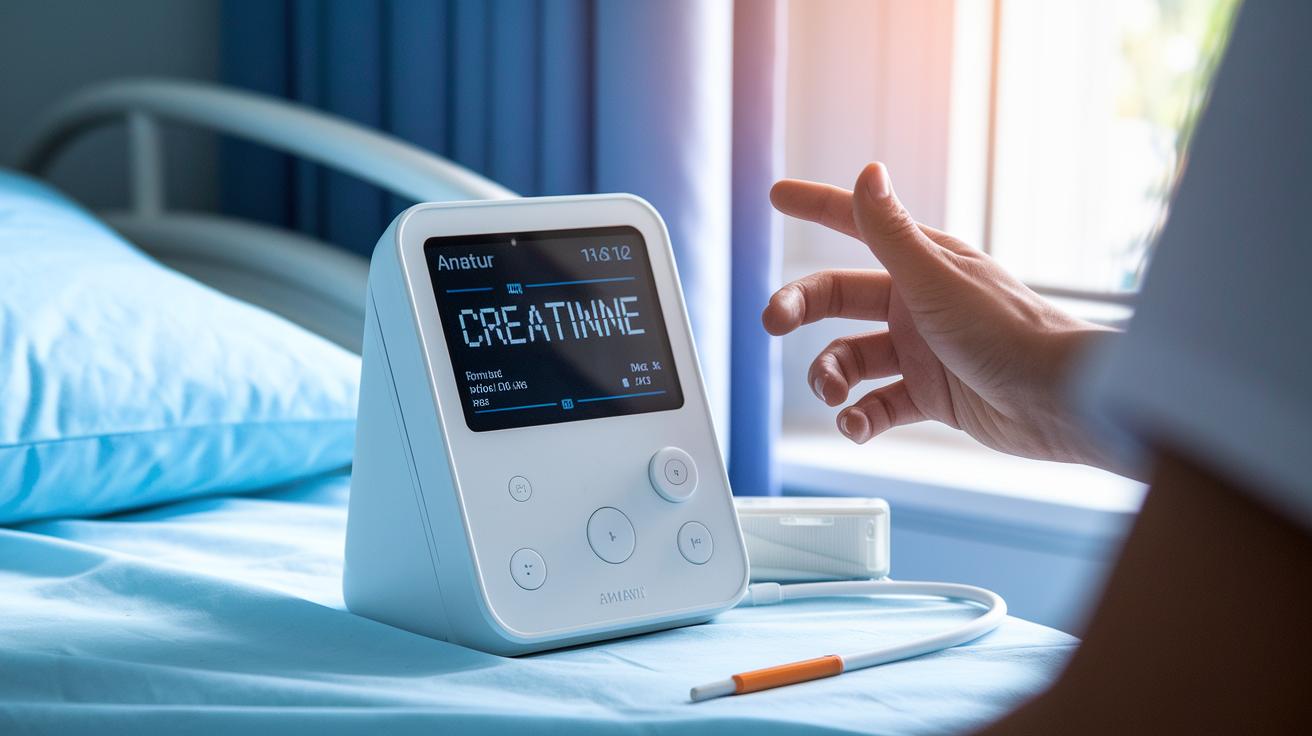
Today's bedside kidney testing devices have come a long way. They blend smart testing methods with automatic accuracy checks in a compact design, making it super easy for doctors to see how a patient's kidneys are doing right then and there.
These devices have built-in parts that measure creatinine (a substance in the blood that shows kidney function) in both serum and plasma. They’re designed to work smoothly at normal room temperatures and take up very little space, perfect for busy clinical settings.
Here’s what you need to know:
- Sample volume: Just a few microliters of blood are all you need.
- Time to result: You get the test results in under 5 minutes.
- Assay calibration: Automatic checks keep the readings really accurate.
- Operating temperature range: Optimized to work well in everyday clinical settings.
- Device footprint: Compact enough to fit right beside the patient.
Clinical Validation and Regulatory Pathways for Breakthrough POC Renal Assays
Thorough testing in real medical settings is key to moving new, fast kidney tests closer to patients. Before a test is used in real life, it goes through clinical trials that check if it is accurate, reliable, and safe even in busy emergency situations. These tests look at how the body responds and also search for tiny markers (small substances that show what’s happening inside) to give doctors a fuller picture when care is needed quickly. By proving that these tests work well, experts build the trust and evidence needed to use systems like the TriVerity™ Test System safely in tough conditions and help win approval from health regulators.
Key Regulatory Milestones
Getting approval from the FDA means filling out detailed paperwork that shows the test meets high standards for performance and safety. Over in Europe, earning a CE mark requires careful reviews by independent experts to prove the test follows strict health, safety, and environmental rules. Real-world studies add extra proof by showing that the test gives fast and accurate results when used in emergency care.
After a test is approved, continuous monitoring is important to keep it working well over time. This ongoing check-up helps update medical guidelines and fine-tunes how the test is used based on new data. In this way, both healthcare providers and patients can rely on these advanced kidney assessments every day.
Accuracy and Reliability of Bedside Renal Function Checks versus Laboratory Standards

Our bodies are unique, and even the amount of creatinine we produce each day can vary a lot. For example, kids make about 0.5 g per day, adult women around 1.5 g, and adult men roughly 2.0 g. This means that differences in muscle mass and lifestyle can change the basic readings, so it's important to factor these in when comparing tests done at the bedside with those from the lab.
Studies comparing quick bedside devices with lab autoanalyzers are very encouraging. They show that the small differences (known as bias, which is just the tiny systematic gap between methods) are almost negligible. The tests done right at the bedside are very consistent (we call this precision) and match up nicely with lab results (this match is measured by something called correlation coefficients). In short, bedside creatinine tests give results so similar to lab tests that they offer fast and reliable insights, especially useful in urgent care situations.
Implementing Point-of-Care Renal Testing Protocols in Acute Care Settings
In busy care settings these days, doctors can now use quick kidney tests right at the patient’s bedside. These tests measure plasma creatinine (a waste product that shows how well kidneys work) fast. This speedy check helps guide safe use of contrast dye during imaging, which is key for patients with kidney issues.
We follow a simple five-step process. First, we draw blood using standard methods, making sure everything is labeled correctly so the sample stays good. Next, every testing device gets routine checks and calibration to keep results trustworthy.
Then, we set clear cut-offs for the creatinine levels so that everyone knows when a result is normal or needs extra attention. After that, doctors use specific guidelines to decide whether it’s safe to use contrast dye during imaging. Finally, the results are quickly added into digital patient records so that the care team has all the necessary information at once.
Staff training is a big part of this process. Regular training sessions and refreshers help the whole team learn how to use the devices properly and manage quality checks. Ongoing quality programs work to keep these testing methods reliable and to make sure patients get the best care possible.
Impact of Instant Renal Performance Screening on Patient Management

Bedside creatinine tests let us react right when emergencies hit. For example, one patient was set for a CT scan with contrast dye and received an instant kidney check. This led the doctor to immediately change the imaging plan to avoid risks like serious kidney damage.
In another instance, a patient suspected of sepsis showed a sudden spike in creatinine during a quick test. That result helped the doctors adjust fluid treatments and overall care on the spot. Such real-time screening allowed the team to modify the treatment plan instantly, preventing potential complications and streamlining the emergency response.
These fast, on-the-spot checks have resulted in fewer contrast-related complications and a shorter stay at the hospital.
Final Words
in the action, the blog outlined bedside kidney tests that offer quick creatinine analysis alongside standard lab methods. Short explanations showed how these tests bring clarity to clinical decisions and reduce the risk of complications.
Steps were discussed, from sample handling to staff training, highlighting the real benefits for patient safety and care.
This breakthrough point-of-care renal function testing in acute care refines decision-making, keeping care clear, swift, and safer for everyone involved.