
Ever wonder how computers help planes fly better and faster? Engineers use something called computational fluid dynamics (CFD), which is basically a way to use computers to see how air moves around an aircraft. It’s like watching the ripples in a pond and understanding how they help shape the perfect design. By using CFD, engineers can cut down on expensive real-life tests and reduce air resistance (drag) to save fuel. In short, CFD is changing how we design airplanes and challenging what we thought was possible in engineering.
How CFD Optimizes Aerospace Design Performance
CFD works by taking the tricky math that explains how air flows around an aircraft and breaking it down into simpler pieces. It’s a bit like looking at small ripples form when you drop a pebble in a pond. This way, engineers can really understand the swirling and shifting air without needing every single solution perfectly calculated.
Using basic ideas from fluid mechanics (the study of how liquids and gases move), CFD gives us neat details about how the air’s pressure, speed, and temperature change. This helps find spots where drag happens, by checking pressure and the pulling force on the aircraft’s surface. In fact, one study found that an optimized wing design using CFD cut drag nearly 10%, which really boosts fuel efficiency and overall performance. That’s pretty cool for anyone into aerospace design!
CFD isn’t just for one little part of flight; it’s used in lots of areas like aerodynamics, aeroacoustics (sound behavior from air movement), and aeroelasticity (how structures flex under stress). Virtual flight simulations even let engineers test flight stability and control. By spotting places where shock waves or strong heating might occur, CFD helps design better structures and protective measures. All this means that when we simulate these conditions ahead of time, we build safer and more efficient aircraft.
By integrating CFD into the design process, engineers can tweak their ideas quickly, cutting down on the need for expensive physical tests. This smart mix of computer simulation and real-world testing speeds up innovation and makes our aerospace projects even stronger. To dig deeper into these breakthrough methods, check out "What is Aerospace Engineering" (https://buzzyandclever.com?p=1666).
Numerical Methods and Solver Strategies in Aerospace CFD
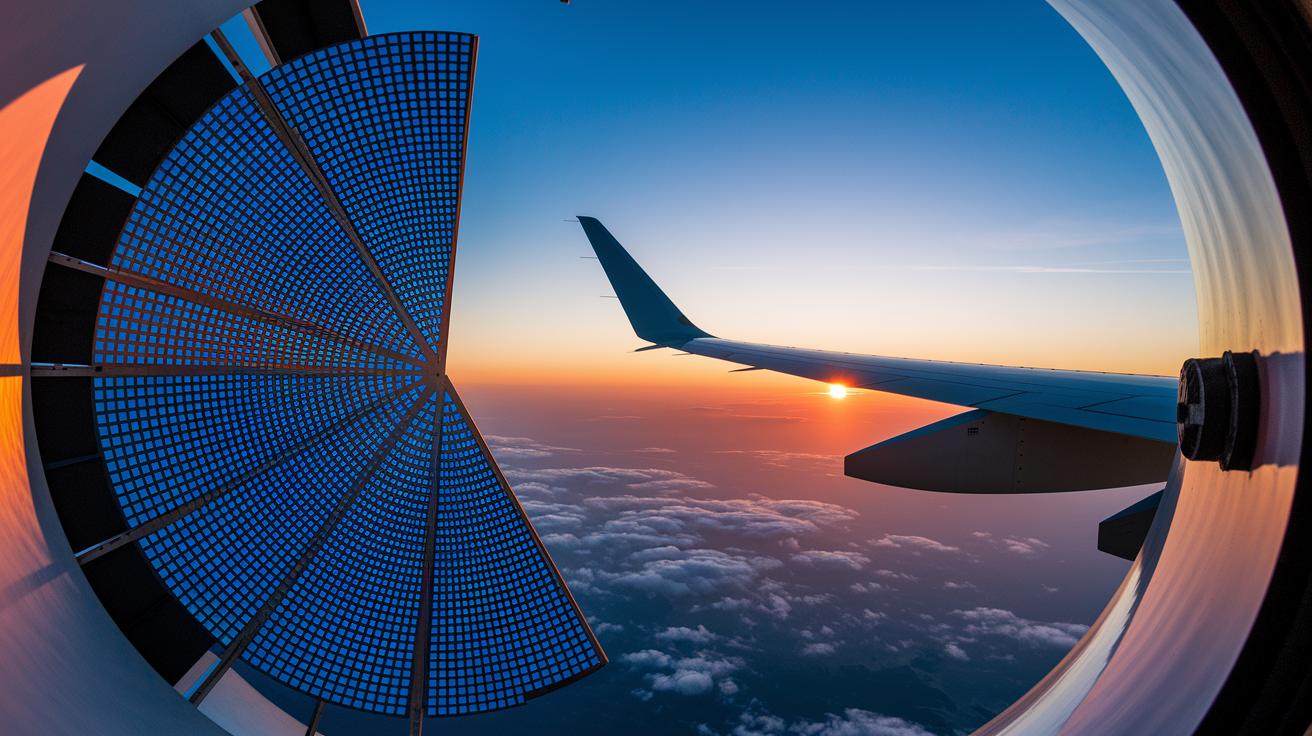
CFD takes hard-to-solve equations about air movement and turns them into easier, straight-line problems using the finite volume approach (a way to break space into small parts). Imagine an aircraft’s airspace sliced into tiny chunks, like cutting a big pie into pieces so you can study each one closely. Then, iterative solvers work over and over to adjust the flow details until everything fits together perfectly.
When it comes to changes over time, time-stepping algorithms step in, capturing the shifting nature of the flow. Picture watching a movie frame by frame as a sudden gust of wind hits an aircraft wing, each frame shows a small update that builds the full picture. This method is really important for keeping track of quick, changing conditions in tricky aerospace situations.
For steady turbulence, engineers often use RANS (Reynolds-averaged methods, which smooth out the wild swirls into something more steady). But if you need to see more detailed, active swirls, LES (Large Eddy Simulation, a technique that shows bigger, bolder motions) is the go-to choice. Thanks to smarter simulation techniques and more powerful computers, these methods now work faster and more accurately. This progress means engineers can safely simulate everything from a gentle breeze to extreme aerodynamic events, opening up new possibilities in aerospace design.
Mesh Generation Strategies and Boundary Layer Evaluation for Aerospace CFD
When engineers work with complex aerospace shapes, they break them into many small pieces using a method called domain discretization. This lets them capture even tiny details of the shape, much like cutting a curved wing into little patches that together show the whole picture.
Near surfaces, the mesh gets refined to study the boundary layer. This is a very thin area right next to the surface where the air changes from being still to moving fast. Think of it as zooming in with a camera to see important details such as sudden changes in air speed and the forces at play.
Engineers also use adaptive mesh techniques to make sure the simulation is spot on. These techniques adjust the grid density in areas where changes in pressure or speed are most noticeable. For example, if there’s a quick jump in pressure along a wing, the grid automatically gets denser there. This approach helps to reduce errors and builds trust in the final design of aerospace components.
Turbulence Modeling Approaches and Aeroacoustic Noise Prediction in Aerospace CFD
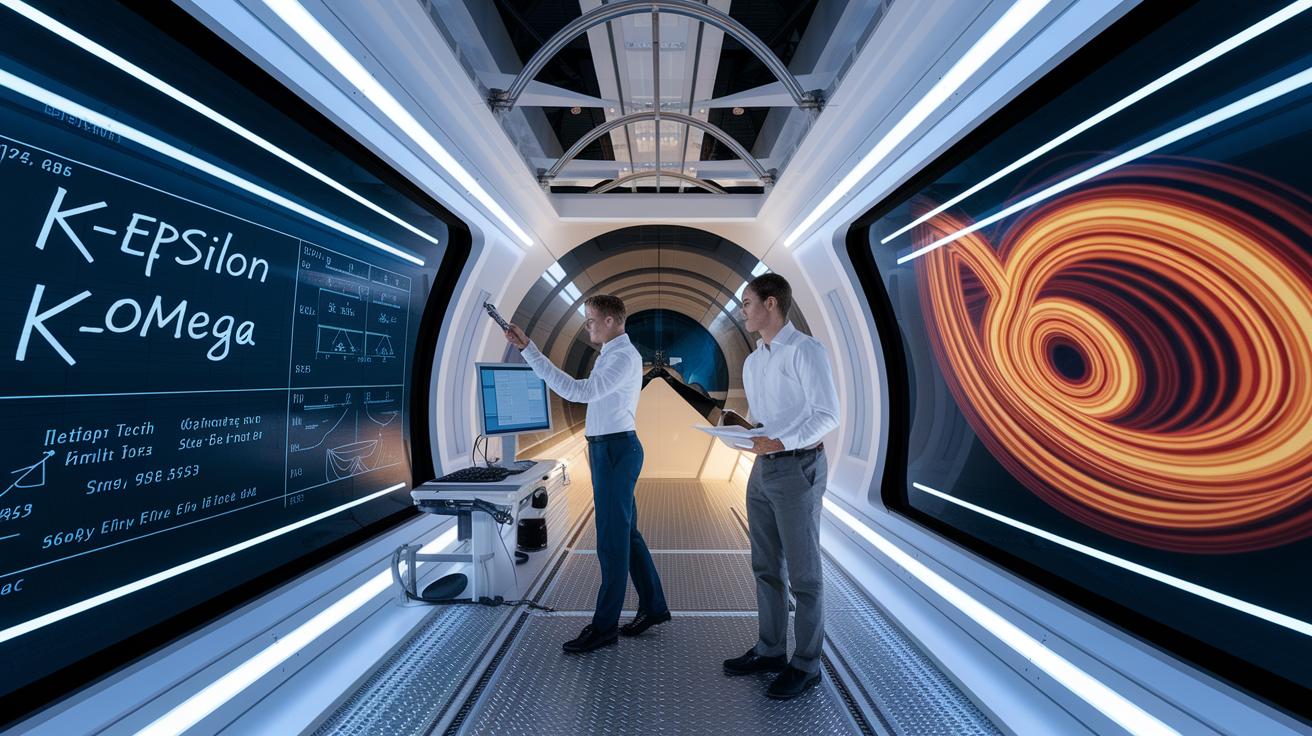
Engineers work with turbulence models in CFD to break down wild, chaotic air movements into smaller, easier-to-study pieces. For example, RANS models like k-epsilon and k-omega smooth out the crazy ups and downs in airflow by averaging them out. Think of it like watching a river from afar, noticing the overall flow rather than every little ripple. It’s a neat way to handle something that seems too wild to track in detail.
When you need to see more details, a large eddy simulation, or LES, comes in handy. LES focuses on the bigger swirls in the air, capturing the detailed patterns of turbulence that may lead to noise. Imagine spotting little vortex patterns forming around a wing, this helps engineers understand how and where sound is created.
CFD aeroacoustic studies put these models to work to find the exact places where noise comes from. They pinpoint spots where unstable airflow, shock waves, and turbulent eddies mix to create problems. With this insight, engineers can design simulated acoustic control systems (ACS) that really help cut down on unwanted sounds, everything from the engine buzz to the loud clamor inside the cabin, and even those surprising sonic booms.
By using the steady, averaged view from RANS and the clear, detailed picture from LES, engineers can predict and lessen noise in a wide range of aerospace designs. In truth, this balanced approach leads to smoother and quieter flights, making each journey a bit more comfortable for everyone on board.
Compressible and High-Speed Flow Modeling in Aerospace CFD
When air speeds up past the speed of sound (Mach 1), its pressure and density change very quickly. Engineers use CFD (computational fluid dynamics, a method that uses computer simulations to study air flow) to see these rapid shifts. Imagine a shock wave hitting a surface with a sudden burst of heat and pressure, CFD shows us exactly where that happens.
These simulations are key to building fast aerospace vehicles. Designers use them to study flows that mix slower and faster speeds over wings and control surfaces. This helps explain how commercial airplanes deal with different air layers as they fly high up. It also shows at what speed shock waves first form, so engineers can pick the right shape and strength for parts that face intense heat and pressure.
CFD also shines in supersonic aerodynamics research. It gives clear visuals of how shock-induced heating affects an aircraft’s structure. With this detailed insight, designers can better plan heat shields and refine vehicle shapes. In truth, these precise tools let engineers build high-speed airplanes that perform well while staying safe under tough conditions.
CFD Software Platforms and High-Performance Computing Integration in Aerospace Design

Modern CFD programs work with many computers at once (parallel computing) and use powerful computing systems to run tough aerospace tests quicker. It’s like having a big puzzle solved by a whole team at once instead of one person doing it alone.
These systems use clusters of high-performance computers (HPC clusters, where many computers work together) to manage the heavy work. They check how well the simulations scale, which means the tests work just as well on a few computers or on hundreds. Adding more computers is like opening extra lanes on a busy highway, everything flows smoother. Engineers can then study the tiny details of air flow and stress on parts much faster, which really helps when making quick design improvements.
The software also connects with design tools like CAD and PLM systems. This link means that the test results can quickly move into the design and production stages, cutting down on time spent doing long physical tests. This close connection makes checking designs easier and boosts overall productivity. By combining strong CFD software with modern computing power, aerospace engineers can perfect their models faster, and every simulation gives them clear insights to help build safer, more efficient aircraft.
Case Studies: Wing Profile Optimization and Drag Reduction Studies via Aerospace CFD
Using computer simulations to study air flow over wings has completely changed the way engineers improve wing designs. By modeling how the air pushes and rubs against the wing’s surface, these studies create detailed maps of pressure. This helps spot the spots with too much drag (air resistance) or not enough lift (the force that keeps a plane up). One study even showed that small changes in a wing’s bend (camber) and twist can cut down drag a lot while boosting lift. It’s like tweaking a sail on a boat to catch the best breeze.
In these design studies, engineers test out different wing shapes by changing factors like the length-to-width ratio, the bend, and the twist. They run virtual flight simulations that show air forces in real time. For instance, when the wing twist was adjusted, the simulation data later confirmed that drag was reduced. This improvement means the plane can handle tricky maneuvers even better.
Engineers also rely on pressure maps to guide their adjustments. Think of these maps as visual scorecards that show where the air pressure builds up and fades along the wing. When the pressure changes smoothly, both lowering drag and boosting lift work really well. In one case, reducing the high-pressure spots near the front of the wing helped keep drag low and lift steady, even in different flying conditions.
- Adjust the wing’s bend for the best pressure flow
- Fine-tune the twist and shape to cut down drag
- Compare simulation results with wind tunnel tests for the best design
These studies built on computer simulations help engineers trust their designs more with every test. Each tweak brings them one step closer to achieving the right mix of smooth air flow and steady flight. This careful approach not only boosts performance but also reduces the need for expensive physical tests, paving the way for smarter, more efficient airplane design.
Final Words
In the action, we traced how specialized techniques in aerospace work together to address fluid flow challenges. We covered numerical methods, grid strategies, turbulence models, and high-speed flow handling, all coming together to support innovative aircraft designs.
Our case studies on wing profile optimization and drag reduction showed firsthand how these tools can refine performance. With computational fluid dynamics in aerospace design driving progress, there’s a bright glow ahead for modern air travel and research.
FAQ
What does “Computational fluid dynamics in aerospace design PDF” cover?
The computational fluid dynamics in aerospace design PDF explains how CFD is applied to analyze airflow, pressure, and fluid behavior around aircraft to optimize design and performance.
What are some computational fluid dynamics examples?
Computational fluid dynamics examples include simulations of airflow over wings, mapping pressure distributions, and analyzing turbulence to reduce drag and improve flight stability.
How does computational fluid dynamics work?
Computational fluid dynamics works by converting complex fluid flow equations into manageable algebraic equations using methods like finite volume analysis and iterative solvers that simulate the behavior of air around objects.
What is CFD in software engineering?
In software engineering, CFD refers to the simulation tools used to model fluid behaviors and aerodynamic phenomena, which help engineers optimize designs and analyze performance.
What do CFD aerospace jobs involve?
CFD aerospace jobs involve using simulation software to solve fluid flow problems, improve aerodynamic efficiency, predict shock-wave patterns, and support the design of safer and more efficient aircraft.
What can a computational fluid dynamics research paper discuss?
A computational fluid dynamics research paper discusses numerical methods, turbulence modeling, mesh generation, and simulation accuracy to enhance our understanding and optimization of aerospace designs.
What information does a Computational Fluid Dynamics for Engineers PDF provide?
A Computational Fluid Dynamics for Engineers PDF provides practical examples, detailed solver strategies, and insights into simulating airflow to help engineers improve aircraft performance.
What topics are covered in a Computational Fluid Dynamics course?
A Computational Fluid Dynamics course covers the basics of fluid mechanics, mesh generation, numerical simulation techniques, and turbulence analysis, offering hands-on experience with real-world aerospace applications.