
Have you ever wondered if today's space projects might be rewriting what we know about the universe? New missions, like sending people around the Moon and dispatching robots to get up close with distant moons, are grabbing our attention. Each of these projects shows us a glimpse into a future where science brings us closer to the twinkling wonders out there. Every mission feels like a step toward understanding more about our vast, star-filled neighborhood.
Active Space Missions: Executive Summary
Here’s a quick look at some of the coolest space missions happening right now. We have both crewed flights and robotic journeys exploring the vast space around us. Each mission marks a big step forward, whether it's testing new ways to fly humans in space, setting up satellite nets, or getting an up-close look at other planets and moons.
These missions show just how powerful modern space tools and programs are. They light up our path for deeper space adventures and spark excitement for what the future holds.
| Mission Name | Launch Date or NET | Agency | Objective |
|---|---|---|---|
| Artemis II | NET April 2026 | NASA | Lunar orbital test flight |
| SpaceX Starlink 500th | Feb 25, 2026 | SpaceX | Deploy 500th Starlink satellite |
| Europa Clipper | NET mid-2024 | NASA | Complete 45 flybys of Europa |
| VIPER | Late 2024 | NASA | Explore lunar south pole volatile spots |
| Chandrayaan-3 | Feb 2024 | ISRO | Study lunar south pole surface composition |
Crewed Space Missions and ISS Resupply Operations in 2026
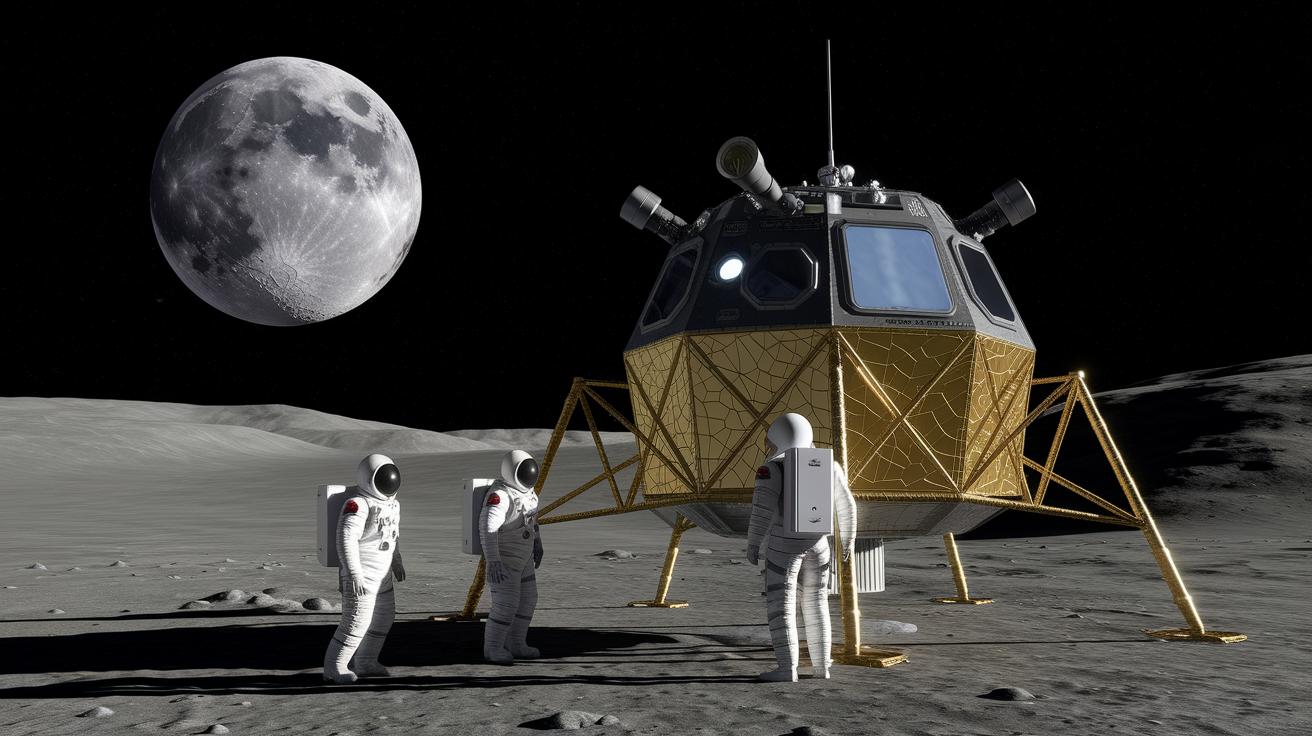
Artemis II is prepping for a 10-day test flight near the Moon with four brave astronauts onboard. This early April 2026 mission is a key step that will test fresh systems in human space travel around our lunar neighbor. It’s both exciting and a little nerve-wracking, don’t you think?
Meanwhile, the Boeing Starliner is getting ready to launch crewed missions from Cape Canaveral under NASA’s Commercial Crew Program. This program is all about making space trips safer and more routine, turning what used to be rare journeys into more familiar trips.
At the same time, regular resupply flights are keeping the International Space Station (ISS) well-stocked with the essentials. Commercial vehicles carry everything from food and scientific gear to spare parts to the ISS, ensuring that experiments continue smoothly in a microgravity environment (where things float as if weightless). This reliable supply chain shows how well space agencies work with private companies to keep everything running like clockwork.
Think of it like a relay race where every handoff matters. Every launch builds our confidence and sets the stage for exciting missions beyond Earth.
Ongoing Space Missions: Interplanetary Mars and Lunar Explorations
Space missions keep pushing the limits of our knowledge. New updates come in from both our Moon and Mars, and teams from around the world are teaming up with fresh ideas to explore our cosmic backyard. Each mission offers hints of secrets waiting to be uncovered.
Lunar Surface Missions
VIPER, a cool new rover, is gearing up to launch late next year under the Artemis program. Its goal is to check out the Moon’s south pole for ice and other materials that might someday support human visits. Think of it like a treasure hunt for clues on how we might live on the Moon. At the same time, India’s Chandrayaan-3 sent its Vikram lander and Pragyan rover down in February 2024. They’re busy studying the Moon’s rocks and minerals closely. Their work helps scientists piece together clues about the Moon’s past and sparks ideas for future lunar homes.
Mars Surface Missions
Over on Mars, the Emirates Mars Mission “Hope,” which launched in July 2020, is still busy watching the planet’s thin atmosphere. It helps us understand how this fragile air fades away into space. Looking ahead, the twin spacecraft from the EscaPADE mission, set for launch in 2025, will explore how the solar wind (a stream of charged particles from the Sun) changes Mars’s environment. Plus, the Mars Sample Return campaign is planning to collect rocks and soil by the late 2020s so scientists can study them up close. These Mars missions bring us one step closer to answering big questions about the Red Planet’s climate, history, and even its potential to support human explorers.
Advanced Space Probe Missions Examining the Outer Solar System
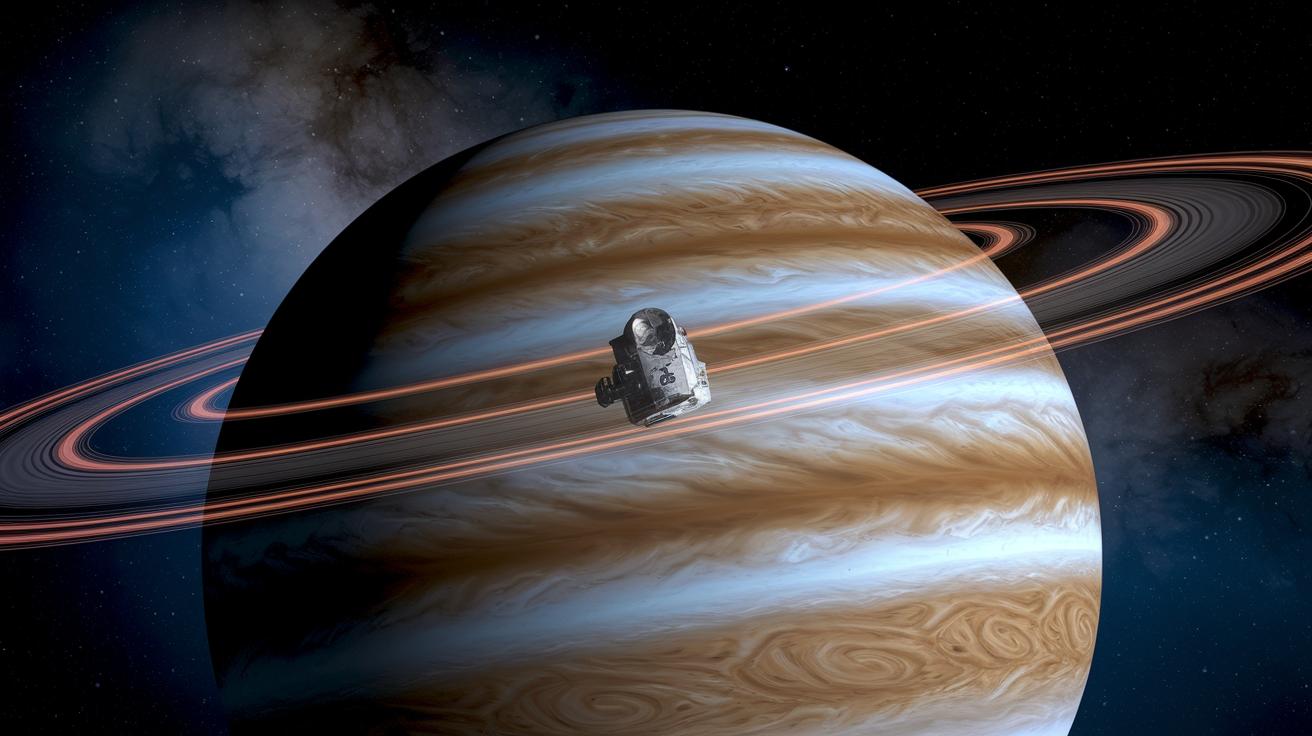
NASA’s Juno probe, launched back in 2011, is still hard at work mapping Jupiter’s magnetic field. It sails through swirling clouds, gathering data that lets us peek into the hidden forces molding this giant planet. Isn’t it amazing that Juno is revealing Jupiter’s secrets by tracking magnetic shifts no one thought possible?
Europa Clipper, set to kick off 45 flybys in 2024, is ready to take a closer look at Europa’s icy surface. With each pass, the probe will study the ice, searching for signs of a hidden ocean that might support life. It’s one of the bold steps in our journey of deep space exploration using clever robotic technology.
ESA’s JUICE mission, which launched in April 2023, is heading toward a big goal: orbiting Ganymede, Jupiter’s largest moon, by 2034. This adventure will help scientists learn more about Ganymede’s surface and what's hidden beneath it. Imagine a spacecraft circling a moon so vast that each orbit feels like it opens a new page in a space story.
BepiColombo touched down at Mercury in 2025 with twin orbiters, offering fresh insights into our innermost planet’s structure and surroundings. At the same time, the Psyche mission, which started its journey in October 2023, is en route to the metal-rich asteroid called Psyche, aiming for an arrival in 2029. This unique target could unveil clues about how planetary cores form, a real standout among today’s space probe missions.
Commercial Space Missions and Orbital Launch Schedules
SpaceX caught everyone's eye in February 2026 with a lively string of Falcon 9 missions, each one marking an exciting milestone in today’s space journey. These launches show us that commercial space projects are moving forward fast, thanks to smart planning, clever reuse of technology (using the same parts again), and a strong commitment to keeping satellite missions on track even when the weather isn’t perfect.
Here are some of the big moments:
- Feb 25, 2026: The Falcon 9 sent its 500th Starlink satellite into space, a huge win for boosting global connectivity.
- Feb 24, 2026: During a beautiful twilight, a launch put 29 Starlink satellites into low Earth orbit, giving the network a nice boost.
- Feb 21, 2026: Booster 1063 finished its record 33rd flight, showing off its toughness and steady performance.
- Feb 20, 2026: Even after a few weather delays, a launch successfully sent 25 Starlink satellites into orbit, proving how flexible the schedule can be.
Each of these events builds on SpaceX’s busy launch timeline. With spot-on timing, careful safety checks, and expert know-how, these missions keep a buzzing fleet of satellites circling the Earth. Not only do they mark steady progress, but they also inspire confidence in the bright future of commercial space travel. Every well-planned launch pushes modern orbital operations forward, one exciting step at a time.
Emerging In-Orbit Experiments and Technology Trials aboard Active Space Missions

ESA’s Proba-3 mission is making waves in space. Its two satellites began flying in formation in February 2026 to study the Sun’s outer layer called the corona. They move like dance partners, and their precise steps let scientists test new ways of positioning and collecting data in a weightless setting. Isn’t that exciting?
Near L2, the Comet Interceptor’s three spacecraft are waiting for action. In 2029, they will split apart to capture 3D images of a comet nucleus. This smart move gives researchers a fresh look at the inner details of these mysterious space visitors.
SPHEREx, which launched in October 2024, is busy mapping cosmic ices and searching for reionization signals using spectro-photometry (a technique that measures light in detail). Think of it like a cosmic X-ray that uncovers the fascinating secrets of our universe.
Each of these experiments is not just about showing off new instruments; they also help us learn more about how to move and work in space. Imagine a lab floating in zero gravity, that’s the kind of innovation pushing space research into the future.
Final Words
In the action, we saw an invigorating mix of space exploration projects. We checked out key programs like Artemis II, Starlink, and Mars missions that show off our push into space.
We touched on crewed flights, interplanetary breakthroughs, advanced probe missions, and commercial orbital highlights.
These current space missions offer fresh insights that are easy to follow and spark wonder. Every update brings us closer to understanding our universe and inspires us to keep asking questions about the world above us.
FAQ
What are the current missions in space?
The current missions in space include projects like Artemis II for lunar tests, VIPER for Moon volatile studies, and interplanetary flights such as Europa Clipper—all designed to expand our understanding of space.
How is NASA organizing its missions timeline and what are the plans for 2026?
The NASA timeline shows a lineup of crewed and robotic missions, including Artemis II’s lunar test flight and planned ISS resupply operations in 2026, highlighting clear steps in space exploration progress.
Where are Voyager 1 and Voyager 2 now?
The Voyager spacecraft are now traveling through interstellar space, sending data from beyond our solar system as they continue past the outer planets.
How many active NASA missions are currently in progress?
The active NASA missions cover multiple areas such as lunar, Martian, and deep-space studies, with more than a dozen projects currently advancing our exploration efforts.
What are some renowned space missions and spacecraft names?
Renowned missions include Voyager 1 and 2, Akatsuki, Juno, Pioneer Venus Orbiter, Venus Express, Magellan, and IKAROS, each making a significant mark in the exploration of space.