Have you ever pictured a classroom that feels like a high-tech playground? Imagine lessons that change right when you need them, with online labs that let you explore not only far-off lands but even tiny details of our world. Little digital badges pop up to cheer you on as you work hard.
This new wave of learning technology is really shaking things up. It means classes could soon become more fun while also helping teachers manage their work. In this post, we're diving into the top tech trends set to change classrooms by 2025. Get ready to see how these clever tools might change the way we all learn every day.
Key Education Tech Trends Shaping the 2025 Classroom
2025 is gearing up to bring a wave of new tech that will transform classrooms for both students and teachers. Smart tools and fresh ideas are making lessons more interactive and helping run classes more smoothly. Here are ten trends that promise to change how we teach and learn in the near future:
- AI-powered learning systems that tweak assignments on the spot based on how students are doing (think of it as a smart teacher who adapts in real time).
- Game-like setups and VR/AR experiences that let students dive into virtual labs and tour faraway places without leaving the room.
- Microcredentials and digital badges that give students little rewards for mastering specific skills.
- Hybrid learning models that blend online resources with face-to-face teaching.
- Learning analytics that track progress and highlight areas needing extra attention.
- Blockchain technology (a secure digital ledger) that keeps academic records safe and authentic.
- AI-assisted tools that speed up the creation of study materials.
- Eco-friendly EdTech solutions that reduce environmental impact while enhancing learning.
- Social platforms that encourage collaboration between students and teachers.
- Stronger cybersecurity measures to safeguard sensitive school and student information.
Each of these innovations is designed to make learning more personalized and engaging while easing teachers’ workloads. For example, adaptive learning systems can pinpoint a student’s strengths and weaknesses, and immersive tech can turn complex topics into fun, accessible experiences. In essence, these trends aim to empower educators and ensure students have safe, flexible access to digital content in an ever-evolving classroom environment.
AI-Driven Personalized Learning in Education Tech Trends
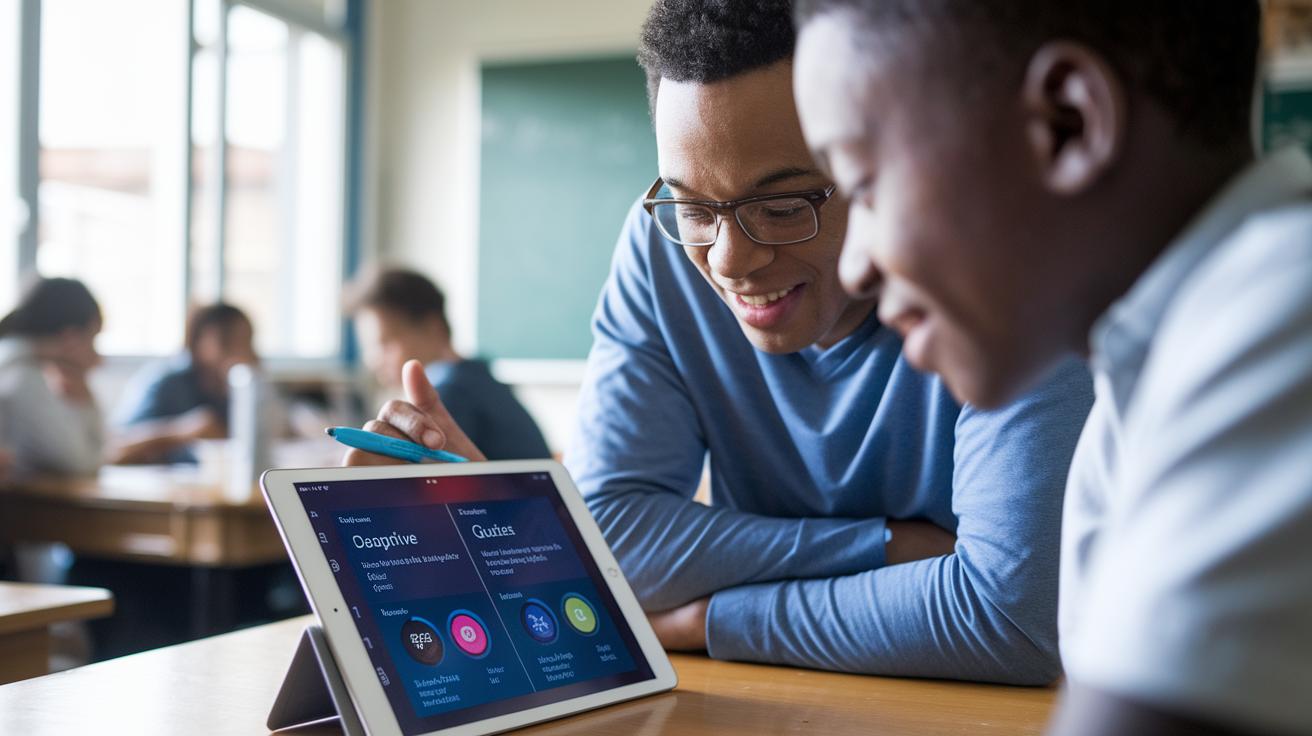
More than 70% of school districts now use smart study tools that watch how students are doing and adjust lessons on the fly. These systems track each student's work in real time and change quizzes and assignments to fit what they need. Imagine a teacher explaining, "Watch how the tool makes quizzes harder or easier based on student answers." It’s like giving each student a ride on a bike that shifts gears just right for the road ahead. This approach has been shown to boost mastery by as much as 25%.
These study tools work by gathering details from every student's work and interactions. They act like a digital coach that gently guides each learner along their path. With these systems handling the routine tasks, teachers can dive into creative lesson planning and give more personal attention where it counts.
One district even found that teachers now spend less time on daily admin work and more time creating fun, engaging activities. This change not only makes learning more enjoyable but also helps every student get the support they need to succeed.
Immersive and Gamified Approaches Among Education Tech Trends
Schools today are trying out VR headsets and AR apps to give students a fresh way to learn. In many classes, these tools have boosted engagement by around 40%. One teacher said, "After we switched to virtual labs, the energy in our science lessons was just amazing!" With VR headsets, students can do experiments in a safe, simulated world, and AR apps turn textbook pages into hands-on adventures.
Gamified learning mixes fun digital games with challenges in subjects like math, history, and art. Students work through quizzes and puzzles that feel more like a game than a test. This approach helps them learn at their own pace and see real progress as lessons get more interesting.
Immersive study setups also let students get hands-on practice without the high cost of field trips or the risks of real-life experiments. This blend of technology makes lessons more lively and gives every student a chance to explore subjects in a way that traditional methods just can’t match.
Streamlining Instruction with Data Analytics in Education Tech Trends

Learning analytics platforms are changing how classrooms work by gathering simple data on how students perform and behave. They act like a friendly digital helper, keeping track of quiz scores and class participation every minute. For instance, Hāpara’s Hall Pass monitors student movement in real time. This smart tool helps teachers quickly spot when a student might need help or seems distracted, making classroom management a breeze.
Learning management tech also cuts down on busywork by automatically organizing documents, grading assignments, and updating lesson plans. Imagine a teacher who now spends less time shuffling papers and more time engaging with students. Many districts even say that these tools save over 2 hours a week for each teacher.
By using data-driven analytics, schools can create classrooms that are both efficient and flexible. Teachers can focus on the important moments that truly boost learning, knowing that routine tasks are taken care of by technology. Every minute saved like this helps lead to better student outcomes and a more energetic learning environment.
Hybrid, Remote, and Cloud-Based Models in Education Tech Trends
In 2024, almost half of K-12 classrooms used flexible setups like hybrid and remote learning. This shows that schools are trying new ways to teach. Teachers and students now connect both in real classrooms and online, which truly breaks down old-school boundaries.
Cloud-based platforms mix live lessons with spaces where you can work at your own pace. Imagine video calls merging with shared digital workrooms, making learning feel both interactive and personal.
Key features include:
- Real-time chats alongside do-it-yourself learning times to fit different schedules.
- Built-in video tools that make live discussions a breeze.
- Shared online spaces for projects and group work that bring everyone together.
School reports say that when students can join class on any device, participation jumps by 25%. This boost shows that when learning is accessible from anywhere, be it at home, in school, or on the go, students jump right in. Remote class tech also makes sessions more interactive, offering tools for quick feedback and friendly problem-solving.
Blended learning models are paving the way for flexible, effective teaching, marking an important move forward in today’s education.
Integrating Core Tools and Automating Workflows in Education Tech Trends

Across many school districts, Google Classroom now joins forces with a mix of educational apps and vast content libraries, all brought together on one clear dashboard. This setup lets teachers easily switch between lesson plans, safety checks, and digital resources without wasting time on separate platforms. It means educators can focus on their students instead of getting tangled in too many tools.
The dashboard has a clean, user-friendly layout that shows everything from daily lesson plans to quick check-ups on how students are doing (like safety checks or wellness surveys). One teacher put it nicely, saying, "When everything is at my fingertips, it feels like I have a digital assistant helping me every step of the way." Plus, schools can get on-site training and a big collection of support materials.
Teachers also enjoy extra resources like:
| Type of Resource | What It Offers |
|---|---|
| Podcasts | Easy-to-understand discussions on using tech in the classroom |
| E-books and White Papers | Simple, detailed guides for tech integration |
| Webinars | Interactive online sessions with free tools for comparing classroom platforms |
These smart dashboards and handy tools not only make everyday tasks simpler but also give teachers more time to create exciting and innovative learning experiences for every student.
Future Academic Insights: Predictions for Next-Gen Education Tech Trends
By 2027, schools are set to change in big ways that could really improve how we learn. Imagine academic records kept safe with blockchain (a digital ledger that records information securely) so everyone can easily verify achievements. Educators might also use smart AI tools to design courses that adapt quickly to what students need, allowing lessons to be updated on the fly. And with competency-based microcredentials, students can earn focused certifications as they master new skills.
We’re also likely to see more investments in sustainable EdTech. This means schools could start using eco-friendly devices that help lower energy use and take better care of our environment. Social learning platforms might boost teamwork by about 30%, turning everyday student interactions into energetic, shared experiences. Plus, as schools integrate more technology, annual cybersecurity budgets might top 150 million dollars to keep all those sensitive details safe.
All these changes indicate a future where learning is even more innovative, secure, and centered around students, opening the door to exciting new ways to teach and learn.
Final Words
in the action, we've seen cutting-edge tech reshape classrooms with adaptive systems and interactive tools. Key trends include:
• AI-driven personalized learning
• Immersive VR/AR experiences
• Digital badges and microcredentials
• Hybrid and remote models
• Data analytics for smarter teaching
• Secure blockchain for credentials
• AI-assisted content creation
• Sustainable EdTech tools
• Social learning integration
• Heightened cybersecurity
These education tech trends spark creativity among educators and students, lighting a path toward more accessible and engaging learning.
FAQ
What are some education tech trends for students?
The question highlights trends like AI-powered personalized learning, virtual reality lessons, smart data analytics, blended remote classes, and unified digital resources. These trends work to boost student interest and simplify teaching.
What are the top five trends in education technology?
The question points to key trends such as personalized AI learning, immersive VR/AR environments, data analytics for adaptive teaching, hybrid class models, and centralized digital tools that make learning more engaging.
Where can I find updated education tech trends in PDF or PPT format?
The question means many online resources now offer PDFs or PPTs covering trends like advanced AI tools, VR/AR learning, and digital classroom innovations, which help educators stay current with the latest advancements.
What does new technology in the education system look like?
The question suggests that modern education technology uses smart dashboards, real-time data tracking, interactive VR lessons, and cloud-based platforms, creating engaging, secure, and efficient learning environments for every student.
What trends in education are expected by 2026 and beyond?
The question refers to future trends like broader blockchain credentialing, expanded AI for course design, sustainable device investments, and social learning platforms — all aimed at supporting innovative classroom practices and improved student success.