
Imagine if exploring space changed the way we live every day. New technology is planning trips to the Moon, Mars, and even beyond using spacecraft that can be used again and innovative travel systems that move fast. Both government teams and private companies are working on these projects, creating new ways to make space journeys smarter and safer. It’s a bit like watching a group of creative, brilliant minds come together to build an easier, more exciting future in space. This article dives into how bold new technology is opening up fresh paths into the great unknown.
Core Trends and Technologies Defining the Future of Space Exploration
In 2025, space exploration is about to get really exciting. Bold missions are planned to visit the Moon, Mars, and even farther into space. Government groups are finishing up plans for reusable spacecraft and new ways to speed up travel, while private companies are introducing huge satellite networks that cover the globe. If you're curious, the Space Tech Expo Europe is happening November 18–20, 2025 (look for booth #X25), where you can see cool components like Proton (Single-Axis), Atom (Dual-Axis), Single-Axis Mite, Dual-Axis Mite, and Space Actuators in action.
Public organizations and private companies are teaming up to change the way we explore space. National space agencies are joining forces with international partners to run important experiments, while companies push new ideas with record-breaking launch rates from places like the UK, Germany, China, and even newcomers like Skyrora XL. It’s like watching a great team effort that’s speeding up new inventions and making space missions smoother.
- Sustainable lunar outposts and tests for using resources on the Moon
- Trials for crewed Mars missions and ways to bring samples back to Earth
- Growing satellite networks that help cover the entire globe
- New propulsion system tests like ion and nuclear (methods to push spacecraft faster)
- Smart, AI-driven systems that help with navigation and fixing problems
All of these trends point to a future where many exciting ideas come together in space exploration. With smart technology and inventive hardware shaping every mission, each launch builds on the last. Thanks to advanced artificial intelligence that helps spacecraft steer clear of dangers and run better, missions are becoming much more efficient. It’s clear that new space technologies are combining in amazing ways, paving the road to a future that’s both sustainable and full of adventure.
Emerging Moon and Mars Missions in Future of Space Exploration
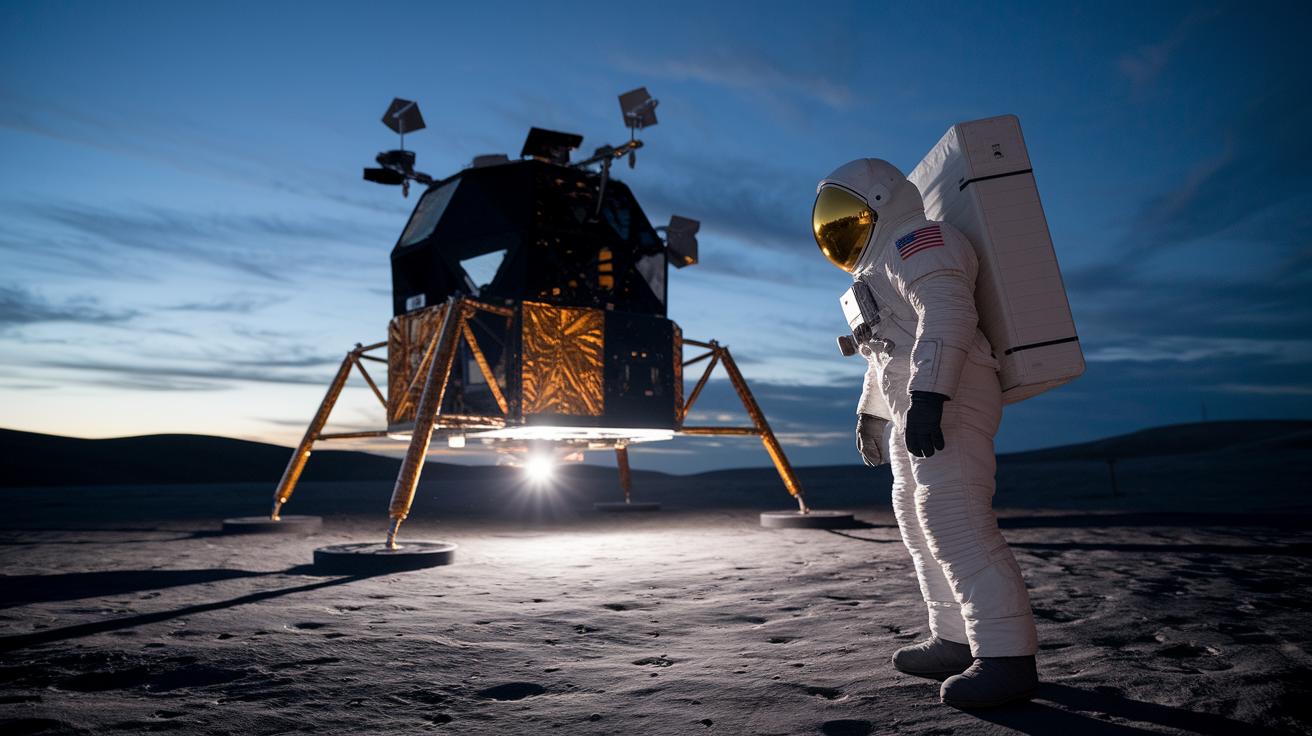
NASA is getting ready for Artemis, a mission set for 2025 that will send astronauts to land on the Moon. This mission is our first step toward living and working on the Moon for a long time. Meanwhile, SpaceX is testing its Starship for both unmanned and crewed Moon trips. They are checking important systems like landers and life support (the gear that helps keep people safe in space). These projects help us learn better ways to travel in space and secure our spot on another world.
| Mission | Agency | Launch Date | Primary Objective |
|---|---|---|---|
| Artemis | NASA | 2025 | Crewed lunar landing and sustainable presence |
| Tianwen-2 | China | 2025 | Asteroid sampling and comet study |
| JUICE | ESA | 2025 | Gravity assists and Jovian system study |
These missions test more than just the machines. Engineers are working hard to make sure that landers can safely touch down and work in places with low gravity (areas where the force of gravity is weaker than on Earth). They are also preparing for missions that will bring back valuable Moon and Mars rocks to tell us about the planets’ past. Smart moves like using Venus’s pull can help deep-space probes save fuel and reach their goals faster. Mars exploration plans are also a big part of this vision and will lead the way for future studies on the planet’s surface. With every test and launch, we get closer to making the dream of living and working beyond Earth a reality.
Innovations in Commercial and Government Spacecraft Shaping the Future of Space Exploration
SpaceX is pushing the limits with its Starship system. They’re testing a way to refill fuel in space (kind of like stopping for gas on a road trip) to help save time and cut down on launch costs. Imagine a spacecraft stopping mid-mission to refuel, much like a quick pit stop at a race; it’s a cool idea that could make trips through space much easier.
Blue Origin is busy working on its MK1 lunar lander concept. This design is meant for both unmanned and crewed trips to the Moon. It’s built to safely move both equipment and people to the lunar surface, sort of like a space taxi ferrying explorers to their next exciting stop. This innovation might play a key role in setting up future Moon bases.
Amazon’s Kuiper Systems is making big plans too. They intend to launch over 3,000 satellites by 2026 to provide better global coverage. And then there’s Vast, a commercial venture ready to roll out the first private orbital station as early as 2025. These projects show that private companies are joining government missions on the space stage, which could lead to a lively mix of new ideas and opportunities.
There’s also a growing trend in how governments and private companies share the costs of space projects. Budgets are shifting to support joint efforts, so both sides get to share the risks and the rewards. By teaming up, they bring fresh ideas and smart investments together, helping us discover more about space and see just how far our technology can go.
Advanced Propulsion and Deep-Space Probe Developments in the Future of Space Exploration
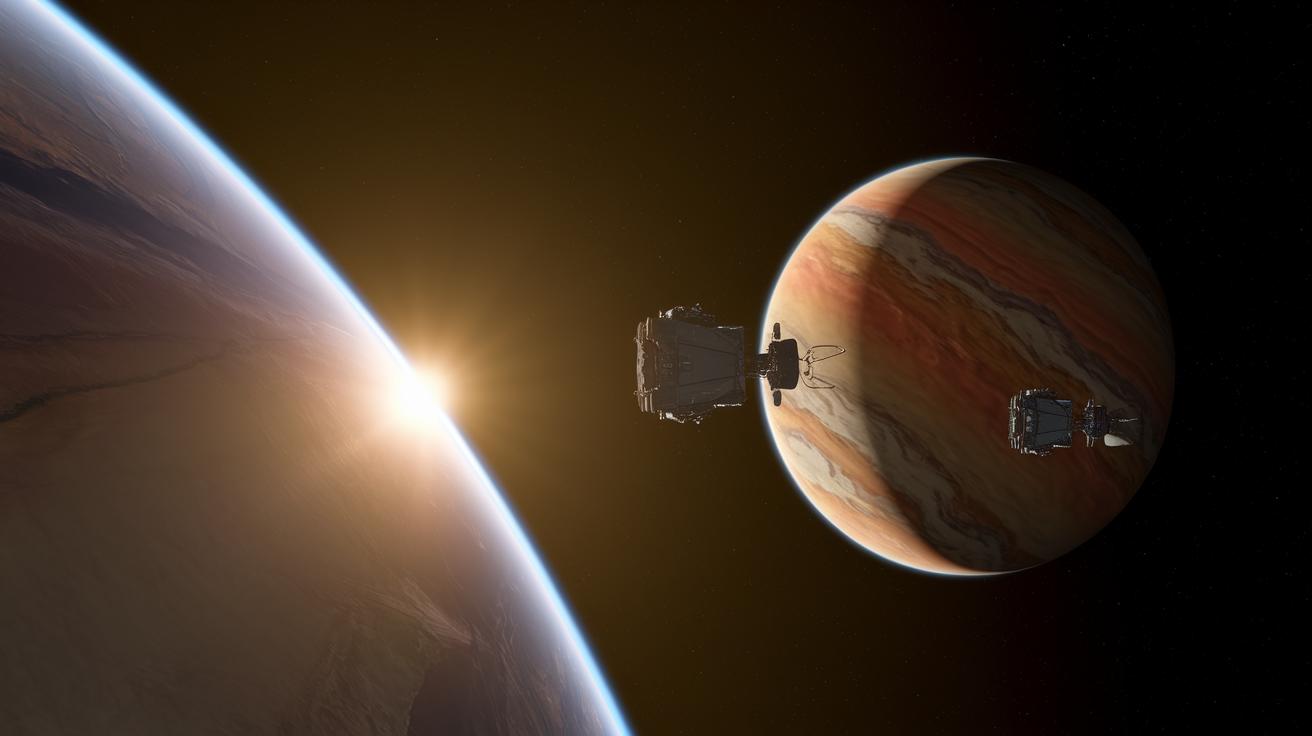
BepiColombo and JUICE show us how to cleverly use a planet’s pull to help spacecraft travel further. In January 2025, ESA’s BepiColombo will pass close to Mercury so it can use the planet’s gravity (the natural pull of mass) to speed up and save fuel. In August 2025, the JUICE mission will do something similar by swinging by Venus, getting a boost on its journey to Jupiter. It’s like giving a bike a gentle push to go further with less effort.
At the same time, scientists are making great progress on new types of engines. They’re testing nuclear thermal engines (engines that use energy from small atomic reactions) that could cut the time to Mars by about 30%. This means that both robot and human missions might travel faster. Fusion propulsion ideas are also on the table. These systems, which use the power of fusing tiny atoms together, promise much higher engine efficiency (how well an engine uses fuel) for very long missions. These new engines could change the way we think about deep-space travel.
Ion Propulsion Research
Researchers are working on both dual-axis and single-axis ion drives from the Proton and Atom series. These systems give small amounts of thrust (gentle pushes) very efficiently, helping spacecraft move smoothly and steadily over long distances.
Nuclear Thermal Propulsion
The focus here is on improving engine power to dramatically cut travel times, especially for journeys to Mars. By boosting performance, these engines can make space travel quicker and more practical.
Fusion Propulsion Systems
Engineers are sketching out designs and planning research for fusion propulsion. These systems could be the breakthrough we need for missions that travel far beyond our solar system, making very long journeys a real possibility.
The Role of AI and Robotics in the Future of Space Exploration
AI systems are now handling navigation and spotting hazards, which makes space travel both safer and smarter. On missions like ESA’s JUICE and NASA’s Europa Clipper, onboard diagnostics act like a trusty co-pilot, catching potential problems and guiding the spacecraft through tricky spots. Imagine a spacecraft that can dodge unexpected space debris the same way a car might steer clear of a pothole, pretty cool, right? This kind of smart, independent decision-making helps ensure every journey goes off without a hitch.
Machine-learning tools (basically computer programs that learn from experience) are also super helpful when it comes to managing sample collection during missions. Take China’s Tianwen-2, for example; it uses smart algorithms to figure out exactly when and where to collect samples. Think of it as having a robot buddy that figures out the best shortcuts over time, making its job faster and reducing mistakes. These automated systems keep getting better at handling complex tasks with very little help from humans.
Then there’s AI-driven monitoring for tracking debris. The FlyPix platform is a great example, it continuously scans and sorts objects floating in orbit. Kind of like wearing smart glasses that instantly tell you what every random item on your messy desk is, FlyPix keeps a real-time eye on space junk. Innovations like this not only keep spacecraft out of harm’s way but also pave the way for a cleaner and more organized orbital environment for future explorations.
International Cooperation, Policy and Investment Trends in the Future of Space Exploration
International space efforts are changing fast. Countries and agencies are now blending scientific goals with creative funding ideas. They’re even adding flexible payback options to mission plans, you might hear a surprising fact like, "Flexible funds increased by 40% over fixed budgets in recent projects."
Public-private partnerships aren’t just about sharing risks anymore. They now join forces on research too. Take one space station project where government funds and private investments come together to overcome traditional budget limits.
Launch technology is getting a fresh update. Specialized vehicles are built for quick, adaptable missions instead of just aiming for top performance. Nations are putting money into tech that lets launch systems adjust rapidly to new ideas and shifting goals.
Policymakers are rethinking old budgeting methods too. New guidelines allow projects to change course in real time, making it easier for all parties to share risks and rewards. One striking insight is that these adaptive practices have boosted how fast projects respond by over 30%.
Sustainable Habitats and Colonization Strategies in the Future of Space Exploration
NASA’s Artemis program and SpaceX’s Starship research are teaming up to create small, adaptable bases for the Moon. Engineers are busy testing flexible habitat designs that can survive the Moon’s tough environment, imagine setting up a mini home on another world. For example, one trial used a habitability module that could be quickly put together while protecting residents from extreme temperatures, sort of like snapping together high-tech Lego bricks. These designs also make smart use of local resources, which is crucial for planning long-term stays on the lunar surface.
Researchers are also working on closed-loop life support systems. These systems aim to recycle nearly 90% of the air and water so that nothing goes to waste on long missions. Picture a self-sustaining ecosystem where every breath and drop of water is reused, like a perfectly balanced fountain that never runs dry. By rigorously testing these systems, scientists hope to make future space habitats capable of supporting life on their own without needing frequent resupply trips from Earth.
Plans for settling Mars are just as innovative. Instead of hauling all materials from Earth, engineers are looking to use what’s already on Mars. Think of it like growing a garden using your own backyard soil rather than buying new plants. Special greenhouses designed for Martian conditions could provide fresh food, while structures built from the local dust and rocks (called regolith, which is just loose rock and soil) can reduce the need for Earth imports. This creative approach not only cuts costs but also paves the way for a more sustainable and independent human presence on Mars.
Final Words
In the action of today’s dynamic space missions, we’ve followed bold lunar and Mars targets, breakthrough spacecraft designs, and smart AI innovations. Both government and private players are shaping a new chapter with reusable systems and next-generation propulsion tests. Key trends like sustainable lunar outposts, crewed Mars efforts, satellite expansions, advanced propulsion, and AI-driven diagnostics promise an exciting future. The future of space exploration is filled with inspiring milestones that spark wonder and keep science at the heart of everyday discovery.
FAQ
Future of space exploration reddit
The space exploration discussions on Reddit highlight community insights into upcoming missions, innovative technologies, and shared challenges. They reflect the excitement and curiosity of enthusiasts following these new developments.
Future of space exploration for humans
The future of space exploration for humans envisions missions to the Moon, Mars, and beyond. This includes advancements in spacecraft design and propulsion systems that aim to safely extend human presence in deep space.
The future of space exploration essay
The future of space exploration essay outlines key trends, technological breakthroughs, and international partnerships. It emphasizes how AI, sustainable habitats, and innovative propulsion will shape upcoming space missions and research.
Future of space exploration 2025
The future of space exploration 2025 focuses on lunar landings, Mars missions, and deep space probe launches. Expectations include reusable spacecraft, massive satellite networks, and advanced AI navigation systems to guide missions.
Future of space exploration pdf
The future of space exploration pdf typically provides detailed analysis on mission timelines, technology breakthroughs, and policy trends. It serves as a comprehensive resource for understanding the next phase of space exploration.
The future of space exploration: challenges and opportunities
The future of space exploration challenges include resource limitations and technical risks, while opportunities arise from breakthroughs in propulsion, AI, and global partnerships. These factors together open exciting new paths in space research.
SpaceX and the future of space exploration
SpaceX and the future of space exploration merge innovative test flights, reusable spacecraft efforts, and in-space propellant transfer tests. Their work is redefining both commercial and governmental mission approaches in the space industry.
Future of space technology
The future of space technology promises advancements in propulsion, satellite design, and AI-driven systems. These breakthroughs aim to make missions more efficient and open new possibilities for exploring and understanding space.
How will space be in 2050?
Experts predict a highly interconnected space with dense satellite networks, autonomous exploration systems, and improved propulsion. This future envisions more frequent, safe, and technologically advanced space missions.
What will happen in 2030 according to NASA?
NASA foresees further advancements in lunar and Mars missions, greater use of reusable spacecraft, and enhanced AI integration to improve data handling and mission safety.
Will NASA ever launch again?
NASA plans to continue launching missions as it upgrades its technology and strengthens partnerships, with goals that include returning to the Moon and progressing toward crewed Mars explorations.
How long until Voyager 1 reaches 1 light day?
Voyager 1 travels at a slow pace by modern standards, taking several years to cover the vast distance of one light day, which underscores the immense scale of space distances.