
Have you ever thought about how the past might help us understand today’s weather changes? Back in the early 1800s, one scientist noticed that some gases in our air act just like a warm blanket (they trap heat). That early idea led to years of research, slowly building up our knowledge of the climate.
Today, we see those early observations reflected in how communities handle climate changes. It’s pretty amazing to think how one simple discovery can shape the way we deal with complex challenges like our climate.
Comprehensive Climate Change History Overview
Climate change is the slow shift in our weather caused mostly by rising levels of gases like carbon dioxide (a gas that traps heat) in the air. This warming affects how plants grow, how storms hit, and even how our economies work. Today, it’s really important to talk about what climate change is and how communities everywhere are finding ways to adapt and respond.
Back in 1824, a scientist named Joseph Fourier noticed that some gases can hold the sun’s warmth close to Earth, warming our planet in the process. His idea was the first step toward what we now call climate science. Over time, researchers from different parts of the world built on his discovery, studying how our actions change our climate. Later on, big organizations like the World Bank, NASA, ESA, and others teamed up to watch greenhouse gases from space, helping us better understand these changes and shape global climate strategies.
This history gives us a clear starting point for diving into the big scientific studies and policy moves that have shaped our fight against climate change today.
Early Scientific Foundations and Observations in Climate Change

In the early days, scientists began asking how Earth's air keeps us warm. They measured how the atmosphere works and noticed that certain gases hold in the sun's heat. This idea opened the door to many more questions and discoveries over the years.
Fourier’s Foundational Heat-Trapping Concept
Back in 1824, Joseph Fourier suggested that some gases in our atmosphere work like a blanket, trapping the sun's heat to keep our planet warm. His breakthrough idea helped us realize that Earth’s natural air mix plays a big role in our overall climate.
Callendar’s Early Temperature and CO₂ Correlation
In 1938, Guy Callendar studied temperature changes and the amount of CO₂ in the air. He found that between 1880 and 1935, the planet warmed by about 0.3°C and CO₂ levels grew by around 6% because of fossil fuel use. His work made it clear that the ways we use energy might be linked to a warming Earth.
All of these early insights laid the groundwork for modern climate science. They helped scientists develop better measurements and models, making it easier for us to understand the delicate balance of our atmosphere. It’s amazing how these initial ideas still inspire today’s researchers as they use new technologies to observe and predict how our planet changes.
Industrial Revolution and Climate Change Trends
Before the industrial age hit, Earth's climate was pretty steady. Natural seasons came and went slowly, almost like nature had a peaceful rhythm. It was a lot like a calm stream with only gentle ripples.
Then, as factories and machines powered up, scientists started to notice changes. In 1938, a researcher named Guy Callendar looked at old records and found that from 1880 to 1935, global temperatures nudged up by about 0.3°C and carbon dioxide (a gas from burning fuels) levels increased by around 6%. It’s a bit like slowly turning up the heat in your room and feeling the warmth build up over time.
Later, in the late 1950s, Charles Keeling took careful measurements of carbon dioxide in the air. Over five years, he charted these levels at one special location, creating what we now call the Keeling Curve. Imagine watching a meter steadily move upward as tiny changes add up day by day. His work showed us in a clear way how our actions have been slowly changing the makeup of our atmosphere.
Then, in 1954, inventors introduced the first practical solar cell. This innovation opened the door to using renewable energy, a cleaner alternative to fossil fuels, and helped set society on a path toward green power.
Advances in Climate Change Modeling and Predictions

In 1967, scientists Manabe and Wetherald crafted the very first computer model to see what happens when you double the carbon dioxide in our air. Their simulation showed that if CO2 levels doubled, the earth's temperature might rise by about 2.3°C. This finding was a real turning point, it gave researchers a solid way to imagine our future climate by crunching the numbers. Have you ever thought about how a little extra CO2 might nudge the thermostat of our planet?
In 1969, the game changed again when the Nimbus III satellite took off. This clever machine measured temperatures all over the globe from way up in space. The data it sent back let scientists see detailed temperature trends across both land and sea like never before. This step forward sharpened climate models and deepened our grasp of how heat spreads around our planet.
Then, in 1985, researchers headed to Antarctica and drilled deep into its ice sheets to collect what are called ice cores. These ice cores, trapped with bubbles of ancient air, held clues dating back over 150,000 years. By studying them, scientists discovered a strong link between changes in CO2 levels and shifts in temperature over countless years. This evidence not only backed up earlier climate models but also painted a richer picture of Earth’s climate history.
| Year | Breakthrough | Impact |
|---|---|---|
| 1967 | First Computer Climate Model | Suggested a ~2.3°C rise if CO₂ doubles |
| 1969 | Satellite Temperature Observations | Provided detailed global temperature maps |
| 1985 | Ice Core Discoveries | Linked CO₂ shifts with long-term temperature changes |
Climate Change Policy Milestones and International Efforts
Back in 1988, world leaders realized we needed a serious, science-driven plan to tackle the changing weather patterns. They set up the Intergovernmental Panel on Climate Change (IPCC), which brought scientists from around the globe together. These experts study and explain the shifts in our climate, giving us clear reports that help guide important policy decisions by showing the impacts and risks of climate change.
In the early 1990s, countries began talking seriously about how to fight global warming together. In 1992, the UN Framework Convention on Climate Change brought nations together in a shared commitment to slow down global warming. Then in 1997, the Kyoto Protocol set clear targets for reducing harmful emissions. One of the biggest steps came in 2015 with the Paris Agreement, when 196 countries vowed to keep the rise in temperature well below 2°C. It was a strong reminder that working together across borders is key to protecting our planet.
More recently, the UK has taken bold action by passing a law in 2019 to achieve net-zero emissions. This local step fits right in with the global push to create a healthier, more sustainable future for everyone.
Recent Climate Change Evidence and Future Research Directions
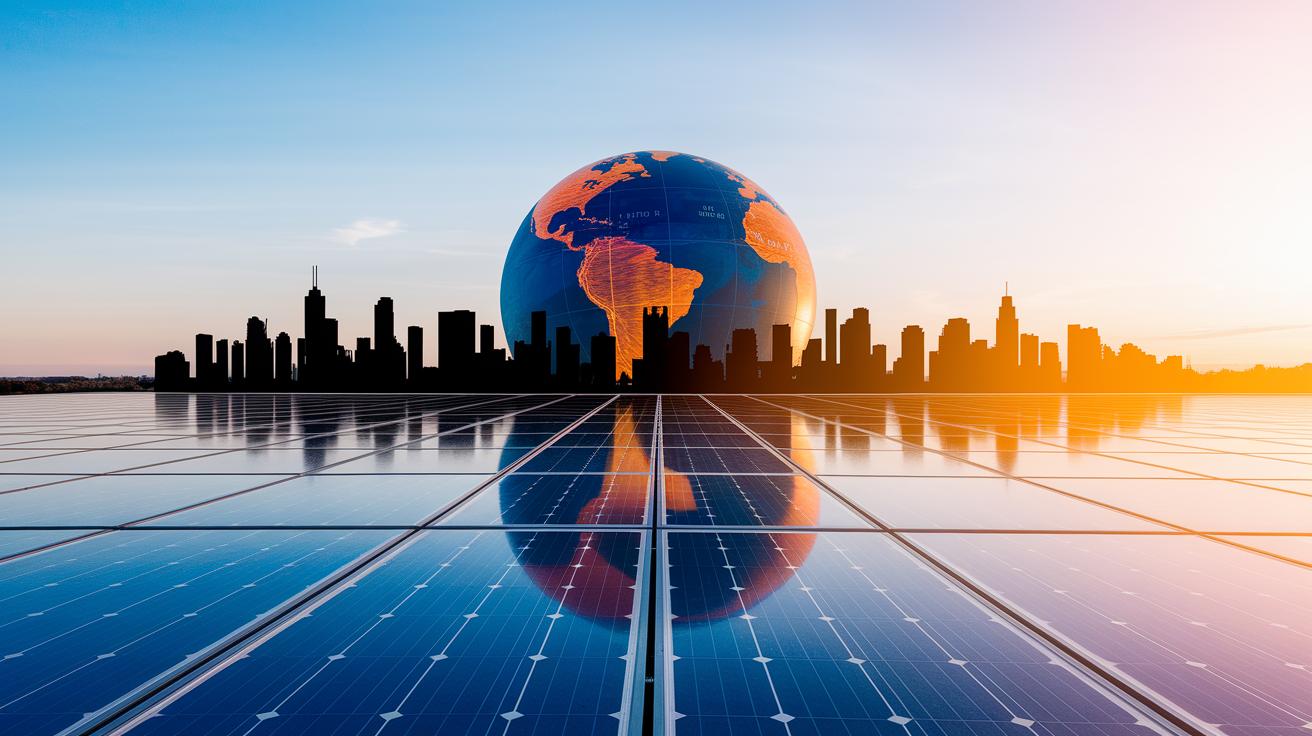
Our planet is steadily heating up, and experts warn that we might hit a key 1.5°C warming point by 2040. The 2023 IPCC Sixth Assessment Report explains that we need to act fast with both changes in our behavior and new solutions to avoid lasting problems. This new evidence pushes us to rethink how we handle things, especially as higher temperatures affect both nature and our communities.
New technology is making a big difference in understanding and tackling climate change. For example, in 2020, Oxford PV set a record by reaching a 29.52% efficiency in solar cells (devices that turn sunlight into electricity). This breakthrough not only points us toward cleaner energy but also shows the power of modern science in the fight against warming.
Looking ahead, scientists are eager to improve sensors and computer models to track changes in our climate more precisely. By doing this, we can better predict what's coming next and take action sooner.
Final Words
In the action, we traced the history of climate change from Fourier’s early heat-trapping theory to satellite missions that recorded our planet’s warming trends. Each part took us through initial measurements during the industrial revolution, breakthrough climate models, and key policy shifts. Scientific efforts, international teamwork, and modern technology all came together to shape our understanding of Earth’s evolving climate.
These reflections remind us that the history of climate change not only informs us but also sparks meaningful steps toward a brighter future.
FAQ
What is the brief history of climate change?
The brief history of climate change spans early theories on atmospheric heat with Joseph Fourier’s 1824 ideas, measurements during industrialization, computer modeling from the 1960s, and modern satellite observations and policies.
What are good resources for learning about the history of climate change?
The history of climate change is detailed in various formats like PDF documents, Wikipedia articles, essays, and books that cover early concepts, scientific observations, and evolving research leading to today’s policy actions.
When did climate change become an issue?
The issue of climate change emerged during the industrial period when fossil fuel use began altering atmospheric gases, with growing scientific concern as measurements revealed steady warming from early industrial times onward.
Who first discovered climate change?
The discovery of climate change traces back to Joseph Fourier, who first posited in 1824 that atmospheric gases can trap solar heat, laying the early groundwork for understanding global warming.
What did Bill Gates say about climate change?
Bill Gates emphasized that climate change calls for urgent innovation and policy measures, highlighting the challenge and the need for fresh solutions in energy and technology to manage global warming.
Is the earth hotter now than 100 years ago?
The earth is indeed hotter now compared to a century ago, with long-term measurements showing a clear warming trend that aligns with increased fossil fuel combustion and environmental changes over time.

