
Have you ever thought of a rocket as a bridge between your wildest dreams and what really happens? NASA rockets push us to new limits by sending satellites, brave astronauts, and cool science tools way beyond Earth’s pull. It’s a bit like tossing a ball high in the air, where each launch mixes strong power and careful guidance to beat gravity. Today’s rockets are smarter and work more efficiently, building on the early models that got us started. In this blog, we’ll take a look at how NASA rockets work and why they still spark our imagination.
NASA Rocket Systems Overview
NASA rockets are clever machines built to carry different loads into space. They are key players in space missions and help send satellites, science tools, and even people into orbit. They are designed to fight off Earth's pull, kind of like a strong throw sending a ball soaring upward.
There are many kinds of launch vehicles that work in different ways. Some rockets use strong boosters for a big initial push, while others have several parts that fall away as they run out of fuel. Some are made to carry astronauts safely, while others send tools and supplies on scientific missions.
The way a rocket moves involves three main ideas: making a strong push (thrust), dropping parts (staging), and steering its path (flight control). Engines burn fuel fast to push the rocket up, much like a quickly released balloon zooms upward. Staging lets the rocket shed heavy parts it no longer needs, and flight control systems work like a pilot, keeping everything on track.
Over time, NASA has improved rocket designs to fit all kinds of missions. Better engines and smart design tweaks have made newer rockets more flexible and efficient. Early rocket models were simpler, but today's rockets are tailored for specific jobs, opening the door to missions that explore deeper into space and face fresh scientific challenges.
Evolution of NASA Rocket Development

Early space missions began with Mercury and Gemini rockets that helped scientists take short trips beyond Earth. These initial rockets were like test pilots trying out a new airplane, giving engineers the chance to experiment and build the basics for future space breakthroughs.
Then came the Saturn V, a giant rocket that played a key role during the Apollo missions. It sent astronauts to the moon with impressive power and precision. Thanks to its strong thrust and smart design, Saturn V broke records and showed that deep space travel was within reach. Ever wonder how a powerful rocket can make the stars feel a bit closer?
Next, the Space Shuttle changed the game by being reusable. Instead of designing a new launcher for every mission, this program allowed the same rocket to fly multiple trips to low Earth orbit. This clever approach not only improved launch techniques but also offered hands-on learning for future space missions.
Today, modern systems like SLS and Artemis build on all those early lessons. They introduce fresh design ideas and new engine technology, pushing the limits of human space travel and opening up even more exciting possibilities in the world of aerospace.
NASA Rocket Propulsion and Engine Technologies
Solid rockets use a set mix of fuel and oxidizer that is already combined into one solid piece. They catch fire quickly and have a simple design, making them perfect for giving rockets that first big push. On the other hand, liquid rockets store fuel and oxidizer separately and mix them in a carefully controlled burn. This allows engineers to adjust the power during the flight, which helps with mission planning, safety, and routine engine checks.
Cryogenic engines have been a game changer in modern rocket design. By using super-cold propellants like liquid hydrogen and liquid oxygen, these engines can control the burn process more precisely. Innovations in fueling techniques, high-performance materials, and precise setups have made rockets more efficient and reliable.
Researchers are always exploring fuel combustion to get the best thrust out of engines. Engineers are fine-tuning the burning process using improved injector designs and computer simulations that model the flow of fuel and oxidizer (think of it as a digital look at how the liquids move). This fine-tuning helps rockets produce just the right amount of power during each phase of a flight, keeping them stable and using fuel more wisely.
| Propulsion Type | Propellant | Specific Impulse (s) | Thrust Range (kN) |
|---|---|---|---|
| Solid Motor | Composite solid propellant | 250-300 | 500-1000 |
| Liquid Bipropellant | Liquid oxygen & kerosene | 300-350 | 800-2000 |
| Cryogenic Engine | Liquid hydrogen & liquid oxygen | 350-450 | 1100-3500 |
NASA Rocket Launch Operations and Mission Profiles

Pre-Launch Countdown Procedures
Before the rocket lifts off, ground teams follow a clear, step-by-step plan. They build in planned pauses called T-0 holds, during which every part of the rocket gets a careful checkup. Teams verify things like fuel flow and electrical system signals to be sure all systems are running smoothly. It’s a close watch in those final moments to catch anything that might go wrong.
Mission Control Coordination
At Mission Control, a tight-knit team, led by the flight director and supported by CAPCOM, keeps everything running seamlessly. The flight director makes the big calls while CAPCOM handles the radio talk between the rocket and the ground crew. They use quick voice updates to stay in sync. Real-time telemetry (live data from the rocket) helps them track engine performance and the rocket’s path. This constant monitoring means that if something starts to drift off course, they can step in and adjust right away.
Future NASA Rockets and Advanced Technologies
NASA is getting ready to take space travel to the next level by upgrading its Space Launch System, especially with something called Block 1B. This upgrade is like a major tune-up for the rocket, making it sturdier and more adaptable. It means better engine performance and a stronger build so the rocket can carry heavier loads and travel longer distances, opening up exciting new avenues for science.
Engineers are also boosting the rocket’s brain power with digital twin simulations (computer models that mimic real rocket behavior). This lets them try new ideas without risking the actual hardware, kind of like running a test drive on your favorite car before hitting the highway. Plus, they’re focusing on reusable booster technology, which is all about making parts you can use over and over to save money and launch missions more often.
On top of that, experts are using computational fluid dynamics (a method to study how air flows) and new, innovative materials to improve the rocket’s aerodynamics and strength. These advances mean the rockets will have smoother, more precise flight paths, making each journey more efficient and reliable.
Experiencing NASA Rocket Launches: Visitor Center Insights
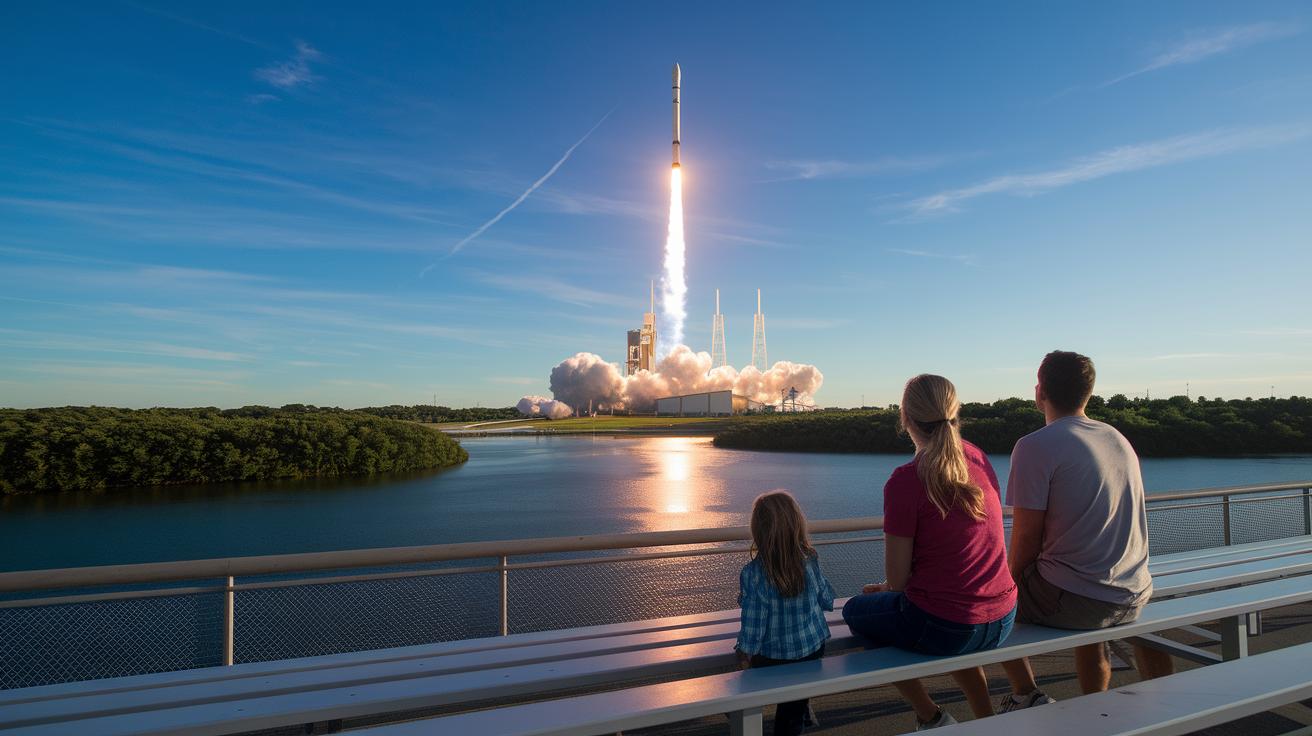
At America's top spaceport, you’ll find tons of ways to watch a rocket launch that suit any space lover’s taste. The Kennedy Space Center Visitor Complex lets you experience a live launch with friendly space experts talking you through it, comfy bleacher seating, and fun exhibits. You can pick from several viewing spots, each with special features to make your visit even better.
Launch dates and times are shared with everyone, but they can change at the last minute. That means it's a good idea to check for updates so you know what to expect. For more details on where to watch, visit the info page at space center houston.
- Get there about two hours early for parking and security checks.
- Sit in the special bleacher seating and enjoy live commentary from experts.
- Explore the on-site exhibits and other fun amenities both before and after the launch.
- Learn about scrub and delay procedures, including refund or rebooking policies.
When planning your visit, it’s smart to keep an eye on weather forecasts and any policy changes. Being flexible with your plans helps you catch that thrilling moment when a groundbreaking space mission takes off.
Final Words
In the action of exploring NASA rocket systems, we’ve covered the basics of rocket design, engine technology, and launch processes. We traced the evolution from Mercury programs to modern systems like Artemis, and even took a peek at the live excitement at visitor centers. Each section brought a clear look at how rocket propulsion and mission plans work together to push science forward. Embracing all these insights helps us see firsthand how a nasa rocket changes our everyday wonder and knowledge of space. Science continues to inspire.
FAQ
What is the NASA Rocket Toy?
The NASA rocket toy is a scaled-down model that mimics real rocket designs. It helps spark curiosity and offers an engaging way to learn about spaceflight.
How does the NASA rocket launch schedule and live launch work?
The NASA rocket launch schedule outlines planned launch dates and times. These launches are streamed live, and updated details appear on NASA’s official website for viewers wanting to tune in.
What is the current NASA rocket?
The current NASA rocket usually refers to the active launch vehicle, such as those used in the Artemis missions, designed to propel missions beyond Earth.
What do NASA rocket photos show?
The NASA rocket photos capture detailed images of rocket designs and launch moments. They help the public see the technical mastery and vibrant work behind each mission.
What do the NASA rocket logo and name represent?
The NASA rocket logo and name represent the legacy of space exploration, serving as symbols of innovation and the groundbreaking work done by the agency.
Why was the NASA launch scrubbed today?
The NASA launch was scrubbed due to technical or weather-related issues. The agency makes such decisions to ensure the safety and success of its missions.
Is SpinLaunch a real thing?
SpinLaunch is a company working on a new type of launch technology that uses centrifugal force. It is undergoing tests to prove its method for future space missions.