
Ever wonder why Earth manages to stay comfy even with the vast cold of space around it? Our planet has its own natural tricks to keep warm. Volcanoes, for instance, release heat along with gases (that adds to the warmth), and gentle shifts in the sun’s energy help balance things out. Long before humans came along, these forces worked together to maintain just the right temperature for life.
It’s almost like Earth has a smart design built into it, one that ensures life always has the perfect home. In this article, we'll dive into how these natural elements join forces in a kind of cosmic dance, spreading warmth and positive energy, and setting the stage for life to thrive.
natural causes of climate change: Radiating Positivity
Earth’s natural greenhouse effect acts like a warm blanket that wraps around our planet, trapping the sun’s heat so that the average temperature stays around 15 °C instead of dropping to about –18 °C. This natural warmth is what makes life possible. Think of it as Earth’s built‑in thermostat, working just the way it needs to.
Natural changes in our climate come from forces that aren’t caused by humans. For example, the sun slowly changes its brightness, volcanic eruptions can loft ash and gases high into the air, and shifts in Earth’s orbit change how sunlight hits different regions. Before we had factories and cars, these forces were the main drivers behind changes in temperature. It’s a bit like how a volcano can briefly block our view of the sun, or how a gentle solar cycle adjusts our overall energy balance.
Looking back through history, records like ice cores and layers of sediment show us that these natural factors have a big impact on our climate over thousands of years. Volcanic activity, changes in solar radiation, and orbital shifts have all played a role in shaping global temperatures over time. Even though human actions affect our climate today, it’s interesting to remember that nature had its own powerful ways of driving change long before we came along.
Volcanic Activity and Its Cooling Effects on Climate

When a volcano erupts, it shoots out a mix of tiny particles like ash and sulfur dioxide (a gas that comes from burning sulfur). These little bits travel high into the atmosphere and can change how much sunlight reaches our planet.
These particles act like a natural sunshade. They bounce sunlight away, which cools the Earth for a while. Take the 1991 Mount Pinatubo eruption as an example. It sent so much sulfur dioxide into the sky that global temperatures dropped by about 0.5 °C for two to three years. In simple terms, the ash and gases form a brief shield that cuts down some of the sun’s heat. Even older events, like the Tambora eruption in 1815, caused similar cooling effects that lasted for a couple of years. It’s really fascinating how nature can take the heat off, even if only for a short time.
| Eruption | Year | Temperature Anomaly | Recovery Period |
|---|---|---|---|
| Tambora | 1815 | –0.7 °C | 1–2 years |
| Krakatoa | 1883 | –0.5 °C | ~1 year |
| Krakatau | 1883 | –0.5 °C | ~1 year |
| Pinatubo | 1991 | –0.5 °C | 2–3 years |
Studies show that even though volcanic eruptions can cool the climate for a few years, the Earth eventually warms back up as these particles slowly clear out of the stratosphere.
Solar Radiation Fluctuations and Their Climate Impact
Satellites show that the sun’s energy changes by about 0.1% over an 11-year cycle. When the sun has fewer spots, Earth receives a bit less energy. Even though this change sounds tiny, it gently shifts the balance of heat our planet absorbs. Scientists keep a close eye on these shifts to learn how natural changes in the sun’s brightness can affect our global temperatures.
There are also extra effects that add more layers to this picture. For instance, changes in the solar wind (the stream of charged particles from the sun) can alter the number of cosmic rays (high-energy particles from space) that reach our atmosphere. These cosmic rays help seed cloud formation, which then changes how much sunlight bounces back into space. When more sunlight is reflected, it can lead to small changes in temperature. In truth, even these slight variations in the sun’s output play a role in shaping our climate.
Milankovitch Cycles: Orbital Drivers of Glacial-Interglacial Change

Eccentricity
Earth’s path around the sun isn’t a perfect circle, it’s more like an oval that slowly changes over a span of about 100,000 years. This shifting shape means our planet isn’t always the same distance from the sun. When Earth’s orbit is more stretched out, the sun’s energy hits us very differently at its closest point than at its farthest, which can make seasons swing from mild to extreme over long stretches of time.
Obliquity
Every 41,000 years, the angle of Earth’s tilt changes just a bit, which affects how much sunlight reaches places near the poles. With a larger tilt, summers become brighter and winters turn colder, while a smaller tilt keeps things more even. This change in tilt helps decide when ice builds up or melts, playing a big part in the cycle of ice ages and warmer periods.
Precession
Imagine spinning a top and noticing it wobbles a little, that’s what Earth does too. This wobble, known as precession, takes about 19,000 to 23,000 years to complete one cycle. It shifts the timing of our seasons in relation to the Earth’s closest and farthest points from the sun. Over time, these shifts gradually change how sunlight is spread over the year, influencing weather and temperature over many millennia.
When these three cycles, eccentricity, obliquity, and precession, work together, they set the stage for major climate changes. Their combined effects guide the long dance between icy periods and warmer interglacial times, shaping the history of Earth’s ice ages.
Oceanic Patterns and Heat Redistribution in Natural Climate Change
Ocean currents help move heat around our planet. For example, the El Niño–Southern Oscillation, which happens every 2 to 7 years, shifts warm water from the western Pacific toward the east. This change affects rain and temperature patterns, making some regions wetter and others drier.
Another important pattern is the Atlantic Multidecadal Oscillation, a cycle that lasts about 60 to 70 years. It changes the sea surface temperatures in the North Atlantic, which in turn influences the weather both nearby and far away. Warm periods in this cycle can lead to more storms and changes in rainfall, while cooler times usually bring steadier weather.
Key oceanic patterns that shape heat distribution:
| Pattern | Cycle Duration |
|---|---|
| ENSO | 2–7 years |
| AMO | 60–70 years |
| Pacific Decadal Oscillation | 20–30 years |
| Indian Ocean Dipole | 3–7 years |
Together, these currents form a network that connects distant regions, balancing our planet's climate. The heat they shift can affect weather thousands of miles away. It’s a neat reminder of how everything on Earth is linked in a big, moving dance of nature.
Feedback Mechanisms and Paleoclimate Evidence
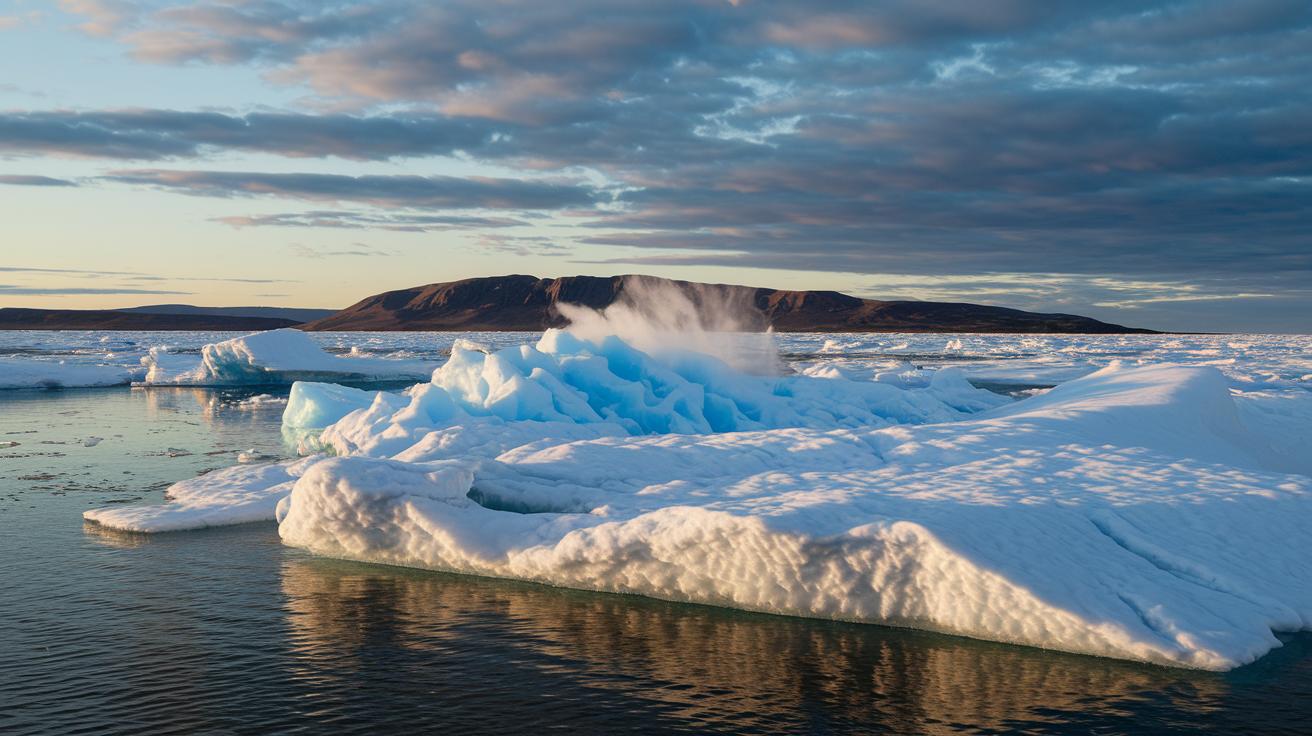
Water vapor acts like a natural boost for our climate system. When the air warms up, it can hold more moisture (that invisible water in the air), which in turn strengthens the greenhouse effect. This means even a small rise in temperature can trap extra heat. And then there's ice. As polar ice melts, dark surfaces replace the bright, reflective ice. Darker surfaces soak up more sunlight, speeding up the warming process. Think of it like a snowy field turning dark after a few warm days, the land then absorbs more heat, making the warming even worse.
The living world and Earth’s own layers also add to these temperature changes. For example, changes in plants can affect how much carbon dioxide (a heat-trapping gas) gets absorbed. Meanwhile, when frozen ground thaws, it releases methane (another powerful greenhouse gas). Scientists study clues from ice cores, tree rings, and layers of sediment to see how these feedback loops worked over hundreds or even thousands of years. These records show that natural feedbacks, whether from water vapor or the biosphere, have been shaping Earth's climate long before humans started making a difference.
Final Words
In the action, this article traced how Earth’s natural processes shape its climate. We followed the baseline greenhouse effect, volcanic cooling effects, solar output shifts, Milankovitch cycles, oceanic heat redistribution, and feedback loops. Each section shows how these natural causes of climate change work together over time.
The discussion invites us to appreciate Earth’s complexity and the natural rhythms that influence our daily environment. It leaves us with a positive view of science as a way to understand our ever-changing planet.
FAQ
What are natural causes of climate change?
The natural causes of climate change include Earth’s baseline greenhouse effect, shifts in solar radiation, volcanic eruptions, orbital variations, oceanic circulation patterns, and internal climate feedback mechanisms.
What are the top five natural causes of climate change?
The top five natural causes include solar radiation fluctuations, volcanic activity, Milankovitch cycles (orbital variations), changes in ocean currents, and feedback processes that amplify temperature shifts.
What are human causes of climate change?
The human causes of climate change come from burning fossil fuels, deforestation, and industrial processes that add extra greenhouse gases, intensifying Earth’s natural warming.
What are the 10 causes of climate change?
Listing 10 causes spans both natural factors—like volcanic eruptions, orbital variations, solar changes, ocean currents, and feedback loops—and human influences such as fossil fuel combustion and land-use alterations.
What natural resources cause climate change?
Natural resources don’t directly cause climate change; climate shifts result from external forces like solar energy and internal Earth processes rather than from resources like water or minerals.
What are the effects of climate change?
The effects of climate change include rising temperatures, altered precipitation, melting ice, sea-level rise, and ecosystem changes that impact both communities and wildlife worldwide.

