
Have you ever thought about how a small rocket pushed us from Earth into a daring space adventure? Early test flights set the stage, giving us the simple tools we needed to see stars that seemed almost out of reach.
Each step along the way reminds us of a time when our curiosity led us to brave new challenges. This timeline celebrates those key moments that helped us learn more about our place in the huge, wondrous universe.
Key Milestones Across the Space Exploration Timeline
Early rockets got us started on our journey into space. During World War II, German scientists launched the V2 rocket and it reached 62 miles high, showing the world that space travel was possible. This bold move was like the first step on an incredible adventure from simple rocket launches to the amazing space tools that let us see the farthest stars.
Over the years, people built on these early tests with missions that have captured our imaginations. We sent the first man-made satellite into orbit and placed telescopes in space that reveal hidden corners of our universe. Every milestone shows our strong desire to understand where we fit in this huge cosmos.
| Year | Mission | Highlight |
|---|---|---|
| 1944 | V-2 Rocket | Reached 62 miles high as the first spacecraft to enter space |
| 1957 | Sputnik 1 | Launched the first artificial satellite, starting the orbital age |
| 1961 | Vostok 1 | Carried Yuri Gagarin, the first human to orbit Earth |
| 1969 | Apollo 11 | Achieved the first crewed landing on the Moon on July 20 |
| 1971 | Mariner 9 | Became the first probe to orbit another planet, Mars |
| 1998 | International Space Station (ISS) | Started a new chapter in teamwork for space exploration |
| 2021 | James Webb Space Telescope | Launched to explore deep space like never before |
These key moments show how our ideas about space have grown from daring early rocket tests to global cooperation and advanced science tools. It’s exciting to think about how each step brings us closer to understanding the marvels of the universe.
Pioneering Missions and Early Achievements in the Space Exploration Timeline (1944–1958)
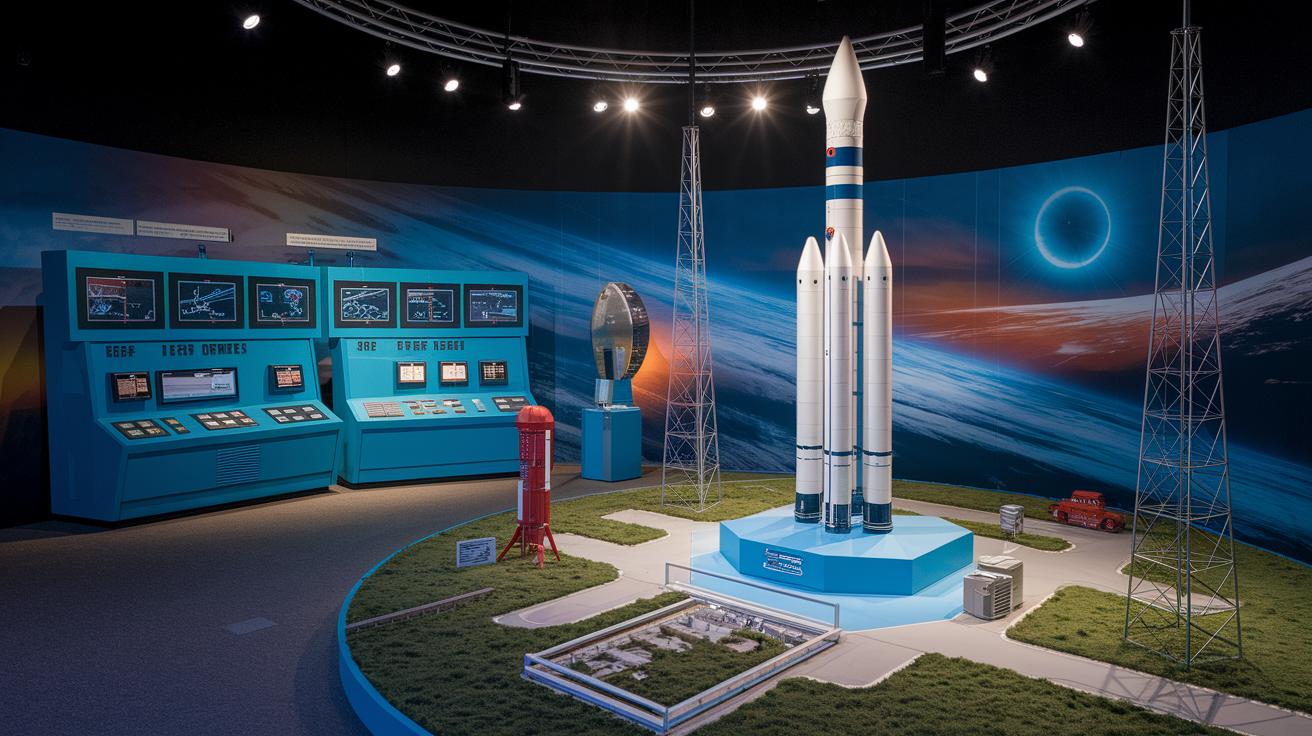
Back in 1944, German engineers at the Peenemünde Army Research Center fired up the V-2 rocket, sending it all the way to the very edge of space. It was a major breakthrough made during a tough time, and it laid the groundwork for the rocket technology we use today. Later on, the know-how from this project was shared with allied nations, sparking fresh ideas and kickstarting civilian space exploration.
By 1957, things really took off with the launch of Sputnik 1. This small satellite zipped around Earth in just 98 minutes, and it got people really excited about the possibilities of space travel. Not long after, Sputnik 2 carried Laika, a brave little dog, into orbit, showing that even living beings could handle the rigors of space, even if just for a short time. These groundbreaking missions caught the world's eye and proved that space exploration was no longer a far-off dream but a fast-moving reality.
- 1944: The V-2 rocket tests at Peenemünde touched the boundary of space, marking a huge step in rocket science.
- 1957: Sputnik 1 orbited the Earth in 98 minutes, kicking off the era of satellites.
- 1957: Sputnik 2 carried Laika into orbit, showing that living creatures could go into space.
- 1958: Pioneer I launched from Cape Canaveral and reached space, though it missed the Moon.
- 1958: NASA was set up on October 1 to lead U.S. civilian space projects.
These early missions not only sparked the public's imagination but also built the foundation for people to travel in space. The tech breakthroughs and inspiring achievements here paved the way for future human journeys beyond our planet.
Space Race Era Milestones and Human Spaceflight Achievements (1957–1975)
Mercury and Vostok Missions
The earliest journeys into space were full of excitement and discovery. In 1961, Soviet pilot Yuri Gagarin orbiting Earth proved that a human could go around our planet. At the same time, American astronaut Alan Shepard took a quick suborbital flight to show that humans could safely experience space, even for a short time. These first missions helped scientists learn how the human body handles no gravity (where you feel weightless) and how to work in the challenging conditions of space.
Gemini Program Breakthroughs
From 1962 to 1966, the focus shifted from Mercury to the Gemini program. During Gemini, crews practiced meeting up with one another in orbit, which was a key step before going to the Moon. They also did spacewalks, leaving their spacecraft to work outside in the vast emptiness of space, and spent longer times up there. These experiences built a better understanding of what living in space means and paved the way for safer, longer missions beyond our planet.
Apollo Lunar Landings
The year 1969 brought a historic moment with Apollo 11 landing the first humans on the Moon. This bold mission not only showed off incredible human skill but also collected precious lunar samples and took astronauts on Moon walks. Later Apollo missions, continuing until Apollo 17 in 1972, honed these techniques further by spending more time on the Moon, carefully performing spacewalks, and gathering lots of scientific data about the Moon’s make-up. In 1973, renaming the Manned Spacecraft Center to Johnson Space Center marked a renewed commitment to training astronauts and advancing human space travel for the future.
Robotic Probes and Interplanetary Exploration Timeline (1962–1974)

The time of unmanned space missions truly changed how we explore the universe. In 1962, Mariner 2 made history by flying close to Venus, proving that small spacecraft could capture amazing close-up details of distant planets. This meant scientists could learn a lot about mysterious worlds without putting lives at risk.
Using these unmanned vehicles, researchers reached far beyond our own neighborhood in space. In 1964, Ranger 7 sent back the first clear pictures of the Moon, offering views that Earth-based telescopes just couldn't match. Then, in 1965, Mariner 4 surprised everyone by photographing Mars after an eight-month trip. Soon after, the Lunar Orbiter Program carefully mapped nearly the entire Moon, and in 1969, Zond 5 showed that living things could survive a space journey around our satellite. Finally, in 1974, Mariner 10 wowed us with exciting flybys of both Venus and Mercury. These early missions not only expanded our understanding of nearby planets but also set the stage for today's advanced interplanetary exploration.
| Mission | Year | Achievement |
|---|---|---|
| Mariner 2 | 1962 | First successful flyby of Venus |
| Ranger 7 | 1964 | Returned the first close-up Moon images |
| Mariner 4 | 1965 | Transmitted Mars photos after an eight-month voyage |
| Lunar Orbiter 1 | 1966–67 | Mapped 99% of the lunar surface |
| Zond 5 | 1969 | Lunar circumlunar flight carrying biological cargo |
| Mariner 10 | 1974 | Conducted flybys of both Venus and Mercury |
Space Shuttle Program and International Orbital Station Era (1972–1998)
Back in 1972, a presidential directive sparked plans for a spacecraft that could carry both astronauts and heavy loads into orbit and safely return them to Earth. Engineers and dreamers rolled up their sleeves to design a reusable craft, one that would change how we explored space. Research labs were buzzing with activity as experts tested models and tweaked systems to keep people safe in the harsh space environment. It was a time full of tough challenges and impressive innovations that set the stage for reusable space travel.
Then came a major milestone in 1981. On April 12, the Space Shuttle Columbia lifted off for its first journey. Its debut flight captured everyone’s attention by showing that a spacecraft could be launched, landed, and refurbished for more trips. The design featured smart aerodynamics, strong thermal protection (a heat shield that protects against extreme temperatures), and automated guidance systems, all while supporting a crew and scientific experiments. Columbia’s flight was a clear sign that the idea of routine space travel was finally becoming real.
By 1998, the focus shifted to building a shared hub in low Earth orbit. The launch of the ISS module Zarya marked the start of a new chapter in teaming up internationally. The United States and Russia combined their skills to create a long-term space station where astronauts could live and work. This collaboration not only boosted our space capabilities but also showed how nations could join forces to extend humanity’s reach beyond our home planet.
Modern Era and Private Ventures in the Space Exploration Timeline (2000–Present)
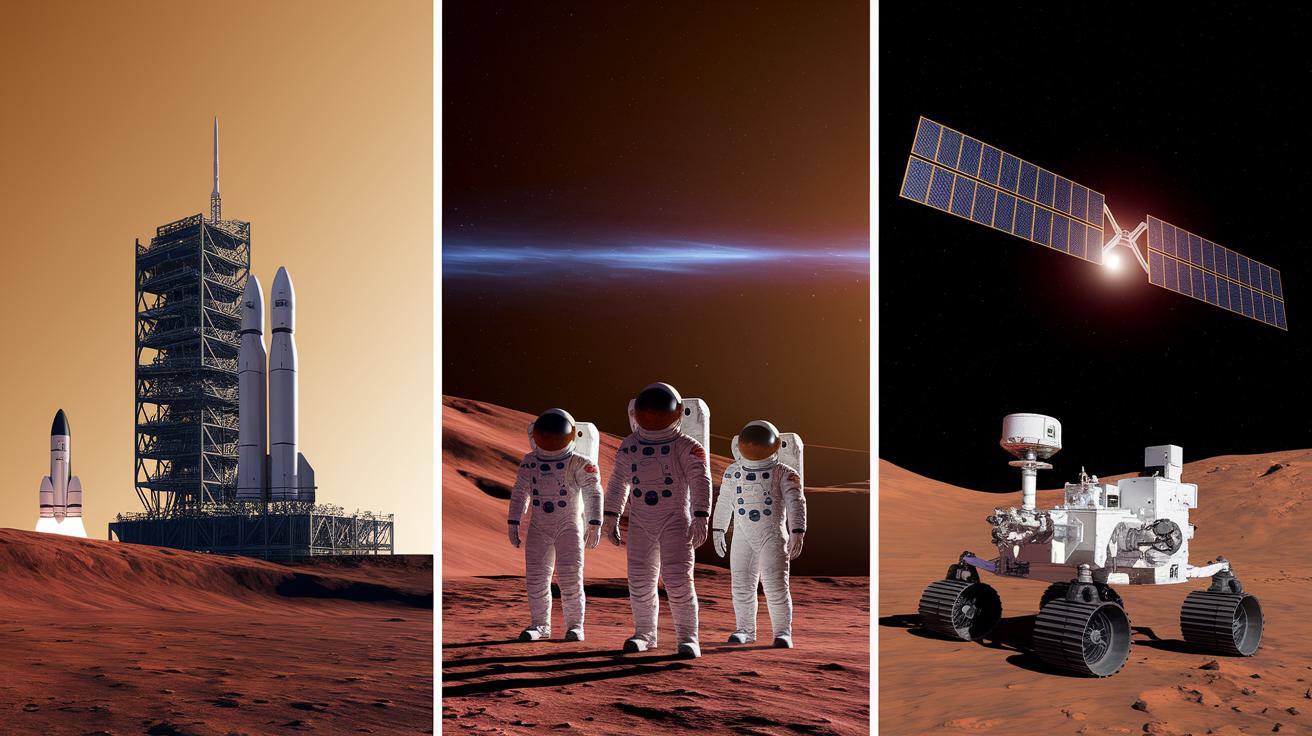
Space exploration has changed a lot over the past two decades. In the early 2000s, the launch of SpaceShipOne in 2004 and its win of the Ansari X Prize completely shifted how we think about space travel. Not long after, companies like SpaceX and Northrop Grumman began handling routine missions to resupply the International Space Station. At the same time, robotic missions kept pushing our limits. For example, the Curiosity rover touched down on Mars in 2012, almost like watching our dreams come alive. And then, in 2021, the James Webb Space Telescope started exploring the universe in infrared light, opening up new sides of the cosmos. These milestones have sparked fresh public interest and led to more exciting scientific questions.
Today, commercial space missions and robotic explorers work side by side with government agencies. They carry out supply runs, perform detailed experiments, and collect heaps of data about space. Looking to the future, planned missions like Blue Origin’s Blue Moon crewed lander, expected in 2024, show that human spaceflight is in capable hands. This blend of automated science and commercial innovation is reshaping what we believe is possible in space travel. Every new mission brings us a little closer to a future where space becomes more accessible, and that truly inspires our imagination.
Private Human Launch Systems
Private companies are now developing new crewed vehicles that promise to change the way we travel in space. These fresh designs are meant to safely ferry astronauts into orbit and back, all while cutting down costs and making space more within reach. With careful testing and innovative engineering, these vehicles are built for both short trips and longer stays in space. By combining lessons learned from past adventures with modern technology, the next generation of crewed launch systems is set to expand our journey beyond Earth, opening the door to even more amazing space missions.
Comprehensive Chronological Table of Space Exploration Timeline Highlights
Below is an extra look at some important space missions we didn’t cover earlier. Each mission in this table marks a special moment that helped us learn more about space.
| Year | Mission | Agency | Achievement |
|---|---|---|---|
| 1957 | Sputnik 2 | Soviet | Sent Laika, the first living creature, into orbit |
| 1962 | Mariner 2 | NASA | Made the first successful flyby of Venus |
| 1974 | Mariner 10 | NASA | Did flybys of both Venus and Mercury |
| 1976 | Viking 1 | NASA | Completed the first successful landing on Mars |
| 2004 | SpaceShipOne | Private | Started a new era of commercial human spaceflight |
Final Words
In the action, we traced progress from early rockets to groundbreaking space missions. We reviewed standout milestones from initial space flights to the pulse of private ventures in space. Our overview touched on first human flights, robotic probes, and the long list of achievements neatly lined up in our chronological table.
This brief recap reminds us that our quest for knowledge never stops. Every breakthrough on the space exploration timeline lights the way to the next big discovery.
FAQ
What is the space exploration timeline?
The space exploration timeline outlines major missions from early rocket tests to modern observatories by marking key milestones in our journey, including historic launches and human spaceflights.
Where can I access a space exploration timeline PDF or project?
A space exploration timeline PDF compiles historic events into an accessible format, while a project version may include interactive visuals and detailed annotations of missions from rocketry to current space achievements.
Is there a space exploration timeline for kids?
A space exploration timeline for kids uses simple language and colorful visuals to explain major events like Sputnik’s launch and the Apollo Moon landing, making space history easy to understand.
What does the space history timeline from 1950 to today include?
The timeline covers key missions from the first satellites to modern ventures, showcasing NASA’s projects and significant era-spanning events such as human spaceflight and deep-space observations.
What are 10 most important events in space exploration?
The top 10 events include missions like Sputnik’s launch, Yuri Gagarin’s first orbit, Apollo 11’s Moon landing, and successes such as the James Webb Telescope deployment, among other milestones.
Are any of the first 7 astronauts still alive?
Early space pioneers, often called the Mercury Seven, mostly have passed on, with only a few survivors remaining; current records from space agencies provide the most up-to-date details.
What are the 7 space shuttles in order?
The commonly listed shuttles include the prototype Enterprise followed by the operational orbiters: Columbia, Challenger, Discovery, Atlantis, and Endeavour, with some listings noting Enterprise’s dual roles.
What happens every 176 years in space?
The idea of an event occurring every 176 years does not match any widely recognized astronomical cycle, as known cycles like Halley’s Comet recur on much shorter intervals.