
Ever thought about a ship that sails among the stars? Picture an orbital aircraft carrier that works like a floating launch pad and repair shop. It sends and fixes satellites using quick, agile robot drones (tiny machines that move on their own). This carrier functions a bit like a naval ship but stays in low Earth orbit (the space close to our planet) to keep our space systems running smoothly. This smart, high-tech machine is changing the way we work in space. Could this clever carrier be the secret to faster, more hands-on space operations and stronger defense?
space force orbital aircraft carrier Soars with Innovation
This orbital carrier is like a space launch pad parked in low Earth orbit. It sends out and brings back smaller, nimble spacecraft, acting as a floating command center in space, much like a naval ship, but built for the stars. It even works as a quick satellite launch station to keep our communication and defense systems running smoothly.
It also doubles as a space repair hub. Robotic drones fly out to inspect satellites and fix issues mid-mission. Fun fact: before it became famous as a repair hub, a small drone once fixed a satellite in tough conditions! This kind of hands-on, in-orbit maintenance sets it apart from typical ground-based systems.
Moreover, the carrier serves as a central recovery spot for orbiting assets. It steps in when satellites need retrieving or fixing, which means our critical space tech stays protected. Plus, it’s built to handle challenges like radio interference and fast-moving threats, extending U.S. military reach into space.
All in all, this carrier transforms how we operate in space. It offers speedy satellite launches, in-orbit repairs, and a secure way to keep our space systems online, making it a true game-changer for national defense and space innovation.
Space Force Initiatives and Contract Behind the Orbital Carrier
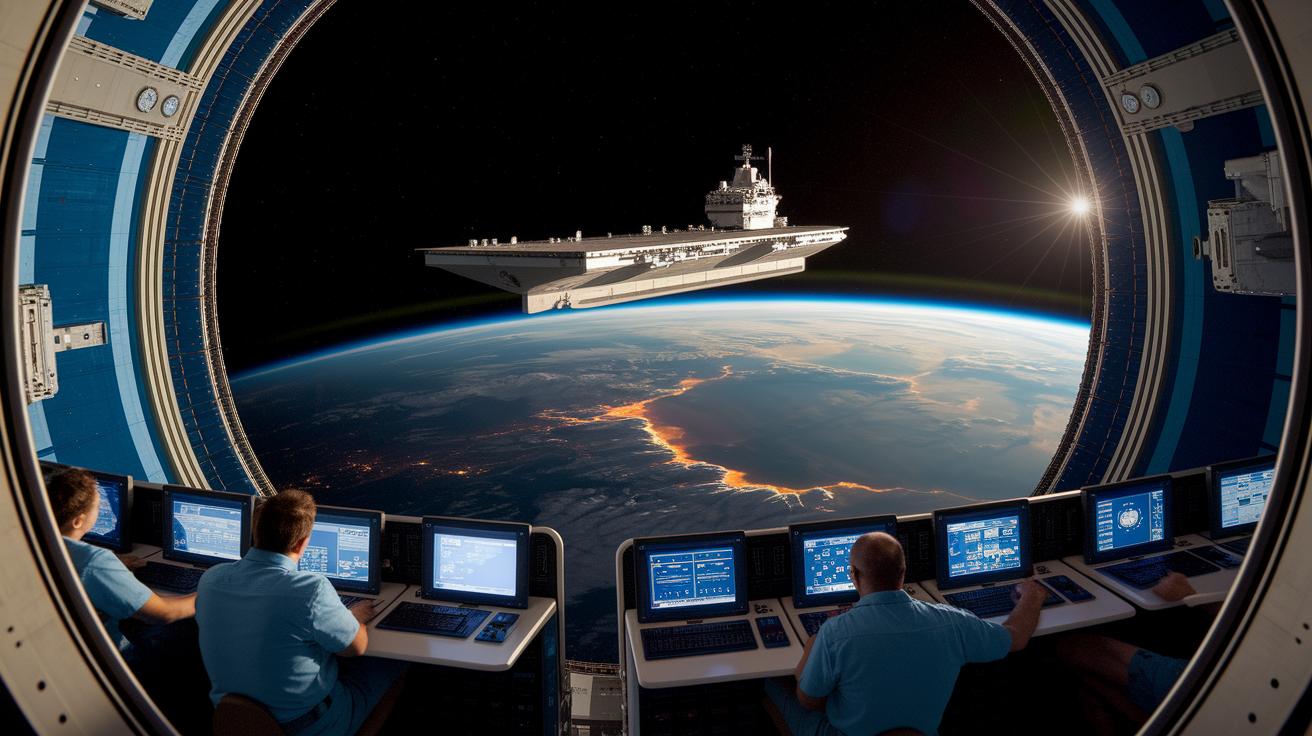
The U.S. Space Force has approved a $60 million contract to Gravitics for an orbital aircraft carrier prototype. This move comes as system defenders face increasing threats from countries like Russia and China. With this contract, the military plans to protect Western satellites, keep communications strong, and counter new anti-satellite weapons. Imagine a command center in space that works as both a launch pad and a repair station, similar to a traditional naval ship but in orbit.
People involved in U.S. orbital operations and space command strategy are watching this project closely. The Space Force’s decision signals a shift from ground-based methods to more dynamic, space-based solutions in today's space race (space race). Their main aim is to keep our space assets secure and effective in a fast-changing environment. Fun fact: even small changes in orbit can be like steering a ship on open water, showing that space is both a challenging and exciting frontier for defense innovation. This project paves the way for future missions by blending smart defense with cutting-edge space technology.
Conceptual Design and Operational Roles of the Orbital Carrier
The orbital carrier mixes modern tech with classic ship design to make a platform that can quickly change for different tasks. It comes with special hangars for drones (small, remote-controlled vehicles) and parts that easily swap out or upgrade as missions change. For example, the drone hangars are built for speedy rearming and quick fixes, so the whole setup can adapt fast when needed.
Key features include:
- Fast, on-orbit defense of satellites using service drones.
- Careful repairs and inspections while in space.
- A smart, modular design that makes launching and picking up spacecraft much easier.
Engineering and Modular Assembly in Orbit for the Carrier

Building a space aircraft carrier that orbits our planet is a lot like putting together the International Space Station. Instead of trying to launch one giant structure all at once, engineers use smaller pieces called modules. Each module is designed for a special job, whether it’s a place for the crew to live, a section for launch rails, a spot for making power, or an area to hold payloads (cargo). Think of these modules as building blocks that come together in space to create one amazing, useful ship.
Because the carrier is so huge, engineers plan for many launches, sometimes hundreds, or even thousands. Every module is built to the same standard so that the pieces fit together smoothly. This modular approach is smart because it lowers the risk compared to trying to send up one massive piece. Plus, it means upgrades and repairs can happen without having to stop the whole project. Isn’t it cool to know that as our space-building skills grow, we can tweak and improve designs using what we’ve already learned?
Here are some of the key ideas behind this strategy:
- Launching modules one at a time cuts down on big risks.
- Standard parts make fitting everything together a lot simpler.
- Every piece, from power units to payload bays, plays a crucial role in the overall design.
By breaking the carrier into smaller, manageable sections, the whole project becomes more doable and flexible. This means that if plans change or new tech comes along, engineers can adjust the launch schedule or design without a huge headache. It’s all about building the future in space step by step, with each piece adding its own important part to the journey.
Propulsion and Orbital Maneuvering Requirements
The carrier relies on strong engine systems that use either electric or chemical power to move its orbit. Electric thrusters push out tiny charged particles (small bits with an electrical charge) to create a gentle but constant force, while chemical engines deliver quick bursts of power for rapid moves. Both options let the carrier maneuver in space like an agile fighter, dodging dangers and keeping a safe distance from harmful objects.
This system also needs to handle station-keeping, meaning it makes small course corrections to stay in a steady orbit. Then it performs orbital transfer maneuvers, which are changes in its path that help it reach key areas in space. For every such move, engineers plan a precise delta-V (a term for the speed change needed) to ensure fuel is used wisely.
Fuel mass fractions add another twist. In simple terms, engineers must balance the amount of fuel carried against the entire weight of the carrier. Think of it like steering a boat through stormy seas, every drop of fuel is valuable for keeping on course. By using these propulsion tactics based on the laws of physics, the carrier stays safe and fully operational out in space.
Life Support Systems and Crew Sustainability on the Orbital Carrier

The orbital carrier uses a closed-loop environmental control and life support system (ECLSS, which means it cleans and reuses nearly all air, water, and waste) to keep everything running smoothly. It's much like the system on the International Space Station but improved to support more crew members for longer trips. Imagine a water fountain that never runs out; every breath you take and every drop you drink gets refreshed again and again. It’s like water coming back to life, always sparkling and ready.
Crew accommodations are built with extra backup to handle any hiccups. If one part of the habitat needs a quick fix, another takes over to make sure the crew stays safe and comfortable. The ship is designed with a smart safety net in mind, using advanced sensors that adjust in real time to keep the environment steady, even during long stays in low Earth orbit. Have you ever thought about how reassuring it is to know there’s always a backup plan ready for you?
Defensive Systems and Strategic Vulnerabilities
The orbital carrier has its own set of tricky defense challenges. It relies on many layers of protection to keep this valuable asset safe. For example, its electronic warfare systems block enemy signals, making it tough for foes to lock onto it. It also uses hard-kill interceptors, which literally knock down any incoming ASAT weapons (anti-satellite weapons that can destroy satellites).
Because this carrier is a single concentrated asset in space, it becomes an easy target. Think of it like a big ship at sea that draws gunfire from modern, fast weapons. Experts say it's like land-based carriers facing hypersonic missile attacks, where a well-known target gets all the heat from enemies.
There are several ways to protect this carrier:
| Defense Strategy | Description |
|---|---|
| Electronic Systems | They mess with enemy radar and communication signals. |
| Physical Interceptors | Designed to knock down incoming projectiles. |
| Redundant Systems | Backup options that kick in if one defense layer is overcome. |
Even with these protective measures, having so many functions in one platform is risky. If one layer fails or gets bypassed, the carrier could face serious trouble. This shows why there must be constant improvements and new tactics to keep our space defenses strong.
Strategic, Economic Assessment and Future Feasibility

When you compare a space force orbital aircraft carrier with the ISS, the differences really stand out. The ISS weighs about 450 metric tons and cost roughly 150 billion dollars. In contrast, an orbital carrier might cost tens of trillions, which makes its price a hot topic for debate. Experts are busy weighing the benefits, like how well such a carrier could keep our satellites safe, against the steep costs and the current state of the needed technology. Imagine planning a super-strong titanium ship that not only sails but can also fend off every danger, it sounds amazing, but it comes with mind-blowing expenses.
Key factors under review include:
| Key Factor | Description |
|---|---|
| Strategic deterrence | The carrier would act as a front line of defense, shielding vital satellites and other space tools. |
| Cost concerns | Because of its huge scale, even a small mistake could lead to losses that far exceed any benefits. |
| Technological maturity | Modern space equipment needs many years of fine-tuning before it can manage something as big as this. |
Those working on the US orbital carrier idea feel that while the project has huge potential to boost national defense, it still remains an idea on paper. Think of it like trying to build a spacecraft that is both incredibly tough and extremely expensive, like putting together a gigantic puzzle where every piece must click just right. Before the idea moved into serious talks, many skeptics said it was like chasing a wild dream that needed a miracle in engineering. Balancing tight budgets with the need for advanced defense systems is the biggest challenge in turning this orbital carrier into reality.
Final Words
In the action of exploring this innovative concept, our discussion covered its roles as a mobile command center, rapid satellite launch pad, and on-orbit service hub. We examined how modular assembly, propulsion techniques, and life support systems shape its design. We also touched on strategic defense and economic prospects. With each detail, the practical potential of a space force orbital aircraft carrier comes into sharper focus, leaving us inspired by what the future of space operations may hold.
FAQ
What is a space force orbital aircraft carrier?
A space force orbital aircraft carrier is a space-based platform in low Earth orbit that serves as a mobile launch and service hub for satellites and smaller spacecraft, ensuring quick response and repair capabilities.
Where is the orbital aircraft carrier located and what is its role?
The space carrier is positioned in low Earth orbit to rapidly deploy, repair, and support satellites, acting as a mobile command center and defensive node against potential space threats.
What is the Gravitics Orbital Carrier and how does it relate to the project?
The Gravitics Orbital Carrier is a prototype developed under a $60 million contract, demonstrating a design concept for deploying and maintaining satellites from space in support of U.S. military operations.
Does the Space Force have aircraft, and how does an orbital carrier fit in?
The Space Force does not operate traditional aircraft; instead, it manages satellites and drones in orbit, with the carrier serving as a platform to launch, service, and defend these assets.
How will the orbital carrier deploy satellites and support space operations?
The orbital carrier acts as a launch pad that rapidly deploys satellites while also servicing and retrieving them, ensuring continuous support for U.S. space operations and robust communication networks.
Is the Space Force building a space-based carrier?
Yes, the Space Force is developing a space-based carrier designed to manage on-orbit satellite tasks, displaying capabilities that extend traditional defense strategies into the space domain.
What makes the orbital aircraft carrier advanced compared to traditional carriers?
The orbital aircraft carrier is advanced due to its unique space-based design, which allows for rapid satellite deployment, in-orbit repairs, and enhanced protection against threats that ground-based systems cannot address.