
Ever wondered what it feels like to dive right into your experiment? With virtual reality, scientists step into 3D labs where data bursts to life using headsets (the screens you wear) and smart tracking systems.
In this piece, we explore how these cool systems turn hard science ideas into interactive, hands-on experiences. Imagine watching tiny quantum states (the smallest bits of energy) dance around, or working with incredibly detailed nano models (really, really small objects). Virtual reality is giving researchers a brand-new way to see and understand science.
How Breakthrough VR Simulation Platforms Are Transforming Scientific Research
VR simulation systems have totally changed the way we do science. Instead of looking at experiments on a flat screen, researchers now step into lively, 3D labs where everything feels real. They use head-mounted displays (devices you wear to see virtual worlds) and clever tracking that follows every move. Believe it or not, early VR seemed like a wild sci-fi dream, but today it lets scientists fully immerse themselves in their own data.
The journey of VR is pretty cool, too. The idea started back in the 1980s and really picked up steam with Palmer Luckey’s Oculus Rift Kickstarter in 2012, which raised a whopping $2.4 million. Now by 2024, both VR and AR (augmented reality that adds digital layers to what you see) are giving us detailed and interactive models of complex data that were once just theories. These immersive platforms have become a cornerstone in modern lab work, letting researchers explore virtual experiments in ways that simple screens just don’t match.
In these digital worlds, the usual rules of experiments just fall away. Researchers can literally stroll through 3D models of quantum states (tiny particles that behave in strange ways) or play with nano-scale structures using AR-guided tools. This new way of doing science makes it easier to analyze results, cuts back on risky real-life trial and error, and sparks creative ideas by blending hard data with vivid, interactive visuals. It's truly turning scientific research into a more engaging and insightful adventure.
Key Technical Components of Advanced VR Simulation Technology
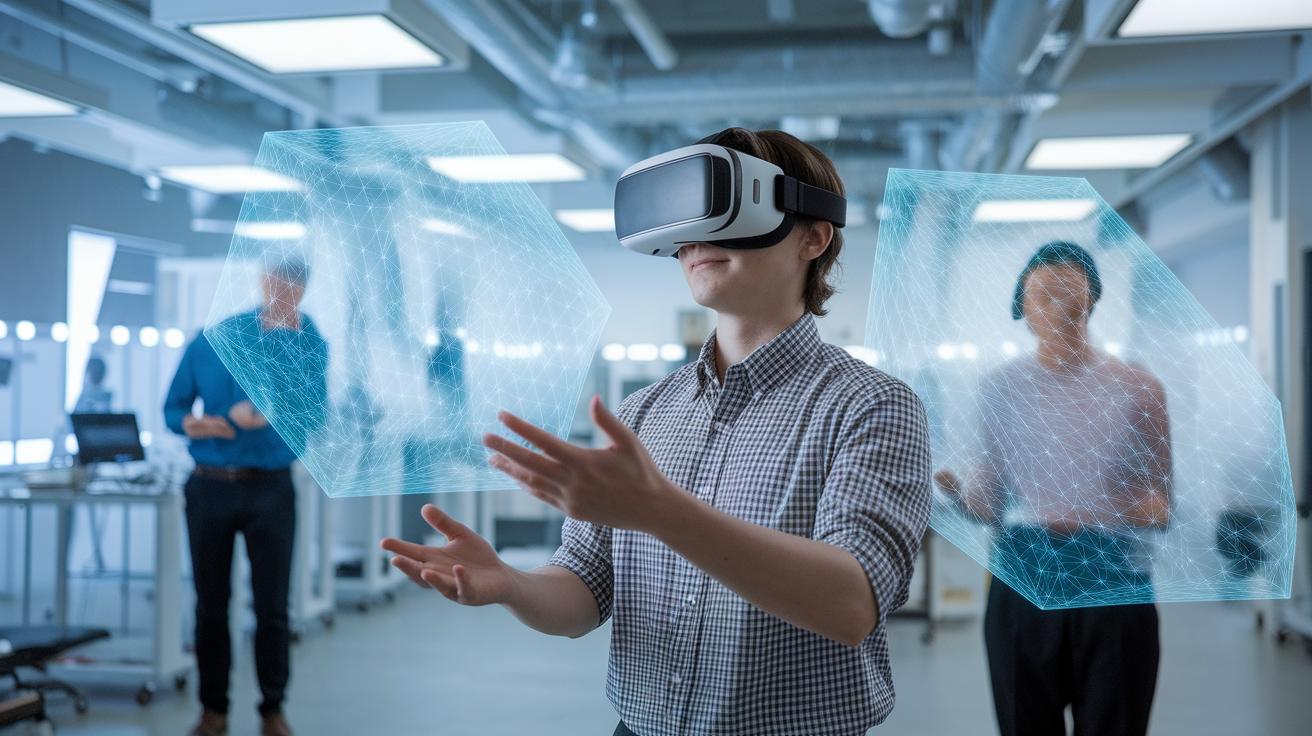
In some tests, a slight hand gesture in VR can generate immediate changes in the simulated experiment, showcasing how real-life interaction meets digital precision. VR platforms mix top-notch hardware with smart software to create a very realistic experience. The hardware includes head-mounted displays that use ultra-high resolution screens, updated roughly every two years, so you can see 3D models with clear, crisp detail. Plus, motion trackers (devices that follow your movements) work with both light and movement sensors to capture every move you make.
On the software side, things get really interesting. Advanced computer modeling is at work here, and it uses AI (artificial intelligence, or computer programs that learn to act like people) to create new scenarios as you interact with the virtual world. There are even virtual assistants that help you out in real time and automated settings that take care of a lot of the setup work. It’s like having a smart helper that makes sure everything is ready for your experiments without all the hassle.
The system also includes tools that mimic real-world lab conditions with great care. These precision instruments adjust every part of the simulation so that it matches what you would see in a real-life experiment. By combining these detailed tools with top-quality displays and quick motion tracking, VR platforms let you run safe, repeatable digital experiments.
Altogether, these ideas turn a computer simulation into a mini research lab where you can test your ideas safely and in detail. It’s fun to think that a simple hand movement can trigger such detailed responses, almost like the digital world is alive and reacting just like ours.
Scientific Applications of VR Simulation Platforms
VR simulation platforms are changing how scientists work with tricky data. They let researchers dive into experiments in 3D and interact with their findings like never before. It’s a bit like stepping into a new, digital world of science.
-
Quantum Physics:
VR tools now let scientists wander through three-dimensional quantum states. Imagine entering a space where electrons and atoms play out their dance right before your eyes, like exploring a secret, tiny universe. -
Nanotechnology:
With AR-guided nano-fabrication, researchers can discover new materials at the atomic level. Think of it as putting together a microscopic jigsaw puzzle where every atom fits perfectly with digital hints guiding the process. -
Environmental Science:
Special haptic gloves deliver touch, sound, and even smell feedback when working with climate models. Picture a scientist feeling the chill of simulated snow or the rush of wind in a digital storm, it's a multi-sensory way to study Earth’s weather and climate. -
Collaborative Research:
Photorealistic avatars bring teams together in a virtual lab, no matter where they are in the world. It’s much like meeting in person, with every expression and gesture making real-time collaboration feel natural.
Over 70,825 academic papers back up how VR is reshaping scientific visualization. By blending hands-on digital feedback with immersive experiences, VR simulation platforms let scientists explore and experiment in ways we once thought couldn’t be done. This merging of digital simulation with real-world interaction is truly changing the game across many scientific fields.
Comparative Advantages of VR Over Traditional Research Methods
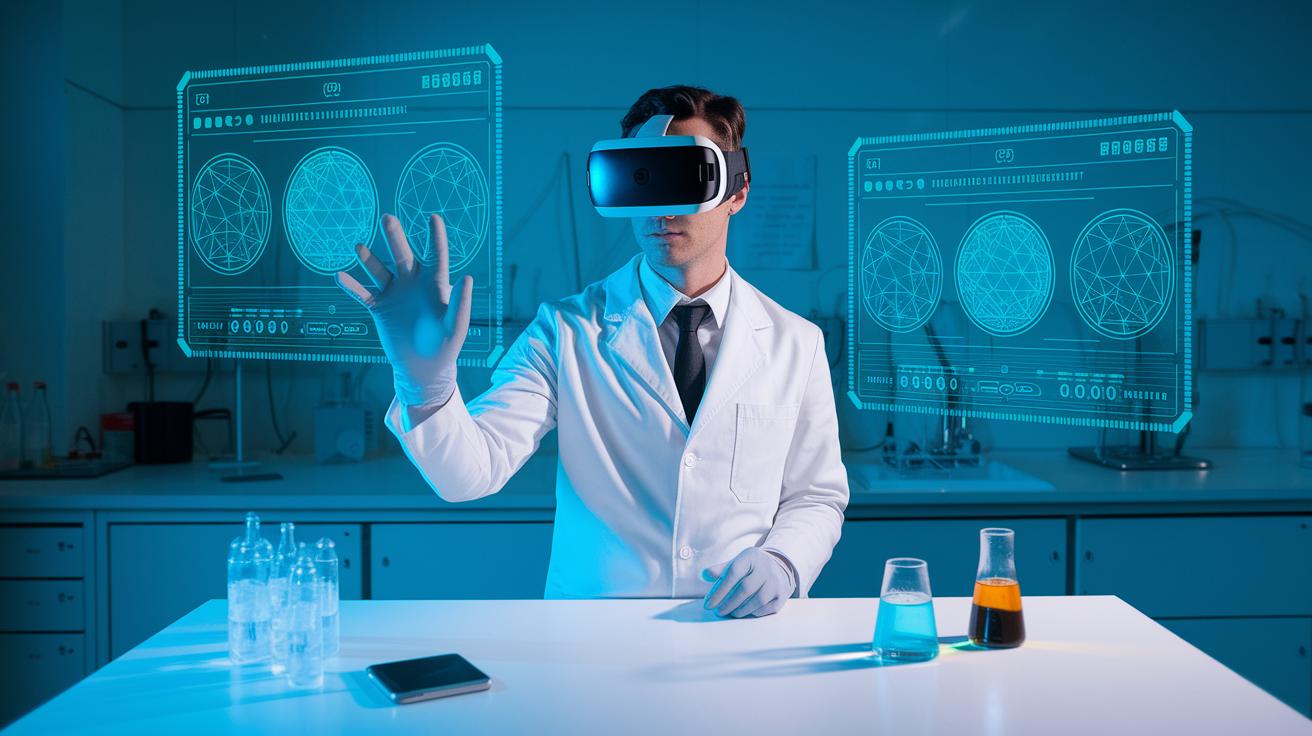
VR simulations offer a fresh twist on the lab experience by putting researchers right in the heart of their work. Instead of following complicated, real-world procedures, scientists can experiment in a digital lab where mistakes aren’t costly and injuries aren’t a worry. Imagine practicing surgery or experimenting with delicate equipment in a simulation that feels almost real, yet completely sidesteps the risks of a busy operating room. For example, HQSoftware’s medical VR platform helped boost knowledge retention by 63% and ramped up engagement by 72% compared to older methods.
VR also cuts down on both time and money. Scientists can avoid using heavy, expensive equipment and skipping long-distance travel, which makes the whole process simpler and more efficient. Here's a quick look at some of the clear benefits of using VR:
| Advantage | Description |
|---|---|
| Safer Experiments | The digital setup keeps dangerous mishaps at bay. |
| Cost Savings | Expensive lab tools and travel can be replaced with virtual solutions. |
| Enhanced Learning | Researchers can practice repeatedly without the pressure of real-life errors. |
| Clearer Concepts | Interactive experiments make tricky ideas easier to grasp. |
In the end, working in a virtual lab isn’t just about safety, it’s about making research faster and more effective, setting a new standard for how science is done today.
Case Studies: Pioneering VR Platforms in Scientific Research
MIT’s QuantumSphere VR platform invites researchers to dive into the world of quantum mechanics. Picture yourself exploring a bright 3D space where you can watch quantum states (the ways tiny particles exist) in real time. Scientists can interact with digital electrons and see how atoms behave, turning abstract ideas into something you can really grasp. One researcher even mentioned that it feels like exploring a mini universe where every turn reveals something new.
IBM’s AR Fabricator helps scientists work with materials at the tiniest scale, the atomic level (that’s as small as it gets). This tool shows digital hints over the real world so researchers can build or adjust structures with mind-blowing precision. Imagine putting together a detailed model where each little move is part of a perfectly controlled process. It turns sketch-like ideas into real experiments that push forward material science.
NOAA’s Immersive Climate Lab brings together touch, sound, and even smells to create a full sensory journey when studying environmental data. You can almost feel small temperature shifts, hear the gentle patter of wind and rain, and even notice subtle scents that mimic nature. This rich, multi-sensory approach helps researchers understand climate patterns in ways that simple charts just can’t match.
| Institution | Platform Name | Key Feature | Research Outcome |
|---|---|---|---|
| MIT | QuantumSphere | Immersive quantum state analysis | Deeper insights into quantum mechanics |
| IBM | AR Fabricator | Guided atomic-scale nano-fabrication | Advances in material design |
| NOAA | Immersive Climate Lab | Multi-sensory environmental data feedback | Enhanced climate model interpretation |
Technical Deep Dive: Underlying Technologies in VR Simulation Platforms

VR simulation platforms work hard to give you a smooth, natural digital experience while fixing common issues. For example, about 20 to 30 percent of first-time users feel motion sickness, and there are real concerns about keeping your biometric and behavior data safe. To address these challenges, engineers are making headsets lighter, updating them roughly every two years, and building smarter software that tackles these problems head on. This teamwork not only creates a more realistic simulation but also shines a light on big issues like data security and the need for different devices to work well together.
New advances in immersion technology and better interfaces are making the whole simulation experience even clearer and more engaging. Next-generation modeling techniques add precision to every virtual action you take. Instead of listing every little hardware detail, the focus is on how all the improved parts join forces with secure, AI-powered software to provide a smooth, balanced experience.
| Component | Specification | Role |
|---|---|---|
| Head-Mounted Display | Ultra-high resolution with a lightweight design refreshed every two years | Offers clear and engaging visuals |
| Motion Tracking System | A mix of optical and inertial sensors | Keeps track of your movements in real time |
| Software Stack | AI-driven simulation with strong security features | Runs everything smoothly while keeping your data safe |
Future Directions for VR in Scientific Research Methodologies
Scientists are about to change how digital experiments work, making them more lively and easier to understand. New VR simulation tools are being designed to let researchers dive into experiments that feel real and interactive.
-
AI-enhanced AR/VR experiences: AI is set to make these virtual worlds even smarter. Imagine a tool that shows lifelike chemical reactions in real time as you experiment, almost like having a mini-lab right in your headset.
-
Brain-computer interface development: Researchers are exploring ways to link our brains directly to computers. This means you could soon see and explore data by just thinking about it (neural signals are the brain's way of sending messages). Have you ever wondered what it would be like to control experiments with just your mind?
-
Mixed reality convergence: Blending VR (virtual reality) and AR (augmented reality) is creating digital lab spaces that feel almost as good as real labs. This mix is already being used in over 70,000 studies and may soon change how we do research entirely.
Altogether, these cutting-edge tools are opening new doors in scientific research, making complex experiments more hands-on and accessible for everyone.
Final Words
In the action, this post unraveled how breakthrough VR simulation platforms are reshaping science. We looked at immersive 3D labs, precise modeling tools, and cutting-edge case studies across quantum, nano, and environmental fields.
The shift from flat screens to interactive digital labs has sparked a new way of learning and experimentation. Embracing virtual reality in scientific research: breakthrough simulation platforms holds exciting potential for clearer insights and smarter studies. Science is stepping boldly into a more hands-on future.
FAQ
Virtual reality in scientific research breakthrough simulation platforms PDF
The term refers to PDF resources that detail key breakthroughs in VR research, highlighting immersive simulation benefits, technical advancements in hardware and software, and their contribution to modern scientific study.
Virtual reality in scientific research breakthrough simulation platforms 2022
This highlights breakthroughs in 2022 where VR platforms advanced immersive modeling and real-time data interaction, showcasing improvements in hardware precision and AI-driven simulation capabilities for research.
Virtual reality in scientific research breakthrough simulation platforms 2021
In 2021, VR simulation platforms evolved with better head-mounted displays and smart tracking systems. These advancements helped reduce risks and costs, enhancing experimental design and research outcomes.
Virtual reality research paper PDF
This refers to downloadable PDF documents that compile studies on VR’s role in research. These papers explain the use of immersive technology in creating digital environments for scientific exploration.
Virtual reality simulation examples
VR simulation examples include interactive 3D models in quantum physics, AR-guided nano-fabrication tasks, and climate experiments with touch feedback, showing practical applications that bring scientific data to life.
Virtual reality simulations in education
In education, VR simulations create safe, immersive learning spaces where students experience interactive experiments, leading to improved retention and understanding of complex scientific concepts compared to traditional methods.
Impact of virtual reality on society
VR impacts society by offering risk-free, cost-effective experimental models that improve training, lower expenses, and foster collaboration in fields like education, healthcare, and research, changing the way we approach learning.
Virtual reality articles
Virtual reality articles cover the latest technical developments and applications of VR in science and education. They offer insights into breakthroughs, case studies, and how immersive technology reshapes research.
How is virtual reality used in scientific research?
Virtual reality is used in research by creating immersive 3D simulations that allow scientists to interact with data, test hypotheses in virtual labs, and use AI for generating realistic experimental scenarios.
Is VR growing or dying?
VR is growing as technology advances with improved hardware, wider research applications, and increased funding supporting immersive simulations, proving its value in interactive scientific exploration.
What is virtual reality in simulation?
Virtual reality in simulation involves using head-mounted displays and tracking systems to build digital environments where users interact with complex data, effectively replacing flat-screen interfaces in research.
What is the current best VR system?
The current best VR system features ultra-high-resolution headsets, accurate motion tracking, and AI-enhanced simulation software that delivers a seamless and interactive experience for research and training.