
Have you ever wondered how a tiny lab could completely change the way we think about flight? NASA Langley is a great example of how a blend of simple ideas and hard work can lead to huge breakthroughs.
Over a century ago in Virginia, this research center started small and has grown into a place where wind tunnel tests (which mimic how air flows over objects) and climate models help us learn more about air travel and space. In this post, we’re diving into how these experiments turn everyday challenges into leaps of innovation that invite all of us to dream big.
NASA Langley Research Center: Founding, Mission, and Location
NASA Langley got its start in 1917 in Hampton, Virginia, as NASA’s very first field center. This cherished center has been a key player in aerospace science from the beginning and still leads the way in advanced space research. Believe it or not, it all started with just a few passionate researchers who were determined to change how we see flight and space.
Set in a city bursting with a rich science history, NASA Langley has grown into a lively hub for research, mission planning, and operations. Its projects range from studying our changing climate to supporting deep space travel, proving that brilliant ideas can come from humble beginnings. The work done here truly shows how determination and innovation go hand in hand.
This Virginia facility is more than just a historic landmark; it’s also a busy lab where new air travel technologies get tested day in and day out. Its special location blends an important past with today’s modern breakthroughs. It captures the adventurous spirit of American science perfectly, with every mission driven by a genuine commitment to discovery and public service.
At the heart of its mission, NASA Langley focuses on creating better models for global climate change, offering deep space support, and boosting aviation efficiency. These goals guide future designs and tech strategies, making sure the center stays at the cutting edge of aerospace progress. With every new project, they add another exciting chapter to their history, encouraging educators, researchers, and all of us to explore further than ever before.
NASA Langley Wind Tunnels and Aerodynamic Testing Facilities
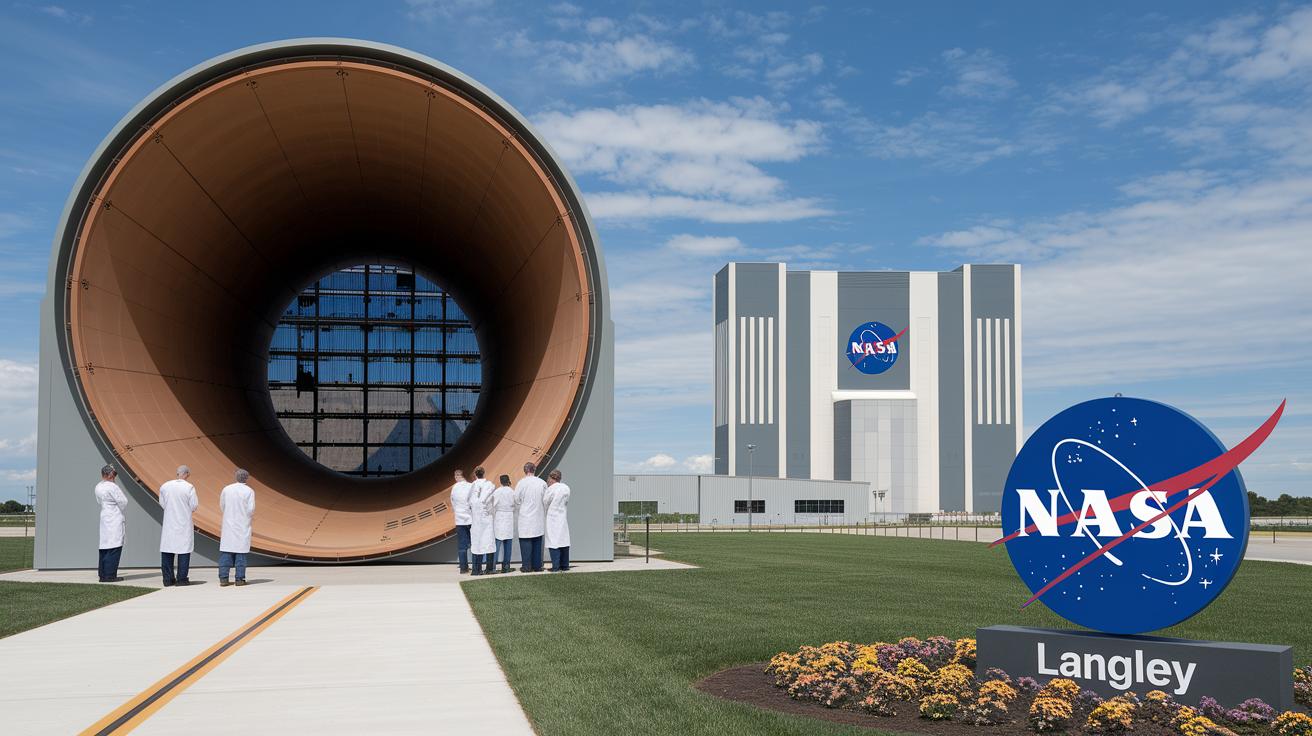
NASA Langley has been home to cool wind tunnels that shape how we explore flight. They even have a giant 30-by-60-foot tunnel where scientists can study full-size models in carefully controlled air currents. Smaller, high-speed tunnels let researchers test new ideas in a safe, contained space.
These facilities have been important for precise measurements and smart experiments since Langley began. Often, researchers mix real-world testing with computer simulations (using digital models to study how air flows) to check and improve their designs. In fact, early tests in these tunnels uncovered tiny airflow secrets that still guide modern aircraft design.
Every test gives us valuable insights to make flying safer and more efficient. The work here not only improves air travel but also helps push the boundaries of space exploration. By blending classic experiments with modern computer tools, Langley continues to open doors to amazing breakthroughs in aerospace research.
Scientific Breakthroughs and Technology Transfer at NASA Langley
NASA Langley has been a place of incredible discoveries that push aerospace research to new limits. The center has built advanced tools to study climate change (which means tracking shifts in weather) and uses them to predict changes in our environment. This work not only helps scientists understand our world better but also guides important government research efforts.
Another cool project is the Orion PA-1 Test Vehicle. This vehicle is a key step toward deep space missions while growing our skills in experimental design and testing. It shows how careful tests in controlled settings can lead to big leaps in human space exploration. NASA Langley teams up with universities and private companies to turn these bold ideas into practical technologies.
NASA Langley also looked closely at parts from the Apollo 12 Command Module. Their detailed study honors the history of space travel and sparks fresh interest in aerospace science among new generations. It’s a clear sign that innovation at Langley isn’t just about lab work, it’s about bringing those ideas into real-world technology.
The center keeps the spirit of innovation alive by sharing its research through patent licensing and collaborative projects. This means ideas move from the lab into everyday use, boosting safety, efficiency, and our understanding of the universe. With this approach, NASA Langley’s work touches many industries and inspires the next wave of scientific breakthroughs.
Visitor Center Exhibits and Interactive Tours at NASA Langley

Step into the Virginia Air & Space Center at Langley and watch 100 years of flight history come alive with hands-on exhibits and cool artifacts. Imagine standing right next to over 30 vintage airplanes and even seeing the Apollo 12 Command Module that once took astronauts to space. It’s like stepping into an exciting time when aviation was just getting started.
On guided tours, you’ll explore fascinating displays and hear engaging stories about the Orion PA-1 vehicle and other iconic pieces. The tour guides share fun details about each exhibit, blending the adventurous spirit of early flight with today’s upbeat tech energy.
Then there are the IMAX shows, which bring space themes and daredevil displays by the Blue Angels to life on the big screen. It really feels like you’re flying among the stars. And during special open house events, families and space fans get a rare peek behind the scenes to see how the magic of aerospace has unfolded over the years.
Membership makes every visit extra special, with unlimited access to all these exhibits and shows. Members also get to visit over 300 partner centers, turning each trip into a little adventure. With birthday events and exclusive member programs, the center becomes a lively community hub. Plus, through educational partnerships, every tour turns into an interactive lesson that connects historic flight with modern space exploration.
Educational Programs and Community Engagement at NASA Langley
At NASA Langley, we invite families, students, and local communities to dive into the exciting world of science. They offer fun, hands-on STEM programs that make even tricky ideas easy to grasp. You can join cool workshops, take virtual field trips (online guided science explorations where you see experiments in action), and enjoy interactive experiences that bring science right to your fingertips.
During these virtual field trips, experts explain the wonders of flight, space research, and engineering using digital tools that simulate real experiments. For instance, one virtual trip surprised kids by showing them tiny sensors (small devices that measure things like air pressure) in wind tunnels, sparking dreams of becoming engineers!
Local communities get a real treat, too. NASA Langley hosts outreach events like science symposiums, networking gatherings, and college recruitment fairs where students see firsthand how science and technology connect with everyday life. These events light up curiosity and open doors to future aerospace careers.
Participants also enjoy interactive sessions, group projects, and hands-on STEM workshops that encourage creative problem solving. Plus, with online modules for remote learners, NASA Langley makes sure science is available to everyone, inspiring the innovators of tomorrow.
| Programs | Description |
|---|---|
| Virtual field trips | Online guided science explorations |
| STEM workshops | Hands-on sessions with experiments and projects |
| Community outreach programs | Events connecting science with real-world applications |
| Science symposiums | Gatherings to learn about current scientific discoveries |
Visiting NASA Langley: Hours, Tickets, and Facility Map
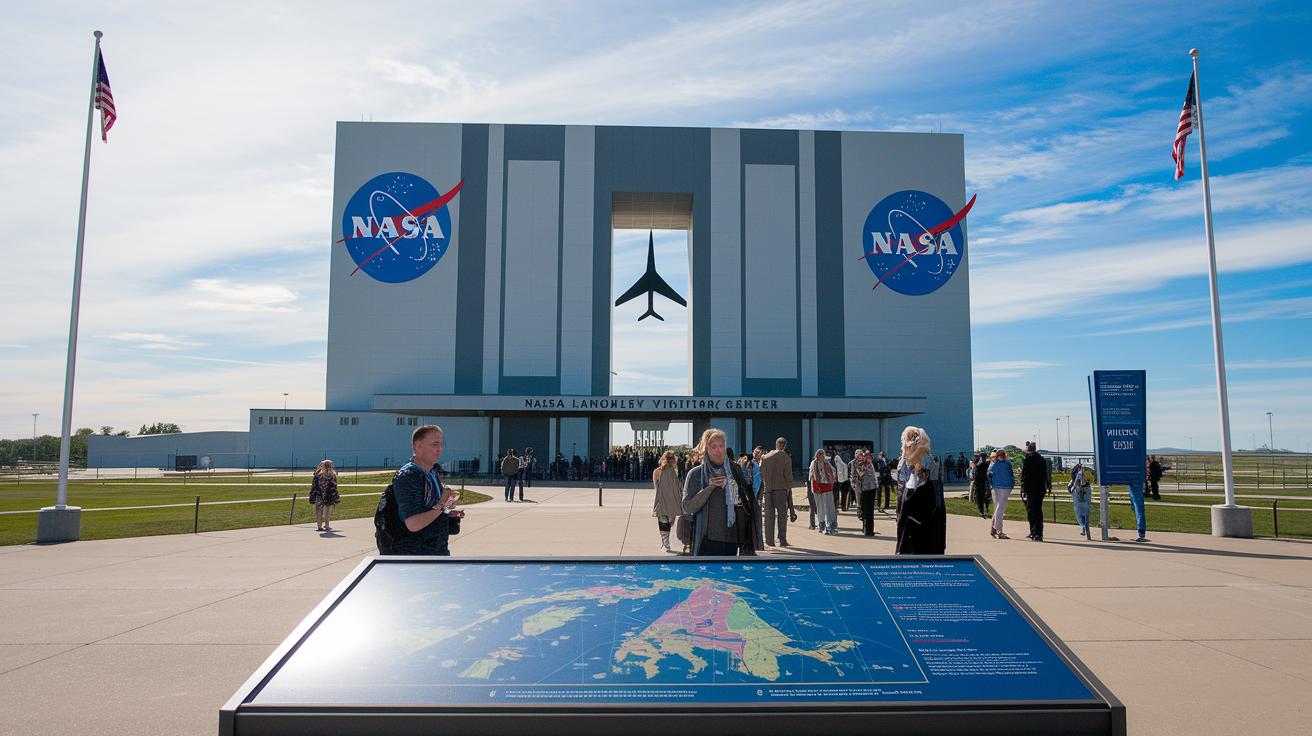
NASA Langley Visitor Center in Hampton, Virginia invites you to explore over 100 years of flight history. It opens on Sundays from 12 pm to 5 pm, and it stays closed on Mondays and Tuesdays to get ready for new events and exhibits.
Booking your visit is easy with online tickets. And if you're really into exploring, there's an annual passport membership that gives you free access to special events and entry at many partner science centers.
A clear facility map is available both online and on-site. It shows you where the exhibits are, where to park, and what accessibility options exist so you can move around with ease. If you have any questions about the address or phone contacts, the friendly staff is always ready to help.
Career and Internship Opportunities at NASA Langley
NASA Langley offers career and internship roles that bring fresh energy to aerospace research. They post positions on USAJOBS for both internships and full-time work in fields like engineering, research, and operations. Whether you’re joining as a summer intern or during the academic year, each opportunity gives you hands-on experience with advanced aerospace tools (high-tech equipment that helps push the limits of flight). These roles let you dive into real challenges that drive the future of flight science.
For those just starting their careers, there are entry-level positions that require you to meet specific technical standards (certifications that show you have the needed skills). You also receive a federal salary and benefits package, which makes these roles particularly attractive for newcomers. NASA Langley celebrates diversity by welcoming candidates from all backgrounds and ensuring an inclusive hiring process at every step.
Fun fact: Many interns say that working on aerospace projects at Langley feels as thrilling as a roller coaster ride at a science park!
Job listings are updated often, so if you’re ready to take the next step in aerospace science, keep an eye on the openings. Visit NASA Careers for all the latest details on current opportunities.
Future Directions and Ongoing Projects at NASA Langley
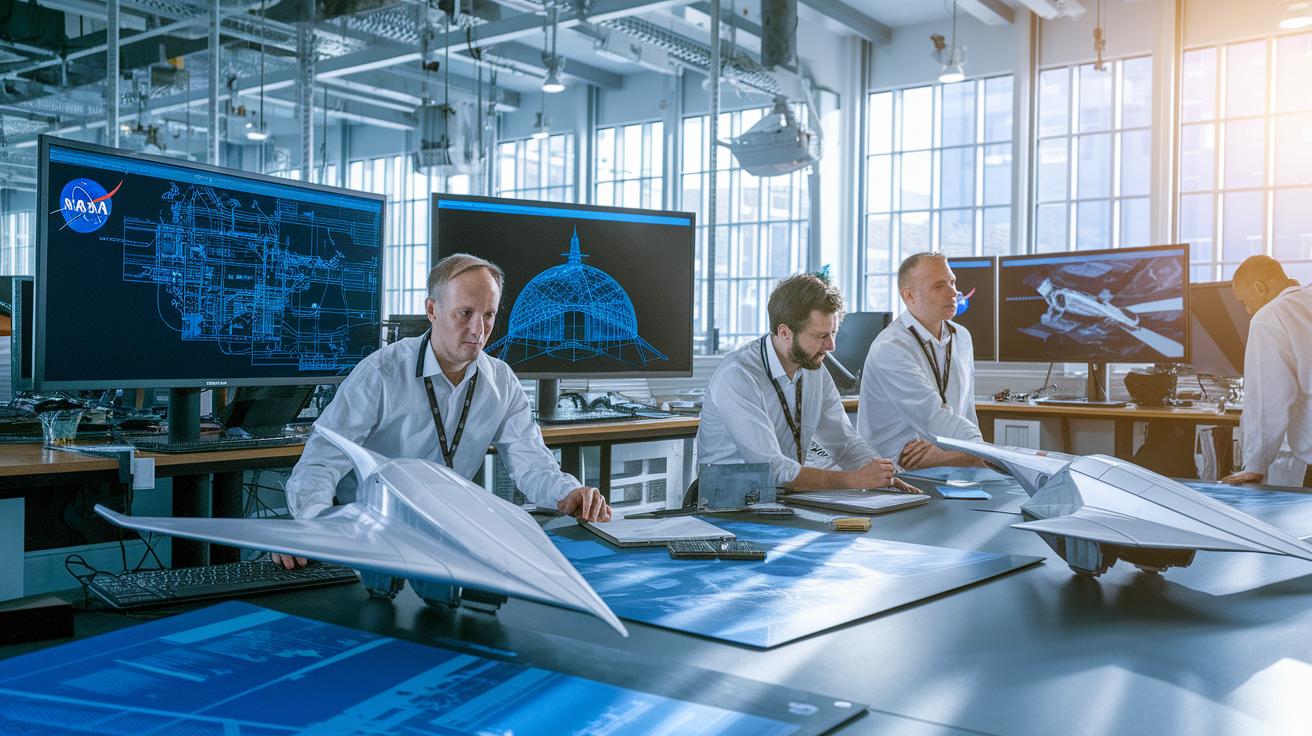
At NASA Langley, we're exploring new ideas to boost the future of flight. Our experts are busy designing modern air transportation systems that make planes fly better by simplifying shapes and saving fuel. They use computer-based fluid dynamics methods (tools that show how air flows over surfaces) to create models that help make flights safer and smoother.
Another cool focus is deep space mission support. Langley's teams test out fresh materials and systems to build technology that lets space missions go further than ever before. Their work reaches out to distant parts of the universe while also updating lab spaces to meet the latest research needs. New labs mean scientists can run advanced experiments safely and accurately.
We're also driving innovation with smart simulation tools. These digital systems let researchers mimic real-life flight scenarios, providing a risk-free way to try out futuristic ideas. And by digitally archiving years of research data and discoveries, we help ensure that key knowledge is ready for future scientists to use.
Our ongoing flight research aims to make air travel both safer and more efficient. Every experiment deepens our understanding of how flight works and builds a solid foundation for the breakthrough aerospace technologies of tomorrow.
Final Words
In the action, the post takes us through NASA Langley’s rich history, impressive wind tunnel experiments, breakthrough scientific projects, engaging exhibits, educational programs, visitor info, career opportunities, and future projects. We got a taste of real-world science that touches education, careers, and technology. The story showcases how nasa langley continues to fuel curiosity and practical learning, making science a part of everyday life. It’s an inspiring reminder of how innovative research connects all of us to a healthier future.
FAQ
What is the NASA Langley address?
The NASA Langley address refers to its location in Hampton, Virginia. This site is the original field center where groundbreaking aerospace research has been conducted for over a century.
What does NASA Langley live offer?
The reference to NASA Langley live points to live updates and event coverage where audiences can watch ongoing research presentations and interactive science demonstrations at the center.
What is known about NASA Langley and asteroids?
The mention of NASA Langley asteroid suggests discussions around NASA Langley’s role in studying space objects. Their research supports deep space exploration and monitoring celestial bodies.
What can be expected at the NASA Langley Open House 2025?
The inquiry about NASA Langley Open House 2025 highlights an upcoming event with interactive tours and exhibits, offering visitors a chance to experience the center’s innovations firsthand.
Where can I find a NASA Langley Map?
The NASA Langley Map is a resource provided to help visitors navigate the facility. It includes details on exhibit locations, parking, and accessibility features for a smooth visit.
What opportunities exist for NASA Langley jobs?
The mention of NASA Langley jobs involves career and internship opportunities in engineering, research, and operations. Prospective applicants can find these listings on USAJOBS and through the center’s employment pages.
How can I access NASA Langley research papers?
When referring to NASA Langley research papers, it points to the center’s advancements documented in published studies. These papers detail significant scientific breakthroughs and aerodynamic testing insights.
What is the latest NASA Langley news?
The NASA Langley news update provides current information on research initiatives, technological advancements, and upcoming programs at the research center, which can be followed through official channels.
What does NASA do at Langley?
The question about what NASA does at Langley signifies that the center works on aerodynamic research, global climate modeling, and space exploration support, integrating advanced wind tunnel experiments and scientific breakthroughs.
Can you visit NASA Langley?
The inquiry about visiting NASA Langley confirms that the public can explore exhibits, interactive tours, and IMAX shows at the Virginia Air & Space Center during set hours, with tickets available online.
Is NASA still active in Langley?
The question around whether NASA is still in Langley indicates that NASA maintains an active presence at Langley, focusing on groundbreaking research and technology development in aerospace.
Was the NASA site at Langley segregated?
The question regarding segregation at the NASA Langley site refers to its historical context. Early practices were influenced by local policies, and over time, the center evolved to promote diversity and inclusion.
How do NASA Langley Research Center and the NASA Neil A. Armstrong Test Facility differ?
The NASA Langley Research Center encompasses a broad range of research, including wind tunnels and breakthrough projects, while the NASA Neil A. Armstrong Test Facility focuses on specialized flight testing and specific mission support.
How does NASA Langley relate to other NASA centers like Marshall Space Flight Center, Michoud Assembly Facility, and the U.S. Space & Rocket Center?
The NASA Langley Research Center works alongside other NASA facilities, each with unique roles. While Langley leads in aerodynamic testing and research, centers like Marshall and Michoud specialize in launch systems and assembly.