
Ever wonder how a space plane with no pilot can shake up our ideas about military strength? The X-37B flies on daring missions that test cutting-edge technology. Its design not only handles the tough challenges of space but also makes a super precise return to Earth. In this post, we’ll explore how this remarkable vehicle is boosting scientific research and defense projects while paving the way for smarter, more affordable aerospace advances. Get ready to see how the X-37B is changing the way we think about unmanned space travel.
x-37b space plane: Daring Military Marvel
The X-37B is a space plane used by the U.S. Space Force. It flies without a pilot and can be used more than once. The idea came from a NASA program started in 1999 to build two unique vehicles, one for testing how to land and another for missions in space. Later, Boeing built this plane, taking a bold step forward in military experiments.
So far, the plane has flown eight missions. For example, one mission called OTV-6 took off on May 16, 2020, and the latest mission, OTV-8, launched on August 21. Most missions used a United Launch Alliance Atlas V rocket while one used SpaceX’s Falcon 9 in September 2017.
| Feature | Details |
|---|---|
| Program start | 1999 under NASA |
| Vehicles built | 2 experimental vehicles |
| Missions flown | 8 (OTV-1 through OTV-8) |
| Launch vehicles | United Launch Alliance Atlas V and SpaceX Falcon 9 |
| Current mission | OTV-8, started on August 21 |
| Awards | Collier Trophy in 2020 |
The X-37B is both a testing platform and a reliable workhorse in modern aerospace. It is built for frequent and cost-effective flights, letting us learn more about operating in orbit and reentering the Earth’s atmosphere with precision. It helps with scientific experiments and supports important defense projects. Every mission pushes the limits of unmanned space travel and lights the way for future military aviation advances.
Technical Design and Specifications of the X-37B Space Plane
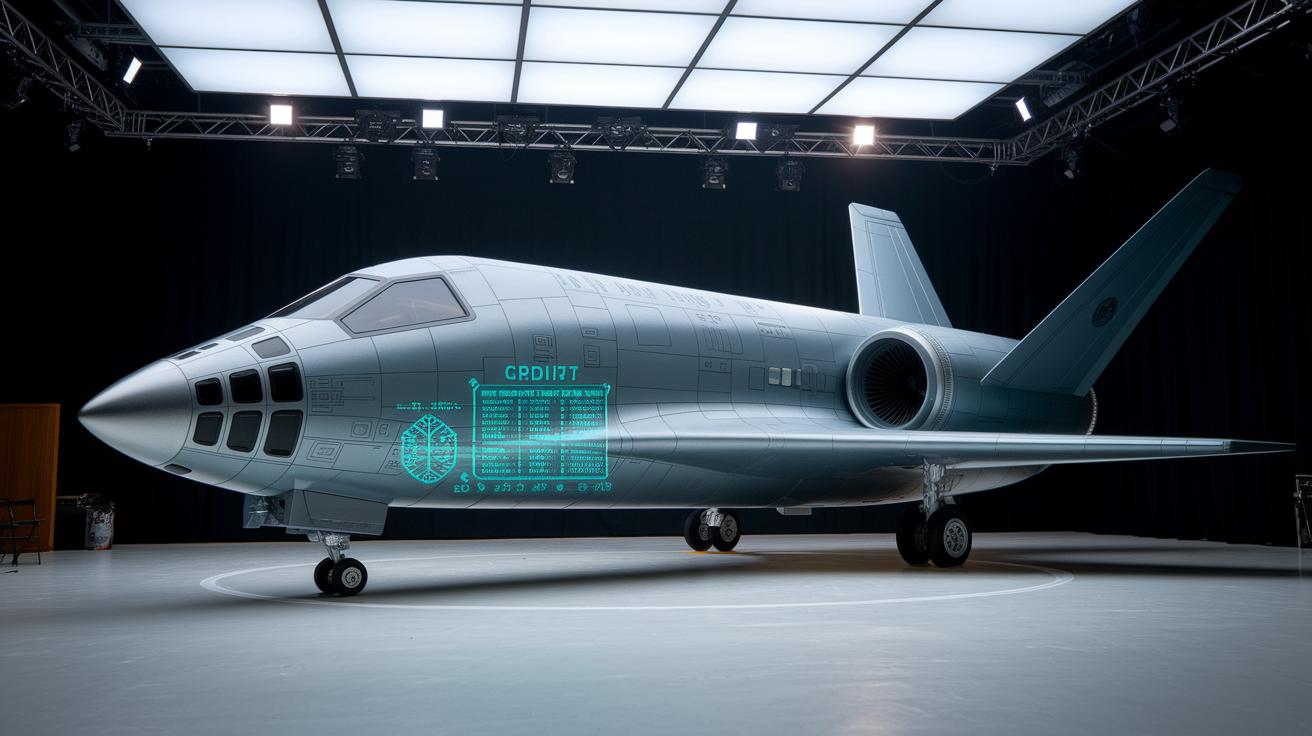
The X-37B is designed to blend the challenges of flying in space with coming safely back to Earth. Its shape and structure are built to handle both the emptiness of space and the busy, unpredictable conditions when reentering our atmosphere. Engineers used smart, advanced aerospace ideas (that is, proven science and innovative technology) to create a trusted unmanned vehicle for modern missions.
| Component | Specification |
|---|---|
| Height | 9 ft 6 in (2.9 m) |
| Cargo Bay | 6.9 ft × 3.9 ft |
| Materials | High-temperature composites; reinforced carbon-carbon thermal shields |
| Avionics | Radiation-hardened systems; redundant flight-control systems |
Special high-heat materials, like strong composites and reinforced carbon-carbon shields, help the X-37B survive the extreme temperatures of reentry. And when you add in smart, radiation-protected systems with backup flight controls, it’s as reliable as a well-tuned engine that keeps running smoothly even under stress. Isn’t it amazing how these engineering choices come together to make space travel both safe and effective?
Mission Timeline and Operational History of the X-37B Space Plane
The X-37B’s timeline tells the story of brave missions that have helped push and improve unmanned space technology. It started with basic test flights and grew into long, detailed operations that taught us a great deal about what happens during extended missions in space.
Between 2010 and 2014, the first four missions, OTV-1 through OTV-4, paved the way for more advanced space travel without a crew. These early flights showed that the design worked well and that the space plane could handle real challenges. In fact, early reports even mentioned how the X-37B quietly set the standard for unmanned space travel.
Then came OTV-5 and OTV-6. Launched in September 2017 and May 2020, respectively, these missions were more complex. They stayed in orbit longer and put the vehicle through a wider range of tests. During these flights, the space plane tackled tricky operations while proving it could adapt to new aerospace challenges.
More recently, OTV-7 and OTV-8, both launched on August 21, took things further. These missions experimented with tools like laser communication links and quantum inertial sensors (devices that measure changes in movement). Each mission built on the lessons of the ones before it, keeping this program at the forefront of space research.
Altogether, these missions have kept the X-37B in orbit for over 700 days. Every flight has delivered important data, confirming that this space plane is a vital asset for testing new aerospace techniques and deepening our understanding of unmanned space operations.
Scientific and Technological Advancements

The X-37B’s on-orbit tests, shown in the Mission Timeline and Operational History, have set the stage for bigger tech advances. In earlier trials, tests on hardware strength, fluid-physics setups (experiments studying how liquids behave), and material-exposure trays gave us valuable clues about how things perform under really rough conditions. Think of it like pushing your gaming console to the extreme, turning up the heat and pressure just to see if it can handle the challenge.
Before this, the vehicle also tried out laser communication links (using beams of light to send information) and quantum inertial sensors (cool devices that measure movement using advanced physics). What makes things exciting now is the push toward running on its own. Imagine a self-driving car that can tackle tricky streets without any help from a driver, that’s exactly the kind of step forward we’re seeing in space, where the need for constant support from the ground is shrinking.
Recent upgrades mix what we learned from those sensor and payload tests with improved independent control. This blended approach is steering us toward a future where the X-37B not only explores scientific ideas but also operates more on its own, opening the door to even more advanced, self-managing missions.
Reentry and Landing Capabilities of the X-37B Space Plane
The X-37B comes back to Earth by speeding through the atmosphere at hypersonic speeds (really, really fast speeds that beat the speed of sound). As it races down, the plane experiences forces and heat that can be as intense as those during a big rocket launch. It uses special reinforced carbon-carbon heat shields (strong, heat-proof materials) to shield itself from the scorching temperatures of reentry. Imagine a spacecraft bravely gliding through a fiery rain, it’s built to handle some of nature’s toughest challenges.
Inside, advanced engineering creates a finely tuned glide system that works without engine power. The plane’s design and heat protection work hand in hand so it can navigate like a graceful glider over Earth’s surface. Much like the old Space Shuttle did, the X-37B carefully slides along until it reaches its landing spot. Every detail, from how it enters the atmosphere to the strength of its heat shields, is planned to keep the vehicle safe during these final moments.
After it lands at Vandenberg Air Force Base, recovery teams rush in to secure the craft. They unload its cargo and inspect every heat shield tile to check for any damage. This careful review not only makes sure the space plane is ready for its next flight but also helps engineers gather clues to make reentry and landing even smoother next time.
Speculations and Controversies Surrounding the X-37B Space Plane
The X-37B has stirred up a lot of talk because we still don’t have many details about its missions. Without clear public information, some folks wonder if it might have a military side beyond simple space research. Its secretive work makes one think there could be hidden roles we don’t know about.
Russia and China have even suggested that the space plane might be used as a space bomber. They argue it might be outfitted to shut down or interfere with enemy satellites. Imagine a small military craft in space ready to cut off vital communications on a moment’s notice. Such ideas really fuel the debate about the X-37B’s possible offensive abilities.
Experts, however, say the design of the plane doesn’t really support those claims. The cargo bay is only about the size of a pickup truck bed, which makes it hard to transport any big or heavy weapons needed for satellite attacks. Engineers and analysts see this as a strong counterpoint to the more dramatic speculations.
Right now, there isn’t solid public evidence to prove that the X-37B is built for offensive warfare. Even though its secret missions invite curious speculation, the facts we have suggest it is a vehicle designed for research and testing new technologies rather than for combat.
Future Missions and Advancements for the X-37B Space Plane
The X-37B is ready for its next big chapter. The upcoming OTV-9 mission will put its new thermal shields and propulsion systems (tech that helps push the space plane through space) to a real test. Think of it like testing a runner's endurance in a marathon, where every part is pushed to its limits under intense heat and radiation.
Engineers are busy fine-tuning advanced propulsion methods and boosting the thermal protection. This means the craft will be tougher and more energy efficient during long journeys, collecting detailed data on how long its parts hold up. Imagine the soft, steady hum of new engines, performing reliably even in extreme conditions, each mission is a real-world test of today’s aerospace ingenuity.
There’s also chatter about a possible update, the X-37C variant. This new version might offer a bigger cargo area and more flexible mission choices, acting as a versatile platform for next-generation research. It’s an exciting step forward in the evolution of unmanned space vehicles, opening up fresh possibilities in space exploration.
Final Words
In the action of space exploration, we saw the x-37b space plane evolve from its early days to testing advanced ideas. Its design, mission milestones, reentry methods, and even the buzz around its classified tasks all form a neat snapshot of modern aerospace work. Each section added a step in understanding this unique vehicle. This overview leaves a positive vibe for what lies ahead in space research and everyday scientific insights.
FAQ
What does X 37B mission speculation suggest about its role and objectives?
The mission speculation hints that the X-37B may be testing secretive technology and autonomous space operations, though its exact tasks remain classified and subject to ongoing debate.
What does an X 37B photo show about its design?
A photo of the X-37B reveals its sleek, compact design with advanced heat shield surfaces and a lifting shape, clearly demonstrating its modern engineering and reusable space capabilities.
What is the X 37B space plane launch date?
The X-37B has been launched several times, with notable dates such as May 2020 marking recent launches, while each mission’s timing varies as part of its scheduled test flights.
What is the X 37B speed in orbit?
The X-37B travels at extremely high orbital speeds required to stay in space, a feature common to most orbital vehicles that ensures it maintains its intended orbit during missions.
How does the X 37B compare to the Space Shuttle?
The X-37B is much smaller, unmanned, and designed for secretive tech tests, unlike the Space Shuttle which was larger and built to carry crews and heavier payloads.
Is the X-37B in orbit now?
The status of the X-37B in orbit changes with its mission cycle; it is sometimes in orbit conducting experiments and other times returns to land, with real-time tracking details kept confidential.
What are the key X 37B specifications?
Key specifications include a height of 9 ft 6 in, a compact cargo bay, high-temperature composite materials, and redundant flight-control systems, all designed for efficient unmanned orbital operations.
What is known about the X 37B interior?
The interior of the X-37B is functional and compact, outfitted with automated systems for unmanned flight and onboard experiments rather than provisions for human crew comfort.
Can the X-37B carry humans?
The X-37B is designed solely as an unmanned space plane, meaning it lacks any capacity or systems to carry human passengers during its missions in space.
How many X-37B vehicles exist?
There are currently two X-37B space planes that have flown several missions, with the program executing eight flights to date, demonstrating its repeated use for experimental research.
What makes the X-37B space plane top secret?
Its secretive status is due to classified experiments and limited public details about its missions and technology, keeping many aspects of its purpose and operations under strict government control.