
Have you ever wondered how a space program can change both science and defense? Iran’s space agency began its journey in 1957 with global partners and soon became a key part of major UN plans. This early start showed that they were serious about mixing research with practical satellite projects.
On one hand, the agency sends scientific missions into space to learn more about our world and the universe. On the other, it works on military projects (projects that help defend a country) to boost national security. This balance of exploration and defense gives the program a unique edge.
As we take a closer look at Iran’s space program, it's clear that this blend of efforts forms a fascinating story of ambition and strategy.
Iranian Space Agency: Inspiring History & Missions
Iran started its adventure in space cooperation a long time ago. In 1957, it joined global efforts and then helped form the UN Committee on the Peaceful Uses of Outer Space in 1959. This early move set the stage for a program that today mixes deep international teamwork with modern technology.
The agency works on two main tracks. The civilian side, run by the official agency, focuses on space research and commercial missions. Meanwhile, a parallel branch managed by the IRGC (Islamic Revolutionary Guard Corps) focuses on military satellite launches and tech improvements. This two-pronged strategy has helped Iran build a strong homegrown space program and a unique profile in aerospace innovation.
Here are some key points:
| Aspect | Description |
|---|---|
| Civilian vs. IRGC Tracks | Separate programs for peaceful scientific research and strategic goals. |
| Launch Centers | The Imam Khomeini Launch Centre near Semnan handles civilian missions, while a military site near Shahrud supports strategic launches. |
| Satellite Fleet | At least eight satellites in low-earth orbit, such as Omid, Rasad, and Navid, show years of local development. |
| Treaty Involvement | Early participation in UN space efforts and the 1967 Outer Space Treaty (even though it wasn’t ratified) highlights a commitment to global space standards. |
In a recent highlight, Iran launched more satellites in 2024 than all of Europe. This impressive feat builds on years of steady progress and shows the agency’s resilience. Despite challenges, Iran continues to grow its domestic space capabilities while also engaging in strategic international partnerships.
Historical Evolution of the Iranian Space Agency
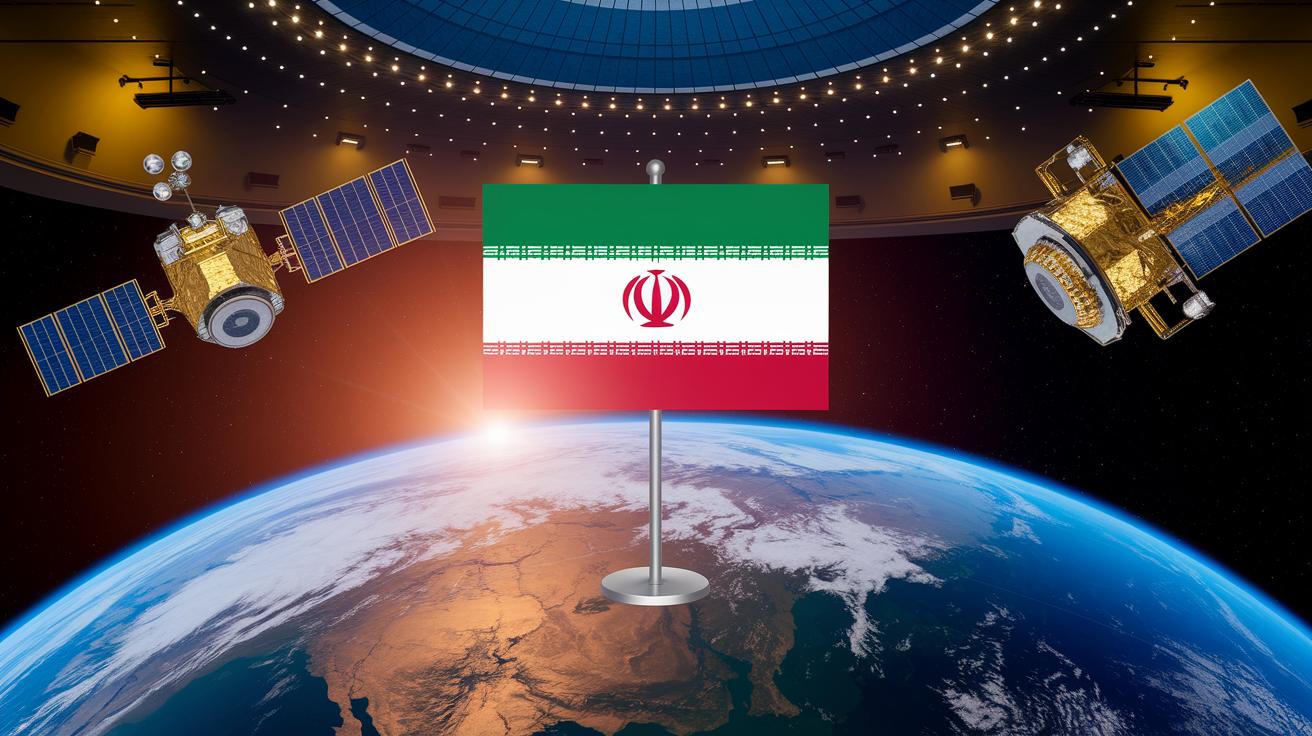
Iran stepped into space diplomacy back in the late 1950s, showing its desire to work with others on peaceful space exploration. In 1957, the nation joined the U.N. ad hoc Committee for International Cooperation in Space, a move that laid the groundwork for its future efforts and signaled its readiness to join global space talks.
| Year | Milestone |
|---|---|
| 1957 | Became a member of the U.N. ad hoc Committee for International Cooperation in Space |
| 1967 | Signed the Outer Space Treaty (though it was not ratified) |
| 2005 | Launched the Russia-built Sina-1 satellite |
| 2020 | The IRGC sent up the Noor-1 satellite |
Since 2009, Iran has made serious strides in developing its own satellite research. With each mission, like the imaging project with Noor-2 in March 2022 and the higher-resolution Khayyam satellite in August 2022, the country has built up a solid base for homegrown space technology. This transformation from early international cooperation to a thriving domestic research hub shows Iran’s steady growth and resilience in the exciting world of space exploration.
Organizational Structure and Governance of the Iranian Space Agency
The Iranian Space Agency is built on a strong legal foundation provided by the national defense and science ministries. Its clear set of rules guides both civilian and military space projects. The headquarters in Tehran acts as a busy hub for government-backed research, handling mission control and overseeing projects that build satellites and rockets.
The agency follows a dual-track approach. On one side, the official agency focuses on peaceful science and commercial missions. On the other, the IRGC Aerospace Force runs a parallel program that supports defense projects. Both parts upgrade their ground stations under direct presidential oversight, ensuring the nation benefits from advances in security and space technology.
Civilian Program Structure
The civilian side is divided into several divisions that manage daily space research and launch operations. They receive steady government funding and run mission control centers that track satellite performance and launch activities. These teams plan, carry out, and review research projects to make sure they align with national goals.
IRGC Parallel Program
The IRGC Aerospace Force operates its own branch that is just as important. Its focus is on boosting strategic capabilities and advancing defense technology. With close monitoring from defense ministries, this program works alongside the civilian side to safely integrate new space innovations.
Aerospace Industries Organization Roles
The Aerospace Industries Organization provides essential engineering skills and leads propulsion research (which is about powering and moving vehicles). It helps design and build launch vehicles by supplying advanced technology components for both civilian and IRGC projects. Their work is crucial for the success of missions and the steady growth of Iran’s space capabilities.
Key Satellite Missions and Launch Vehicle Achievements of the Iranian Space Agency

Iran has launched a group of satellites that orbit close to Earth. These satellites, named Omid (2009), Rasad (2011), Navid (2012), Fajr-5 (2015), Noor-1 (2020), Noor-2 (2022), Khayyam (2022), and Russia-built Sina-1 (2005), float in space below about 2,000 km (which is like our local space neighborhood) and last one to three years on average. Each one serves a different purpose, from taking basic images to handling communication tasks. This steady rollout shows Iran’s real dedication to building its own space technology.
Each satellite carries tools for its specific job. Take Noor-2, for example, it has an imaging payload that works like a camera, capturing detailed views of our planet. Other satellites are built to relay data and make scientific measurements. Imagine a camera snapping the soft glow of a city at night; every image tells a story of innovation. This wide range of missions underlines how the agency is steadily advancing its skills in managing different satellite tasks.
Iran’s launch vehicles have also come a long way. The Safir rocket, a two-stage launch vehicle that first reached orbit in 2009, paved the way for later improvements. Its successor, the Simorgh, is a three-stage rocket that carries heavier loads, showing clear progress in rocket design. This shift to more powerful rockets marks a big step forward in handling tougher missions and reaching farther into space.
Recent upgrades in propulsion systems have made a notable impact, too. Improvements in both liquid-fuel guidance (where liquids help steer the rocket) and solid-fuel propulsion (where solid materials push the rocket forward) mean that launches are now more accurate and efficient. It’s a bit like tuning a car engine for better performance. These advances not only boost the agency’s ability to send satellites into space but also lay a strong foundation for future missions.
Impact of International Sanctions on the Iranian Space Agency
In 2002, US officials labeled Iran as part of the "axis of evil," a term that cast a long shadow over its space efforts. The agency leaders just shrugged it off, calling the restrictions a minor inconvenience. Even with challenges set to slow down their research and development, Iran’s space team kept on moving forward.
They built up resilience by teaming up with Russian experts (skilled people who know a lot about technology) and boosting local funding. This mix of international help and homegrown support allowed them to keep their projects on track. They even chose to work with foreign-made satellites like Sina-1 and Khayyam as a smart move to blend trusted partnerships with self-reliance.
In 2024, Iran showcased its progress by launching more satellites than Europe did. This milestone not only proves that their program can adapt under strict economic pressure but also marks a shift toward more innovative space practices. It’s really a sign that even tough constraints can be overcome with persistence and creative strategy.
Recent Developments and Future Outlook for the Iranian Space Agency

They’re busy planning a new spaceport in Chabahar, inspired by the famous Cape Canaveral. This modern launch hub aims to make space missions more efficient while opening the door for fresh ideas through public-private partnerships. Even with economic challenges and international pressure, involving private companies could lead to smart, agile solutions.
Local efforts are also on the rise as the agency ramps up its digital outreach. Their website and verified Twitter updates share detailed plans for upcoming launches that are catching people’s attention. For example, 2024 looks set to see several imaging payloads launched, which means better tools for Earth observation (watching our planet from space) and scientific research. Meanwhile, both the IRGC and the agency are exploring ideas for crewed suborbital flights, a nod to a concept dating back to a Soviet proposal in 1990.
Chabahar Spaceport Development
At Chabahar, every detail matters. The team is carefully choosing the best site and mapping out a clear timeline for building modern facilities. They’re focusing on better launch angles and infrastructure that mirrors top-notch centers abroad. The idea is to have a state-of-the-art facility that not only works well but also feels as efficient as its international counterparts.
Proposed Crewed Space Missions
Plans for crewed missions are moving steadily forward. The focus right now is on preparing suborbital flights, a crucial first step toward human space exploration. These tests are being designed with lessons from past projects, blending careful planning with innovative ideas. It’s an exciting move that hints at greater human presence in space down the line.
Public-Private Partnerships and International Aid
There’s a growing spirit of collaboration between the government and the private sector. With technical support from partners like Russia and a robust social media campaign keeping everyone informed, these partnerships are key to boosting research and development. Regular updates on social media make each new launch a shared community celebration, fueling interest and enthusiasm for future advances.
Final Words
In the action, we traced the agency’s evolution from its early steps to its modern dual-track structure and varied satellite missions. We highlighted its founding moments, shared split programs, effective launch centers, and growing satellite fleet.
We also saw how creative strategies helped overcome tough sanctions, with more launches in 2024 than Europe. The iranian space agency continues to spark curiosity with its bold, forward-thinking approach, an inspiring reminder that everyday science can open minds to endless possibilities.
FAQ
Where can I find information about the Iranian Space Agency online?
Information about the Iranian Space Agency is available on both its official website and on Wikipedia, where you can learn about its history, structure, and ongoing missions.
What is known about the Iran space agency’s budget?
Questions about the agency’s budget reveal that funds support dual civilian and IRGC programs, satellite launches, and infrastructural upgrades, though exact figures are not widely publicized.
How can I stay updated with Iranian space agency news?
Keeping up with updates is possible by visiting the agency’s official website and following trusted news outlets that cover recent launches, collaborative projects, and policy changes.
What are details about Iran satellite launches in 2024 and 2025?
Inquiries about satellite launches indicate that Iran has executed multiple missions in 2024 with imaging and communication payloads, while plans for the 2025 launch cycle are in development.
What about the Israel Space Agency compared to Iran’s space program?
The comparison shows that Israel maintains its own focused space program, investing in satellite technology and research with objectives distinct from Iran’s dual-track civilian and military operations.
Does Iran have a space agency and its own satellites, and how many are in space?
The question confirms that Iran runs its own space agency managing both civilian and military satellite projects, with at least eight low Earth orbit satellites currently operating.
What is Iran’s intelligence agency known as?
Answers to this inquiry note that Iran’s intelligence functions are handled by agencies like the Ministry of Intelligence and Security, which operate separately from the space agency.
Which space agencies count among the top five worldwide?
The question points to NASA, ESA, Roscosmos, CNSA, and ISRO, all recognized for their major contributions to space exploration and technological developments on the global stage.