
Have you ever wondered if tackling climate change is just about science or if politics is pulling the strings too?
Sometimes, the heated debates and stubborn facts seem to say that even with a booming economy, our emissions barely move. This sets the stage for a political tug-of-war where every decision has the power to shape our future.
In this article, we'll look at how bold moves in policy and clear, informed choices can help us connect scientific facts to political action, giving communities the strength to face climate challenges head-on.
Analyzing the Politics of Climate Change: Policy Impact and Debate
Climate change isn’t just a matter of science, it’s a political issue too. The science behind climate change, like learning about rising temperatures and shifting weather (you can check out more details here: what is climate change), forces governments and key players to make tough choices. Did you know that in the United States, greenhouse gas emissions have stayed almost the same since 1990, even though the economy is booming? This fact shows how scientific numbers can stir up strong political opinions.
Recent studies show clear splits in how people think about this issue. In the U.S., emissions haven’t changed much even with economic growth, while globally, emissions keep creeping up toward levels that might be dangerous. For over twenty years, surveys have revealed that between one-third and nearly half of people think global warming is blown out of proportion. Meanwhile, about 40% of voters felt really anxious after major disasters like those in 2017. These mixed opinions make it tricky for policymakers to come up with clear plans.
The science itself is pretty complex too. Different gases like CO2, CH4 (methane, which is another gas that affects our climate) and N2O (nitrous oxide, a gas that comes from agriculture and industry) play roles in changing our glaciers, sea levels, and weather. This makes it hard for everyone, both the public and lawmakers, to see what causes what. Because of this, figuring out the right regulations gets even more complicated, and often the technical details end up narrowing the wider political conversation.
Climate Change Legislation and Government Actions

Laws help shape how we cut carbon emissions. Governments set clear rules and investments in cleaner energy, guiding industries toward less pollution and more renewable energy sources. These policies build a simple roadmap for companies to follow for a cleaner future.
| Policy/Agreement | Year | Key Provision |
|---|---|---|
| Clean Air Act Amendments | 1990 | Stricter emissions standards |
| Kyoto Protocol | 1997 | Industrialized country targets |
| EU Emissions Trading System | 2005 | Cap-and-trade market |
| Paris Agreement | 2015 | Nationally determined contributions |
When governments set rules like clear emissions limits and detailed standards, it streamlines decision-making. This step-by-step approach turns giant environmental challenges into manageable tasks. For example, the U.S. Clean Power Plan used clear, measurable targets that made it easier for industries to follow the rules, even if it sometimes narrowed the wider debate about climate policy.
Focusing too much on numbers and technical details can keep conversations from covering the whole picture of climate change. When policies lean on strict benchmarks, the discussion might miss out on big ideas like community needs, long-term economic changes, and different political values. This way, the debate stays mainly among experts instead of engaging everyone in the important conversation about climate action.
Stakeholders in Environmental Politics: NGOs, Think Tanks, and Corporate Influence
Groups like WWF and Greenpeace have been pushing for lower emissions for a long time. They work hard to show everyone why environmental issues matter using clear and friendly messages. Meanwhile, research groups such as the World Resources Institute do careful studies and connect with experts (people with special knowledge) to help guide government rules. Their work helps turn complex scientific data into simple ideas that we can all understand.
Fossil fuel companies spend over $200 million each year on efforts to influence policy. They want to keep rules loose so they can keep doing business, and they work to shape public opinion in favor of less regulation. At the same time, many media outlets tell the story in a very plain way that doesn’t grab our imaginations, which can make it harder for people to get involved. When we look at the players in this field, we find a few main groups:
- NGOs
- Think tanks
- Fossil fuel companies
- Media outlets
- Advocacy coalitions
Public relations strategies also mix into this picture. They turn tough, detailed issues into catchy phrases and vivid images that shape how we see the debate. By boiling down a lot of scientific facts into short, simple messages, these strategies can either widen the discussion or narrow it to a few technical points that leave many of us feeling left out.
International Climate Negotiations and Diplomatic Politics
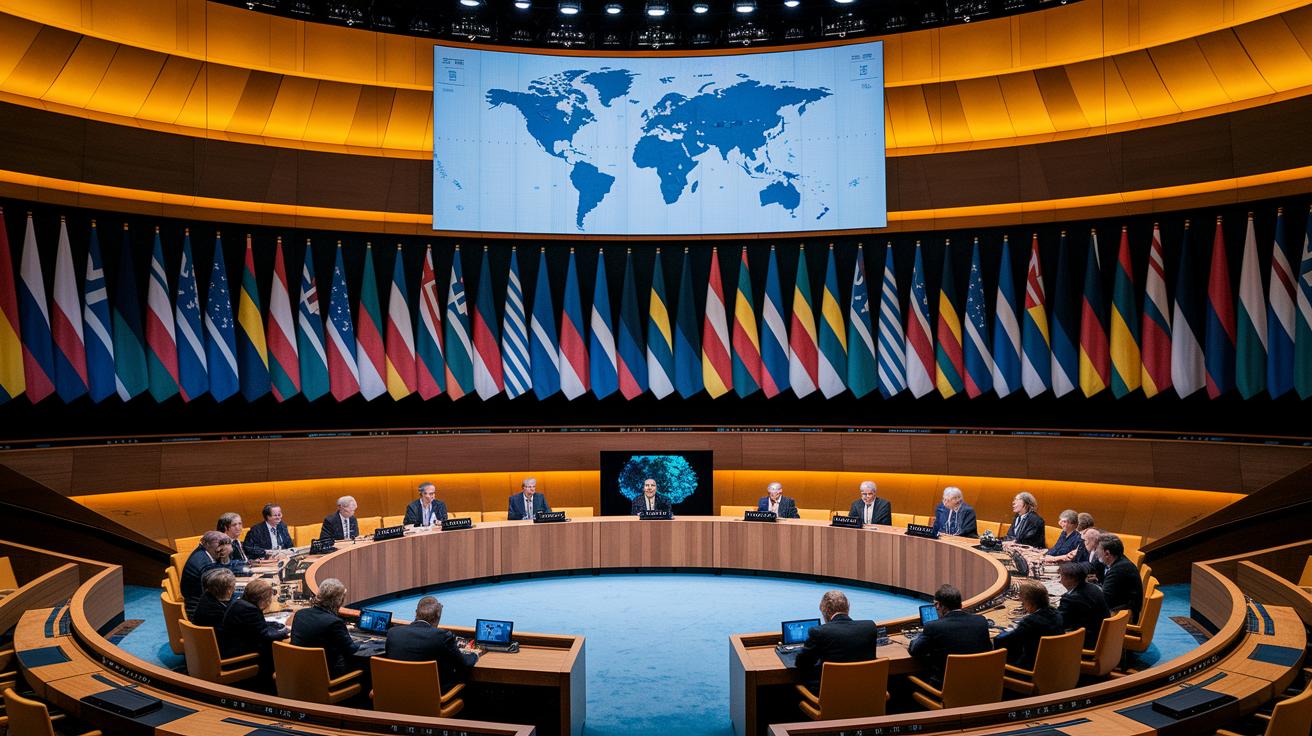
Since 1992, the United Nations has offered a space where nearly 200 countries gather to chat about cutting down on global warming and reducing pollution traps (greenhouse gases that keep our planet warm). This forum gives every nation, from big economies to tiny island states, a chance to share ideas and work together on greener plans.
Then, in 2015, the Paris Agreement built on that foundation. It invited 195 countries to come up with their own plans to keep the Earth’s temperature from rising too much (ideally staying well below 1.5°C). Every country sets its own goals, and even a small move toward clean energy can inspire bigger efforts around the world.
But sticking together isn’t always simple. Some countries get a free ride by reaping the benefits of global efforts without fully pitching in. And because every nation has its own rules, making sure that all countries follow the same guidelines can be really challenging. In truth, this ongoing balancing act shows just how tough it is for the world to agree on a one-size-fits-all plan for a healthier planet.
Political Debates, Polarization, and Climate Policy Uncertainty
Political differences in environmental talks come from strong cultural beliefs and changing economic priorities. Many communities see climate policy mainly by how it affects local life. For example, in some parts of Europe, people have moved the focus away from just technical data to include deep-rooted traditions that influence local energy choices.
While expert plans help explain complex science, they can sometimes make the discussion all about numbers. A recent study in a US state found that relying only on technical measures made community voices fade away. In one case, a shift to technical indicators led to a 30% drop in community meetings where local issues were discussed.
Politicization
Different groups often hold very different values, which turns debates into lively discussions where every opinion seems vital. For instance, arguments about whether the state should control things or if local communities should decide add extra heat to the conversation.
Depoliticization
When discussions focus on expert advice and technical data, the broader topics, like local customs and everyday effects, can get left out. This narrow focus means important community stories might never be heard.
Polarization Dynamics
Surveys show that nearly half of people are unsure if global warming is a serious issue, which makes developing good policies even more challenging. When we look at studies from other countries, it becomes clear that cultural backgrounds play a big role in how people see and react to climate challenges.
Economic and Institutional Dimensions of Climate Change Politics
Carbon pricing is a simple idea that many regions use to help cut pollution. It means putting a cost on carbon emissions, which encourages both businesses and regular folks to pollute less. Today, over 40 countries and 20 local areas use methods like cap-and-trade systems (a way to limit emissions by allowing companies to buy and sell permits) and carbon taxes. Each area sets its own targets based on its local economy and politics. For example, one region might adjust its rules to support its local industries, while another sticks with a standard tax.
Sometimes these plans run into problems because not everyone pitches in. This happens when some companies or individuals benefit from cleaner air without paying their fair share, a bit like enjoying a community garden without helping maintain it. When this free-rider issue occurs, the overall progress on reducing emissions can slow down. It reminds us that just pricing carbon might miss other important signals needed for real climate action.
Some policies lean heavily on market incentives instead of strict government rules. But if you look at the U.S., emissions have barely changed since 1990. This shows that market signals alone might not be enough. When debates pop up about spending on green projects or bailing out industries, it's clear there’s a tug-of-war between pushing for economic growth and reducing emissions. In truth, the best approach is a mix of market tools and government regulations to drive investments in low-carbon technologies.
Final Words
In the action of tracing policy debates, emissions trends, stakeholder roles, and global negotiations, this article broke down how various forces shape our approach to science and society. It presented clear data and real-world examples that relate to everyday life while exploring the complex politics of climate change. The insights provided make it easier to understand how laws, opinions, and economic realities merge in the fight against climate challenges. The conversation leaves us feeling positive about our shared drive to learn more and influence change.
FAQ
Frequently Asked Questions
What are some available resources on the politics of climate change, such as PDF files, books, essays, and PowerPoint presentations?
The politics of climate change resources, including PDFs, books, essays, and PPTs, offer various formats that provide background, data analysis, and thoughtful discussion on the subject.
What does the politics of climate change Wikipedia page cover?
The politics of climate change Wikipedia page covers an overview of political debates, policy impacts, public opinion trends, and international negotiations, providing a broad resource on climate-related political issues.
How have discussions on the politics of climate change shifted in 2020 and 2021?
The politics of climate change in 2020 and 2021 reflects evolving policy debates and public opinions, with increased focus on regulatory measures and data analysis amid growing concerns about climate impacts.
What are the political impacts of climate change in the Philippines?
The political impacts of climate change in the Philippines include debates over policy responses, economic challenges due to natural disasters, and efforts to build resilience in the face of environmental changes.