
Ever wondered how computers can think a little like us? Neural networks work like a small team of mini brain cells that each pick up clues to help make smart guesses. Some networks are simple with just a few steps, while others add lots of layers to catch every little detail.
In this article, we'll look at different types of neural networks and see how each design helps AI do things like recognize pictures and understand language. It's pretty cool to see how the way a network is built can change how AI learns and works.
Neural Network Classifications: A Comprehensive Overview
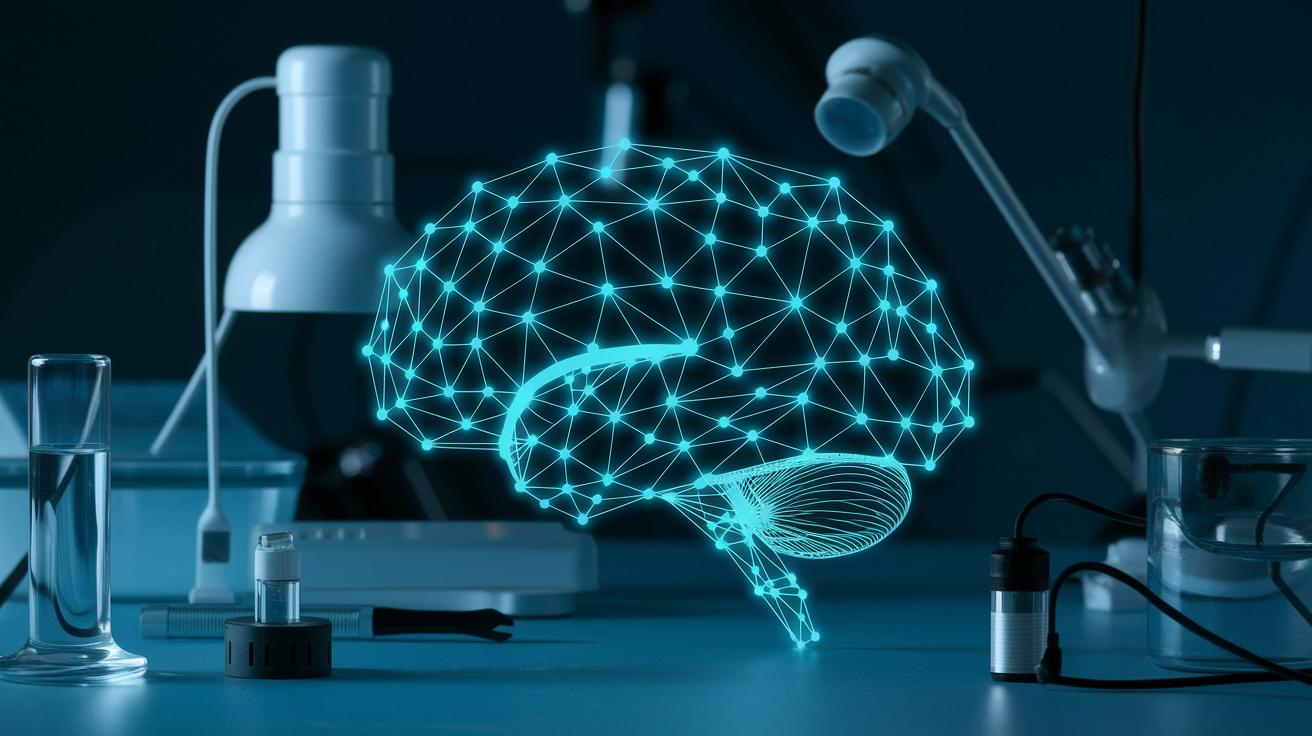
Neural networks are computer systems modeled after the human brain. They work through many interconnected nodes that pick up on patterns, sort information, and make predictions, all without someone having to write out every instruction. Some networks have just one hidden layer, while others go deep with many layers to capture more complex details. This simple difference helps us understand how these systems tackle various challenges in different fields.
These models can be grouped by how they are built, how they learn, and what they are used for. Depending on their design, they can handle anything from basic image recognition to understanding human language. It’s not just about how many layers they have; it’s also about the journey data takes through these layers. The main types include:
- Feedforward Neural Networks
- Convolutional Neural Networks
- Recurrent Neural Networks
- Transformer Networks
- Radial Basis Function Networks
- Self-Organizing Maps
- Autoencoders
- Generative Adversarial Networks
Choosing the right neural network depends on how tricky the problem is, the type of information available, and the outcome you want. For simple jobs with clear-cut data, a shallow network might be enough. But for tasks like spotting details in images or decoding language, deeper setups like convolutional or recurrent networks can really shine. In truth, understanding these differences helps experts pick the best model for the job, whether that means using a transformer for quick language processing or a feedforward network for neat pattern tasks.
Feedforward Network Systems: Fundamental Neural Network Types

Feedforward neural networks, or FNNs, are like one-way streets for data. The information flows from the start point (input) through some middle steps (hidden layers) until it reaches the end (output) without turning back. They learn using a technique called backpropagation (a way to adjust the network’s inner settings by looking at the error in the outcome), kind of like a teacher offering hints after a mistake. This clear, straightforward design makes it simple to train them using proven methods like gradient descent (a technique for finding the best settings by following a path of least error).
These networks really shine when it comes to spotting things like faces or reading handwritten numbers. They’re used to sort images or detect clear patterns in data, imagine a network that can recognize a face in a crowd or turn a photo of a word into text.
However, while feedforward networks are reliable in many situations, they aren’t the best fit for tasks where order matters, like time series or sequential data. Because they lack the feedback loops that help remember previous information, more complex network models are usually chosen for tasks where sequence is key.
Convolutional Network Structures: Processing Grid-Like Data

Convolutional Neural Networks, or CNNs, work by stepping through grid-like data such as images and video frames. First, think of the network scanning an image with special filters that slide over the picture. These filters, which learn over time, help spot patterns like edges or textures. Then, pooling layers jump in to shrink the size of the image data, summarizing little areas to emphasize important features. Finally, fully connected layers mix all this information together to decide what is in the image, much like putting together puzzle pieces to see the whole picture. Have you ever imagined a computer spotting a car on a busy street step by step?
One of the coolest things about CNNs is how they pick up on different levels of detail. They can see tiny details, like the curve of a road sign, while also understanding the overall layout of a scene. Plus, they use the same filters over the entire image, which keeps the number of unique parameters low and learning efficient. This approach helps the network recognize objects no matter where they appear in the image.
Yet, CNNs also come with their challenges. They need a lot of computer power and memory, and tuning things like layer depth and filter size can be tricky. Thankfully, tools like GPU acceleration (using graphics cards to speed things up) and batch normalization (techniques to make the learning process more steady) help balance out these demands. These methods are key to making sure CNNs work well in real-world tasks, from smart driving systems that spot pedestrians and road signs to medical imaging that finds subtle patterns in scans.
Recurrent Network Designs: RNN, LSTM, and GRU Architectures

When you're dealing with things like voice recordings or written text, the order really matters. These kinds of data need a special type of neural network that can remember what came before and use that info to understand what comes next.
Vanilla RNNs
Vanilla RNNs are the simplest kind of recurrent network. They work by taking the output from one step and feeding it back as input for the next. Picture it like reading a sentence where each word helps remind you what came before. This works great for short bits of data, like spotting individual words. But when it comes to longer passages, these networks sometimes forget details because the learning process can get unstable. It’s like trying to remember every step in a very long story, and the pressure can cause the system to lose track.
LSTM Networks
LSTM networks step in when longer memories are needed. They add memory cells and special controls, think of them as little decision makers that choose what important details to remember or toss out. It’s a bit like reading a lengthy story and making quick notes about key points so you don’t lose track later. These networks shine in tasks like translating languages or generating text, where understanding the whole plot and all its little twists is crucial.
Gated Recurrent Units
Gated Recurrent Units, or GRUs, offer a simpler alternative to LSTMs. They combine some of the decision-making tools into one package, which means there’s less to set up and they often train faster. GRUs work well when you need to process information quickly and don’t have a lot of computing power, like handling voice commands on your mobile phone. They capture the essential parts of a sequence without all the extra steps, making them a handy tool in many modern AI setups.
Transformer-Based Networks: Self-Attention Deep Network Architectures
Transformers are a fresh way for computers to understand language. They skip the old method of handling words one by one and instead let every word "chat" with every other word at the same time using self-attention (a tool that helps different parts of a sentence learn from each other). This lets the system catch connections between words that are far apart in one go.
Inside these networks, you’ll find parts like multi-head attention (imagine several little teams each focusing on different details), positional encoding (a way to remember a word’s spot in the sentence), feedforward layers (steps that process words further), and layer normalization (making sure everything stays balanced). Think of it like a lively conversation where every word makes sure nothing gets overlooked.
One neat perk of transformers is their ability to work on many words at once instead of one after another. This means they learn faster and handle big language tasks better. Models like BERT and GPT use this magic for tasks like translation, summarizing, and answering questions. It’s like glancing at a whole paragraph and instantly understanding which words matter most.
Of course, transformers aren’t without their challenges. They need a lot of memory and strong computing power, especially with longer texts. Researchers are tackling this by testing tricks like sparse attention (focusing only on key parts) and model distillation (where a large model trains a smaller, quicker version without losing much accuracy). These strategies help keep transformers both powerful and practical for advanced language tasks.
Unsupervised Network Models: RBF Networks and Self-Organizing Maps

Radial Basis Function Networks, or RBF Networks, use special bell-shaped functions (like a smooth curve you might see in a graph) in their hidden layer. They work by measuring how far input data is from specific center points and then using a radial function to change the data. This lets the network make smooth predictions for things like continuous data or sort out patterns that aren’t straight-line simple. Think of it like a weather app that smoothly fills in temperature changes across different areas.
Self-Organizing Maps, also called Kohonen maps, take data from many dimensions and place it onto a flat two-dimensional grid. During training, each node in the network slowly adjusts itself so that similar data points end up close together. This means you can look at a colorful grid and easily see groups or trends, like spotting clusters in survey responses that might reveal different customer behaviors.
Both RBF Networks and Self-Organizing Maps work without needing labeled examples, which makes them great for exploring data. RBF Networks are often picked when you need quick, accurate math approximations, though setting up the right functions can sometimes be a bit of a puzzle. On the other hand, Self-Organizing Maps give you a clear visual picture of how data groups itself, even if they take a bit longer to train and need careful tweaking of the grid size. In the end, it really comes down to whether you want precise numerical predictions or a friendly visual map of your data.
Generative Neural Models: Autoencoders vs. Generative Adversarial Networks

Generative modeling makes new data by learning the hidden rules of existing information. Autoencoders and Generative Adversarial Networks both do this, but they take very different approaches.
Autoencoders work by squishing input data into a smaller hidden space using an encoder and then rebuilding the original data using a decoder. This helps to cut down on the number of features or to spot weird patterns that might signal an error. Conversely, Generative Adversarial Networks pit two parts against each other. The generator creates fake data that tries to look like the real thing, while the discriminator takes a closer look to decide whether the data is genuine or not. This friendly competition makes the produced samples better over time, which is why GANs are great at crafting lifelike images or boosting picture quality.
Both models shine in different areas but have their own challenges. Autoencoders sometimes end up simply copying the input if their hidden space is too large, making them less effective for reducing data size. And while GANs can produce impressively realistic results, training them can be a tricky balancing act. It takes careful tweaking of settings to keep the generator and discriminator on equal footing.
| Model Type | Mechanism | Key Applications | Training Challenges |
|---|---|---|---|
| Autoencoder | Encodes data into a hidden space then decodes it back to the original format | Data compression and anomaly detection | Can simply copy the input if the hidden space is too large |
| Generative Adversarial Network | The generator creates samples while the discriminator checks their authenticity | Producing realistic images and videos | Sensitive training balance due to fine-tuning needs |
This clear contrast helps you choose the right approach based on your specific tasks, available data, and computing power.
Reinforcement Learning Networks: Decision-Making Neural Architectures

Reinforcement learning networks work by letting an "agent" (a computer program or robot) learn from interacting with its environment. The agent tries different actions and gets rewards when things go right. Over time, it changes how it acts so it can do even better next time. Think of it like learning to ride a bike by falling a few times until you get it right.
Deep Q-Networks, or DQN, mix a method called Q-learning (which teaches the agent about rewards) with models like convolutional networks (a type of image or pattern recognition tool) to choose the best actions. Another style, called actor-critic, splits the work. One part (the actor) picks what to do, and the other part (the critic) checks if those choices are good based on the rewards. It’s a bit like having a coach suggest moves and a judge give feedback.
Here are some common uses for reinforcement learning networks:
| Application | Description |
|---|---|
| Robotics control systems | Helps robots learn to move and act in the real world |
| Autonomous vehicle decision-making | Assists self-driving cars in navigating roads safely |
| Strategic games such as Atari and AlphaGo | Plays video games or board games by learning winning strategies |
| Real-time resource management | Adjusts how resources are used in dynamic settings |
| Dynamic process optimization | Improves complex processes to run more efficiently |
These examples show how reinforcement learning networks help AI make smart and fast decisions even when things around them keep changing.
Spiking Neural Networks: Bio-Inspired Event-Driven Frameworks
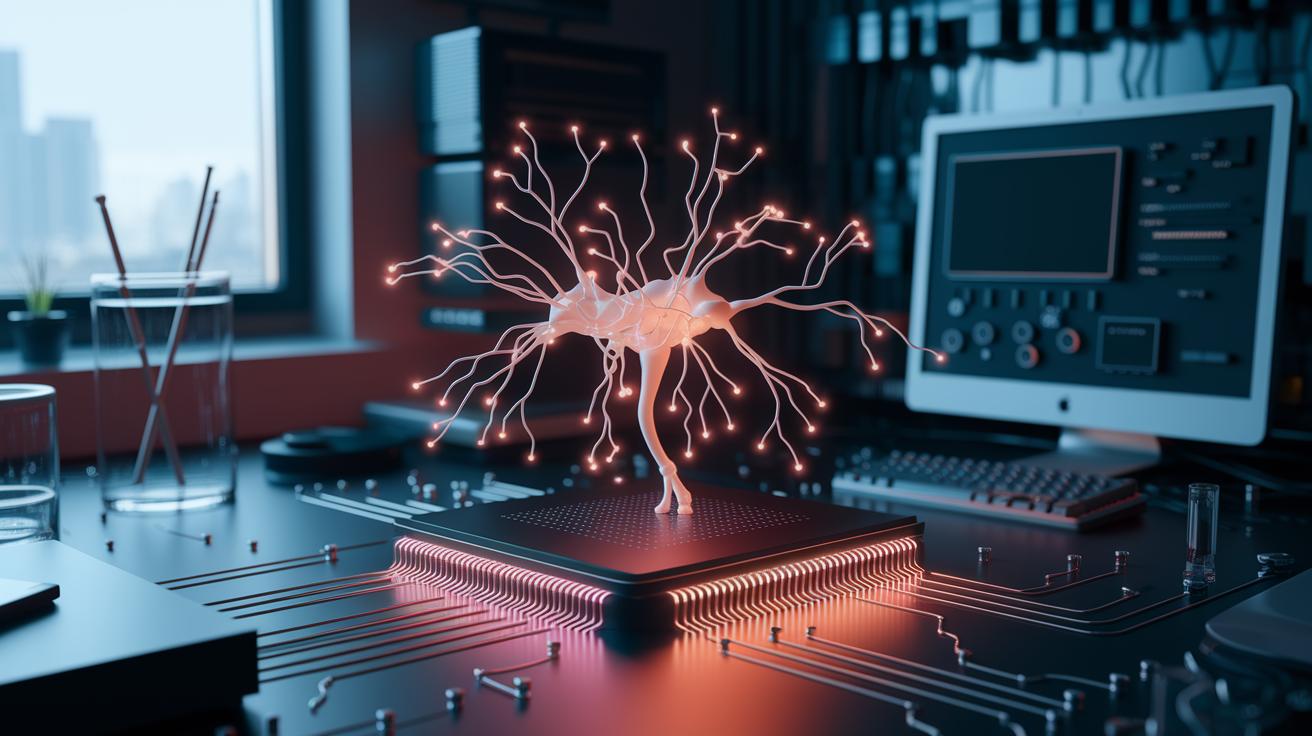
Spiking Neural Networks work a lot like the neurons in our brains. In these networks, each neuron sends a quick burst of electrical signal called a spike, but only when its charge reaches a certain level. Think of it like a firefly that only flashes when the right conditions are met, sending a bright burst of information instead of a steady glow.
This burst-driven system saves a lot of energy because the network only does work when it senses a spike. Instead of constantly running and using power, it stays quiet until something important happens. Special computer chips like Intel Loihi and IBM TrueNorth are built to use this smart, energy-saving method, making these networks perfect when quick processing and low power use matter a lot.
There are a few popular types of these brain-inspired models. For example, Liquid State Machines use a pool of neurons in a way that acts like a natural reservoir of signals. Another type, Echo State Networks, uses a group of neurons with fixed random connections to process information in new ways. Both models offer fresh ways to solve problems, even though setting them up perfectly can take a bit of trial and error.
Final Words
In the action, we explored the fascinating world of types of neural networks. We examined everything from shallow to deep designs and multiple architectures, such as feedforward, convolutional, recurrent, and transformer-based systems.
We also looked at how these classifications help choose the right model for tasks like pattern recognition and processing grid-like data. The research continues to push science forward, sparking creative solutions and keeping us curious about what comes next.
FAQ
What are the types of neural networks class 9?
The question points to neural network types taught in class 9, introducing simple models like basic feedforward networks and early deep network ideas for pattern recognition and basic computational tasks.
What are the types of neural networks with examples?
The inquiry covers various models, including feedforward networks for basic computations, convolutional networks for image handling, and recurrent networks for processing sequences like text or sound.
What are the types of neural networks in deep learning?
The question refers to deep learning models, such as convolutional networks, recurrent networks, transformers, autoencoders, and generative adversarial networks, each designed for tasks like image analysis and language processing.
What does a types of neural networks PPT include?
The question indicates that a typical PPT on neural networks explains core architectures, comparisons between shallow and deep models, and features examples like CNNs, RNNs, and feedforward models for better understanding.
What are the 3 types of neural networks?
The question highlights three popular models: feedforward networks for basic tasks, convolutional networks for grid-like data, and recurrent networks for sequential information like speech and text.
What are the types of neural networks in a PDF?
The question suggests that PDFs on neural networks detail various architectures, including simple and deep networks with diagrams and examples such as CNNs, RNNs, transformers, and autoencoders.
What are the types of neural networks and their applications?
The question explains that different neural network models—feedforward, convolutional, recurrent, and transformer networks—serve tasks from simple classification and pattern recognition to complex language and image processing.
How many types of neural networks are there?
The question indicates that there are many neural network types, ranging from shallow models to deep architectures like CNNs, RNNs, transformers, autoencoders, GANs, and more specialized variants.
What is MLP vs CNN vs RNN?
The question rephrases that MLP (multilayer perceptron) is a simple feedforward model, CNN excels in processing grid-structured data like images, and RNN is designed for sequence data with feedback loops.
What are the 4 types of AI systems?
The question explains that the four broad types of AI systems often discussed include reactive machines, limited memory systems, theory of mind models, and self-aware systems, covering different levels of cognitive complexity.
Is ChatGPT a neural network?
The question indicates that ChatGPT is built on a transformer network, a type of deep neural network designed to understand and generate natural language with high fluency.
What is the difference between ANN vs CNN vs RNN vs LSTM?
The question clarifies that an ANN is a general network model; CNN specializes in visual data processing; RNN manages sequential data with loops; LSTM enhances RNN by effectively handling longer dependencies using internal gates.