
Have you ever wondered if today's science is really stretching our limits? Researchers are snapping clear pictures of solar flares (sudden bursts of energy from the sun) and following how nutrients move through chilly, icy places.
These breakthroughs come from many areas, including space studies and modern gene therapies (new ways to fix or change parts of our genes). They mix clever techniques with solid facts, sparking bright new ideas that could change how we live and explore.
In this post, we'll see how hard work and smart thinking turn raw data into bold steps for our future.
Latest Science Breakthroughs: Comprehensive Overview
Breakthroughs mean using strong data, clever methods, and having a big impact. These studies show how creative ideas can lead to major steps forward. For example, a detailed image of an M-class solar flare captured by the Solar Orbiter on January 21, 2026, proves how careful research works. New models on how nutrients pass through Europa's ice remind us that fresh ideas can change the way we look at oceans on other worlds.
Cool discoveries also span from ancient fossils to modern gene therapies and new physics ideas. No matter the subject, every finding sticks to the same rules: solid evidence, repeatable tests, and promising hints for future work. These breakthroughs mix hard work and smart risk-taking, which are at the heart of today’s science.
- Solar Orbiter Mission, January 21, 2026 – Space Physics
- Europa Ice-penetration Model, Recent – Astrobiology
- Paranthropus Fossil, 2.6 million years old – Paleoanthropology
- Lyfgenia Gene Therapy, 2026 Case – Medical Biotechnology
- Dark Matter Model, Recent – Theoretical Physics
Research moves fast these days. Scientists around the world keep pushing limits by mixing high-tech tools with a genuine sense of wonder. Every new discovery builds a step toward more exciting breakthroughs and helps us see our world, and beyond, in a whole new way.
Latest Science Breakthroughs in Space Exploration

New orbital missions are uncovering details that push our tech to the limit. The Solar Orbiter, for instance, used super-sharp sensors and clever data tricks to catch a solar flare in action. It recorded magnetic reconnection (when magnetic fields snap and change direction, releasing bursts of energy) during a moderate solar flare. Its instruments picked up energy bursts and streams of plasma (charged particles that flow like a liquid) with advanced on-board tools. Meanwhile, scientists are building a nutrient-transfer model for Europa to see how chemicals on its icy surface might mix with a hidden ocean underneath. Imagine a sensor that picks up gentle solar vibrations like a stethoscope catching a quiet heartbeat.
| Discovery | Date | Significance |
|---|---|---|
| Solar Flare Observation | January 21, 2026 | Sensors captured energy bursts and plasma flows in great detail |
| Europa Nutrient Transfer Model | Recent | This model shows how surface chemicals could mix with an ocean larger than Earth’s |
Teams are now gearing up for future probes using smarter data algorithms and better sensor arrays. New simulation frameworks will help track tiny plasma blobs and follow nutrient movements with even more accuracy. Imagine watching a simulation where small magnetic shifts light up into sudden energy bursts, similar to ripples in a pond that reveal hidden currents.
Latest Science Breakthroughs Spark Bright Innovation
Recent digs and studies are shedding new light on our ancient Earth. Scientists from around the globe are uncovering relics that tell stories of long-vanished life and changes in our climate. Places like Ethiopia, Mexico, and the Naracoorte Caves each offer a peek into our planet’s history. Imagine finding a fossil that shows life once spread far wider than we ever imagined – it's like discovering a 2.6-million-year-old bone that quietly hints at early human journeys.
In Ethiopia, a 2.6-million-year-old fossil shows us that our early relatives roamed great distances. A 2-million-year-old Homo habilis skeleton offers the clearest look yet at what our ancestors looked like. Meanwhile, a dinosaur with a thick skull found in Mexico adds new details about the dinosaurs from the Cretaceous period (a time when dinosaurs ruled the Earth). Scientists have also found ancient salt crystals from the Mesoproterozoic era (a very old time period) that trap air bubbles, revealing that oxygen levels were just 3.7% of what they are today, while carbon dioxide was ten times higher than before the industrial age. Deposits filled with fossils at the Naracoorte Caves even show a surprising number of ancient shorebirds, hinting at big shifts in coastal climates.
These discoveries mean more than just extra data points. They help build fresh models for understanding how life evolved and how our climate has changed over time. By connecting traits of different species, clues from old environments, and marks on the map, scientists are piecing together a fuller picture of our planet’s dramatic past. Each fossil, trapped air bubble, and bone fragment reshapes our view of how climate and life have danced together, sparking new ideas and bright innovation in the field.
Latest Science Breakthroughs in Medicine & Biotechnology

New discoveries in life sciences are changing how we look after our health and understand our bodies. Cool new tools and treatments are coming out of labs and heading straight into everyday use. For example, scientists have built night-vision contact lenses that let people see parts of the infrared spectrum even with closed eyes. This neat invention might one day replace those clunky goggles. It’s clear that research is moving toward less invasive and more user-friendly ideas that could help make life safer and simpler.
In labs and clinical trials, researchers are trying out exciting ideas that might completely change treatments and even how we conserve nature. A gene therapy called Lyfgenia, for example, has been used to reprogram patient bone marrow to make healthy red blood cells, successfully treating a case of sickle cell anemia in New York. Even more amazing, a test for an mRNA vaccine for pancreatic cancer showed that half of the 16 patients developed long-lasting immune responses that could help stop the cancer from coming back. Meanwhile, scientists are using human stem cells (cells that can become many types of cells) to form the notochord, an important guide for growing spinal tissues. They’re even turning giant panda skin cells into special stem cells, which might help improve conservation efforts and disease research. A simple shift in a cell's destiny might one day mean restoring a damaged spine or saving an endangered species. Cool, right?
To make sure these breakthroughs are safe and fair for everyone, medical boards, researchers, and government groups are working closely together. They discuss everything from making sure patients agree to the treatments to watching how things go over time and ensuring everyone has fair access. This mix of cutting-edge research with careful checks promises a future where advanced treatments can help many people while keeping everyone safe.
Latest Science Breakthroughs in Wildlife Conservation & Animal Science
Wildlife research is changing the way we protect animals. New studies show that nature is full of surprises, creatures we think we know well can have clever, unexpected skills. With smart methods and careful watching, scientists are uncovering behaviors that used to be hidden.
In one exciting example from Kenya, a team used in vitro fertilization (a procedure done outside the body in a lab) on a southern white rhino. They managed to place an embryo almost two meters inside its uterus. This breakthrough could really help efforts to save the northern white rhino. And then there’s Veronika, a Swiss Brown cow, who was caught using a deck scrub broom as a tool. This is the very first time anyone has seen cattle use an object to help them. Researchers have also found that marmoset monkeys make special “phee-calls” that are unique to each individual. It’s a trick usually seen in creatures like elephants, dolphins, and even humans.
Looking ahead, scientists believe that ongoing biodiversity studies will uncover even more cool insights about nature. By mixing advanced technology with close-up field observations, they’re building new ways to keep animal populations safe. With fresh techniques emerging all the time, the blend of innovation and nature holds huge promise for keeping our wildlife thriving.
Latest Science Breakthroughs in Fundamental Physics
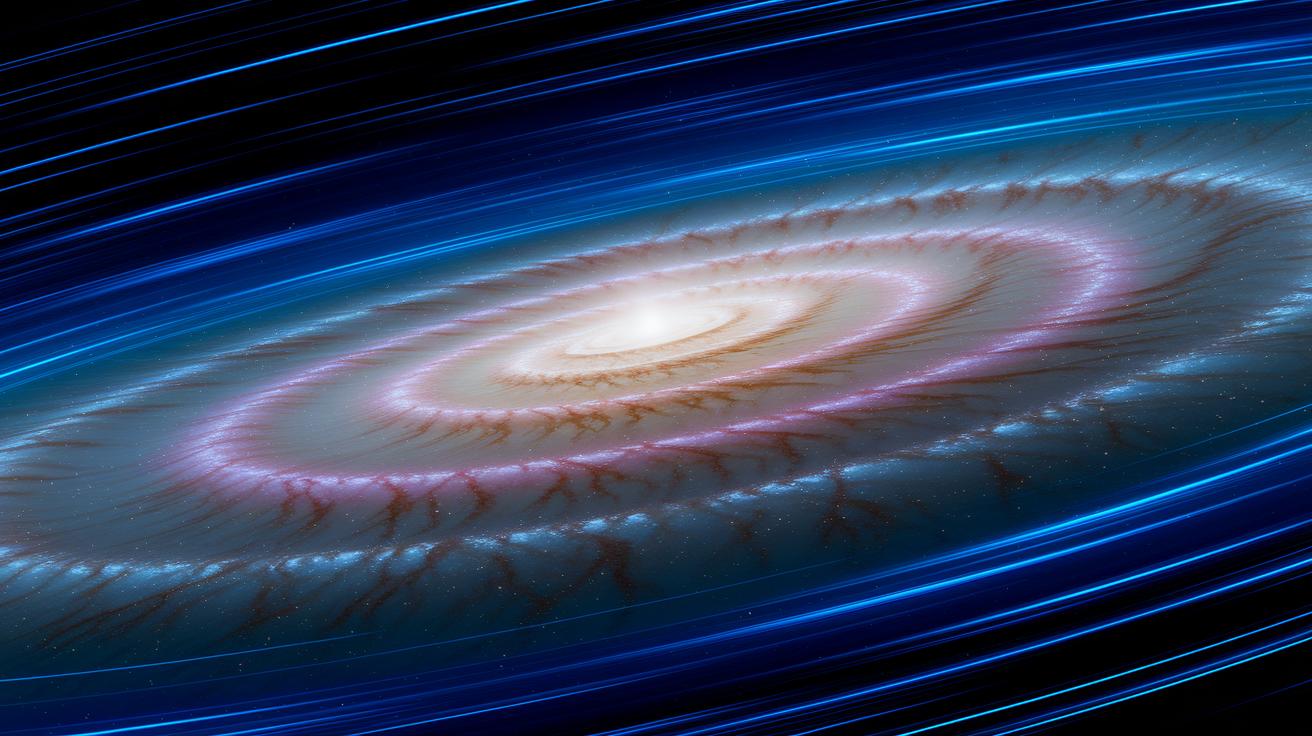
A new idea in dark matter research tells us that, long ago, dark matter particles sped around nearly as fast as light instead of being slow and still. Experiments with tiny particles and careful looks at the stars hint that these particles packed much more energy back then. Researchers now believe that these fast-moving particles might have helped shape the first galaxies and the overall structure of the cosmos. Detailed computer models and very precise measurements support a view of an early universe that was vibrant and ever-changing, with dark matter actively carving out what we now see. This fresh way of thinking could spark new experiments and give us a better grasp of how energy and matter teamed up during the universe’s earliest days.
Final Words
In the action, we witnessed breakthroughs ranging from space exploration and ancient fossils to innovative medical treatments and animal intelligence. Each snippet of progress contributes to a broader understanding of our world and beyond.
Modern research is paving the way for everyday insights that spark curiosity and ignite vibrant discussions. With these latest science breakthroughs, the future looks brighter, offering both inspiration and new perspectives to fuel our collective quest for knowledge.
FAQ
Q: What are the latest science and technology breakthroughs?
A: The latest science and technology breakthroughs highlight advances like high-resolution solar flare imaging, pioneering gene therapies, and early human fossil finds. These updates reveal our expanding grasp of the natural world and space.
Q: What breakthrough discoveries defined 2025 in science?
A: The breakthroughs in 2025 include next-generation gene therapies, refined models of dark matter, and transformative fossil discoveries. These findings shaped research priorities and broadened our scientific understanding.
Q: What are the top scientific discoveries that changed the world?
A: The top scientific breakthroughs include major innovations in gene therapy, fresh perspectives in physics, and fossil findings that deepen our views on human origins. These discoveries have truly reshaped our world.
Q: What did NASA discover recently?
A: NASA’s recent discoveries feature detailed imaging of solar activity and dynamic space phenomena. These findings boost our understanding of solar behavior and help to guide the planning of future space missions.

