
Have you ever stopped to wonder how airplanes and rockets come to life? Aerospace engineering is a mix of creative design and solid science that builds the vehicles soaring in our skies and reaching into space. Even a short 12-second flight, like the Wright Flyer’s first ride, can light up big dreams and show us that nearly anything is possible.
In this field, math, physics, and hands-on engineering work side by side to tackle real challenges in air and space travel. It’s like a dance between cool ideas and practical work, where bold dreams become real. Isn't that amazing?
what is aerospace engineering: Inspiring Insights
Aerospace engineering is all about designing, building, and taking care of vehicles that fly in the sky and even venture into space. In simple terms, it bridges the world of air travel with that of space travel. We split it into two main areas: aeronautical engineering focuses on airplanes, helicopters, and drones that fly within our atmosphere, while astronautical engineering tackles satellites, spacecraft, and rockets that journey beyond Earth.
Here's a cool fact: The Wright Flyer’s 12-second flight covering 121 feet reminds us that even the smallest advances in flight design can spark big dreams. This example shows how aerospace engineering mixes creativity with solid science. Engineers use math, physics, and various engineering principles to make sure these vehicles work safely and follow important guidelines. They lean on ideas like fluid dynamics (the study of how liquids and gases move) and material science (understanding different substances and their properties) to build reliable systems.
In short, aerospace engineering is a constant adventure of discovery and innovation. It blends studying theories with practical, hands-on work in offices, labs, and even out in the field. By turning scientific ideas into real machines, these engineers help power everything from our everyday travel to our journeys in space. This exciting field remains a key driver of progress in both flight and space exploration.
Aerospace Engineering History and Milestones
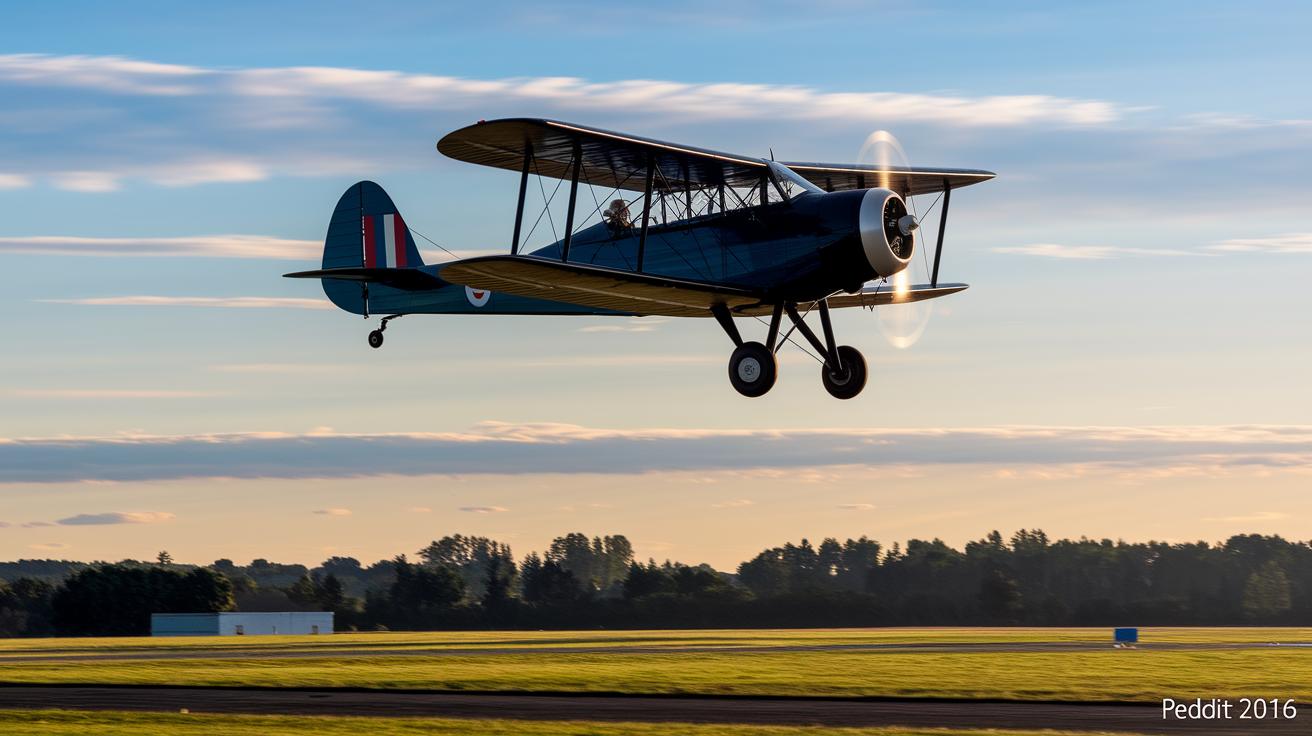
The journey of aerospace engineering is full of bold adventures and breakthrough moments that changed our idea of flight. In 1903, the Wright Flyer soared for just 12 seconds and traveled 121 feet. Even though it was a short flight, it proved that powered, controlled flight was real and sparked a wave of new inventions.
Back in the late 1700s, George Cayley made early sketches of gliders (simple flying machines without engines) that laid the foundation for future discoveries. Building on these sketches, the Wright brothers brought the dream of flight to life with their groundbreaking work.
Then in 1926, Robert Goddard launched the first liquid-fueled rocket (a rocket powered by liquid fuels), marking a big change in how we looked at reaching space. Later on, engineers like Wernher von Braun pushed the limits even further with achievements like the V-2 rocket and the Saturn V.
Moments like Neil Armstrong stepping onto the Moon in 1969 and Kalpana Chawla, the first India-born woman in space in 1997, filled people with wonder and inspired countless dreams of exploring the cosmos.
Aerospace Engineering Sub-disciplines: Aeronautics and Astronautics
Aeronautical Engineering
Aeronautical engineering is all about designing, testing, and keeping aircraft safe as they soar through our skies. In this field, engineers create everything from airplanes and helicopters to drones. They explore how air flows over wings to boost lift and perfect propulsion systems that power flight. They also work with materials science (the study of how different substances behave) to build structures that are both light and strong. And they design flight controls so every aircraft moves smoothly and predictably in the air. Ever thought about how each curve on a wing helps make a flight more stable? It’s like piecing together a delicate puzzle where every detail counts.
Astronautical Engineering
Astronautical engineering takes us way beyond Earth. This branch focuses on building space vehicles like satellites, space shuttles, and rockets for deep space missions. Engineers solve problems using ideas like orbital mechanics (the rules that tell us how objects move in space) and work on guidance systems that keep spacecraft on track. They also design thermal control systems to handle the extreme heat and cold found in space. Imagine planning a really long trip where every detail, from fuel use to mid-space adjustments, is carefully mapped out. It’s hard science mixed with a lot of vision and planning.
Avionics Engineering
Avionics engineering is about the electronic systems that help pilots and computers steer vehicles, whether they're flying through the sky or traveling in space. This field covers communication tools, navigation systems, and control units that work together to keep flights safe. Engineers blend sensors, flight computers, and software to build a smart, responsive guidance network. Think of it like the spaceship’s control room where every signal and piece of code plays a part in keeping things on track. It’s amazing how a single electronic system can make split-second decisions that guide a flight safely through the skies.
Together, these three fields work hand in hand to push the limits of what’s possible in both air and space travel, making modern flight and space exploration ever more exciting and reliable.
Core Principles in Aerospace Engineering: Aerodynamics and Propulsion
Understanding how things fly starts with some basic physics that let airplanes and rockets soar. At its core, aerospace combines two big ideas: aerodynamics and propulsion. Aerodynamics is about how air flows around surfaces and creates lift (the force that keeps a plane up). Propulsion, on the other hand, is all about generating the push (or thrust) that moves a vehicle forward, whether that comes from jet engines, liquid rocket engines, or even solid rocket engines.
Let’s break this down into simple parts:
Lift generation and airfoil theory: Airfoils are specially shaped wings that boost lift. When air flows over a curved wing, it moves faster on top and creates lower pressure there, which pulls the aircraft upward.
Drag forces and reduction strategies: Drag is the resistance an object faces while moving through air. Engineers design smooth, streamlined surfaces to reduce drag, much like a cyclist tucking in to ride faster.
Thrust production in engines: Thrust is the force that pushes the vehicle forward. Whether it's a jet engine pulling in air and pushing it out at high speed or a rocket burning fuel to eject exhaust gases rapidly, this force is essential for moving the vehicle.
Weight and balance considerations: For steady flight, an aircraft’s weight needs to be balanced perfectly. Engineers carefully calculate weight distribution so it collectively lifts evenly, reducing any risk of unwanted tilts or instability.
Stability and control dynamics: This involves how the vehicle responds to the pilot’s inputs and changing conditions. By adjusting control surfaces like flaps and rudders, engineers keep the flight smooth and controlled.
Together, these principles make modern flight possible, ensuring every takeoff, cruise, and landing is as safe and efficient as can be.
Fundamentals of Aircraft and Spacecraft Design in Aerospace Engineering
In aerospace engineering, the design process unfolds in three main steps: conceptual, preliminary, and detailed. At first, engineers toss around ideas like sketching a rough blueprint, think of doodling a futuristic airplane on a napkin to capture a bold vision. Next, these ideas start to take shape as basic models where the form, structure, and function are mapped out. Finally, in the detailed stage, every part is carefully refined to ensure everything works safely and performs well.
When it comes to aircraft design, several core subsystems work together. This includes the airframe, wings, fuselage, propulsion systems, and avionics. For each piece, engineers run tests and analyses (like checking how strong each piece is) to boost performance and durability. With spacecraft design, the approach is similar but with a twist. Designers look at the crafts’ structure, systems to control extreme heat or cold (thermal control), power, communications, propulsion, and guidance. Materials such as composites (like carbon fiber), aluminum alloys, and titanium are popular because they keep the craft both tough and light.
Systems integration is key to making sure all these parts work together smoothly. It’s like putting together a puzzle where every piece has its perfect spot, or like arranging a well-organized kitchen where every tool plays its part to create a great meal. Have you ever noticed how every appliance in a kitchen contributes to a delicious dinner?
| System Category | Aircraft Examples | Spacecraft Examples |
|---|---|---|
| Structure | Fuselage, wings | Bus frame, truss |
| Propulsion | Turbofan engines | Liquid rocket engines |
| Avionics & Controls | Flight computers | Guidance computers |
Educational Pathways for Aerospace Engineering Degrees
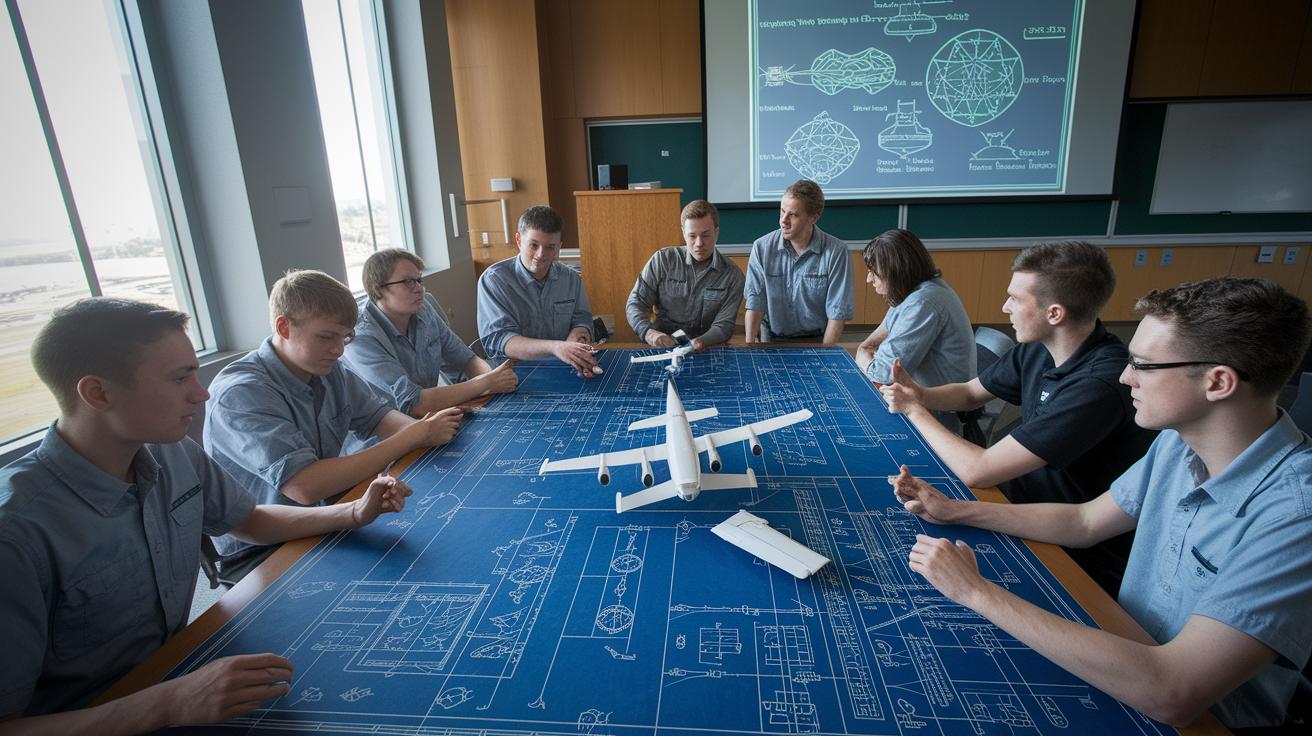
Many aerospace engineers kick off their careers by earning a bachelor's degree in aerospace engineering or a closely related field like mechanical, electrical, or materials engineering. They dive into courses such as calculus, physics, and fluid dynamics (the study of how air or water moves). These classes help build a solid foundation to understand how propulsion, structures, and control systems work together to make flight possible. Many students also choose ABET-accredited programs since they follow strict industry standards and get them ready for real-world challenges. For instance, a fluid dynamics lesson might describe how air flows over a wing, imagine how water flows smoothly over a rock in a stream before swirling around it.
As careers progress, some engineers decide to further their education with a master's or even a PhD. Advanced roles in aerospace often need deeper study, and internships or co-op programs become essential. These work experiences help bridge the gap between classroom learning and the hands-on research and development seen in industry labs.
Here are some helpful tips when choosing a program:
- Look for schools with strong connections to industry teams.
- Pick institutions that encourage practical work through internships.
- Consider programs that balance classroom theory with lab work.
A solid education in flight sciences goes beyond textbooks. It equips students with the hands-on skills they need to succeed in designing and building the air vehicles of tomorrow.
Career Pathways and Opportunities in Aerospace Engineering
Aerospace engineers work in many different places, from government agencies like NASA and the Department of Defense to manufacturers, research labs, and defense contractors. They mix design, testing, project management, research, and quality checks in their daily tasks. Often, you'll find them working in offices, laboratories, and testing sites.
A great example is the internships at big names like Boeing, SpaceX, and NASA. These internships offer real hands-on experience and can lead to long-term career success. Fun fact: some interns end up working on next-generation flight systems, pushing what we know about air and space travel even further.
When it comes to pay, there’s a lot of variety. In 2021, the median yearly salary for aerospace engineers was about $122,270, or roughly $58.78 an hour. Some earn as little as $42,000, while others make up to $165,000. Plus, where you work matters, aerospace engineers in North Dakota average around $103,520 a year, compared to about $97,100 in Minnesota.
Key roles in this field include:
Companies look for engineers who can mix technical skills with clear communication and leadership. Whether it's solving the challenges of a new engine or managing a busy project, aerospace engineers play a big part in advancing air and space technology. Their work not only boosts national defense and transportation but also lays the groundwork for future innovations that continue to shape modern technology.
Future Trends in Aerospace Engineering Innovation
In the next decade, aerospace engineering is stepping into a fresh era that mixes eco-friendly design with smart technology. Engineers are now testing special composite materials (strong, lightweight blends) to build airframes that are lighter and tougher. Picture an aircraft wing made of carbon fiber that flexes and adapts to stress like a smooth dance, changing naturally with the conditions.
Here are some key trends leading the way:
- Electric and hybrid propulsion systems that make engines more efficient and cut down on pollution.
- Digital twins and simulation tools that let designers try out flight ideas in realistic, computer-made worlds.
- Additive manufacturing techniques that produce complex parts with high precision.
- Unmanned aerial vehicles that are quickly evolving to tackle more advanced missions and bring new capabilities.
These innovative methods are the result of experts from mechanics, computer science, and environmental studies working together. AI-driven designs (when computers help create smarter designs) and automation are changing the way aircraft are built, aiming for better performance with less wasted material. Meanwhile, research into greener fuels and hypersonic flight (very fast travel) is setting the stage for cleaner, quicker journeys. Even commercial space tourism is sparking new ideas, pushing engineers to design safer and more reliable space vehicles.
Every breakthrough helps build a future where aerospace engineering breaks boundaries and transforms imaginative ideas into real, high-performing technologies.
Final Words
In the action of what is aerospace engineering, we explored basics from design and history to the roles of aeronautics and astronautics. We looked into flight mechanics like lift and propulsion, then broke down how aircraft and spacecraft come together step by step. The article covered academic choices and career opportunities alongside exciting future trends. Each part was made simple and clear, showing just how this field touches everyday life. It’s a neat reminder of science in motion and a bright outlook on what’s ahead.
FAQ
What is aerospace engineering salary?
The aerospace engineering salary averages around $122,270 per year. This figure highlights the field’s competitive pay, with variations based on experience, location, and employer.
What is aerospace engineering reddit?
The aerospace engineering reddit community serves as a forum where enthusiasts and professionals share experiences, answer questions, and discuss career paths and technical topics in the field.
What is aerospace engineering jobs?
Aerospace engineering jobs cover roles in design, testing, research, and project management. Engineers work in government, private companies, and research labs to build and improve flight systems.
How to become an aerospace engineer?
Becoming an aerospace engineer starts with earning a bachelor’s degree in the field, followed by hands-on internships and sometimes advanced studies, all while honing math, physics, and problem-solving skills.
What is aerospace engineering major and course?
The aerospace engineering major includes courses on aircraft design, propulsion, and flight dynamics. Classes mix physics, math, and hands-on projects to build a strong foundation in flight technology.
Is aerospace engineering hard or a tough job?
Aerospace engineering involves challenging math and science, but many find it rewarding with steady study habits and a knack for solving complex problems in flight technology.
What are aerospace engineering colleges?
Aerospace engineering colleges are institutions offering accredited degree programs focused on flight technology and vehicle design. These schools provide labs, internships, and research opportunities to build practical skills.
What exactly do aerospace engineers do?
Aerospace engineers design, test, and maintain aircraft and spacecraft. They apply physics, math, and engineering principles to develop systems like propulsion, control, and safety mechanisms.
Is aerospace engineering for NASA?
Aerospace engineering is highly relevant for NASA careers. Many engineers at NASA specialize in flight systems and space exploration, applying their expertise to advance space missions.
How does aerospace engineering compare with other engineering fields?
Aerospace engineering focuses on flight and space vehicles, emphasizing aerodynamics and propulsion. Other fields, like mechanical or electrical engineering, concentrate on different systems and technologies.