
Have you ever wondered if the universe is keeping secret treasures just out of sight? New breakthroughs in space exploration are changing what we thought we knew. Scientists are now finding amazing bursts of energy from stars and picking up signals from galaxies that are billions of years old (billions of years means a really long time).
Today, our tools are so advanced they reveal wonders that once seemed like pure magic. These discoveries stretch our understanding and spark our imagination about what surprises might still be waiting for us in the vast sky.
Key Technological Milestones Defining Science Breakthroughs in Space Exploration
Lately, events beyond Earth's orbit have been speeding up our innovations. In 2023, the Sun let off a gamma-ray burst that had way more energy than we've ever seen before, and it shook up what we thought we knew about our star. At the same time, an explosion in a galaxy far away outshined every supernova we've ever known. Its light took 8 billion years to get here, reminding us that energy from deep space still holds plenty of surprises for our theories.
Other breakthroughs also show how much we've advanced. For example, on June 19, 2022, scientists picked up a fast radio burst , a quick, bright pulse in space , that traveled 8 billion light-years. We also detected signals from neutral hydrogen (the most common type of hydrogen, which is key to understanding the universe) coming from a galaxy that lived over 8.8 billion years ago. Meanwhile, instruments like those on the JWST have helped us spot the oldest supermassive black hole ever seen, 13.1 billion light-years away, and even found a tiny brown dwarf weighing just three or four times Jupiter’s mass.
Robotic missions continue to amaze too. NASA’s Ingenuity helicopter has now flown more than 60 times on Mars, each flight a small step that adds up to a giant leap for technology. On the human side, astronaut Frank Rubio set a record with a 371-day mission aboard the ISS, showing that people still play a big role in exploring space.
| Area of Innovation | Examples |
|---|---|
| Propulsion and Spacecraft Design | New methods that help us move faster and build better spacecraft |
| Observational Instrumentation | Powerful tools like the JWST that capture faint light from across the universe |
| Robotic Missions | Innovative machines like the Ingenuity helicopter on Mars |
| Astrophysical Discoveries | New findings like the record-breaking gamma-ray event and distant galaxy explosions |
| Human Exploration Experiments | Historic missions such as the long-duration ISS flight by astronaut Frank Rubio |
All these milestones remind us that our progress in space exploration comes from many different angles. Whether it's new ideas about propulsion, stronger spacecraft, or tools that capture the faint glow of distant stars, every breakthrough makes our missions better. With each discovery, whether by clever robots or brave astronauts, we are learning more about our universe and pushing the limits of what we can achieve.
Cosmic Observation Breakthroughs Shaping Space Exploration Science
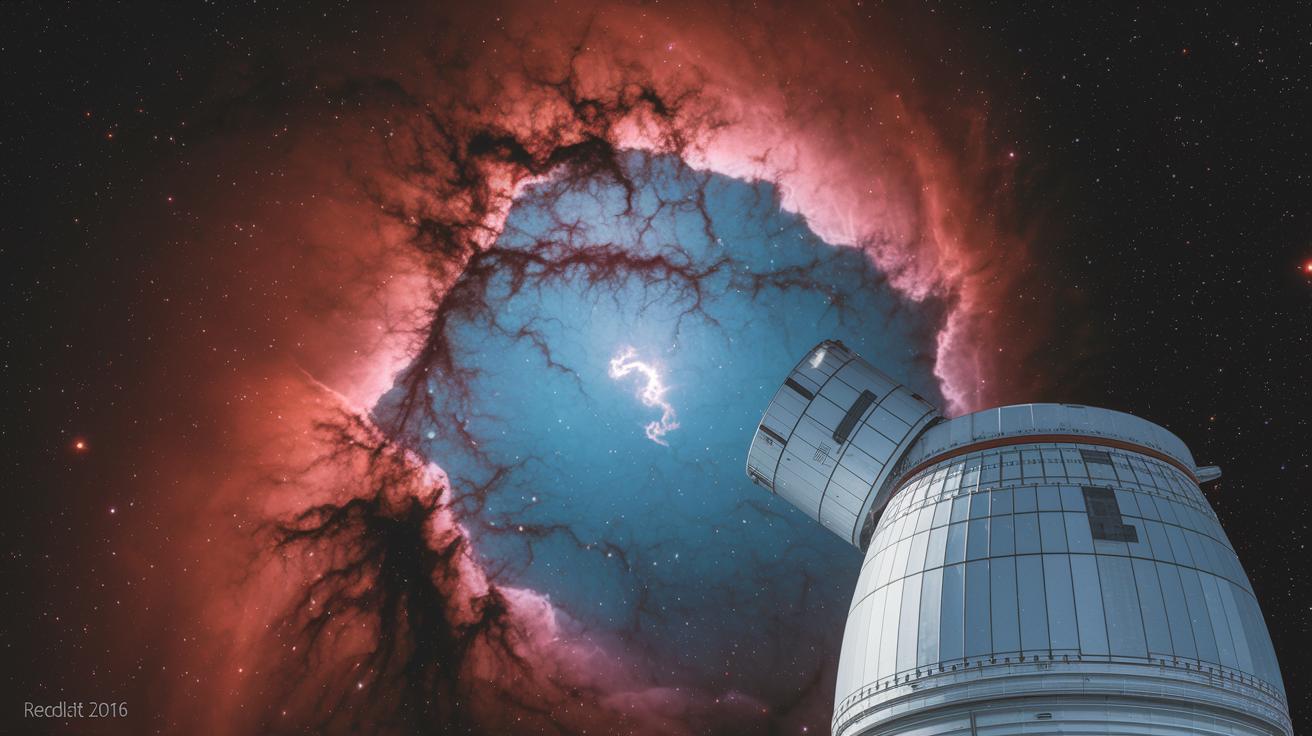
Our modern sensors and improved telescopes are opening up a much clearer view of space. They let us capture crisp images and pick up signals from distant cosmic bodies, revealing secrets that were hidden before.
JWST Nebula Imaging Improvements
The James Webb Space Telescope now uses sharper near-infrared filters (tools that catch heat signals) to uncover amazing details in nebulae, those beautiful, cloud-like formations of gas and dust. It's really surprising how these upgrades help JWST see faint wisps that used to look like simple blurry smudges. This progress lets scientists look closer at how stars are formed and how gases and dust interact in space.
Merged Other Observational Advances
Earlier discoveries, like picking up a 21 cm hydrogen signal from an 8.8-billion-year-old galaxy, capturing a fast radio burst on June 19, 2022, and finding both a huge black hole and a tiny brown dwarf, have all played important roles in our journey. Today, these findings lay the groundwork for even better views and refined techniques, thanks to our new and improved instruments.
Record Astrophysical Discoveries Demonstrating Science Breakthroughs in Space Exploration
New findings show us some truly wild high-energy events in space. Scientists recently spotted an explosion that outshines a typical star explosion by a factor of ten. Its light traveled 8 billion years before reaching us, imagine that!
And then there’s the Vela pulsar, a spinning star that burst out gamma rays (very high-energy light) at record levels of up to 20 TeV using super-advanced detectors (tiny instruments that capture high-energy particles with extreme precision). Even the Sun surprised researchers with a gamma-ray pulse that broke past all previous solar flare events. Imagine a solar event so dazzling it tops all records, a real cosmic light show!
ESA’s Gaia data is bringing us some amazing details about runaway stars. For example, there’s an interstellar white dwarf zooming through space at record speeds. Scientists used extremely precise methods (astrometric techniques, which measure star positions and movements) to capture these details, helping us fine-tune our models of how our galaxy works. Mixing these fresh insights with older discoveries deepens our understanding of how explosive cosmic events and star remnants shape our galaxy.
Robotic Mission Landmarks Driving Science Breakthroughs in Space Exploration
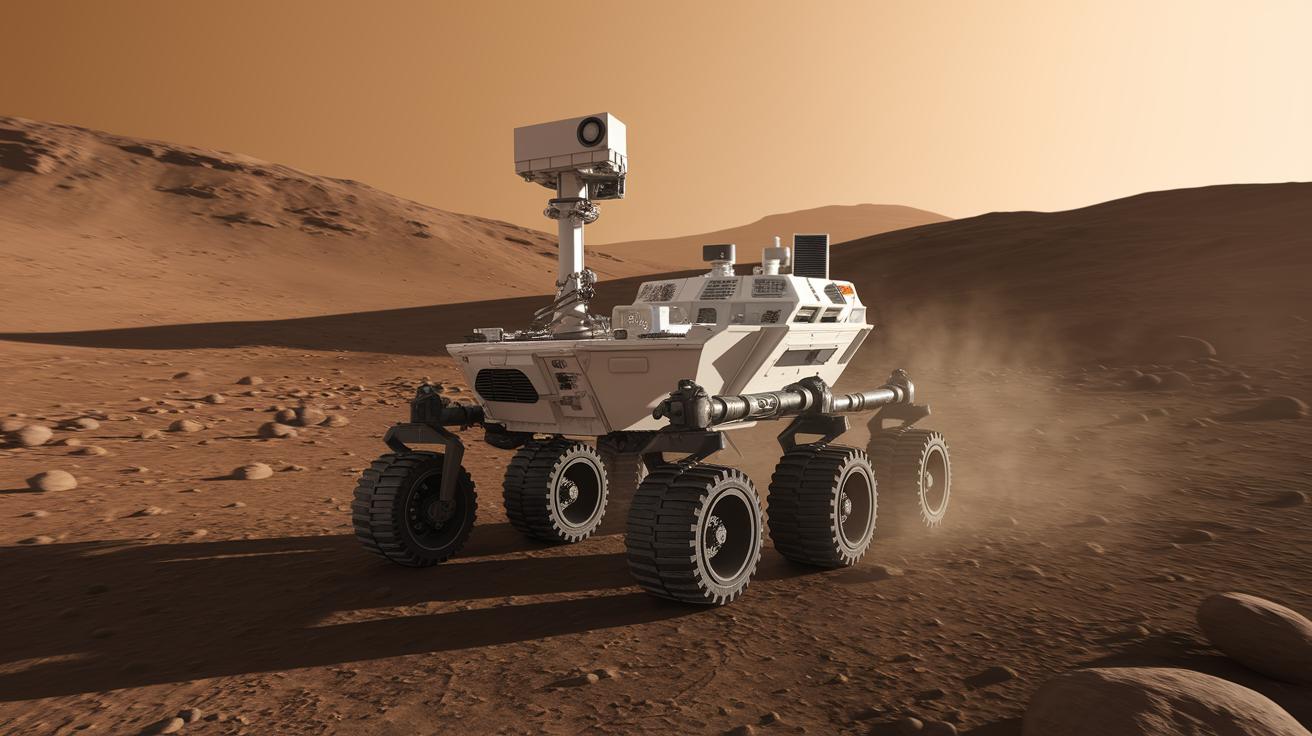
Space robots have come a long way. Today, machines can do work that we once thought only human explorers could handle. They use onboard sensors (devices that help them see and measure their environment) and fast computers to make decisions right then and there. Instead of waiting for instructions from Earth, they check out their surroundings, steer clear of obstacles, and change direction on their own. This shift from remote-controlled gadgets to smart, self-reliant machines marks a big change in how we explore deep space.
NASA’s Ingenuity helicopter on Mars shows just how far we’ve come. Over more than 60 flights, it became the first device to fly using powered lift on another planet, a real first! These flights sent back detailed data that helped scientists learn about the challenges of flying in a thin atmosphere. They gathered the insights needed to tune future designs for self-flying systems, as explained in "What is aerospace engineering" (https://buzzyandclever.com?p=1666). The goal wasn’t just to nail controlled flight; it was also to spark ideas for new robotic tools that will take space exploration to the next level.
Human Exploration Breakthroughs Fueling Science in Space Exploration
The International Space Station is like a special lab where scientists study how living things and materials behave in microgravity (that’s when gravity is so weak, things seem to float away). Researchers run experiments in zero gravity, fine-tune how spacewalks work (tasks done outside a spacecraft), and test practical systems like water recycling and air filtration. Did you know a simple water recycling test on the ISS proved that everyday processes can work nearly as well as they do on Earth? This surprising result is sparking ideas for longer space missions.
NASA astronaut Frank Rubio spent 371 days in space, mixing these advanced studies into one long mission. His work gave us really detailed insights into how weightlessness affects muscles, bones, and overall health. By combining human research with rigorous system testing, his mission builds on past discoveries and sets the stage for even bigger breakthroughs in space exploration.
Emerging Trends Forecasting Future Science Breakthroughs in Space Exploration
We’re stepping into an exciting time in space exploration. Right now, looking ahead and planning smartly is key to opening doors for amazing new discoveries. Researchers are dreaming up creative missions and testing out new, advanced tools (think of gadgets that can help solve tough challenges) to overcome today’s limits. By thinking ahead, scientists can spot trends and lay the groundwork for breakthroughs that will change how we explore space.
| Trend | Focus Area | Expected Timeline |
|---|---|---|
| Asteroid mining technologies | Finding ways to extract rare minerals | 5–10 years |
| Advanced habitat prototypes | Designing eco-friendly living spaces | 5–10 years |
| Next gen exoplanet telescopes | Getting clearer views of far-off planets | 10–15 years |
| Interplanetary propulsion research | Boosting travel speed and efficiency | 10–20 years |
| Biosignature detection instruments | Looking for real signs of life | 5–15 years |
These trends aren’t just cool ideas, they are practical steps to make space travel better, safer, and more efficient. Innovations like asteroid mining and new habitat designs could push our reach further than ever before. New telescopes will soon give us clearer, more detailed views of planets far away, while advances in propulsion might cut the time it takes to travel between worlds. And if we crack the code on biosignatures, we might finally answer that big question: Is there life beyond Earth?
When engineers and scientists work together, they turn today’s smart planning into tomorrow’s reality. With each new discovery, our journey through space gets richer and more inspiring, inviting all of us to imagine the endless possibilities that await.
Final Words
in the action, the post has shown how new tech, refined sensors, and bold robotics have pushed space exploration further than ever before. We touched on spacecraft design improvements, high-energy cosmic events, and even human endurance aboard the ISS. Every section connects fast-moving innovations with practical insights that make current science breakthroughs in space exploration feel within reach. The blend of fresh data and real test cases adds energy and hope for a future where every step in space fuels our everyday understanding of the universe.
FAQ
Recent science breakthroughs in space exploration?
Recent science breakthroughs in space exploration show major findings like powerful gamma-ray events and fast radio bursts, alongside innovations in robotic missions and telescopic observations that are redefining our view of the cosmos.
What scientific discoveries have been made through space exploration and which space discoveries changed the world?
The scientific discoveries made through space exploration include detailed observations of extreme cosmic events and breakthroughs achieved by advanced spacecraft and robotic missions that are reshaping our understanding of the universe.
How have technological advancements in space exploration driven progress?
Technological advancements in space exploration drive progress by improving tools such as upgraded telescopes, autonomous spacecraft, and innovative propulsion systems, which enhance our ability to study and understand space phenomena.
What has NASA discovered in space recently, including its research about space?
NASA’s recent space research has uncovered transformative findings—from successful robotic missions on Mars to new data on powerful cosmic events—that continue to expand our knowledge of the solar system and beyond.
What is the greatest achievement in space exploration?
The greatest achievement in space exploration might be seen in record-setting human missions, like extended stays aboard the ISS, and pioneering robotic flights, which together highlight our growing capability to explore and understand space.
How has scientific advancement impacted space exploration?
Scientific advancement impacts space exploration by refining our instruments and methods, which leads to more detailed cosmic observations, improved mission success, and a deeper grasp of the universe’s complex phenomena.