
Have you ever imagined what it feels like to leave Earth behind? Yuri Gagarin did just that on April 12, 1961, when he became the very first person to journey into space.
He hopped into a tiny capsule and, with a burst of courage, turned a wild dream into an inspiring mix of bravery and science. As his ship took off, his excited shout of "Poyekhali!" filled the air. That moment made space travel feel real and showed us that the skies are full of more wonders than we ever dreamed possible.
Yuri Gagarin: The First Man in Space and His Historic Flight
Yuri Gagarin made history on April 12, 1961, when he became the very first person to orbit our Earth. He was born on March 9, 1934 in Klushino and later moved to Gzhatsk (which was renamed Gagarin). Studying math and physics helped him become a pilot and, later on, a cosmonaut (a term for a space traveler). His journey from a small town to space amazed people everywhere and showed off the impressive technology of his country.
Flying aboard the Vostok 1 capsule, his trip was a true game-changer for space exploration. The launch happened at 09:07 MSK from the Baikonur Cosmodrome in what we now call Kazakhstan, and his famous shout of "Poyekhali!" kicked off the flight. The adventure lasted about 108 minutes and took him on one full orbit around the Earth, quite a feat for a small, round space cabin about 7 feet (2 meters) wide. Really amazing, right?
- Yuri Gagarin became the first man in space on April 12, 1961.
- Vostok 1 completed one orbit of Earth in around 108 minutes.
- The crew capsule was a round module measuring about 7 feet (2 meters) in diameter.
- The mission took off at 09:07 MSK from the Baikonur Cosmodrome.
- His excited call of "Poyekhali!" signaled the historic liftoff.
Gagarin’s journey not only proved that the Soviet space program was capable of incredible things but also became a powerful symbol during the Cold War. It sparked international interest and rivalry while paving the way for all the human space exploration that followed.
Early Life and Cosmonaut Selection of the First Man in Space

Yuri Gagarin grew up in a small town called Klushino, where his family lived a simple life. In 1946, his family moved to a town later renamed in his honor. As a kid, Yuri loved exploring numbers and science. Imagine a young boy staring up at the sky, curious about what lay beyond. His growing passion for learning was a hint of the greatness to come.
In 1960, Yuri became one of just 20 candidates chosen from across the Soviet Union for the new group of space travelers. He faced a tough selection process that included centrifuge tests (machine rides that mimic strong forces), zero-gravity flights, isolation trials, and even outdoor survival exercises. These tests were made to check both his mental toughness and physical strength, making sure only the best would travel into space.
Yuri was picked not only because he performed well during these tests but also because he had a warm and charismatic personality. His mix of technical skills and ease under pressure made him the perfect person to represent the Soviet space program. This laid the groundwork for a historic journey that would inspire people for many years to come.
Vostok 1 Mission Details and Engineering Breakthroughs
On April 12, 1961, the Vostok 1 mission took off from Baikonur Cosmodrome at 09:07 MSK. It circled the Earth in one complete orbit, marking a huge leap in space travel. The mission showed off clever engineering that let the cosmonaut stay safe and even chat with ground stations during this short but daring trip around our planet. Every system, from the cabin’s life-support to the way the module came back to Earth, was built with great care.
| Event | Time (MSK) | Technical Details |
|---|---|---|
| Launch | 09:07 | The rocket lifted off from Baikonur Cosmodrome, kicking off the journey into orbit. |
| Orbital Insertion | Shortly after launch | The spacecraft was set into an orbit with the closest point around 175 km and the farthest point around 327 km. |
| Cabin Life-Support Activation | Immediately post-launch | The sealed cabin was equipped with an oxygen supply and temperature controls to keep the environment steady. |
| Telemetry Transmission | Continuous | Data was sent in real-time via VHF radio, allowing ground stations to monitor the flight’s progress. |
| Service Module Separation | During descent initiation | The service module detached at about 7 miles (11 km) above Earth, setting up the descent module for re-entry. |
| Re-entry and Parachute Landing | Re-entry phase | The descent module, with its sturdy heat shield that could handle temperatures over 1,500 °C, deployed a parachute to ensure a safe landing. |
The design of the spacecraft mixed simplicity with clever ideas. Inside the sealed cabin, life-support systems maintained a steady flow of oxygen and watched over the temperature, even as space temperatures swung wildly. The smooth spherical shape of the descent module helped keep it stable during the fiery re-entry into the atmosphere. Thanks to these innovations, the cosmonaut could rely on steady environmental controls and automated support throughout the mission.
Technology played a key role during the re-entry phase. The descent module’s heat shield used special materials to protect it from the extreme heat, temperatures soared above 1,500 °C. Engineers also set up telemetry and VHF radio links to keep a close eye on the spacecraft's performance in real time. This continuous monitoring not only ensured a safe journey back but also gave valuable insights for planning future missions. It was a clear sign that with careful planning and smart design, even the toughest parts of space travel could be safely managed.
First Man in Space and the Cold War Space Race Milestone
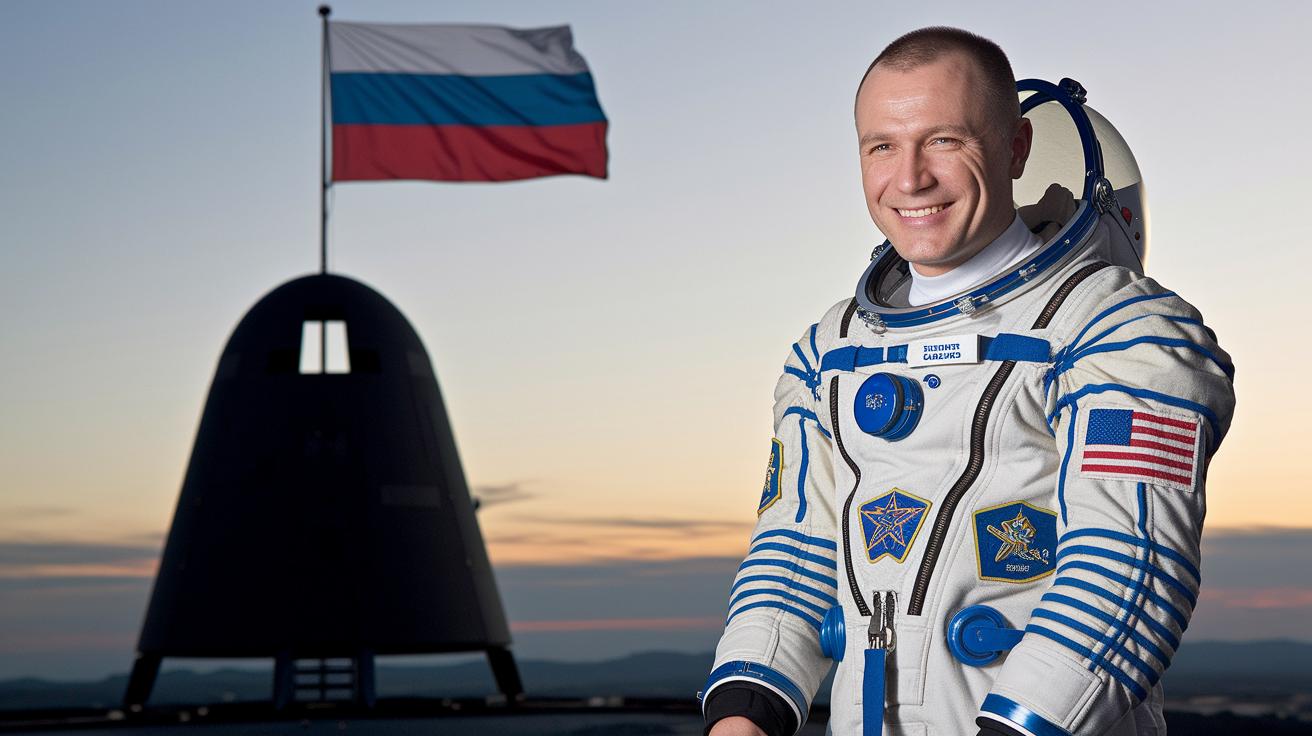
Yuri Gagarin’s orbit helped boost Soviet pride at a time when every move mattered on the global stage. His calm smile and cheerful “Poyekhali!” quickly turned into symbols that everyone could rally around. Soviet leaders proudly showcased his journey as proof of their strong science skills and technological progress. The flight wasn’t just a technical win, it painted a picture of national strength during a period when every message was loaded with purpose. It stirred up support back home and reminded people that even in tough times, reaching for the stars could bring hope and confidence for the future.
Gagarin’s historic journey also made American officials take a hard look at their own space dreams. His success pushed U.S. leaders to put Project Mercury on the fast track, deepening the rivalry in the space race. In response, the United States ramped up its own manned orbital missions, determined to keep pace with Soviet achievements. His flight went far beyond a single moment in time, it became a symbol of fierce determination and was a spark that intensified the global contest over technology and leadership during those tense years.
Legacy, Cultural Influence, and Cosmonaut Heritage of the First Man in Space
Yuri Gagarin’s first flight into space made him a worldwide hero. His smiling face has been celebrated on stamps, monuments, and murals, and events like Yuri’s Night remind us of that daring adventure beyond Earth. His warm personality and approachable style turned a time of strict, impersonal views into one filled with hope, inspiring people everywhere to dream big.
Gagarin’s mark is felt in both science and culture. Even though early space programs suffered losses, such as the tragic death of fellow cosmonaut Valentin Bondarenko, his story continues to shine. Statues, ceremonies, and commemorations keep his memory alive and encourage each new generation to see the mix of courage and humanity in space exploration. His lasting image reminds us that the human spirit has the power to soar, even in the face of challenges.
Final Words
In the action of history, Yuri Gagarin shines as the first man in space, marking a bold step in scientific progress. His brave flight aboard Vostok 1 and the detailed mission insights remind us that courage and hard work can push the limits of what we thought possible. The post reviewed his early life, rigorous training, and how his flight spurred global change.
A spirit of curiosity lights the way toward a future full of hope.
FAQ
Who was actually the first man in space?
The first man in space was Yuri Gagarin, who orbited Earth on April 12, 1961, aboard Vostok 1. His historic flight marked a major breakthrough in human space exploration.
What caused Yuri Gagarin’s death?
Yuri Gagarin died in 1968 during a routine training flight in a MiG-15UTI. Unclear technical and human factors likely led to the fatal crash, leaving his final moments open to debate.
What were Yuri Gagarin’s last words before death?
There are no confirmed records of Yuri Gagarin’s last words before his death. No verifiable documentation exists detailing any farewell remark, so his final moments remain a mystery.
Who was the second man in space?
The second man in space was Gherman Titov, who orbited Earth soon after Yuri Gagarin. His flight showcased rapidly advancing Soviet achievements in human spaceflight.
Who was the first woman in space?
The first woman in space is Valentina Tereshkova, who flew aboard Vostok 6 in 1963. Her mission broke new ground and opened the door for more female explorers in space.
What is the film “First Man in Space (1959)” about?
The film “First Man in Space” (1959) is a science fiction movie that envisions early space travel with dramatic storytelling, offering a creative take on what human spaceflight might have been like.
Who was the first American in space?
Alan Shepard was the first American in space, launching on a suborbital flight in 1961. His brief trip sparked national pride and marked a key milestone for the U.S. space program.
Who is Vladimir Komarov?
Vladimir Komarov was a Soviet cosmonaut who played a major role in early space missions and tragically died during the Soyuz 1 flight. His loss highlighted the risks of early space exploration.
Who is Alexei Leonov?
Alexei Leonov is famed for performing the first-ever spacewalk in 1965. Stepping outside his spacecraft, he broadened our understanding of human activity beyond Earth.
Who is Rakesh Sharma?
Rakesh Sharma is an Indian cosmonaut who flew on a Soviet mission in 1984. His flight marked a significant milestone by bringing India into space exploration.