
Have you ever thought about hidden worlds beyond our own? NASA’s search for planets outside our solar system gives us a fresh look at our cosmic neighborhood. Missions like Kepler, TESS, and the James Webb Space Telescope (a super-powerful space camera that takes deep images of the universe) have uncovered thousands of fascinating exoplanets (planets orbiting stars other than our sun), and some of these might even support life.
Every new discovery nudges us to rethink our place in the vast universe. It’s pretty amazing to consider that, out there on a small planet millions of miles away, life could be unfolding in its own unique way. Stick around and see how these groundbreaking missions spark our natural, cosmic curiosity.
Key Breakthroughs and Missions in NASA’s Exoplanet Exploration
NASA's hunt for planets beyond our solar system has totally changed how we see the universe. Take the Kepler mission, for example. Running from 2009 to 2018, it discovered more than 2,600 exoplanets, including many Earth-sized worlds in zones where life might exist. Imagine finding out that our galaxy is filled with planets that could support life!
Then there's TESS, which started its mission in 2018. TESS has scanned about 85% of the sky and spotted over 5,000 candidate exoplanets. This mission has really expanded our catalog of distant worlds, opening up new wonder and excitement.
The James Webb Space Telescope, launched in December 2021, takes this exploration even further. It uses high-resolution atmospheric spectroscopy (a fancy way of saying it studies planet atmospheres in great detail) to uncover clues about these far-off worlds. With the help of smart computer tools like machine learning and even virtual reality, scientists can model and analyze the light coming from these planets. It’s amazing how these discoveries light up our curiosity about the cosmos and make science accessible to everyone!
NASA Exoplanet Missions: From Kepler to TESS to Webb
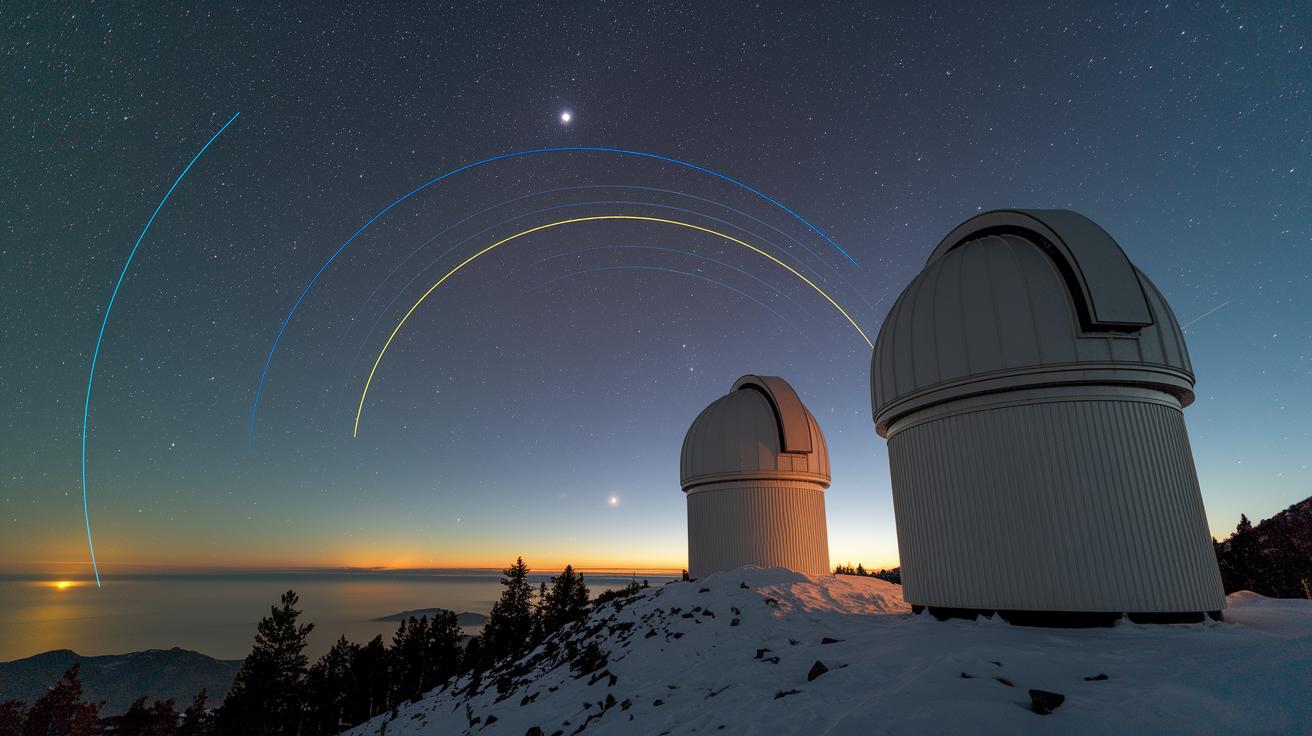
Kepler launched in 2009 and used a method called transit photometry (that is, watching for a small dip in a star’s light when a planet crosses in front) to find more than 2,600 confirmed exoplanets. Its careful measurements opened up a brand new way to map the space around us. In fact, Kepler could monitor thousands of stars at once, which helped create the very first reliable list of planets outside our solar system.
TESS started its work in 2018. It scans about 85% of the sky by breaking it into 27-day sectors. With its wide-angle view, TESS has spotted over 5,000 candidate exoplanets. By quickly finding these planets, it sets up the next round of detailed studies that build on what Kepler started.
Then, in December 2021, the James Webb Space Telescope lifted off, taking these discoveries further with top-notch instruments. Its tools, like NIRCam (a Near Infrared Camera that detects heat and light beyond what our eyes see) and MIRI (a Mid-Infrared Instrument that shows details in cooler light), give scientists sharp images and a close look at the gases and temperatures of distant worlds. This means researchers can explore the makeup of alien atmospheres and better understand how these planets differ from Earth.
This way of combining broad sky surveys with detailed, high-resolution technology has pushed modern astronomy forward. With the innovative approaches of Webb adding to the solid work of Kepler and TESS, scientists are continually inspired to ask new questions about our vast universe.
| Mission | Launch Year | Main Instruments/Techniques | Key Achievements |
|---|---|---|---|
| Kepler | 2009 | Transit photometry | Cataloged over 2,600 exoplanets |
| TESS | 2018 | Wide-field sky survey | Identified over 5,000 candidate exoplanets |
| James Webb Space Telescope | 2021 | NIRCam and MIRI | Enables high-resolution imaging and atmospheric studies |
Exoplanet Detection Methods Used by NASA
NASA uses several neat tricks to find planets way out in space. One popular method is the transit method. This is when a planet passes in front of its star, causing the star's brightness to dip just a bit. Imagine watching a light flicker ever so slightly – that small change tells us quite a bit about the planet’s size and how it orbits.
Another cool approach is called radial velocity. Here, researchers look for a gentle wobble in a star’s movement. This happens because a hidden planet pulls on it with its gravity, causing a slight shift in the star’s light color (we call this a Doppler shift). This trick helps scientists figure out how heavy the planet might be.
Then there’s direct imaging. In this method, NASA blocks out the star’s overpowering glare with special tools like coronagraphs or starshades. This lets them actually see the planet, much like dimming a bright lamp to spot a faint glow next to it.
For finding planets that are either very far away or a bit harder to catch, scientists sometimes use gravitational microlensing and astrometry. Gravitational microlensing captures how a planet bends light as it passes by, while astrometry tracks tiny movements in a star’s position. Both methods add extra clues when a planet is hard to spot.
Also, modern technology like machine learning comes into play. These smart computer programs help sort through all the noisy light data, making it easier to pick out the subtle signs of a planet.
| Technique | Description |
|---|---|
| Transit Method | Measures slight dips in a star’s brightness when a planet passes in front of it. |
| Radial Velocity | Detects the small wobble of a star caused by a planet’s gravitational pull. |
| Direct Imaging | Uses tools to block a star’s light, letting us see its planets directly. |
| Gravitational Microlensing | Observes the bending of light around a planet as it passes by. |
| Astrometry | Tracks tiny shifts in a star’s position to uncover orbiting planets. |
Notable NASA Exoplanet Discoveries and Their Characteristics
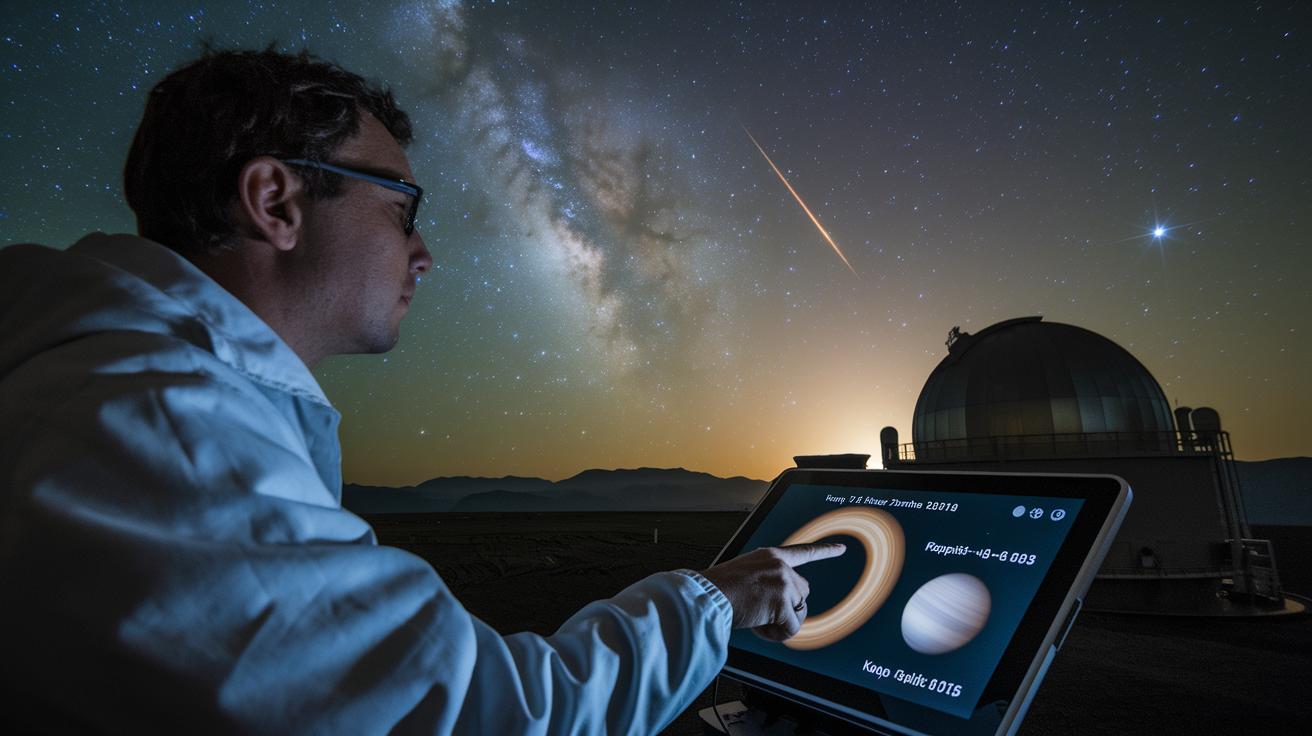
NASA has been busy exploring worlds beyond our solar system, and these findings show us a mix of really interesting planets. In 2015, scientists discovered Kepler-452b, a planet a lot like Earth that sits in a warm zone where water can stay liquid. Imagine finding another world with so many Earth-like features, it really makes you wonder what else might be out there!
Then, in 2017, the TRAPPIST-1 system grabbed our attention with seven rocky planets, and three of them are in regions that could have water. It’s like stumbling upon a tiny collection of potential homes for life. And a couple of years later, in 2019, the TESS mission spotted TOI-700 d. This Earth-size planet is not too far away, about 100 light years from us. Each discovery is a reminder of just how many similar worlds could be floating around in space.
More recently, NASA’s newest telescope found a planet very close to home, showing us features that are a lot like what we see on Earth. This nearby discovery adds to our growing list of worlds with Earth-like conditions. Researchers are busy comparing details like size, distance from its star, and the makeup of its atmosphere (the blanket of gases around a planet). These comparisons are key to helping us understand how these planets form and change over time.
| Planet | Discovery Year | Distance | Notable Feature |
|---|---|---|---|
| Kepler-452b | 2015 | ~1,400 ly | Earth-size in habitable zone |
| TRAPPIST-1 System | 2017 | ~39 ly | Seven rocky planets; three in habitable zone |
| TOI-700 d | 2019 | ~100 ly | Earth-size discovered by TESS |
| Nearby Earth Analog | 2023 | Close proximity | Deep similarities to Earth |
Assessing Exoplanet Habitability: NASA’s Approaches and Studies
NASA figures out if a planet might hold liquid water by checking how far it is from its star. They call this distance the habitable zone, where water can exist in liquid form. Without water, life as we know it would struggle to exist. To learn even more, NASA uses the James Webb Space Telescope. Its NIRSpec tool splits starlight into different colors, showing unique signs of water (H2O), carbon dioxide (CO2), and methane (CH4) in a planet’s atmosphere. This gives scientists important hints about the air around the planet and whether it might support life.
Next, scientists mix data about a star’s energy with what they know about a planet’s make-up to build climate and atmospheric models. Imagine it like putting together a weather forecast for a faraway world. These models help them see if conditions might be just right for water to stay liquid.
Researchers also use virtual reality simulations to step into the shoes of an explorer on another planet. These digital recreations let them feel what a candidate exoplanet might be like by testing how changes in temperature or light could alter the surface and affect potential life. By blending precise measurements with creative simulations, NASA is slowly piecing together a clearer picture of which distant planets might be able to host life.
NASA’s Astronomical Data Archives and Analysis Tools for Exoplanets

NASA's exoplanet archives let anyone peek into space and discover a world of details about other planets. Researchers and space fans can explore confirmed lists of planets, promising candidates, and light curves (graphs that show a star’s brightness over time) that reveal the lively beat of far-off stars. They also provide ephemerides (tables that predict when a planet will pass in front of its star) and important star data. It’s like a treasure chest for anyone wanting to compare and study planetary systems across our galaxy.
With public API access (a tool that helps computers share data), scientists can quickly dive into huge amounts of information through automated searches. This platform combines data from big missions like Gaia, Spitzer, Hubble, and the James Webb Space Telescope, giving us a rare, all-around view of the cosmos. Thanks to remote observation methods and solid archiving practices, every bit of planetary data is kept safe for future studies.
This all-in-one system inspires creative research and reminds us of NASA's exciting early days in the space race, a time full of daring exploration and breakthrough science.
Future of NASA Exoplanet Exploration and Technological Innovations
NASA is gearing up to change the way we see distant worlds with some really exciting projects. One of the big players is the Nancy Grace Roman Space Telescope, scheduled for launch in 2027. It’s like a high-powered camera that takes wide-angle photos of the universe, helping scientists catch tiny clues about exoplanets (planets beyond our solar system) that have been hiding in plain sight.
Then there’s the ESA–NASA PLATO mission coming around 2026. Imagine looking for another Earth, with tools that watch stars closely by detecting little dips in their brightness (a trick called transit photometry) and listening to star vibrations (known as asteroseismology, which is a way to study stars by their sounds). This mission is all about finding planets that are a lot like our own.
There’s even talk of a Habitable Worlds Observatory. This proposed project plans to use a neat trick called starshade technology to block out the bright light of stars, making it easier to spot faint, faraway planets. It’s like using a mask to see something subtle in a bright room.
And that’s not all. New data systems powered by machine learning and AI are set to make a big splash. These smart systems will help scientists sort through huge amounts of data quickly, zeroing in on the most promising exoplanets for a closer look.
Isn’t it amazing to think how these innovations could change our view of the universe?
Final Words
In the action, we saw breakthroughs from missions like Kepler, TESS, and Webb that revealed new worlds and sharpened our techniques for spotting them. We touched on smart detection methods, habitability studies, detailed data archives, and exciting future projects. Each step brings us closer to understanding the mysteries above. Keep your eyes on nasa exoplanets as they continue to expand our view of the universe and inspire wonder every day.
FAQ
What does NASA Exoplanets 3D offer?
The NASA Exoplanets 3D provides an interactive view that maps distant planetary systems, giving users a clear visual context of where exoplanets lie within our galaxy.
How does the NASA Exoplanet Archive serve researchers and the public?
The NASA Exoplanet Archive collects confirmed planet data, light curves, and star information to help researchers spot patterns and spark ideas for future missions.
What information does the NASA Exoplanet Catalog provide?
The NASA Exoplanet Catalog shows key details of discovered planets, including size, distance, and type—whether a gas giant or an Earth-like world in the Milky Way.
Which major missions have propelled NASA’s exoplanet discoveries?
Missions like Kepler, TESS, and the James Webb Space Telescope have advanced our view of exoplanets by confirming thousands of worlds and refining our imaging techniques.
What detection methods does NASA use to find exoplanets?
NASA uses transit photometry, radial velocity measurements, direct imaging, gravitational microlensing, and astrometry techniques to spot and study exoplanets around distant stars.
What plans does NASA have for future exoplanet exploration technologies?
NASA is preparing next-generation missions such as the Nancy Grace Roman Space Telescope and enhanced ML-driven data tools to provide sharper images and detailed atmospheric insights on exoplanets.